
Justice Denied: Unrepresented Immigrants Face Severe Risks
Without legal counsel, detained immigrants face prolonged custody risks.
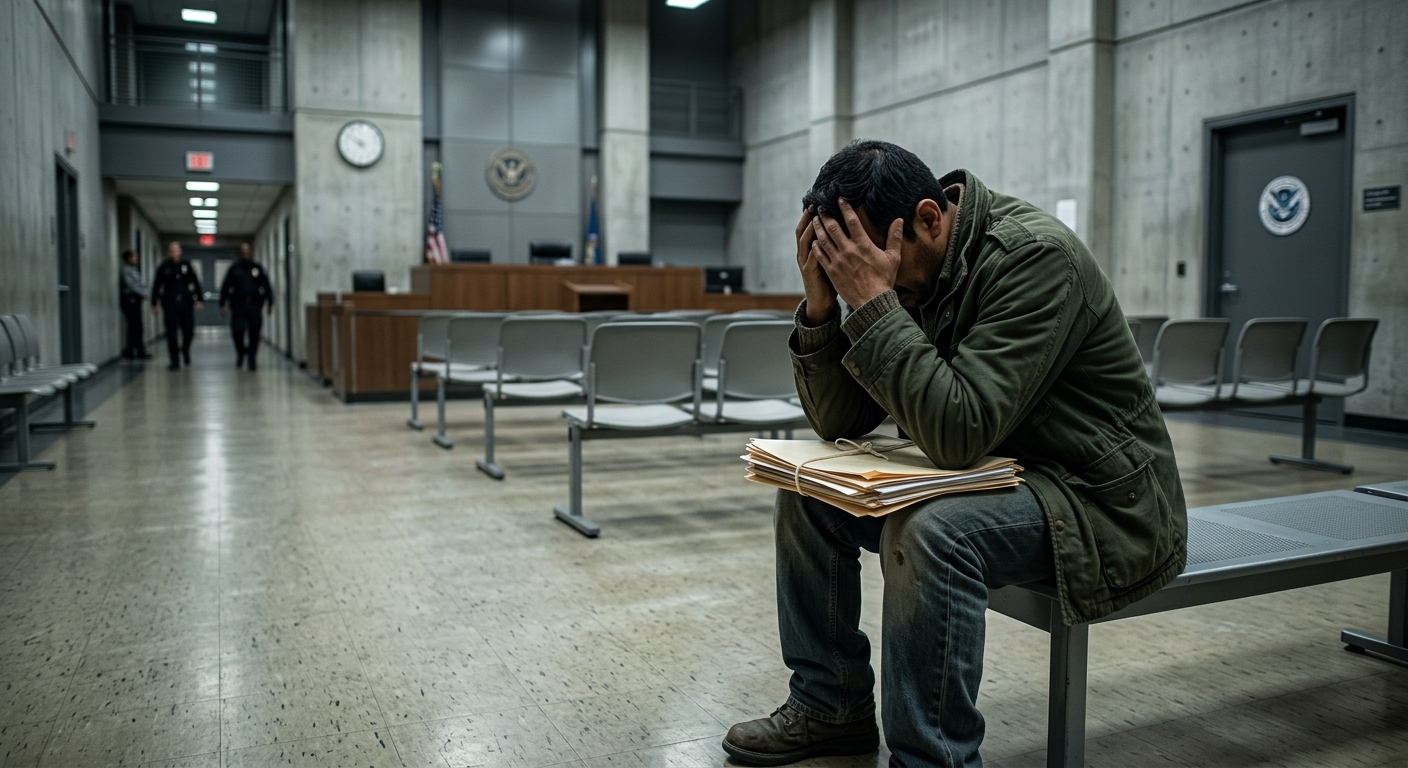
The Hidden Crisis: How Lack of Legal Counsel Jeopardizes Due Process for Detained Immigrants
When an individual is accused of a crime in the United States, the Sixth Amendment guarantees them the right to an attorney. If they cannot afford one, a public defender is appointed to represent them. However, this constitutional right does not extend to the immigration court system. Because immigration violations are categorized under civil law rather than criminal law, the government is under no obligation to provide legal counsel. Consequently, tens of thousands of detained immigrants must navigate an incredibly complex and adversarial judicial system completely alone. Facing highly trained government attorneys representing Immigration and Customs Enforcement (ICE), unrepresented immigrants are placed at a severe disadvantage.
The stakes in these proceedings are arguably just as high—if not higher—than in many criminal cases. A loss in immigration court means deportation, leading to permanent family separation, loss of livelihood, and in many asylum cases, a forced return to perilous or life-threatening conditions. Without a lawyer to articulate legal defenses, gather evidence, or negotiate bond, detained immigrants face significantly elevated risks of prolonged incarceration and unlawful deportation.
A System on the Brink: The Immigration Court Backlog
The sheer volume of cases flowing through the Executive Office for Immigration Review (EOIR) has created a judicial bottleneck of historic proportions. According to the Transactional Records Access Clearinghouse (TRAC) at Syracuse University, the active immigration court backlog exceeded 3.2 million cases by early 2026. Within this overwhelming administrative gridlock, immigrants who are held in detention centers face an excruciating reality. While non-detained immigrants might wait years for their day in court, those in ICE custody are often subjected to expedited dockets. This paradox rushes them through proceedings before they can realistically secure an attorney, or conversely, leaves them languishing in cells during prolonged procedural delays caused by systemic inefficiencies.
Prolonged detention is not merely an inconvenience; it is a punitive experience that exacts a heavy toll on an individual’s physical and mental health. Facilities are frequently located in remote areas, hundreds of miles away from urban centers, legal aid organizations, and the detainees’ families. This geographic isolation is a calculated logistical barrier that makes it exceedingly difficult for pro bono attorneys to reach clients and for families to provide supportive documents. For the unrepresented, the backlog translates directly into extended periods behind bars, where the desperation to be released can coerce individuals into abandoning valid legal claims and accepting voluntary departure or deportation just to escape the traumatic conditions of detention.
Unrepresented and Vulnerable: The Demographics of Detention
Who are the people facing immigration judges without legal guidance? They are predominantly marginalized individuals fleeing persecution, economic collapse, or gang violence. A significant majority lack proficiency in English, further complicating their ability to comprehend the dense legal jargon required to argue for relief such as asylum, withholding of removal, or protection under the Convention Against Torture. Statistics highlight a bleak landscape regarding access to counsel. Nationwide research indicates that roughly 67 percent of all people facing deportation lack legal representation.
The situation is even more dire for those who are physically detained. Recent data from TRAC indicated that only about 33.3 percent of immigrants had attorney representation when their final removal orders were issued in early 2026. When a person is locked inside a detention center, their capacity to earn money is zero, making the retention of a private immigration attorney—which can cost thousands of dollars—virtually impossible. Furthermore, detention center policies often restrict phone access, limit visitation hours, and charge exorbitant rates for communication, effectively severing detainees from the outside world. This environment disproportionately impacts indigent immigrants, creating a two-tiered system of justice where outcomes are dictated not by the merits of a case, but by a person’s financial ability to hire a lawyer.
The Dramatic Impact of Legal Representation
The presence of a competent attorney fundamentally alters the trajectory of an immigration case. Navigating the labyrinth of the Immigration and Nationality Act requires specialized knowledge. An attorney can identify obscure avenues for legal relief, ensure that applications are filed before stringent deadlines, object to improper evidence presented by the government, and prepare the immigrant for rigorous cross-examination.
Quantitative data unequivocally demonstrates the life-saving impact of representation. A comprehensive 2026 study by the Vera Institute of Justice analyzing a universal representation program found that legal counsel dramatically improves judicial outcomes. On average, being represented by a program attorney increased an immigrant’s likelihood of being granted relief by a staggering 366 percent. Put simply, individuals with legal backing were nearly 4.7 times more likely to win their cases and secure protection from removal compared to their unrepresented counterparts.
Beyond final deportation defense, attorneys play a critical role in the earliest stages of the process, particularly during custody redetermination or bond hearings. Unrepresented individuals rarely know what factors a judge considers when setting bond, such as community ties, employment history, and lack of criminal record. The same Vera Institute study noted that legal representation increased an individual’s chances of being released from detention on bond by 46 percent. Securing release is a pivotal turning point; once free, immigrants can more easily gather evidence, find stable employment, support their families, and meaningfully participate in their own legal defense.
Data at a Glance: How Counsel Changes Outcomes
The statistics surrounding legal representation clearly show a vast disparity in outcomes for those navigating the system alone versus those with professional guidance. The table below outlines the tangible benefits of having a lawyer during deportation proceedings.
| Immigration Outcome Metric | Unrepresented Immigrants | Represented Immigrants |
|---|---|---|
| Likelihood of Securing Relief from Deportation | Baseline success rate | +366% increase (4.7x more likely) |
| Probability of Securing Bond Release | Baseline release rate | +46% increase in release likelihood |
| Representation at Final Removal Order (Early 2026) | 66.7% faced orders alone | 33.3% had counsel present |
*Data derived from 2026 reporting by the Vera Institute of Justice and the Transactional Records Access Clearinghouse (TRAC).
Systemic Barriers Within Detention Facilities
Even when free or low-cost legal service providers attempt to intervene, the structure of the immigration detention system actively obstructs effective representation. Immigration detention centers, frequently managed by private, for-profit prison corporations, implement stringent operational protocols that hinder attorney-client communication. Lawyers often report insurmountable difficulties in simply scheduling confidential calls with their clients.
Mail is routinely delayed, making the timely signing and filing of time-sensitive immigration applications a logistical nightmare. Furthermore, the use of remote video hearings has become increasingly prevalent. While touted as an efficiency measure, video hearings further disconnect the detainee from the courtroom dynamics. It becomes exceptionally difficult for an unrepresented immigrant to present physical evidence, meaningfully interject when translators make errors, or establish a human connection with the immigration judge through a pixelated screen. Language barriers compound this alienation. Indigenous language speakers, for instance, frequently face situations where courts cannot provide an exact interpreter, forcing them to communicate through a secondary language like Spanish, in which they may only have rudimentary fluency. All these systemic roadblocks coalesce to create a deeply inequitable environment that virtually guarantees failure for the unrepresented.
The Human and Economic Costs of Prolonged Custody
The consequences of this systemic lack of representation ripple outward, devastating families and local communities. When a primary breadwinner is suddenly detained and held for months without bond due to the lack of legal advocacy, their dependents often face immediate financial ruin, eviction, and food insecurity. Children of detained immigrants suffer profound psychological trauma, leading to diminished academic performance and long-term emotional distress.
Moreover, holding immigrants in prolonged detention is an extraordinary financial burden on American taxpayers. It costs the federal government substantial daily sums to detain a single individual. By contrast, community-based case management programs and legal representation initiatives cost a fraction of that amount. When attorneys successfully advocate for their clients’ release on bond, they are not only protecting the individual’s due process rights but also saving public funds.
- Taxpayer Savings: Alternatives to detention are exponentially cheaper than maintaining physical custody in secure facilities.
- Community Stability: Allowed to remain in their communities pending hearings, immigrants continue to pay taxes and support local economies.
- Family Cohesion: Preventing unlawful deportation keeps families together, reducing the burden on the foster care and social welfare systems.
The Case for Universal Legal Representation
In response to these glaring inequities, a burgeoning movement led by legal advocates and human rights organizations is calling for a universal representation model in immigration courts. Likened to the public defender system in criminal law, universal representation guarantees that every person facing deportation, regardless of their income, race, or background, is provided with a government-funded attorney.
Pioneering jurisdictions at the city and state levels have already begun proving the viability of this model. Programs across various states have demonstrated that when detained immigrants are universally represented, court efficiency improves, and the scales of justice are rebalanced. Universal representation prevents courts from being bogged down by procedural delays caused by unrepresented individuals struggling to understand the rules. For the judges, proceedings run much smoother when both sides are represented by competent counsel. Proponents argue that scaling this model to the federal level is the only way to ensure that the U.S. immigration system adheres to the fundamental American principles of fairness and due process. Until such a system is codified into law, the immigration courts will remain a mechanism of systemic disenfranchisement.
Frequently Asked Questions (FAQs)
Why don’t immigrants automatically get a lawyer in deportation proceedings?
Unlike criminal proceedings where the Sixth Amendment guarantees the right to a public defender, immigration offenses are classified under civil law. Therefore, the government is not constitutionally required to provide legal counsel for those who cannot afford it, leaving many to represent themselves.
How does the immigration court backlog affect detained individuals?
With an ongoing backlog of over 3.2 million cases, the immigration system is severely delayed. For detained individuals, this means they can spend months or even years in custody waiting for their hearings to be finalized. Lack of counsel exacerbates this, as unrepresented immigrants struggle to file motions that could expedite their cases or secure bond.
What is Universal Representation?
Universal representation is a legal defense model—similar to the public defender system—advocating that any person facing deportation should have access to a government-funded attorney, regardless of their financial status or background.
How does having a lawyer change the outcome of a case?
Data clearly shows that legal representation drastically improves an individual’s chances of success. Studies indicate that represented immigrants are nearly 4.7 times more likely to secure relief from deportation and face significantly higher odds of being granted bond compared to those without an attorney.
Conclusion
The intersection of immigration enforcement and the judicial system represents one of the most critical civil rights battlegrounds of the modern era. Denying legal counsel to detained immigrants effectively strips them of their voice, subjecting them to arbitrary, prolonged detention and the imminent threat of unlawful deportation. As the immigration court backlog continues to swell, the need for systemic reform is undeniable. Guaranteeing legal representation is not merely an act of compassion; it is an essential prerequisite for a functioning, legitimate, and equitable justice system.
References
- News from TRAC: Immigration Court Operations: February 2026 Update — Transactional Records Access Clearinghouse (TRAC), Syracuse University. 2026-03-24. https://trac.syr.edu/reports/
- Universal Legal Representation Program Increases Detained Immigrants’ Chances of Securing Relief from Deportation by 366 Percent — Vera Institute of Justice. 2026-04-21. https://www.vera.org/news/universal-legal-representation-program-increases-detained-immigrants-chances-of-securing-relief-from-deportation-by-366-percent
- Immigration Courts: Actions Needed to Track and Report Noncitizens’ Hearing Appearances — U.S. Government Accountability Office (GAO). 2024-12-19. https://www.gao.gov/products/gao-25-106565
- EOIR Announces Significant Immigration Court Milestones — U.S. Department of Justice, Executive Office for Immigration Review. 2025-09-04. https://www.justice.gov/eoir/news-and-updates
Similar Articles








Read full bio of Sneha Tete




