
Mastering Jury Persuasion: Strategic Approaches to Trial Success
Essential techniques and psychological principles attorneys use to effectively persuade juries.
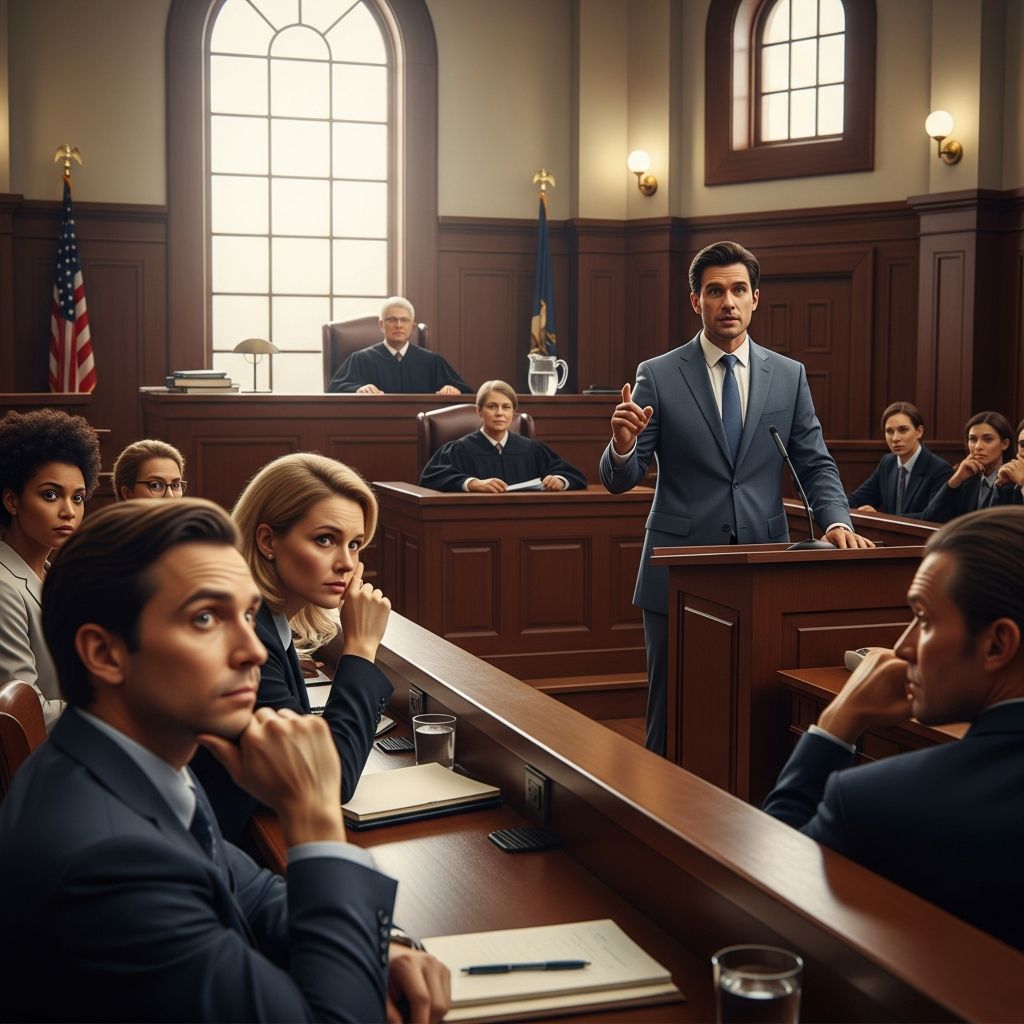
The ability to persuade a jury represents one of the most critical skills in trial advocacy. Success in the courtroom depends not only on the strength of your case facts but on your ability to communicate those facts in a way that resonates with jurors. Understanding the psychology behind jury decision-making and applying evidence-based persuasion techniques can substantially improve your chances of a favorable verdict. This comprehensive guide explores the foundational principles and practical strategies that distinguish effective trial lawyers from the rest.
The Foundation: Building Credibility and Trust
Before any persuasion can occur, jurors must believe in you. Credibility serves as the bedrock upon which all other persuasion techniques rest. Jurors are making judgments about your trustworthiness from the moment you enter the courtroom, and these initial impressions shape how they receive your evidence throughout the trial.
To establish credibility, you must demonstrate thorough command of your case. This means knowing every detail of the facts, evidence, and legal framework backwards and forwards. When you speak with confidence grounded in preparation, jurors recognize this expertise. Conversely, appearing unprepared or uncertain undermines your message, regardless of how compelling your arguments might be. Jurors naturally gravitate toward attorneys who appear knowledgeable and professional, as this confidence signals reliability.
Transparency also builds trust. When you acknowledge weaknesses in your case rather than attempting to hide them, you demonstrate honesty. This counterintuitive approach—admitting what doesn’t support your position—actually strengthens your overall credibility. Jurors respect lawyers who address opposing arguments head-on and provide alternative explanations for inconvenient facts. By taking this approach, you show that your theory of the case can withstand scrutiny.
Personal presentation matters equally. Eye contact with jurors, clear enunciation, and composed body language communicate respect and sincerity. When you treat the jury with obvious consideration—by being organized, using summaries, and respecting their time—they reciprocate with increased attentiveness and goodwill toward your case.
The Power of Narrative Construction
The human brain is wired to remember stories far more effectively than isolated facts or statistics. Jurors do not process information as abstract data points; they construct meaning through narrative frameworks. Your task as an advocate is to present your case as a coherent story with a clear beginning, middle, and end.
A compelling narrative has several essential components. First, it contains characters—real people whose struggles and humanity the jury can understand. Rather than referring to “the plaintiff” or “the defendant,” help jurors see the actual person involved and appreciate their perspective. Specific details about their life, their motivations, and their experience make them memorable and relatable.
Second, an effective narrative includes clear causation and consequence. Jurors naturally think in terms of cause-and-effect relationships. Your story should explain not just what happened but why it happened and what impact it had. When you can connect events in a logical sequence that makes intuitive sense, jurors follow your reasoning more readily.
Third, your narrative should contain tension or conflict that gives jurors reason to care about the outcome. A story without conflict is forgettable; one with meaningful stakes engages jurors emotionally and helps them invest in the resolution. This doesn’t mean fabricating drama but rather highlighting the genuine human dimensions of the dispute.
Throughout your narrative, use concrete, vivid language rather than abstract legal terminology. Describe scenes in sensory detail. When your witnesses testify, encourage them to show rather than tell—to provide specific examples and anecdotes rather than general statements. The difference between “the company values family” and “when an employee’s son performed in a school play, the company not only scheduled him off work but his manager attended the performance” illustrates this principle. The latter creates a picture in the juror’s mind that abstract claims cannot achieve.
Harnessing Emotional Connection Without Manipulation
Emotions drive juror decision-making far more than logic alone. Research demonstrates that jurors who feel emotionally connected to a party are substantially more likely to decide in that party’s favor. However, leveraging emotional connection requires ethical boundaries. The goal is not to manipulate through irrelevant sentiment but to help jurors genuinely understand the human stakes involved in the case.
Effective emotional persuasion occurs when jurors empathize with the experiences and struggles of the people involved in your case. This requires presenting information in ways that allow jurors to imagine themselves in the plaintiff’s or defendant’s position. What would they feel? What would they do? How would this situation affect their own life?
Your witnesses are your primary vehicles for emotional connection. Their testimony should be authentic and personal. A live witness in the courtroom creates a human presence that transcripts cannot replicate. When selecting which witnesses to present, prioritize those who can genuinely communicate the human impact of the events in question.
Strategic Use of Surprise as a Persuasion Tool
One of the most underutilized persuasion techniques available to trial lawyers is the strategic application of surprise. Surprise serves a specific psychological function: it temporarily disables the mental filters through which jurors evaluate information, particularly their confirmation bias—the tendency to dismiss evidence that contradicts their preexisting assumptions.
When jurors enter the courtroom, they carry assumptions about how the world works. They have intuitions about contract interpretation, corporate behavior, causation, market dynamics, and damage calculations. Many of these intuitions are flawed. If you allow these assumptions to remain unchallenged, they will shape how jurors interpret your evidence.
Strategic surprise involves presenting information in ways that violate juror expectations and force them to reconsider their assumptions. This isn’t ambush tactics or gamesmanship—it’s presentation design. You’re still presenting facts the jury must hear; you’re simply arranging them to maximize attention and engagement.
Consider how to expose scale in unexpected ways. A statement that “the defendant controls 73% of the market” may not land emotionally. But presenting that the defendant’s annual profits exceed the GDP of several states, or that their market share dwarfs the combined share of the next five competitors, creates a recalibration moment. Jurors suddenly understand the magnitude of the defendant’s dominance in a way that a percentage alone cannot convey.
Similarly, revealing unexpected causation can interrupt biased thinking. Many cases involve complex chains of causation. If jurors expect simple causality—”A caused B”—but your evidence shows that an intervening actor or decision actually drove the outcome, this surprise forces genuine engagement with the complexity of your case.
Crafting Clear and Accessible Arguments
Legal complexity represents a barrier to juror comprehension and persuasion. While you must be legally accurate, translating legal concepts into plain language is essential. Jurors are not lawyers; jargon alienates them and makes them feel excluded or confused.
Simplicity and brevity serve multiple functions. They show respect for jurors’ time and intelligence. They make your arguments easier to remember and repeat. When jurors discuss the case in the jury room, they will discuss your themes and explanations; simple, clear language translates into more effective jury room advocacy.
Use analogies and comparisons to make abstract concepts concrete. Find relatable examples from everyday experience that illustrate your legal theory. Visual aids—charts, diagrams, animations, and images—leverage the brain’s visual processing capabilities and create multiple pathways for juror understanding.
Repetition of key themes strengthens memory and persuasion. Rather than introducing a theme once, weave it throughout opening statement, witness examination, and closing argument. Each repetition reinforces the theme and increases the likelihood jurors will retain and act on it.
Witness Selection and Preparation
The witnesses you choose to present—and how you prepare them—significantly impacts jury persuasion. Not all witnesses are equally persuasive. Some convey information in ways that resonate with jurors; others, despite knowledge, fail to connect.
Identify witnesses who can not only provide necessary testimony but who can do so in a credible, relatable manner. Consider how they will come across to jurors. Will jurors find them likeable? Do they communicate clearly? Can they tell their story in a way that feels genuine rather than rehearsed?
Prepare witnesses to follow the “show, don’t tell” principle. Rather than making general claims, have them recount specific events with relevant details. Instead of testifying “the workplace was unsafe,” they might describe a particular day, the specific hazard they observed, what they felt, and what they did in response.
Encourage witnesses to maintain composure and authenticity. Jurors can detect when testimony feels artificial or overly prepared. The goal is for witnesses to appear confident and truthful, not rehearsed.
The Role of Voir Dire in Early Persuasion
Jury selection, known as voir dire, is your first opportunity to persuade. While the statutory purpose of voir dire is identifying bias in prospective jurors, this process can simultaneously begin moving jurors toward your theory of the case.
One sophisticated technique involves the “devil’s advocate” approach. Rather than asking jurors whether they believe corporations should be held responsible for employee actions, you might ask: “Because corporations manage many people and decisions, can you think of any reason why a corporation shouldn’t be responsible when an employee causes harm?” This framing invites jurors to argue against a proposition, which paradoxically increases their cognitive commitment to the opposite position.
Focus your voir dire on identifying genuine bias rather than preconditioning jurors. The most effective use of voir dire involves asking questions that reveal which prospective jurors hold beliefs inconsistent with your case theory, so you can remove them through cause challenges. Every juror you remove through a legitimate cause challenge preserves your peremptory challenges for other purposes.
Jurors begin forming impressions of you and opposing counsel during voir dire. Treat the process with respect, listen carefully to juror responses, and demonstrate that you value their role in the justice system. These early interactions establish the foundation of trust or skepticism that persists through trial.
Demonstrative Aids and Visual Persuasion
Visual presentation dramatically enhances jury comprehension and memory. Charts, diagrams, photographs, animations, and other visual aids engage multiple cognitive pathways and make complex information accessible. When jurors see and hear information simultaneously, retention increases substantially.
Effective visual aids share common characteristics. They are clean and uncluttered, presenting information without unnecessary decoration or distraction. They use color strategically to draw attention to key points. They present data in context, helping jurors understand not just what something is but what it means relative to other information.
Visual presentation also creates dramatic impact. When you introduce information through a visual aid that contradicts juror expectations, you create that moment of surprise and cognitive recalibration discussed earlier. Jurors pay more attention to information that surprises them, remember it better, and give it greater weight.
Establishing Authority Through Mastery
Authority represents one of the psychological principles that influences persuasion. Jurors defer to those they perceive as knowledgeable experts. Your command of the case facts, law, and evidence establishes your authority.
This authority must be genuine, not performed. Jurors quickly recognize when an attorney is bluffing or uncertain. By contrast, an attorney who speaks knowledgeably, answers questions directly, and admits the limits of their knowledge appears authoritative and trustworthy.
Your authority extends to your witnesses. Prepare them to appear confident in their knowledge and willing to acknowledge when they don’t know something. Expert witnesses, in particular, should communicate their expertise clearly while remaining accessible to the jury.
Creating Urgency and Importance
Human attention is a finite resource. In a long trial with multiple witnesses and significant evidence, you cannot expect jurors to find every element equally compelling. You must signal which information is most important and deserves their focused attention.
You can create this sense of urgency and importance explicitly. When a particular witness is about to testify to something critical, you might say: “What this witness is about to tell you is important, and they are the only person who can provide this information.” This linguistic signal primes jurors to pay closer attention and encode the information more deeply into memory.
Additionally, create drama around significant moments. Organize your case presentation so that critical testimony or evidence receives appropriate emphasis rather than being buried among less important information. Jurors naturally focus on information they perceive as rare, important, or dramatic.
Reciprocity and Jury Respect
The psychological principle of reciprocity operates powerfully in jury settings. When you demonstrate respect for jurors—through organization, clarity, efficient use of their time, and genuine engagement with their role—they reciprocate by paying closer attention and working to understand your case.
Reciprocity doesn’t guarantee victory, but it creates an environment where jurors are predisposed to listen and consider your arguments carefully. By contrast, disrespecting the jury’s time or intelligence creates a reciprocal response: jurors disengage and become less receptive to your case.
Practical demonstrations of respect include using clear summaries, providing jurors with the frameworks they need to organize complex information, and being concise in your presentation. Show the jury that you value their time and cognitive effort, and they will reciprocate by valuing your case.
The Appearance and Demeanor Factor
Jurors form judgments about your case based partly on factors entirely separate from the legal merits. Your appearance, demeanor, and presentation style influence how receptive jurors are to your arguments.
Professional presentation—appropriate attire, grooming, and comportment—signals respect for the process and for the jury. It communicates that you take your role seriously. Conversely, casual or unkempt presentation can undermine even strong legal arguments because jurors question whether you’re treating the matter with appropriate gravity.
Your tone of voice, pace of speech, and body language all convey messages to the jury beyond your words. Speak clearly and at a moderate pace, allowing time for jurors to process information. Use hand gestures purposefully rather than nervously. Make eye contact with individual jurors, especially when making important points. Stand with confidence and open posture rather than behind a podium or with defensive body language.
The Challenge of Overcoming Preexisting Bias
Jurors arrive at trial with existing beliefs about corporations, government, personal responsibility, and countless other matters relevant to your case. These preexisting beliefs function as filters through which they interpret evidence. Directly contradicting these beliefs rarely works; jurors resist and dismiss contradictory information.
Instead, use techniques that allow jurors to arrive at your desired conclusions through their own reasoning. When you can present information that causes jurors to question their own assumptions, they engage in active thought and are more likely to genuinely change their position. This is far more powerful than directly telling them what to think.
The surprise technique discussed earlier serves this function. By presenting information that violates juror expectations, you create cognitive openness. Research on juror decision-making consistently shows that self-persuasion—where jurors reach conclusions through their own reasoning—is more effective and durable than passive reception of arguments.
Methods for Assessing and Testing Juror Reactions
Before trial, consider using jury research tools to test your case themes and persuasion strategies. Focus groups, mock trials, and community attitude surveys reveal how jurors respond to different presentations of your case. This research can identify which themes resonate, which witnesses are most persuasive, and which visual aids effectively communicate complex information.
Mock trials allow you to observe how test jurors respond to your full presentation. You can see which arguments they find compelling, where they struggle to understand, and how they discuss the case among themselves. This feedback informs trial preparation and helps you refine your persuasion strategy before the actual trial.
Focus groups provide smaller, more intimate settings for testing specific elements of your case. You might test how jurors understand particular evidence, whether they find certain expert testimony credible, or how they respond to your damage calculations.
Community attitude surveys assess the baseline attitudes of potential jurors in your venue regarding issues central to your case. This information helps you develop voir dire questions that effectively identify problematic jurors and helps you understand what assumptions you’ll need to overcome.
Ethical Boundaries in Jury Persuasion
While persuasion is central to trial advocacy, ethical boundaries exist. Techniques that manipulate through irrelevant emotions, present false information, or involve ambush tactics violate professional responsibility rules and undermine the justice system.
Legitimate persuasion techniques rest on a foundation of honesty. You’re presenting true facts, but arranging them in ways that maximize attention and engagement. You’re helping jurors understand information accurately, but using presentation design to ensure they truly comprehend it. You’re connecting to juror emotions through genuine human understanding, not artificial sentimentality.
The distinction matters. Ethical persuasion serves the interests of justice by helping jurors reach well-informed decisions based on accurate information. Manipulation serves only the advocate’s interests at the expense of fairness and truth.
Frequently Asked Questions About Jury Persuasion
Q: How early should I begin thinking about jury persuasion?
A: Jury persuasion begins during case analysis and theory development. How you frame your case narrative, which witnesses you identify, and how you structure evidence all reflect persuasion strategy. By the time jury selection occurs, your persuasion framework should be well-developed.
Q: Can jury research really make a difference in trial outcomes?
A: Yes. Mock trials and focus groups reveal how real jurors respond to your case themes, witnesses, and evidence. This feedback often identifies weaknesses you can address before trial, strengthening your overall persuasion strategy.
Q: What if my case has significant weaknesses?
A: Address weaknesses head-on rather than ignoring them. Acknowledging problems and offering alternative explanations or context builds credibility. Jurors respect lawyers who don’t hide inconvenient facts and are more receptive to the full case theory.
Q: How much emphasis should I place on emotional connection versus logical argument?
A: Both matter, but emotional connection provides the foundation. Jurors need to care about the outcome and understand the human stakes, then logic helps them justify the decision they’re inclined to make. Integrate emotional understanding with clear, logical presentation.
Q: Is storytelling appropriate in all types of cases?
A: Narrative structure works across all case types—commercial disputes, personal injury, criminal matters, intellectual property. Every case involves people, events, and consequences; framing these as a coherent story makes them more memorable and persuasive.
Q: How should I handle hostile jury reactions during trial?
A: Remain professional and composed. Address substantive concerns directly; never become defensive or argumentative. If you notice jurors responding negatively to particular information, consider whether your explanation or presentation needs adjustment. Your demeanor matters as much as your words.
References
- The Basics of Jury Persuasion — Plaintiff Trial Lawyer Tips. Accessed January 17, 2026. https://plaintifftriallawyertips.com/the-basics-of-jury-persuasion
- Persuasion Science for Trial Lawyers — Temple University James E. Beasley School of Law. October 24, 2022. https://law.temple.edu/aer/2022/10/24/persuasion-science-for-trial-lawyers/
- Seven Principles Attorneys Should Follow to Persuade Juries — IMS Legal. https://imslegal.com/articles/seven-principles-attorneys-should-follow-to-persuade-juries
- Jury Persuasion Techniques: Using Surprise to Overcome Boredom and Confirmation Bias in the Courtroom — Persuadius. https://persuadius.com/blog/jury-persuasion-techniques-using-surprise-to-overcome-boredom-and-confirmation-bias-in-the-courtroom
- The Psychological Science of Jury Persuasion — Plaintiff Magazine. https://plaintiffmagazine.com/recent-issues/item/the-psychological-science-of-jury-persuasion
- Understanding the Art of Jury Persuasion — The National Law Review. https://natlawreview.com/article/crafting-narrative-to-connecting-personal-level-understanding-art-jury-persuasion
- Jury Persuasion Takes on Different Dimensions — HawkPartners. https://hawkpartners.com/trial-consulting/jury-persuasion-takes-on-different-dimensions/
Similar Articles








Read full bio of medha deb


