
Jury Duty Scams: How Fake Arrest Threats Steal Your Money
Learn how jury duty imposters trick people with fake arrest threats, and the exact steps to spot, avoid, and report these scams.
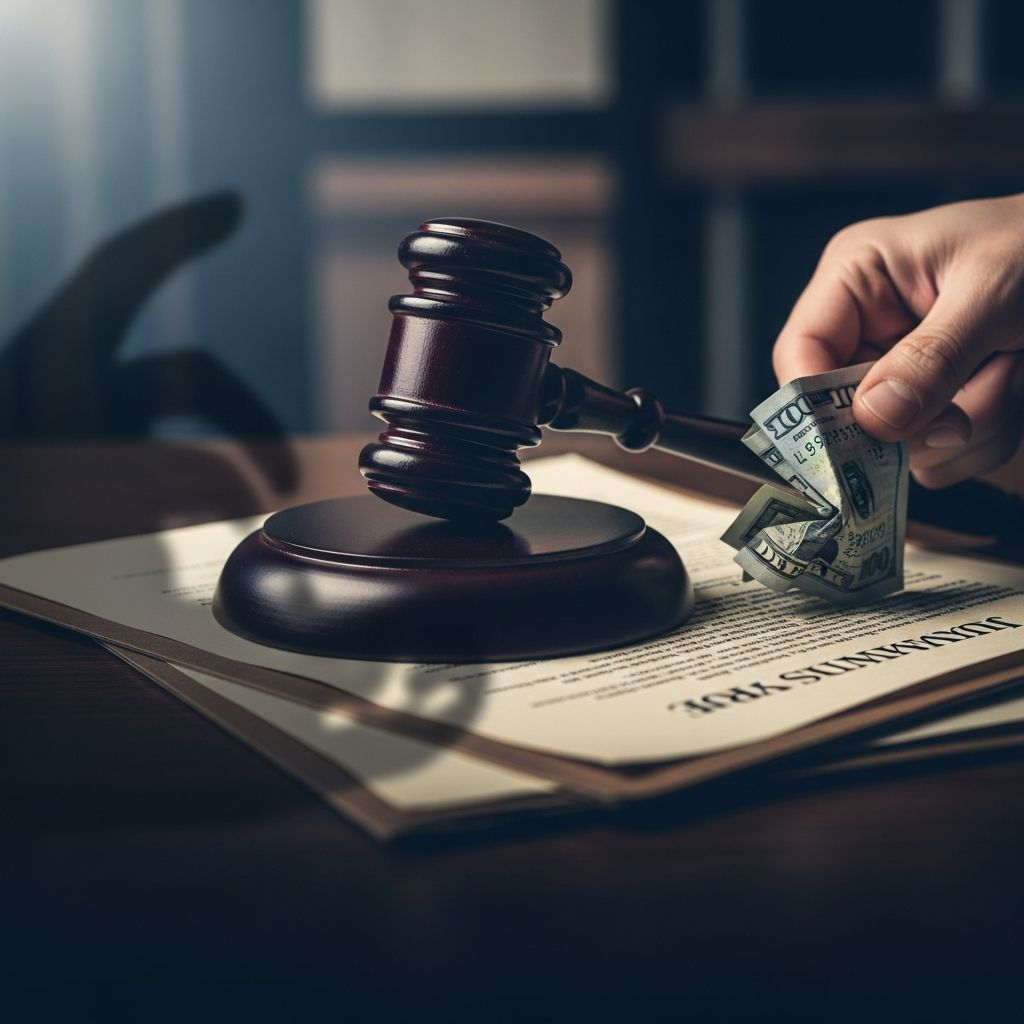
Missing jury duty can lead to real legal trouble — in some courts, that can mean fines or even a warrant if you ignore repeated notices. Scammers know people are afraid of that possibility, so they impersonate law enforcement or court staff and pressure you to pay immediately. Their goal is not justice; it is to steal your money and personal information.
This guide explains how jury duty scams work, what real courts and law enforcement actually do, and the specific steps you can take to protect yourself and others.
What Is a Jury Duty Scam?
A jury duty scam is a type of government imposter scam where criminals pretend to be:
- Police officers or sheriff’s deputies
- U.S. Marshals or federal agents
- Clerks or staff from a local, state, or federal court
They claim you missed jury service and say there is a warrant or contempt charge against you. Then they insist you must pay a fine or provide sensitive information right away to avoid arrest, more penalties, or jail.
How the Scam Typically Unfolds
Scammers use a fairly predictable pattern, but they adapt details to sound local and believable. Here is the usual sequence:
1. Sudden, urgent contact
The scam usually begins with an unexpected:
- Phone call (often showing a spoofed caller ID that looks like a real court or police department)
- Email that appears to come from a court or law enforcement address
The caller or sender often uses an official-sounding title and may provide a supposed badge number, case number, or department name to sound convincing.
2. Frightening claim: you missed jury duty
The imposter tells you that:
- You failed to appear for jury duty, even if you never received a summons
- A warrant has been issued or is about to be issued for your arrest
- You are in contempt of court and face heavy fines or jail time
They rely on your fear and confusion. Many people do not remember every piece of mail they receive or are unsure of the exact rules about jury service, so the story can feel plausible.
3. High-pressure threats and demands
Once the scammer sees you are engaged, they increase the pressure. Common tactics include:
- Insisting you must act immediately or be arrested
- Telling you not to hang up or not to talk to anyone else, claiming you would then be a “fugitive”
- Raising the amount of the supposed fine, or adding extra “fees,” if you hesitate
- Using aggressive, intimidating language or shouting to scare you into compliance
Some scammers even send fake documents, such as bogus warrants or court notices, using stolen logos or seals from real agencies to make their demands look legitimate.
4. The payment or data grab
Ultimately, the scam aims to get money or valuable personal data. Common demands include:
- Paying a “bond,” “fine,” or “fee” immediately
- Providing your Social Security number, birthdate, or other identity details
- Entering information on a fake website that looks like an official court page
They often insist that you use nontraditional payment methods, which make it difficult or impossible to recover your money.
Red Flags: How to Know It’s a Scam
Although scammers improvise, they share several telltale signs. If you notice any of these, treat the contact as a likely scam.
1. Demands for payment over the phone or by email
Courts and legitimate government agencies do not call or email you demanding that you pay a fine immediately to avoid arrest. If you truly owe a fine or have a court issue, you will receive official written communication and be directed to standard payment channels, not pressured by a surprise call.
2. Threats of immediate arrest
Real law enforcement officers do not:
- Call to threaten arrest if you hang up
- Offer to “cancel” a warrant on the spot if you pay
- Negotiate the amount of a fine with you over the phone
Any caller claiming they can keep you out of jail in exchange for instant payment is not following real legal procedures.
3. Unusual payment methods
Scammers frequently demand that you pay only by:
- Gift cards
- Cryptocurrency
- Payment apps or person-to-person transfers
- Wire transfer services
- Prepaid debit cards or cash deposits at a kiosk
Legitimate courts do not require these methods and will never insist that they are the only way to pay.
4. Requests for sensitive personal information
Courts and jury offices do not ask for your full Social Security number, bank account details, or complete birthdate over the phone or by email just to confirm jury duty status. Only scammers try to obtain such details in the context of a supposed missed jury appearance.
5. Caller ID and email that look official — but are not
Scammers often use technologies that make their phone number or email address appear to belong to a real court or law enforcement agency. Caller ID and sender names can be faked. Never rely solely on what appears on your screen as proof of legitimacy.
What Real Courts and Law Enforcement Do (and Don’t Do)
Understanding how the legal system actually handles jury duty helps you separate fact from fiction.
| Real Practice | Scam Behavior |
|---|---|
| Jury summons are sent by official mail, not by surprise threatening calls. | Scammers call or email out of the blue demanding immediate action. |
| If you miss jury duty, follow-up notices or formal actions come in writing through the court. | Imposters say there is already a warrant and only instant payment can stop arrest. |
| Courts may impose fines through documented legal processes. | Scammers negotiate “fines” and “bonds” like a sales pitch, sometimes lowering the amount if you hesitate. |
| Government agencies do not require payment by gift cards, cryptocurrency, or wire transfers. | Imposters insist these methods are the only acceptable form of payment. |
| Legitimate staff encourage you to verify information using official contact details. | Scammers tell you not to hang up, not to call anyone else, and discourage you from checking with the real court or police. |
Newer Variations: Fake Jury Duty Websites and Kiosks
As more people learn not to trust threatening calls, some scammers are shifting tactics. Recent reports describe schemes where victims are directed to:
- A fake website that looks like an official court or government page
- Enter personal information, such as date of birth or Social Security number, supposedly to “look up” how much they owe
- Pay large sums in fines through the site or at a so-called “government payment kiosk” using cryptocurrency or other irreversible methods
There is no such thing as a general-purpose government kiosk where you must go to pay a jury fine in cryptocurrency. When in doubt, ignore any link or URL provided by the caller and instead go directly to the court’s official website by typing the address you know, or using a trusted search to find it.
Immediate Steps to Take If You Get a Suspicious Call or Email
If someone contacts you about missed jury duty and you feel pressured, stop and follow these steps:
1. End the conversation
- Hang up the phone or stop replying to the email.
- Do not provide any personal or financial information.
- Do not click links or open attachments in an unsolicited message.
2. Verify using trusted contact information
- Look up the official phone number or website of the court in your county, state, or federal district.
- Call the jury office or clerk’s office directly and ask if there is any issue with your jury service.
- Use contact details from a government website, not from the caller or email.
Federal and state court systems publish scam alerts and contact information on their official sites, which you can consult to confirm what you experienced.
3. Report the scam
Reporting helps enforcement agencies track patterns, warn others, and sometimes shut down operations. Consider reporting to:
- Your local or state court’s jury office or clerk
- Your state attorney general’s consumer protection division
- Relevant federal consumer protection bodies that collect fraud reports
4. If you paid or shared information, act quickly
If you already sent money or gave personal information:
- Contact your bank, credit union, or card issuer immediately to ask about reversing charges and monitoring your accounts.
- If you used a wire transfer or payment app, reach out to that service right away to report fraud.
- Consider placing a fraud alert or security freeze on your credit files if you shared sensitive identity details.
- Watch your statements and credit reports closely for unauthorized activity.
How to Protect Yourself and Your Community Long-Term
Good habits and awareness can make it much harder for scammers to succeed.
Know your jury duty rights and obligations
- Review how jury service works in your local and federal courts by visiting their official websites.
- Understand when you can be excused or exempt (for example, some jurisdictions excuse older adults or people with certain hardships).
- Keep an eye on your mail so real jury summons are not overlooked.
Strengthen your response to unexpected pressure
- Adopt a personal rule: you will never pay or share sensitive information based solely on an unexpected call or email.
- Give yourself permission to hang up and verify before acting, no matter how urgent the caller sounds.
- Talk through scenarios with family members so they know what to do if they receive a similar call.
Share what you know with those at higher risk
Scammers often target people who may be:
- Older or living alone
- New to the country and unfamiliar with court procedures
- Under stress or managing health issues
Explain to friends, neighbors, and relatives that:
- Courts do not demand immediate payments by phone, email, or text
- Gift cards and cryptocurrency are signs of a scam
- They can always hang up and call the court directly using a trusted number
Frequently Asked Questions (FAQs)
Do people actually get arrested for missing jury duty?
In some jurisdictions, repeatedly ignoring a valid jury summons can lead to fines, a contempt finding, or, in rare cases, an arrest warrant handled through formal legal procedures. Those consequences are communicated through official notices and court actions — not a surprise phone call demanding instant payment.
What if I am not sure whether I missed a jury summons?
If you think you might have missed or misplaced a jury notice, contact the jury office listed on your local or federal court’s official website. Staff can check your status and give you correct instructions, without demanding payment or sensitive personal data over the phone.
Can caller ID be trusted when it shows a court or police number?
No. Scammers can manipulate caller ID to display the name or number of a real court or law enforcement agency. Treat caller ID as information, not proof. Always verify by hanging up and calling the official number yourself.
What if the caller knows my address or other personal details?
Scammers often obtain partial personal information from data breaches, public records, or social media. Having your address or other non-secret details does not prove the caller is legitimate. Rely on how they ask for money or information, not on what they already know.
How can I tell if a website is really a court’s official site?
Type the court’s known web address directly into your browser, or use a trusted search to find the official site. Look for clear government domain endings (such as .gov in the United States) and compare contact information there with what you were given. Never trust a link or URL that comes only from a caller or a suspicious email.
References
- That call or email saying you missed jury duty and need to pay? It’s a scam. — Federal Trade Commission. 2025-03-19. https://consumer.ftc.gov/consumer-alerts/2025/03/call-or-email-saying-you-missed-jury-duty-need-pay-its-scam
- Scammers are using fake websites in a twist on jury duty scams. — Federal Trade Commission. 2025-08-21. https://consumer.ftc.gov/consumer-alerts/2025/08/scammers-are-using-fake-websites-twist-jury-duty-scams
- Did you get a call or email saying you missed jury duty and need to pay? It’s a scam. — Federal Trade Commission. 2024-09-27. https://consumer.ftc.gov/consumer-alerts/2024/09/did-you-get-call-or-email-saying-you-missed-jury-duty-need-pay-its-scam
- Jury Duty Scam Alert. — Tennessee Attorney General’s Office. 2024-08-14. https://www.tn.gov/attorneygeneral/news/2024/8/14/pr24-63.html
- U.S. District Court and U.S. Attorney’s Office Warn Public of Jury Duty Scam. — U.S. Department of Justice, Middle District of Florida. 2023-01-24. https://www.justice.gov/usao-mdfl/pr/us-district-court-and-us-attorneys-office-warn-public-jury-duty-scam
- Jury Duty Scams Warning with Commissioner Melissa Holyoak (video transcript). — Federal Trade Commission. 2024-03-14. https://www.youtube.com/watch?v=QjpIk5DjQTw
- Scam Alert: Do Not Pay Callers or Emailers Who Claim You Missed Jury Duty. — U.S. District Court, Northern District of Georgia. 2024-01-09. https://www.gand.uscourts.gov/news/scam-alert-do-not-pay-callers-or-emailers-who-claim-you-missed-jury-duty
Similar Articles








Read full bio of Sneha Tete




