
Junk Science in Court: The Illusion of Certainty
How unvalidated forensic science threatens the justice system.
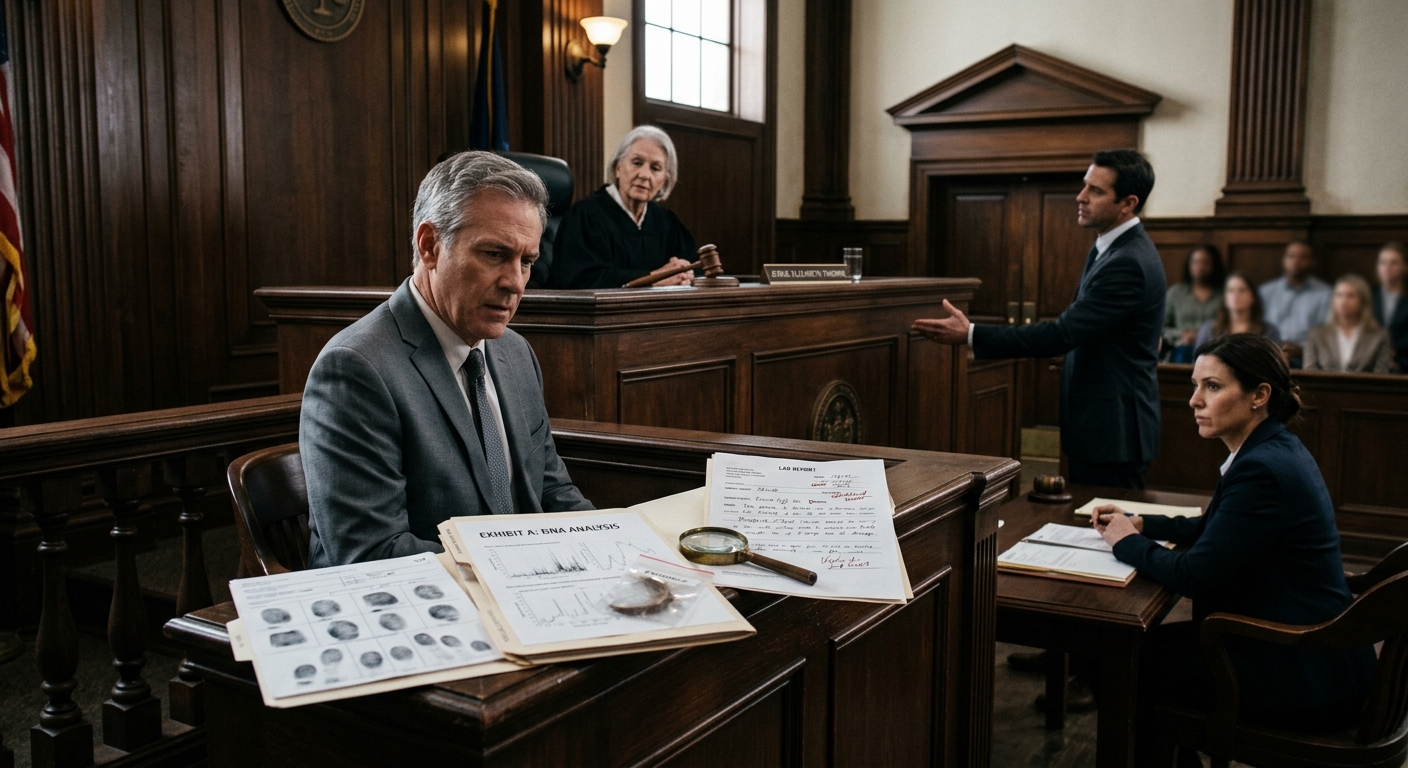
The Myth of the Infallible Crime Lab
For decades, popular culture has painted a picture of crime laboratories as infallible temples of truth. Television shows routinely depict forensic analysts examining a piece of evidence, punching data into a futuristic computer, and generating a one-hundred-percent conclusive match to a suspect. The reality, however, is far more precarious. Behind the sterile laboratory coats and complex terminology lies a disturbing truth: many of the forensic techniques historically used to secure criminal convictions lack rigorous scientific validation.
This phenomenon, sometimes referred to as unvalidated forensics or “junk science,” represents a profound crisis within the criminal justice system. When courts prioritize the appearance of scientific authority over actual empirical validity, the consequences are devastating. Innocent individuals are stripped of their freedom, while the actual perpetrators remain at large. The intersection of science and law is supposed to be a search for objective truth, but without stringent standards, it can easily devolve into a vehicle for tragedy. The assumption that everything presented by a crime lab is empirically proven is a dangerous misconception that has severely compromised the integrity of the justice system.
The Perilous Foundation of Pattern Matching
To understand how unvalidated forensics infiltrated the justice system, one must look at the history of pattern-matching disciplines. Unlike modern DNA analysis, which was born in clinical laboratories and subjected to rigorous academic peer review before entering the courtroom, many traditional forensic methods were developed directly by law enforcement with the primary goal of solving crimes. Disciplines such as bite mark analysis, microscopic hair comparison, footwear impression analysis, and tire tread examination fall under the umbrella of “feature-comparison” or pattern-matching methods.
The fundamental flaw in these disciplines is their profound subjectivity. In a pattern-matching examination, an analyst visually compares a piece of crime scene evidence against a sample taken from a suspect. The analyst then makes a judgment call on whether the two items exhibit enough similarities to be considered a definitive match. However, for most of the twentieth century, these disciplines lacked standardized, objective criteria for what constitutes a match. More importantly, they lacked empirical studies establishing their error rates. No one knew how often a bite mark might randomly resemble the dentition of an innocent person, or how many different people’s hair might look microscopically indistinguishable. There was no scientific consensus on how many “points of similarity” were required to declare a definitive link.
Despite this void of empirical data, these techniques were widely accepted in courtrooms across the nation. Forensic examiners were frequently permitted to testify with absolute certainty, sometimes claiming to a “reasonable degree of scientific certainty” that a suspect was the sole source of a piece of evidence. Juries, lacking the scientific background to question these assertions, predictably took the experts at their word. The sheer weight of an expert witness testifying from the stand often overpowered any reasonable doubt presented by the defense.
The FBI Hair Comparison Scandal: A Wake-Up Call
The dangers of subjective pattern matching are not merely theoretical. They have played out in catastrophic ways in real-world courtrooms, most notably in the realm of microscopic hair comparison. For decades, FBI examiners routinely testified that hairs found at crime scenes matched samples taken from defendants. This testimony was considered highly persuasive and was instrumental in securing countless convictions, including severe capital murder cases where lives hung in the balance.
However, the advent of mitochondrial DNA testing in the late 1990s and early 2000s began to expose severe discrepancies. Advanced DNA tests repeatedly excluded defendants who had been convicted based on hair comparison evidence. Prompted by a series of high-profile exonerations, the Department of Justice and the Federal Bureau of Investigation launched an unprecedented, massive internal review of their microscopic hair comparison unit.
The results, announced in 2015, sent shockwaves through the legal and scientific communities. The FBI formally acknowledged that in more than 90 percent of the trial transcripts reviewed, their examiners had provided flawed testimony. Specifically, examiners frequently overstated the probative value of their findings, presenting microscopic similarities as definitive matches in ways that vastly exceeded the limits of empirical science. In many of these cases, defendants had already served decades in prison, and several had tragically been executed. This staggering revelation underscored a terrifying reality: highly trained experts from the nation’s premier law enforcement agency had been systematically presenting invalid science as absolute truth, fundamentally altering the trajectory of thousands of lives.
Landmark Reports Exposing the Flaws
The FBI’s admission was a symptom of a much broader systemic disease, a disease that leading scientific institutions had been warning about for years. The turning point in the modern understanding of forensic evidence occurred in 2009, when the National Academy of Sciences (NAS) published a groundbreaking report titled Strengthening Forensic Science in the United States: A Path Forward. Commissioned by Congress, the NAS committee conducted an exhaustive review of the forensic science landscape, gathering data from laboratories, legal experts, and scientific researchers.
The conclusions of the 2009 NAS report were historically damning. The committee declared that, with the notable exception of nuclear DNA analysis, no forensic method had been rigorously shown to possess the capacity to consistently and with a high degree of certainty connect a piece of evidence to a specific individual or source. The report highlighted a severe lack of peer-reviewed studies establishing the scientific bases and validity of many widely used methods. It was a clarion call, stating unequivocally that the system was broken and required fundamental overhauls, including the establishment of standardized error rates and the shielding of crime laboratories from prosecutorial influence.
Seven years later, in 2016, the President’s Council of Advisors on Science and Technology (PCAST) issued another monumental report focusing specifically on feature-comparison methods in criminal courts. The PCAST report went a step further than the NAS report by explicitly defining what constitutes “foundational validity” for a scientific method. The council concluded that several common forensic disciplines, including bite mark analysis and certain types of firearms identification, still fell woefully short of basic scientific standards. Regarding bite mark analysis, PCAST stated that the prospects of developing it into a scientifically valid method were so poor that they advised against any further government funding to even attempt to establish its validity.
The Stranglehold of Legal Precedent
Given the unequivocal conclusions of the nation’s top scientific bodies, one might assume that unvalidated forensics would have been immediately banished from criminal proceedings. Yet, the eradication of junk science from courtrooms has been agonizingly slow and fraught with institutional resistance. The primary reason for this inertia is the fundamental difference between the scientific method and the foundational principles of the legal system.
Science is inherently progressive and self-correcting. It demands continuous testing, independent peer review, and the willingness to discard outdated theories the moment new data emerges. The legal system, conversely, is deeply conservative and rooted in the doctrine of stare decisis—the principle of relying on past legal precedent to guide current judicial decisions.
When a defense attorney attempts to exclude bite mark or microscopic hair evidence by citing the NAS or PCAST reports, prosecutors frequently counter by pointing out that such evidence has been admitted by appellate courts for a century. Judges, acting as the designated gatekeepers of evidence, are often highly reluctant to overturn decades of established appellate precedent, regardless of what modern scientific consensus dictates. This creates a dangerous feedback loop: a technique was admitted fifty years ago because no one had the tools to challenge it, and it is admitted today simply because it was admitted fifty years ago. Consequently, the legal system remains stubbornly insulated from scientific progress, continuing to elevate outdated case law over contemporary empirical facts.
The Human Cost: Innocence Lost
The friction between scientific evolution and legal stagnation is not merely an academic debate for scholars to ponder; it exacts a staggering and irreversible human toll. Every single time an unvalidated forensic method is presented to a jury as an objective, infallible truth, the risk of a wrongful conviction skyrockets exponentially. The data surrounding exonerations paints a grim, undeniable picture of this tragic reality.
According to the Innocence Project, an organization dedicated to exonerating the wrongfully convicted through DNA testing and reforming the criminal justice system, the misapplication of forensic science is a primary contributor to severe miscarriages of justice. Their compiled statistics reveal that flawed, unvalidated, or exaggerated forensic science contributed to an astonishing 52 percent of their wrongful conviction exoneration cases.
These staggering statistics represent stolen lives. They represent men and women who spent their youth, their prime earning years, and sometimes multiple decades locked away in maximum-security prisons for heinous crimes they did not commit. Furthermore, the continued reliance on junk science fundamentally undermines general public safety; every time an innocent person is imprisoned based on flawed forensics, the actual perpetrator of the crime is left out on the streets, entirely free to victimize other innocent people.
Charting a Path Forward: Reforming Forensic Evidence
Addressing the deeply rooted crisis of unvalidated forensics requires profound, systemic reform across both the scientific research communities and the legal landscapes. The path forward must absolutely begin with a steadfast, well-funded commitment to independent empirical research. Forensic techniques cannot simply be assumed to be reliable based on an examiner’s tenure; they must be subjected to independent, rigorously controlled academic studies to determine their true accuracy, their repeatability under varying conditions, and their specific, quantifiable error rates.
Furthermore, forensic laboratories must urgently implement robust analytical protocols to minimize the danger of cognitive bias. Currently, many forensic analysts are exposed to extraneous investigative case information—such as the defendant’s prior criminal record, race, or a purported confession—long before they examine the physical evidence under a microscope. “Blind” testing, where analysts are intentionally given only the physical evidence and the minimum necessary context to perform the test, is a crucial step for ensuring that highly subjective conclusions are not unconsciously influenced by prevailing police narratives.
Finally, the legal profession itself must undergo a massive educational transformation. Judges and prosecuting attorneys frequently lack the foundational scientific literacy required to properly scrutinize complex forensic testimony. Defense attorneys must be equipped with the financial resources and expert knowledge to aggressively challenge unvalidated science during crucial pre-trial admissibility hearings. Judges must be willing to fulfill their legal gatekeeping duties, prioritizing reliability over the comfort of outdated legal precedent. Only by bridging the massive chasm between scientific rigor and legal practice can society hope to fulfill the true promise of the justice system: protecting the innocent and uncovering the objective truth.
Frequently Asked Questions (FAQs)
What exactly is considered “junk science” in forensics?
“Junk science” or unvalidated forensics refers to investigative techniques that are presented in a court of law as objective scientific evidence but wholly lack foundational scientific validity. This means they have not been subjected to rigorous, independent empirical testing to establish their accuracy and specific error rates. Prominent examples often cited by legal scholars include bite mark analysis, microscopic hair comparison, and certain subjective forms of bloodstain pattern analysis.
Why are bite marks no longer considered reliable evidence?
Bite mark analysis relies heavily on the underlying premise that human dentition is entirely unique and that human skin can accurately record that unique pattern without distortion. However, the 2016 PCAST report and numerous other independent scientific reviews have conclusively shown that human skin is highly malleable and distorts bite marks significantly based on movement and elasticity. Furthermore, there are no standardized criteria for matching a bite mark to a suspect, leading to an unacceptably high rate of false positive identifications.
What was the significance of the 2009 NAS report?
The 2009 National Academy of Sciences report, Strengthening Forensic Science in the United States, was a monumental watershed moment because it was the first time an independent, prestigious scientific body comprehensively evaluated the various forensic disciplines. It famously concluded that, apart from nuclear DNA analysis, no forensic method had been rigorously proven to consistently link evidence to a specific source, sparking a massive nationwide push for criminal justice reform.
Why do courts continue to allow unvalidated forensics if scientists say they are flawed?
Courts often rely heavily on legal precedent, a doctrine known as stare decisis. Because methods like hair analysis and footwear impressions have been admitted as evidence for many decades across numerous jurisdictions, judges are frequently hesitant to suddenly bar them from the courtroom. The legal system looks backward to established case law, while the scientific method demands forward-looking empirical proof, creating a significant and dangerous lag in the adoption of better forensic standards.
References
- Strengthening Forensic Science in the United States: A Path Forward — National Research Council. 2009-08-01. https://nap.nationalacademies.org/catalog/12589/strengthening-forensic-science-in-the-united-states-a-path-forward
- Forensic Science in Criminal Courts: Ensuring Scientific Validity of Feature-Comparison Methods — President’s Council of Advisors on Science and Technology (PCAST). 2016-09-01. https://obamawhitehouse.archives.gov/sites/default/files/microsites/ostp/PCAST/pcast_forensic_science_report_final.pdf
- FBI Testimony on Microscopic Hair Analysis Contained Errors in at Least 90 Percent of Cases in Ongoing Review — Federal Bureau of Investigation / Department of Justice. 2015-04-20. https://www.fbi.gov/news/pressrel/press-releases/fbi-testimony-on-microscopic-hair-analysis-contained-errors-in-at-least-90-percent-of-cases-in-ongoing-review
- Misapplication of Forensic Science — Innocence Project. 2024-01-01. https://innocenceproject.org/misapplication-of-forensic-science/
Similar Articles








Read full bio of medha deb


