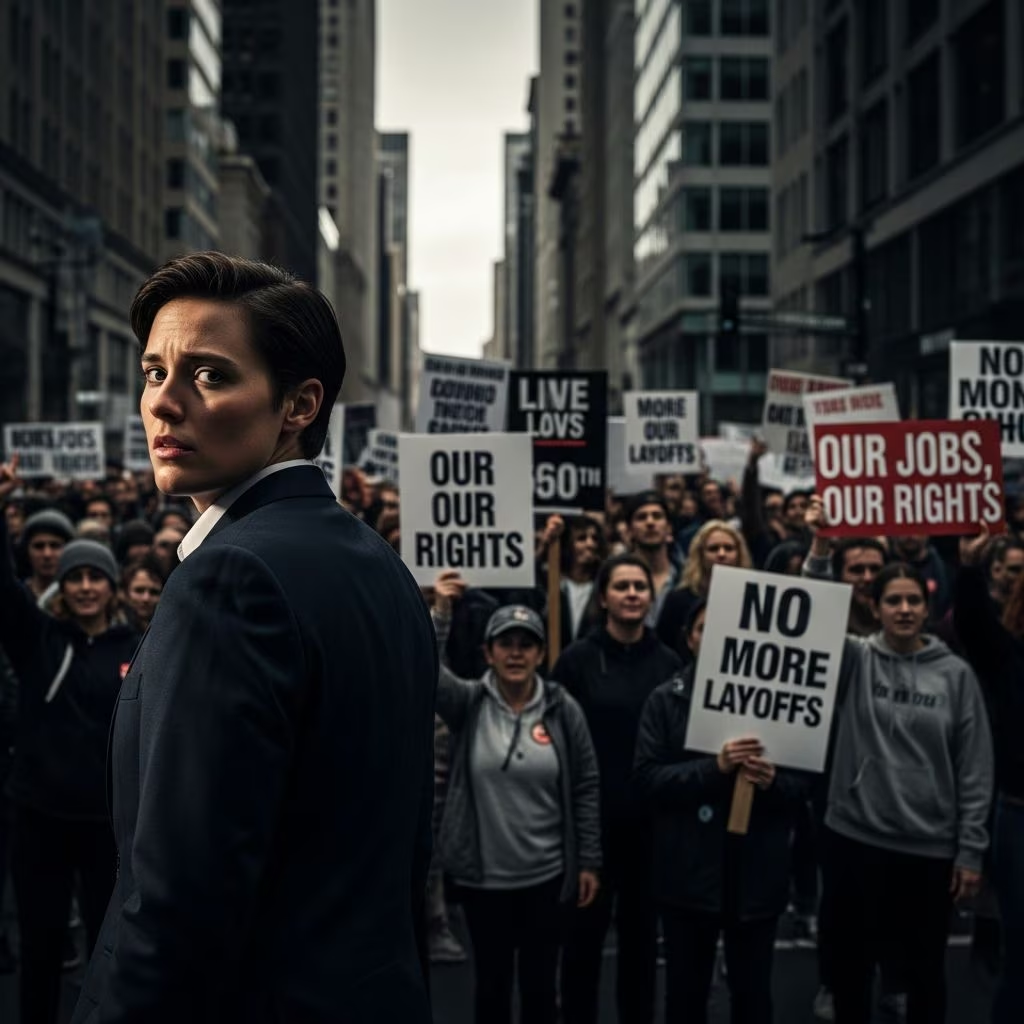
Employees across the United States often wonder if participating in protests could cost them their jobs. While the First Amendment safeguards free speech and assembly, these rights apply primarily to government actions, not private employers. However, federal and state laws provide specific protections for off-duty conduct, political expression, and labor-related activities. This article examines the legal landscape, highlighting when protests are shielded from retaliation and scenarios where termination remains lawful.
Understanding Federal Protections Under the NLRA
The National Labor Relations Act (NLRA) plays a pivotal role in safeguarding employee speech related to workplace conditions. Administered by the National Labor Relations Board (NLRB), the NLRA protects “concerted activities” for mutual aid or protection, which can encompass protests about wages, hours, or other employment terms.
For instance, employees organizing a walkout over unsafe working conditions or unfair pay practices are generally protected, even if it disrupts operations temporarily. However, purely political protests unrelated to job issues—such as those opposing national policies—may not qualify unless they tie back to workplace impacts. Violence, property damage, or blocking access during such actions voids protection, allowing employers to discipline participants.
Employers must avoid threats of firing or other reprisals for protected activities, as this violates the NLRA. Threats of plant closure, benefit loss, or harsher conditions in response to protests are prohibited. Non-unionized workers also benefit from these rules, extending protections beyond traditional union contexts.
State-Specific Safeguards: Spotlight on California
California offers robust employee protections that surpass federal baselines, particularly for political and off-duty conduct. Labor Code Section 1102 prohibits employers from coercing or influencing workers through threats of termination to adopt or abandon specific political actions. This explicitly covers participation in protests advocating for marginalized groups or other legitimate causes.
Sections 96(k) and 98.6 further shield “lawful conduct” during non-working hours away from company premises, including peaceful demonstrations. Thus, attending a rally on personal time without impacting shifts is protected. Employers cannot retaliate based on political beliefs if evidence shows inconsistent treatment of opposing views.
Arrests during protests add complexity. Labor Code Section 432.7 bars using non-conviction arrests in employment decisions, though pending cases may prompt inquiries if they affect business operations. Employees should document peaceful involvement to counter assumptions.
| Scenario | Protected? | Key Law |
|---|---|---|
| Off-duty peaceful protest | Yes | CA Lab. Code §96(k), §98.6 |
| Missing shift without notice | No | Attendance policies |
| Workplace disruption | No, if violent | NLRA limits |
| Political speech on own time | Yes | CA Lab. Code §1102 |
When Protests Cross into Permissible Termination Territory
Not all protest involvement is immune from consequences. Absences without prior approval, even for compelling causes like civil rights marches, can justify discipline under standard attendance rules. For example, skipping a scheduled shift for a Black Lives Matter event without permission allows termination, unlike excused absences.
On-site protests during work hours risk violating conduct policies, especially if they halt productivity or create safety hazards. Employers can enforce rules against blocking exits or vandalism consistently without legal backlash. Walkouts for non-workplace political goals, like international policy opposition, often lack NLRA coverage, treating them as unexcused.
- Notify employer: Seek permission for time off to preempt absence issues.
- Avoid premises: Keep activities off company property during non-work time.
- Document conduct: Photos or witnesses prove peaceful participation.
- Check policies: Review handbooks for off-duty behavior clauses.
Employer Strategies for Managing Activism
Businesses face challenges balancing employee rights with operational needs amid rising activism—a 40% surge in employee-led actions post-COVID. Proactive measures help mitigate risks.
Clear policies on protests, communicated transparently, outline acceptable behaviors and consequences. Training HR on NLRA and state laws ensures compliant responses. Fostering dialogue through town halls addresses grievances early, reducing escalation.
During events, prioritize safety: monitor for hazards, offer remote options, and engage protesters calmly without snap judgments. Post-incident, apply discipline uniformly and debrief to refine policies. For ESG-related protests, empathetic listening can align company values with employee concerns.
Broader Civil Liberties and Protest Rights
Beyond employment, the First Amendment protects assembly from government interference, though police may impose time, place, and manner restrictions. Private employers aren’t bound by this but must heed labor statutes. The California Constitution reinforces free speech, amplifying workplace protections.
Case Studies: Real-World Applications
Consider a tech worker joining an off-site climate protest on a weekend: protected under California law. Contrast with factory employees walkout during shifts for unrelated politics: discipline upheld. An arrest without conviction at a rally can’t justify firing. These illustrate nuanced applications.
Frequently Asked Questions
Can my boss fire me for a social media post about a protest?
If posted off-duty and not disrupting work, California laws protect it as political activity. Workplace posts may fall under conduct rules.
What if the protest is about my company’s practices?
NLRA likely protects concerted complaints about terms of employment.
Does union membership change my rights?
Unions amplify NLRA protections but don’t alter core off-duty rules.
Can employers ask about protest arrests?
Yes, if pending and business-relevant, but no action without conviction.
How do I prove retaliation?
Show disparate treatment of similar views and timing link to activity.
Navigating Activism Safely as an Employee
To minimize risks, employees should plan protests meticulously: secure time off, stay peaceful, and separate from work personas. Employers benefit from inclusive cultures that channel activism productively. Legal recourse exists via NLRB charges or state agencies for violations.
In summary, while job loss risks persist for unprotected actions, laws provide strong shields for lawful, off-duty protests. Awareness empowers both sides.
References
- Employee Protesting Rights in California — Miracle Mile Law Group. 2023. https://miraclemilelaw.com/employee-protesting-rights-in-california/
- Your Rights as Protester: Political Protests by Employees — Legal Aid at Work. 2023. https://legalaidatwork.org/factsheet/your-rights-as-protester-political-protests-by-employees/
- Workplace Protests: Employee Rights and Employer Responsibilities — Anne Loehr Law. 2024. https://www.anneloehr.com/workplace-protests-employee-rights-and-employer-responsibilities/
- Politics, Protests, and Posts: What Employers Can and Can’t Do — Fisher Phillips. 2024. https://www.fisherphillips.com/en/news-insights/politics-protests-and-posts.html
- Employment Protections for Political Protesters in California — Wilmer Harris Law. 2023. https://www.wilmerharrislaw.com/employment-protections-for-political-protesters-in-california/
- Strikes, Pickets and Protest — National Labor Relations Board. 2025-01-10. https://www.nlrb.gov/about-nlrb/rights-we-protect/the-law/employees/strikes-pickets-and-protest