
Jaywalking Laws, Safety, and Your Legal Rights
Understand what jaywalking really means, how laws vary, and how a simple street crossing can affect tickets, safety, and accident claims.
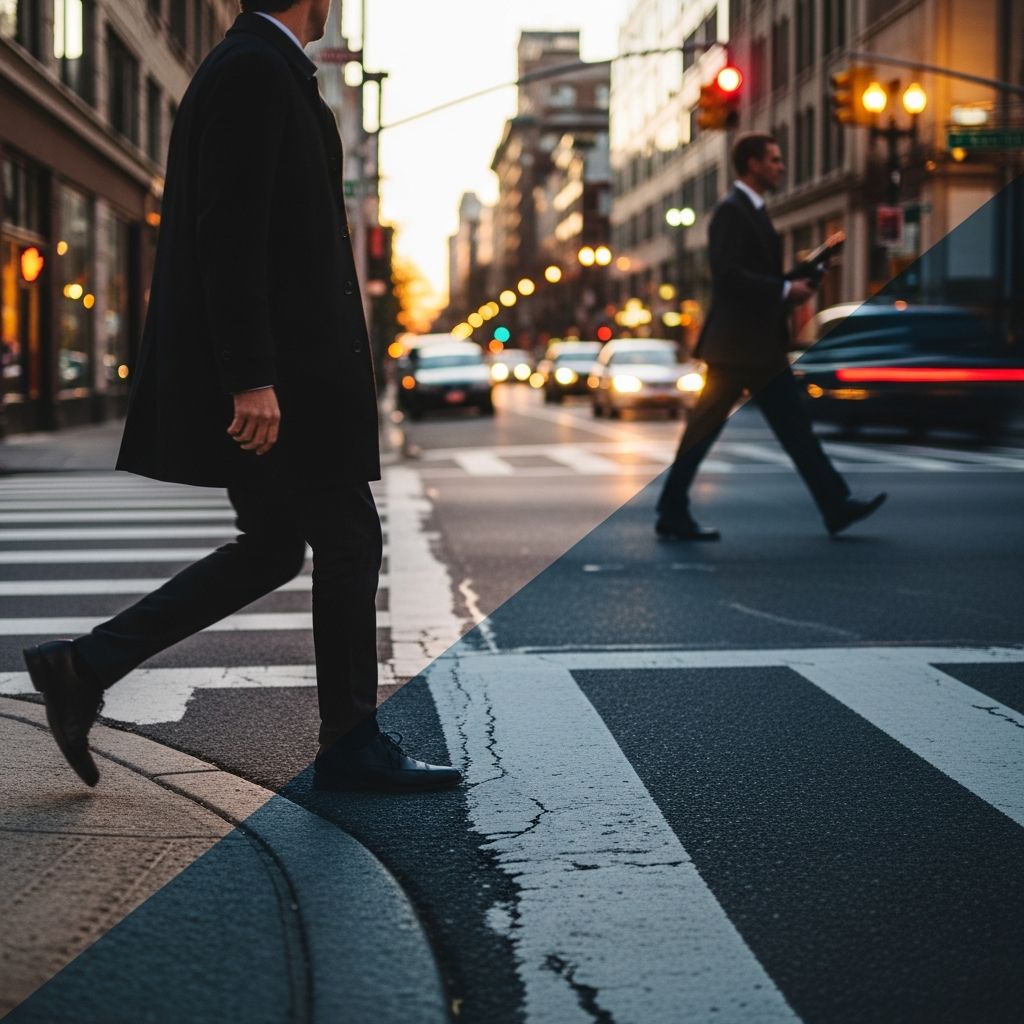
Jaywalking might seem like a minor shortcut across the street, but it is a legally defined act that can lead to tickets, fines, and serious consequences if an accident occurs. Understanding what counts as jaywalking, how rules differ across jurisdictions, and how these rules affect your rights is essential for both pedestrians and drivers.
What Is Jaywalking?
In most places, jaywalking broadly refers to a pedestrian crossing or walking in the roadway in violation of traffic laws. While definitions are usually found in state or local codes rather than in a single universal rule, the behavior typically includes:
- Crossing a road mid-block when a marked crosswalk is nearby.
- Entering the street against a “Don’t Walk” or red pedestrian signal.
- Crossing diagonally at an intersection where this is not allowed.
- Walking in the roadway where a sidewalk is available and required by law.
Some jurisdictions never use the word jaywalking in their statutes, instead describing specific prohibited acts (for example, crossing against a pedestrian signal or failing to yield to vehicles when crossing outside a crosswalk).
Why Do Jaywalking Laws Exist?
Jaywalking laws developed alongside the rise of motor vehicles as a way to organize how road space is shared and to reduce conflicts between pedestrians and drivers. Modern justifications typically focus on three goals:
- Safety: Separating pedestrian and vehicle movements in time and space to reduce collisions.
- Predictability: Helping drivers anticipate where and when pedestrians will cross.
- Liability clarity: Providing legal rules that courts can apply when assigning fault after crashes.
However, research and advocacy organizations have questioned whether strict jaywalking enforcement actually improves safety, pointing out that pedestrian fatalities have risen in recent years despite such laws. Some states and cities are now reconsidering or reforming their approach.
Common Legal Rules for Pedestrians
Although every state and many municipalities have their own detailed codes, several common patterns appear in U.S. pedestrian and crosswalk laws.
When Pedestrians Have the Right of Way
- Marked crosswalks at signalized intersections: When the pedestrian signal is in their favor, pedestrians typically have the legal right of way.
- Unsignalized crosswalks: At many locations, vehicles must yield to pedestrians who are already within a marked or legally recognized unmarked crosswalk at an intersection.
- Designated school crossings: Drivers often face additional duties (such as lower speeds or mandatory stopping) in marked school zones and crossings.
When Pedestrians Must Yield
- Mid-block crossings: If a pedestrian crosses outside a crosswalk, they are usually required to yield the right of way to vehicles.
- Crossing against a signal: Entering the road on a solid “Don’t Walk” or red signal is prohibited and typically requires the pedestrian to wait until a legal indication appears.
- Between controlled intersections: Some laws bar pedestrians from crossing between two adjacent signalized intersections if crosswalks are available at each.
Sidewalk and Roadway Use
- Where sidewalks are provided and usable, pedestrians may be required to use them rather than walk on the roadway.
- In areas without sidewalks, many state laws require pedestrians to walk on the left side of the road facing traffic.
Is Jaywalking Always Illegal?
Jaywalking is illegal in many states, but the details and enforcement practices differ widely. In some places, crossing outside a crosswalk is legal as long as the pedestrian yields to vehicles; in others, it may be prohibited or tightly regulated.
| Legal Aspect | Typical Approach in Many U.S. Jurisdictions |
|---|---|
| Mid-block crossing | Often allowed if no nearby crosswalk, but pedestrian must yield to vehicles. |
| Crossing against signal | Generally prohibited; considered a traffic infraction. |
| Diagonal crossings | Prohibited unless special pedestrian signals/markings permit it. |
| Sidewalk required | Where sidewalks exist, pedestrians may be required to use them, not the roadway. |
| Terminology | Statutes may not use the word “jaywalking,” but describe specific prohibited acts. |
Some jurisdictions have recently moved toward decriminalizing certain forms of jaywalking, focusing enforcement on crossings that create an immediate risk of collision rather than harmless mid-block crossings. These reforms typically leave the underlying right-of-way rules in place, which still matter for determining civil liability in crash cases.
Penalties and Enforcement
Where jaywalking is an offense, it is usually treated as a non-criminal violation similar to a minor traffic ticket.
Typical Consequences
- Fines: Many cities impose fines for crossing against signals or outside crosswalks. Repeat offenses can sometimes lead to increased penalties.
- Citations, not arrests: In most U.S. states, jaywalking is handled by issuing a citation rather than making an arrest, unless other factors (such as refusing to identify oneself) are involved.
- Civil penalties: Some states have replaced criminal or infraction-based penalties with civil fines or assessments for certain pedestrian violations.
How Police Enforce Jaywalking Laws
Police enforcement practices vary by city and time period. In some busy urban areas, officers may conduct focused enforcement campaigns at high-crash locations to remind pedestrians of crossing rules. In other cities, enforcement may be rare and reserved for particularly dangerous behavior, such as entering high-speed traffic or crossing major arterials in the dark.
Recent debates have also highlighted concerns about unequal enforcement of jaywalking laws, with advocates and researchers pointing to data showing that tickets are sometimes disproportionately issued to people of color or to residents of certain neighborhoods. These concerns have motivated some of the recent reforms that limit police stops for minor pedestrian violations.
Jaywalking and Pedestrian Accident Liability
Even where penalties for jaywalking are modest or have been reduced, the underlying rules about lawful and unlawful crossings still affect how fault is assigned in pedestrian crashes.
Comparative and Contributory Negligence
States use different systems to determine how much a pedestrian can recover in a civil lawsuit after a collision:
- Comparative negligence: A pedestrian’s compensation is reduced by their percentage of fault. A jaywalking pedestrian may still recover something, but less than if they had crossed lawfully.
- Contributory negligence (few states): If a pedestrian is found even slightly at fault (for example, by jaywalking), they may be barred from recovering damages from the driver.
In both systems, evidence that a pedestrian violated a crossing rule can be used to argue that they were negligent. Conversely, if a driver failed to yield in a crosswalk where the pedestrian had the right of way, that can strongly support the pedestrian’s claim.
Key Factors in Jaywalking-Related Cases
When insurance companies, lawyers, or courts evaluate a pedestrian crash, some recurring questions include:
- Was the pedestrian inside a marked or unmarked crosswalk at the time of impact?
- What did the pedestrian signal (Walk/Don’t Walk) show?
- Was the pedestrian visible (lighting conditions, clothing, obstructions)?
- Was the driver speeding, distracted, or impaired?
- Were there local ordinances or state rules affecting where pedestrians could lawfully cross?
Because each state’s law is unique, people involved in a pedestrian collision usually benefit from consulting a lawyer familiar with local traffic statutes and negligence rules.
Practical Safety Tips for Pedestrians
Regardless of how strict local jaywalking enforcement is, pedestrians face significant risk when sharing space with vehicles. In the United States, thousands of pedestrians are killed each year, and many more are seriously injured. To reduce risk, consider the following strategies:
- Use crosswalks whenever reasonably possible. Crossing at intersections or marked crosswalks improves visibility and often gives you legal right of way.
- Obey pedestrian signals. Start crossing only on a “Walk” signal and avoid entering the road once the countdown is nearly finished.
- Make eye contact with drivers. Do not assume a driver sees you, even if you have the right of way.
- Be especially cautious at night. Wear bright or reflective clothing and recognize that drivers have less time to react in the dark.
- Avoid distractions. Looking at a phone or wearing noise-cancelling headphones can reduce your ability to detect danger.
Tips for Drivers When Pedestrians Jaywalk
Drivers also carry obligations to act with reasonable care and to do what they can to avoid collisions, even when a pedestrian is crossing illegally.
- Slow down in areas with heavy foot traffic, near transit stops, schools, and entertainment districts.
- Expect unpredictable crossings, especially where mid-block parking, bus stops, or wide roads make crosswalks less convenient.
- Yield when required by law, but also be prepared to brake or change lanes safely when someone appears in the roadway.
- Watch for pedestrians stepping out from between parked cars or from behind large vehicles.
Recent Legal Trends and Policy Debates
Several recent trends are reshaping how lawmakers and communities think about jaywalking.
Decriminalization Movements
Some U.S. states and cities have moved toward reducing or eliminating criminal penalties for certain pedestrian crossing violations. These reforms often:
- Limit police stops to crossings that create an “immediate danger” of a collision.
- Replace criminal charges or traffic infractions with civil penalties.
- Emphasize education and engineering solutions (such as better crosswalk design) rather than ticketing.
Equity and Enforcement Concerns
Advocacy groups and researchers have argued that jaywalking laws are sometimes enforced in ways that disproportionately affect low-income communities and people of color, without clearly improving safety. This has led to calls for:
- Collecting and publishing detailed data on pedestrian stops and citations.
- Reviewing whether crossing rules match actual pedestrian behavior and needs.
- Designing streets so that legal, convenient crossings are available where people naturally want to cross.
What to Do If You Receive a Jaywalking Ticket
If you are cited for a pedestrian crossing violation, you generally have several options:
- Pay the fine: Many jurisdictions allow payment online or by mail, which resolves the case but may count as an admission of responsibility.
- Contest the ticket: You can typically request a hearing, present your version of events, and argue that you did not violate the law or that the officer misinterpreted the situation.
- Seek legal advice: Consulting an attorney may be helpful if a serious injury, significant fine, immigration concern, or related criminal charge is involved.
Because rules differ, it is important to check the instructions on the citation and any relevant state or city court website.
Frequently Asked Questions (FAQs)
Is jaywalking a crime?
In many jurisdictions, jaywalking is treated as a non-criminal infraction or civil violation rather than a misdemeanor or felony, meaning it typically results in a ticket and fine rather than arrest.
Can I be found at fault in an accident if I was jaywalking?
Yes. If you crossed in violation of pedestrian rules, that conduct can be used to argue that you were negligent and may reduce or bar your ability to recover damages, depending on your state’s negligence system.
Is it always illegal to cross outside a crosswalk?
No. In some states, crossing mid-block is legal if no nearby crosswalk is available and you yield to traffic. In others, local ordinances may limit where you can cross. You need to check the rules in your specific area.
Does decriminalizing jaywalking mean there are no rules?
Not usually. Even where penalties are reduced, pedestrians still must follow general right-of-way rules, and their conduct can still affect civil liability if a crash occurs.
Where can I find my state’s pedestrian laws?
You can usually find them in the state vehicle code or traffic statutes, often under sections labeled “pedestrians,” “crosswalks,” or similar. Some legal resources compile crosswalk and pedestrian rules for all 50 states for reference.
References
- Jaywalking — Wikipedia (summary of legal definitions and history, consulted for background; primary legal rules are contained in cited statutes and reports). 2024-03-10. https://en.wikipedia.org/wiki/Jaywalking
- Is Jaywalking Illegal, and Why? — ConsumerShield. 2024-02-01. https://www.consumershield.com/injuries-accidents/car-accidents/jaywalking-illegal
- What Is Jaywalking And Is It Really Illegal? — Traffic Safety Store. 2023-06-15. https://www.trafficsafetystore.com/blog/what-is-jaywalking-and-is-it-really-illegal/
- Pedestrian and Crosswalk Laws in All 50 States — Matthiesen, Wickert & Lehrer, S.C. 2023-01-05. https://www.mwl-law.com/resources/pedestrian-crosswalk-laws-50-states/
- Freedom to Move — America Walks. 2022-11-30. https://americawalks.org/campaigns/freedom-to-move/
- “Jaywalking” and the Rules for Pedestrians — International Students Office, MIT. 2020-08-20. https://iso.mit.edu/americanisms/jaywalking-and-the-rules-for-pedestrians/
Similar Articles








Read full bio of medha deb


