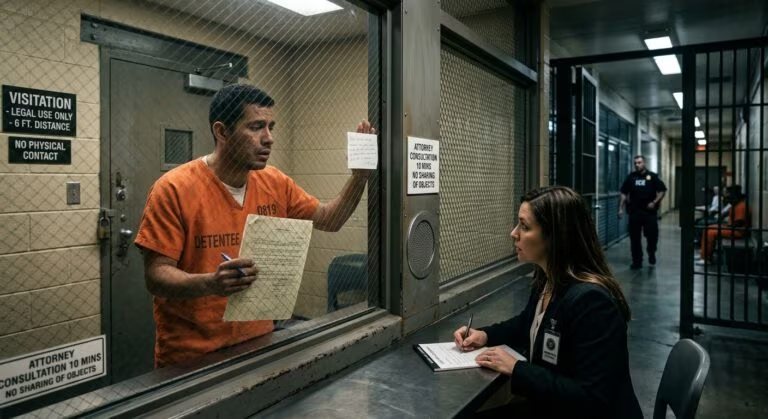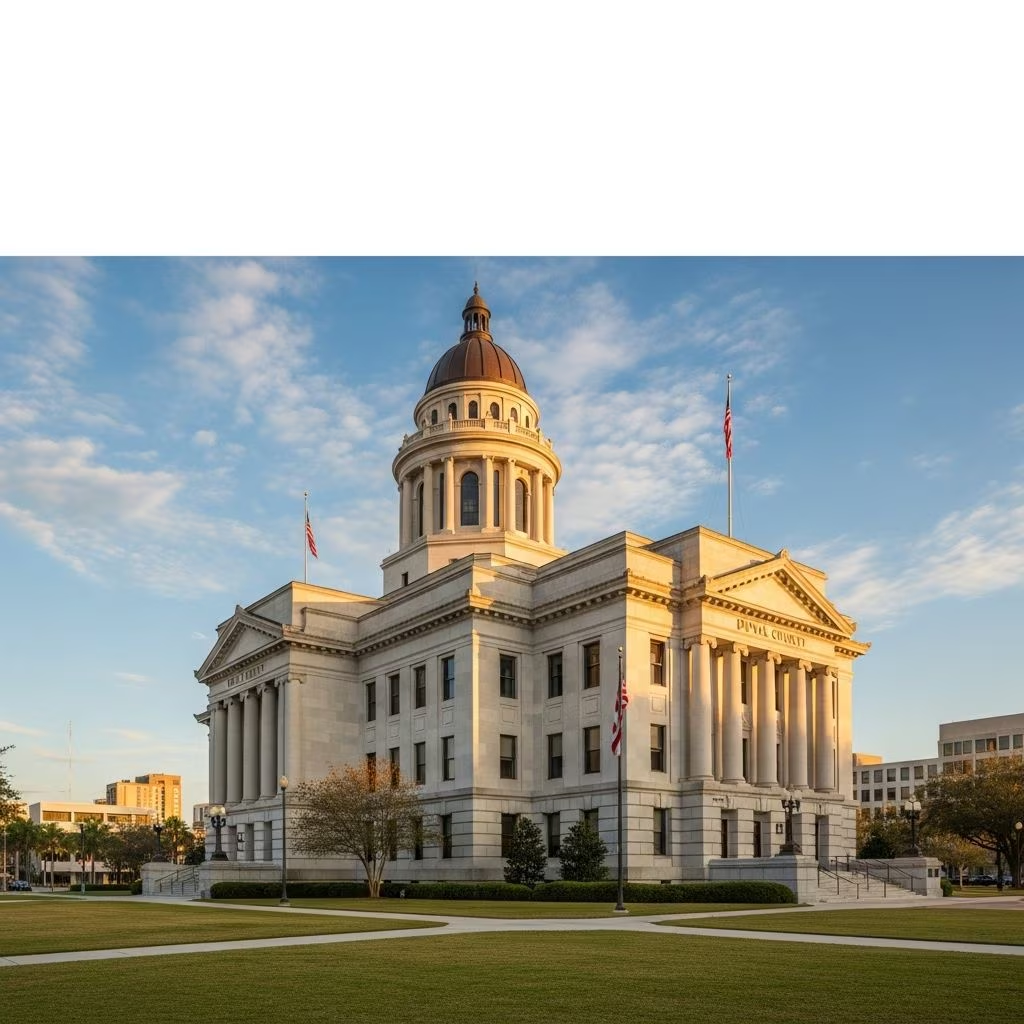
Jacksonville, Florida is home to several important courthouses that serve residents of Duval County and the surrounding area. These buildings house both state courts and federal courts, each with different powers, case types, and procedures. Knowing which courthouse you need and what to expect when you arrive can save significant time, stress, and confusion.
This guide explains how the local court system is organized, highlights major courthouses that people in Jacksonville commonly use, and offers practical tips for navigating a court case or visit.
How the Court System Works in Jacksonville
Courts in Jacksonville operate within two overlapping systems:
- Florida state courts, which handle most criminal, family, probate, and general civil disputes under Florida law.
- Federal courts, which hear cases that arise under U.S. law, the U.S. Constitution, or involve specific federal subject areas.
Understanding this distinction helps you quickly determine whether your matter belongs in a state courthouse or a federal courthouse.
Florida State Courts Serving Jacksonville
Jacksonville is in the Fourth Judicial Circuit of Florida, which covers Duval, Clay, and Nassau counties. Within this circuit, there are two main types of state trial courts:
- Circuit Court (general jurisdiction)
- County Court (limited jurisdiction)
Both levels sit in Jacksonville, primarily at the Duval County courthouse complex.
Florida Circuit Court (Fourth Judicial Circuit)
The Circuit Court is often described as a court of general jurisdiction because it can hear a broad range of cases.
Typical Circuit Court matters include:
- Felony criminal cases and related serious offenses
- Civil lawsuits over a statutory threshold (for many disputes, this is more than $50,000 under current Florida law)
- Family law issues, such as divorce, child custody, child support, and paternity
- Probate cases, including estates, guardianships, and certain mental health proceedings
- Juvenile delinquency and juvenile dependency matters
- Real property disputes, such as actions to determine title and boundaries
- Requests for injunctions and certain extraordinary writs (for example, habeas corpus, mandamus)
Florida County Court
County Courts in Florida are created by statute and have more limited authority than Circuit Courts. Their jurisdiction typically includes:
- Misdemeanor criminal cases and local ordinance violations
- Civil disputes up to a statutory cap (traditionally lower-value disputes)
- Small claims cases within a specified dollar limit
- Landlord–tenant and eviction actions
- Most traffic infractions and non-criminal traffic matters
In Duval County, both Circuit and County Court divisions operate within the same courthouse facility, but their courtrooms and clerks are organized by division and case type.
Federal Courts Serving Jacksonville
Federal courts are separate from state courts and derive their authority from the U.S. Constitution and federal statutes. The federal court system has three primary levels:
- U.S. District Courts (trial courts)
- U.S. Courts of Appeals (intermediate appellate courts)
- U.S. Supreme Court (highest federal court)
Florida is divided into the Northern, Middle, and Southern federal judicial districts. Jacksonville falls within the Middle District of Florida, which maintains a federal courthouse in the city.
In federal district court, judges hear both civil and criminal cases under federal law, often with a jury. Federal magistrate judges assist district judges by handling preliminary matters and some lower-level proceedings.
Major Courthouse Types You May Encounter
Most people in Jacksonville will interact with one of two main courthouse categories:
- A large county courthouse complex that houses Florida trial courts and various administrative offices
- A federal district courthouse for U.S. District Court proceedings
Typical Services at the Duval County Courthouse Complex
Although individual layouts can change and you should always check the latest information from official sources, many county courthouse complexes in Florida offer similar types of services under one roof.
Common services and offices include:
- Clerk of Courts windows for paying filing fees, obtaining certified copies, or checking case records
- Civil filing counters for new lawsuits, small claims, and eviction cases
- Criminal divisions where arraignments, pretrial hearings, and trials are scheduled
- Family law and domestic violence intake areas for petitions, injunctions, and support issues
- Probate and guardianship staff to process estate and incapacity proceedings
- Traffic and misdemeanor payment windows
- Self-help or pro se assistance centers that provide forms and basic guidance (not legal advice)
Typical Functions of the Federal Courthouse in Jacksonville
The federal courthouse in Jacksonville, as part of the Middle District of Florida, is focused on federal matters such as:
- Federal criminal prosecutions, often brought by the U.S. Attorney’s Office
- Civil rights lawsuits under federal law
- Federal question cases involving U.S. statutes or constitutional issues
- Diversity jurisdiction cases between citizens of different states meeting specific requirements
- Certain bankruptcy appeals or matters closely tied to federal statutes
Security procedures are generally stricter at federal courthouses, and electronic devices may be subject to tighter restrictions than in some state facilities.
Comparing State and Federal Courthouses in Jacksonville
The following table highlights major differences that matter to most visitors.
| Feature | Florida State Courthouse (Duval) | Federal Courthouse (Middle District of Florida) |
|---|---|---|
| Primary authority | Florida Constitution and Florida statutes | U.S. Constitution and federal statutes |
| Common case types | Felonies, misdemeanors, traffic, family law, probate, landlord–tenant, most civil disputes | Federal crimes, civil rights, federal questions, diversity cases, certain federal administrative appeals |
| Trial level | Circuit and County trial courts | U.S. District Court |
| Appeals go to | Florida District Court of Appeal, then possibly Florida Supreme Court | U.S. Court of Appeals (11th Circuit), then possibly U.S. Supreme Court |
| Judges selected by | Elected by voters (or appointed to fill vacancies) for fixed terms | Appointed by the President, confirmed by the Senate, serve during good behavior (life tenure) |
Preparing for a Visit to a Jacksonville Courthouse
Whether you are a party to a case, a witness, or simply attending as a member of the public, being prepared can make your courthouse visit smoother and more efficient.
Before You Go
- Confirm the correct courthouse and division. Check your notice or contact the clerk’s office to verify the exact building, floor, and courtroom.
- Review your case information. Have your case number, party names, and any hearing notices available.
- Plan extra time for security. Both state and federal courthouses use metal detectors and screening procedures that can create lines.
- Check device policies. Federal courthouses often restrict phones, cameras, and laptops more than state courts. Review rules ahead of time to avoid having to return items to your vehicle.
- Gather necessary documents. Bring copies of any filings, identification, and supporting evidence you may need.
What to Expect at Security
Most courthouses in Jacksonville use security practices similar to other courts nationwide. While details vary, visitors can generally expect:
- Metal detectors at the entrance
- X-ray screening of bags and briefcases
- Prohibitions on weapons, sharp objects, and certain electronic devices
- Photo identification required in some facilities, especially federal buildings
Arriving 30–45 minutes early is often recommended, particularly for morning dockets when many people enter the building at once.
Inside the Courthouse
After you clear security:
- Find the directory or information desk to confirm your courtroom location.
- Check posted dockets or electronic screens for case lists and hearing times.
- Locate restrooms and waiting areas near your courtroom if you anticipate delays.
- Turn off or silence your phone before entering any courtroom.
Common Case Types in Jacksonville Courts
Different legal disputes are filed in different divisions and sometimes in different systems altogether. The following overview shows where frequent case types typically belong.
Criminal Cases
- State felonies (such as serious drug offenses, robbery, or homicide) are prosecuted in the Circuit Court of the Fourth Judicial Circuit.
- State misdemeanors and city ordinance violations are generally handled in County Court.
- Federal crimes (for example, certain firearms, immigration, or large-scale fraud offenses) are prosecuted in the U.S. District Court for the Middle District of Florida.
Civil and Family Cases
- High-value civil disputes (contract conflicts, serious personal injury suits, real estate litigation) usually proceed in the Circuit Civil division.
- Lower-value claims, including many small claims, go to County Court.
- Divorce, custody, and support actions are filed in family law divisions of Circuit Court.
- Probate and guardianship matters are managed through Circuit Court probate divisions.
- Cases involving federal questions or diversity jurisdiction may instead be filed in federal district court.
Self-Representation vs. Hiring an Attorney
People in Jacksonville have the right to represent themselves in most civil matters, but the court system can be complex. Florida’s trial courts are responsible for upholding legal rights and providing a fair forum, but they cannot give individual legal advice.
Consider hiring a licensed attorney if:
- Your case involves serious criminal charges or risk of incarceration
- There is a substantial amount of money or valuable property at stake
- Your matter concerns child custody, relocation, or complex support issues
- You receive documents from a federal agency or notice of a case in federal court
For simpler legal issues, especially in County Court or small claims, some people choose to proceed without counsel, using publicly available forms and instructions. Always review official court resources and consider at least consulting a lawyer before making that decision.
Frequently Asked Questions (FAQs)
Q: How do I find out which Jacksonville courthouse my case is in?
A: Review your court notice or citation, which should list the court name, division, and address. If you are unsure, contact the appropriate clerk of court and provide your full name, case number if available, and the type of matter (for example, traffic ticket, eviction, or federal civil case). The clerk’s staff can confirm the correct courthouse and courtroom information but cannot give legal advice.
Q: What is the difference between Circuit Court and County Court in Duval County?
A: In general, Circuit Court hears more serious cases: felonies, higher-value civil disputes, family law, juvenile, and probate matters. County Court handles misdemeanors, traffic offenses, and lower-value civil cases, including many small claims and landlord–tenant disputes. Both operate at the trial level but have different jurisdictional limits.
Q: When does a case go to federal court instead of state court in Jacksonville?
A: A case typically goes to federal court when it involves a federal statute, the U.S. Constitution, the federal government as a party, or certain disputes between citizens of different states that meet specific requirements for diversity jurisdiction. Federal criminal prosecutions, major civil rights suits, and many cases involving federal agencies are heard in U.S. District Court rather than in state court.
Q: Are Jacksonville courthouses open to the public?
A: Most court proceedings are presumed to be open to the public unless restricted by law, court rule, or a specific judicial order. However, some matters, such as certain juvenile cases or mental health proceedings, may be confidential or closed. All visitors must comply with courthouse security and conduct rules.
Q: Where can I find reliable information about court rules and procedures?
A: For state cases, consult official resources from the Florida State Courts System and the websites of the Fourth Judicial Circuit or the Duval County clerk. For federal matters, review information provided by the U.S. District Court for the Middle District of Florida and the U.S. Department of Justice. These sources publish up-to-date rules, forms, and procedural guidance.
References
- About the Courts – Fourth Judicial Circuit — Fourth Judicial Circuit of Florida. 2024-01-01. https://www.jud4.org/about-the-courts
- Florida’s Courts: A Layman’s Guide — Office of the State Courts Administrator, Florida. 2017-10-01. https://www.circuit5.org/wp-content/uploads/2017/10/floridas-courts.pdf
- Federal and Florida Court System — Swisher Library, Jacksonville University. 2023-05-15. https://library.ju.edu/court-systems/federal-court
- Circuit Civil – Duval County Clerk of Courts — Duval County Clerk of Courts. 2024-02-01. https://www.duvalclerk.com/departments/civil-court-services/circuit-civil
- Fourth Judicial Circuit — Fourth Judicial Circuit of Florida. 2024-01-01. https://www.jud4.org
- Introduction to the Federal Court System — U.S. Department of Justice. 2020-09-22. https://www.justice.gov/usao/justice-101/federal-courts
- Federal Judicial Districts of Florida — U.S. District Court, Southern District of Florida. 2022-01-01. https://www.flsd.uscourts.gov/federal-judicial-districts-florida