
Is Storm Chasing Legal? Rights, Risks, and Emerging Rules
Explore when storm chasing is legal, where it crosses the line, and how new state rules and safety concerns shape this extreme-weather hobby.
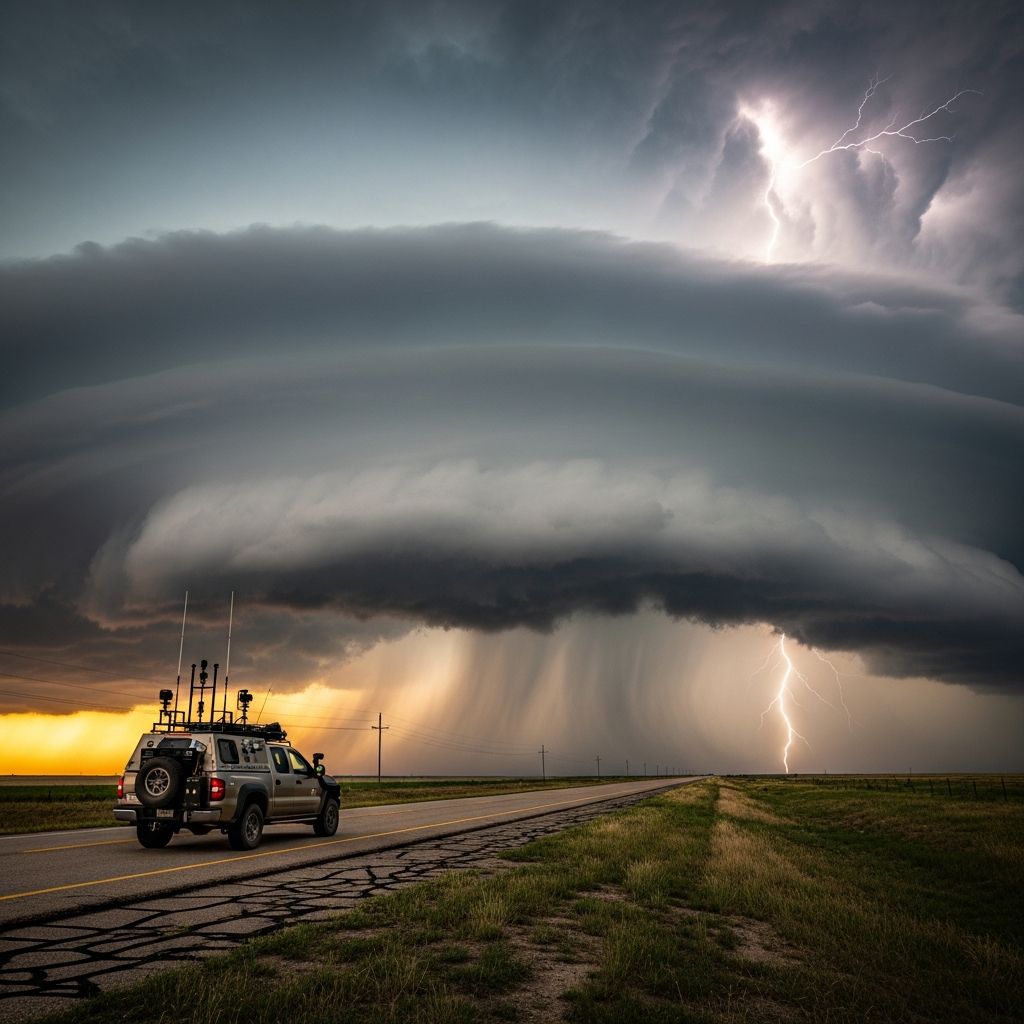
Storm chasing has moved from niche hobby to mainstream fascination, fueled by social media, live streams, and dramatic footage from tornado alleys across the United States. But as more people jump into cars and head toward severe weather, a natural question arises: is storm chasing actually legal? This guide explores how existing laws apply to storm chasers, why some states are considering new licensing rules, and what anyone chasing storms needs to know about safety and liability.
What Does “Storm Chasing” Really Mean?
The law almost never uses the phrase storm chasing directly. Instead, it regulates the behaviors associated with chasing:
- Driving toward or near severe thunderstorms, tornadoes, hurricanes, or hail-producing storms
- Parking along highways or on shoulders to observe or film storms
- Entering damaged areas after a storm passes
- Streaming or reporting live information for the public, media outlets, or research groups
In practice, a storm chaser is anyone who deliberately travels to observe, photograph, measure, or document severe weather. That can include:
- Casual hobbyists who simply follow radar and drive toward storms
- Professional media storm trackers hired by TV stations or digital outlets
- University and government researchers collecting scientific data
- First responders and emergency managers verifying damage or threats
Lawmakers tend to be most concerned with how storm chasers use public roads, whether they interfere with emergency response, and whether their actions endanger themselves or others.
Is Storm Chasing Itself Illegal?
In the United States, simply deciding to follow a storm or drive into an area under a tornado warning is not illegal by default. There is no nationwide ban on storm chasing, and most states do not have a specific statute that prohibits the activity as such.
Instead, storm chasers are governed by the same rules that apply to all drivers and pedestrians, including:
- Traffic regulations (speed limits, stop signals, lane use)
- Trespassing laws on private or restricted land
- Reckless or negligent driving standards
- Obligations to yield to emergency vehicles and follow road closures
When storm chasing becomes dangerous or unlawful, it is almost always because a chaser violates one of these general laws, not because the person is a storm chaser in name.
How Traffic Laws Shape What Chasers Can and Cannot Do
Most legal risk for storm chasers occurs on the road. While some states are now contemplating special rules for professional chasers, ordinary drivers must follow standard traffic codes.
| Issue | How the Law Applies to Chasers | Potential Consequences |
|---|---|---|
| Speeding to catch a storm | Speed limits apply regardless of weather; only recognized emergency vehicles have special privileges in most states. | Fines, points on license, or enhanced penalties if speeding contributes to a crash. |
| Running red lights or stop signs | Non-emergency vehicles must stop; professional trackers need special authorization to lawfully proceed through signals. | Traffic citations; possible criminal charges if a collision causes injury. |
| Blocking roadways or intersections | Many state laws require that vehicles do not obstruct traffic or interfere with emergency operations. | Citations, towing, or liability if obstruction worsens outcomes in an emergency. |
| Driving on closed roads | Road closure orders generally apply to all civilians; exceptions may be made for authorized emergency or licensed response vehicles. | Fines, removal by law enforcement, and increased civil liability for resulting harm. |
States such as Oklahoma are now debating whether certain professional storm trackers should be treated as a type of emergency responder with limited authority to exceed speed limits or proceed through red lights once conditions and training requirements are met.
Emerging Trend: Optional Licensing for Professional Storm Trackers
In recent years, portions of the central United States—especially states in the traditional “tornado alley”—have seen a surge in storm chasing activity. This has led to occasional traffic congestion at critical intersections during tornado outbreaks and raised concerns from public safety officials.
Some lawmakers have begun experimenting with a new category of regulated participant: the licensed severe weather tracker or professional storm chaser. For example, legislation considered in Oklahoma would create an optional license for chasers who are:
- Professionally employed or contracted by a media outlet, or
- Affiliated with specified higher-education or research programs
Under such proposals, licensed trackers could receive limited privileges similar to other emergency response vehicles, such as:
- Using designated flashing lights during defined severe weather events
- Proceeding through red lights or stop signs after yielding and ensuring it is safe
- Driving on some otherwise closed roads during a qualifying weather emergency
These measures are designed to help experienced, vetted chasers provide real-time information to media outlets and emergency managers without being slowed by congestion, while still imposing background checks, insurance requirements, and visible identification on licensed participants.
What a Licensing Regime Typically Requires
Although details vary between proposals, bills under discussion often include requirements such as:
- Submitting to a criminal background check before a license is issued
- Providing proof of valid motor vehicle insurance for the chasing vehicle
- Demonstrating affiliation with a recognized media outlet or qualifying institution
- Displaying license and sponsor numbers on the vehicle when operating under the license
- Paying an initial licensing fee and annual renewal fees to cover administration costs
Importantly, such bills often state explicitly that amateur or hobbyist storm chasing remains legal and unchanged. The licensing system instead creates a special, optional status for certain professionals who want added road privileges and recognition.
Federal and State Safety Priorities During Severe Weather
Even where storm chasing is allowed, government agencies emphasize that personal safety and non-interference with operations are paramount. The National Weather Service (NWS) issues watches and warnings for severe thunderstorms, tornadoes, and other hazards, and works closely with state emergency management to coordinate alerts.
During active events, state and local authorities often:
- Close especially dangerous roads or bridges
- Restrict access to disaster zones to authorized personnel
- Encourage the public to shelter rather than travel toward storms
Storm chasers who ignore these measures—by entering damaged neighborhoods early, interfering with evacuation or rescue, or causing new crashes during tornadic events—can face legal consequences under existing traffic, obstruction, or emergency-management statutes.
Trespassing and Access to Land
Another key legal boundary for storm chasers is property law. Severe weather often strikes rural areas composed of farms, ranches, and privately owned open land. While a roadside shoulder may be public or easement space, the adjacent field, driveway, or barn is almost always private property.
Storm chasers can run into legal trouble if they:
- Drive onto private fields or farm roads without permission
- Climb fences or enter barns or sheds to get better footage
- Walk into damaged structures following a tornado without the owner’s consent
In most states, entering private property without authorization can be a civil or criminal offense, depending on the circumstances and intent. Penalties may increase if the trespass occurs in an active disaster area where authorities have limited access for safety reasons.
Liability: When Chasing Goes Wrong
The most serious legal issues arise when a storm chase causes harm to others. Even if chasing is not prohibited, a chaser can still be held liable under negligence law for careless conduct.
Civil liability typically becomes an issue when:
- A chaser’s driving causes a crash that injures another motorist or pedestrian
- Improper parking or blocking of a road forces others into danger
- Unauthorized use of flashing lights or sirens misleads drivers about who has the right of way
Courts generally use a reasonable person standard to evaluate negligence. A storm chaser, like any other driver, is expected to act as a reasonably prudent person would under similar circumstances. If chasing a storm leads someone to disregard basic safety, they can face both civil lawsuits and, in extreme cases, criminal charges.
Insurance considerations also matter. Ordinary auto insurance policies may cover traffic accidents that occur during a recreational chase, but coverage could be challenged if the chaser is:
- Operating commercially without disclosure to the insurer
- Engaged in obviously reckless or intentional risk-taking
- Using unapproved lights or vehicle modifications that violate local codes
Professional chasers working for media outlets or universities often carry additional liability coverage or operate under institutional policies, another reason some states want them formally identified and licensed.
Ethics, Crowding, and the Unwritten Rules of the Road
Beyond written law, a set of informal ethical norms has developed within the storm chasing community. Many experienced chasers emphasize:
- Never blocking intersections or narrow rural roads, especially near small towns
- Yielding space to first responders and clearly marked emergency vehicles
- Providing real-time reports to the NWS via approved channels when safe to do so
- Avoiding disaster tourism and respecting storm survivors’ privacy
Congested chase zones can delay evacuations and make already dangerous weather more deadly. While not always illegal, poor etiquette can quickly turn into legal exposure when roads clog or accidents occur.
Best Practices for Safer, Lawful Storm Chasing
Anyone considering storm chasing—whether once-in-a-lifetime or as a recurring hobby—should take steps to reduce both physical and legal risk.
- Get formal weather education. Many community colleges, universities, and online programs offer introductions to severe storm structure, radar interpretation, and warning systems.
- Follow official guidance. Track warnings from the National Weather Service and local emergency management rather than relying solely on social media or word of mouth.
- Know state and local traffic codes. Understand rules about road shoulders, parking, lights, and closed roads in the areas you plan to chase.
- Never impersonate an emergency vehicle. Unauthorized use of sirens, red/blue lights, or misleading markings on a vehicle can itself be a criminal offense in many states.
- Stay off private land without consent. Use public roads, pull-outs, and designated observation areas whenever possible.
- Respect post-storm restrictions. If authorities limit access to damaged areas, do not enter until the zone is reopened or you have explicit permission.
International Perspectives: Not Just a U.S. Issue
While much of the public conversation focuses on tornado alley, interest in storm chasing extends to countries such as Canada, Australia, and parts of Europe. Legal frameworks abroad can differ substantially. Some regions strictly limit access to disaster zones or heavily regulate private use of emergency-style lighting and markings on vehicles, even more so than many U.S. jurisdictions.
Anyone planning to chase outside their home country must research:
- Local traffic and emergency-management laws
- Import and insurance rules for vehicles and equipment
- Restrictions on operating drones near storms or disaster areas
Drones, in particular, are subject to aviation and privacy regulations in many countries, making it essential to check civil aviation authority guidance before using them to film storms.
Frequently Asked Questions About the Legality of Storm Chasing
Q: Can a state outright ban storm chasing?
A: In theory, a state could pass laws that significantly restrict intentional travel into declared emergency zones or high-risk areas during active severe weather. In practice, most legislation has focused on regulating behavior—traffic conduct, access to closed roads, or impersonation of emergency vehicles—rather than banning chasing itself.
Q: Do I need a special license to chase storms?
A: At present, most U.S. states do not require a special license for hobbyist storm chasers. Some states are exploring optional licenses for professional severe weather trackers working with media or research institutions, mainly to grant limited road privileges and clarify their status as part of an organized emergency response.
Q: Are storm chasers considered emergency responders?
A: Ordinary storm chasers are not treated as emergency responders. Pending or proposed laws may categorize licensed professional trackers in a way that allows them to be treated similarly to emergency vehicles during specific weather events, but this status is carefully defined and limited.
Q: If I stream storms online, does that change my legal status?
A: Streaming by itself does not generally create a special legal status. You remain subject to the same driving, trespass, and safety rules as anyone else. If you are paid by a media outlet or sponsor, you may need to consider additional contractual, tax, and insurance obligations, but those are separate from basic storm chasing legality.
Q: What should I do if I witness damage or injuries while chasing?
A: Your first obligation is personal safety—do not put yourself in additional danger. When safe, contact emergency services (such as 911 in the U.S.) to report the location and apparent severity. Many experienced chasers also relay critical observations to the National Weather Service through official reporting channels, which can help improve warnings for others.
References
- Legislators table storm-chaser licensing bill for further study — The Journal Record. 2025-04-11. https://journalrecord.com/2025/04/11/legislators-table-storm-chaser-licensing-bill-for-further-study/
- Severe Weather 101: Tornado Basics — National Weather Service / NOAA. 2023-05-01. https://www.weather.gov/oun/severetornadobasics
- Oklahoma considers severe weather tracker licensure — CLEAR. 2025-02-06. https://www.clearhq.org/news/oklahoma-considers-severe-weather-tracker-licensure-2-6-25
- A License? For Storm Chasing? — Bill Steffen – Weather. 2025-02-10. https://www.billsteffen.com/p/a-license-for-storm-chasing
- Fetgatter Passes Storm Chasing Licensing Bill — Oklahoma House of Representatives. 2025-02-06. https://www.okhouse.gov/posts/news-20250206_2
Similar Articles








Read full bio of medha deb


