
Is Keying a Car a Crime? Legal Consequences Explained
Understand why scratching or keying a vehicle is treated as vandalism, the criminal penalties, and your options for compensation.
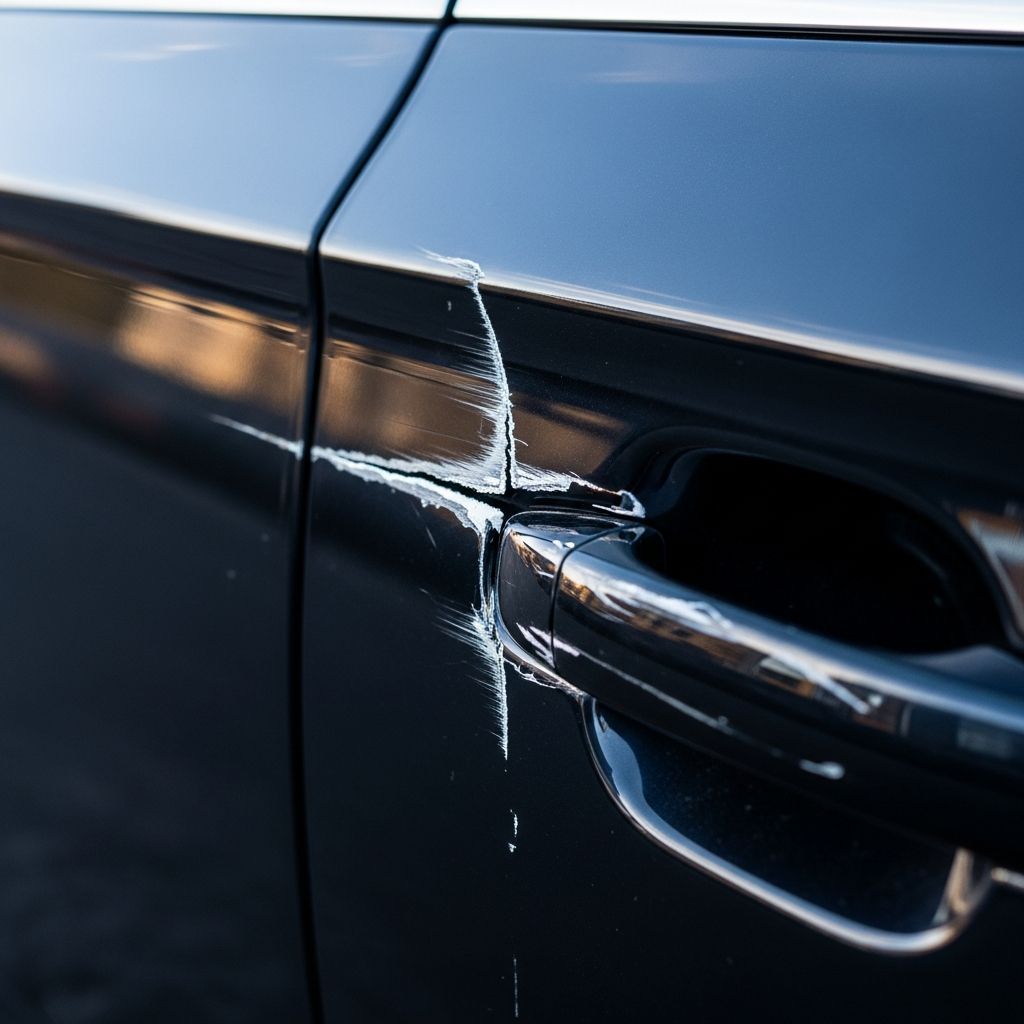
Running your hand – or a key – down the side of someone else’s vehicle might look like a impulsive act of anger, but the law treats it as a form of criminal property damage. In most jurisdictions across the United States, scratching a car on purpose can lead to criminal charges, a permanent record, and a civil claim for money damages.
This guide explains how the law views keying a car, what penalties apply, how insurance fits in, and what both vehicle owners and accused vandals need to know.
What Does “Keying a Car” Mean Legally?
From a legal standpoint, the specific tool used (key, screwdriver, nail, or other sharp object) usually does not matter. What matters is the combination of intent and damage.
- Intentional act: The scratch is made on purpose, not accidentally brushing a zipper or bag against the car.
- Damage to property: The paint is gouged, the clear coat is cut, or the metal is exposed, requiring repair.
- Property of another: The vehicle belongs to someone else (or is jointly owned and damaged without consent).
When those elements are present, keying a car is typically classified as:
- Vandalism
- Criminal mischief
- Malicious destruction of property
The exact label depends on the state’s criminal code, but the core idea is the same: deliberate damage to someone else’s property is a crime.
Criminal Charges: Misdemeanor or Felony?
Whether keying a car is charged as a misdemeanor or a felony usually depends on the dollar value of the damage, and sometimes on the offender’s prior record.
| Factor | Typical Legal Effect |
|---|---|
| Cost to repair damage | Below a set threshold (e.g., $500, $1,000, or $2,500) often results in a misdemeanor; above that can elevate to a felony. |
| Extent of damage | Multiple panels, deep scratches to bare metal, or damage to more than one vehicle may increase the charge level and sentence. |
| Prior convictions | Repeat offenders or those already on probation may face harsher penalties and probation violations. |
| Bias or hate motive | If the vandalism targets a victim’s race, religion, or other protected characteristic, additional hate-crime enhancements may apply in some states. |
Common Criminal Penalties
If convicted of keying a car, a defendant may face one or more of the following consequences, depending on state law and the severity of the damage:
- Jail or prison time – ranging from a few days for minor misdemeanors up to several years for serious felonies.
- Criminal fines – sometimes equal to or higher than the repair costs.
- Restitution – a court order to repay the vehicle owner for repair expenses and related losses.
- Probation – supervised release, community service, or mandatory counseling, especially where anger or substance abuse contributed.
- Permanent record – vandalism or criminal mischief convictions can appear on background checks for jobs, housing, and licensing.
How Civil Liability Differs from Criminal Charges
Keying a car can lead to two different kinds of legal actions:
- Criminal case – brought by the government to punish the offender and protect the public.
- Civil case – brought by the vehicle owner to recover money for the damage.
Criminal Case
The prosecutor must prove the case beyond a reasonable doubt. If the defendant is found guilty, the court may order:
- Jail or prison time
- Fines paid to the government
- Restitution to the victim for repair costs or related expenses
Civil Lawsuit for Property Damage
Separately, the car owner can often sue for:
- Repair costs – repainting, refinishing, or replacing damaged body panels.
- Diminished value – loss in market value even after repair, especially for newer or high-end vehicles.
- Incidental losses – towing, rental car expenses, or time missed from work to deal with repairs, if recognized by state law.
- Punitive damages – in some jurisdictions, extra damages may be available if the vandalism was particularly malicious or repeated.
The standard of proof in civil court is usually preponderance of the evidence (more likely than not), which is lower than in criminal cases.
How Insurance Treats Keyed-Car Damage
For vehicle owners, the immediate concern is usually: Who pays for this? The answer often depends on what type of coverage is on the policy.
Comprehensive Coverage
In many standard auto policies, comprehensive coverage pays for damage to your car caused by vandalism, theft, fire, and other non-collision events. Keying typically falls under this category, subject to the policy’s deductible.
- If you carry comprehensive coverage, your insurer may cover repainting or repair after you pay your deductible.
- Insurers may pursue the vandal (or their insurer) afterward through a process called subrogation.
Liability-Only Policies
If your policy only includes liability coverage (to pay for harm you cause others), it generally will not pay to fix your own keyed vehicle. In that situation, your options might include:
- Pursuing the vandal directly for payment or filing a civil lawsuit.
- Requesting restitution if there is a criminal case.
Effect on Premiums
Claiming vandalism can affect premiums, depending on your insurer’s underwriting rules and claims history. Some insurers treat comprehensive claims more leniently than at-fault collision claims, but there is no universal rule.
Evidence Needed to Prove Someone Keyed a Car
Whether in criminal or civil court, the central question is often: Can you prove who did it? Suspicion alone is not enough for conviction or a successful lawsuit.
Common Forms of Evidence
- Surveillance video – Footage from building cameras, dash cams, or doorbell cameras can clearly show the act and the person responsible.
- Eyewitness testimony – Statements from bystanders, neighbors, or passersby who saw the scratch being made.
- Physical evidence – Paint transfer on the object used, distinctive patterns consistent with the suspect’s actions, or tools recovered.
- Digital evidence – Messages, posts, or admissions on social media or text that reference the vandalism.
- Pattern of conduct – Prior threats or disputes may be relevant, especially in civil cases, if they help show motive and intent.
Why Filing a Police Report Matters
Reporting the vandalism to law enforcement creates an official record, which can help if:
- Prosecutors later decide to file criminal charges.
- You make an insurance claim (many insurers require a police report).
- You sue the vandal and need documentation of the incident date, location, and damage.
Steps to Take If Your Car Has Been Keyed
Acting promptly can increase your chances of identifying the culprit and recovering your losses.
Immediate Actions
- Document the damage – Take clear photos and videos from multiple angles, including close-ups and wider shots showing the entire vehicle.
- Look for witnesses – Politely ask nearby people whether they saw anything unusual or recognize the person in any footage.
- Check for cameras – Note nearby security cameras, including at homes, businesses, or public facilities.
- File a police report – Provide as many details as you can: time frame, location, potential suspects, and any evidence you have.
Next Steps
- Notify your insurance company – Report the incident promptly, following any specific timelines in your policy.
- Obtain repair estimates – Get written quotes from reputable body shops, which may be needed for insurance, court, or restitution.
- Keep all receipts and records – Save repair bills, towing receipts, rental car contracts, and correspondence with insurers or law enforcement.
- Consult a lawyer if needed – For serious damage or disputes about responsibility, legal advice can help you evaluate your options.
Defenses and Legal Issues for the Accused
People accused of keying a car are often charged based on partial evidence, such as being nearby at the time or having an argument with the car’s owner. Defense strategies vary but often focus on identity and intent.
Common Defenses
- Mistaken identity – Arguing that the defendant was not the person who damaged the vehicle; for example, poor-quality video or unreliable eyewitnesses.
- Lack of intent – Claiming the scratch was accidental (e.g., bumping the car with an object without realizing) rather than deliberate vandalism.
- Alibi – Showing that the accused was somewhere else when the damage occurred, supported by witnesses, receipts, or digital records.
- Insufficient proof of damage value – Challenging the claimed cost of repairs to argue for a lesser charge (misdemeanor rather than felony).
Because vandalism charges can result in jail time and a criminal record, many defendants choose to seek legal representation, negotiate plea agreements, or pursue diversion programs where available.
When Keying a Car Becomes Part of a Larger Crime
Keying a car does not always occur in isolation. It may be connected to other behavior that leads to additional charges.
- Domestic or neighbor disputes – Vandalism during a conflict with a spouse, ex-partner, or neighbor can lead to restraining orders or harassment claims.
- Threats or stalking – When combined with threatening messages, following the victim, or repeated acts of damage, prosecutors may charge stalking or intimidation offenses.
- Hate crimes – If the car is targeted because of the owner’s race, religion, ethnicity, or other protected class, hate-crime enhancements may increase penalties.
Preventive Measures: Reducing the Risk of Vandalism
No method is foolproof, but some practical steps can reduce the likelihood of your vehicle being keyed or help catch the perpetrator if it happens.
- Park in visible, well-lit areas – Vandals are less likely to act under bright lights or where many people can see them.
- Use garages when available – Parking in a locked or monitored garage limits access to your vehicle.
- Install cameras or dash cams – A camera aimed at your parking spot or a parking-mode dash cam can capture valuable evidence.
- Maintain good records of disputes – If tensions exist with neighbors or others, documenting incidents can be useful if vandalism later occurs.
- Review your insurance coverage – Consider whether comprehensive coverage is worthwhile based on your vehicle’s value and where you park.
Frequently Asked Questions (FAQs)
Q: Is keying a car always a crime, even for a small scratch?
Yes. Intentionally scratching someone else’s vehicle without permission is generally a crime, regardless of the size of the scratch. The level of damage mainly affects whether it is charged as a misdemeanor or felony and how harsh the penalty may be.
Q: Can a car owner go to small claims court over keyed damage?
In many states, if the repair costs fall within small claims limits, the owner can sue the suspected vandal in small claims court for the cost of repairs and related expenses. Small claims procedures are simplified, and lawyers are often optional, but proof of who caused the damage is still required.
Q: What if I saw who keyed my car but have no video?
Eyewitness testimony alone can still be important evidence. You can file a police report describing what you saw and may later testify in court. While video footage strengthens a case, it is not always necessary if other credible evidence supports your account.
Q: Will my insurance company go after the person who keyed my car?
If your insurer pays a vandalism claim under comprehensive coverage, it may attempt to recover that money from the responsible person or their insurer through subrogation. Whether they do so depends on the strength of the evidence and the likelihood of recovery.
Q: Could I face charges for keying my own jointly owned car?
It depends on the circumstances and state law. Damaging property that you jointly own with a spouse or partner can still be treated as a crime in some jurisdictions if it is done maliciously and affects the other owner’s rights. Local legal advice is important in such complex situations.
References
- Comprehensive Insurance Coverage — National Association of Insurance Commissioners (NAIC). 2023-06-01. https://content.naic.org/consumer-tips-auto-insurance
- Destruction of Property and Vandalism Laws — Virginia Code & Virginia Criminal Sentencing Guidelines (referenced by Virginia Courts and public defender resources). Accessed 2024-05-10. https://law.lis.virginia.gov/vacode/title18.2/chapter5/section18.2-137/
- Hate Crime Laws and Bias-Motivated Vandalism — U.S. Department of Justice, Civil Rights Division. 2022-11-15. https://www.justice.gov/crt/hate-crime-laws
- Crime Prevention Through Environmental Design (CPTED) — U.S. Department of Justice, Office of Community Oriented Policing Services. 2011-01-01. https://cops.usdoj.gov/RIC/Publications/cops-p164-pub.pdf
Similar Articles








Read full bio of medha deb




