
Can You Legally Mail Marijuana in the United States?
Understand when mailing cannabis is a federal crime, how hemp is different, and why state legalization does not protect packages.
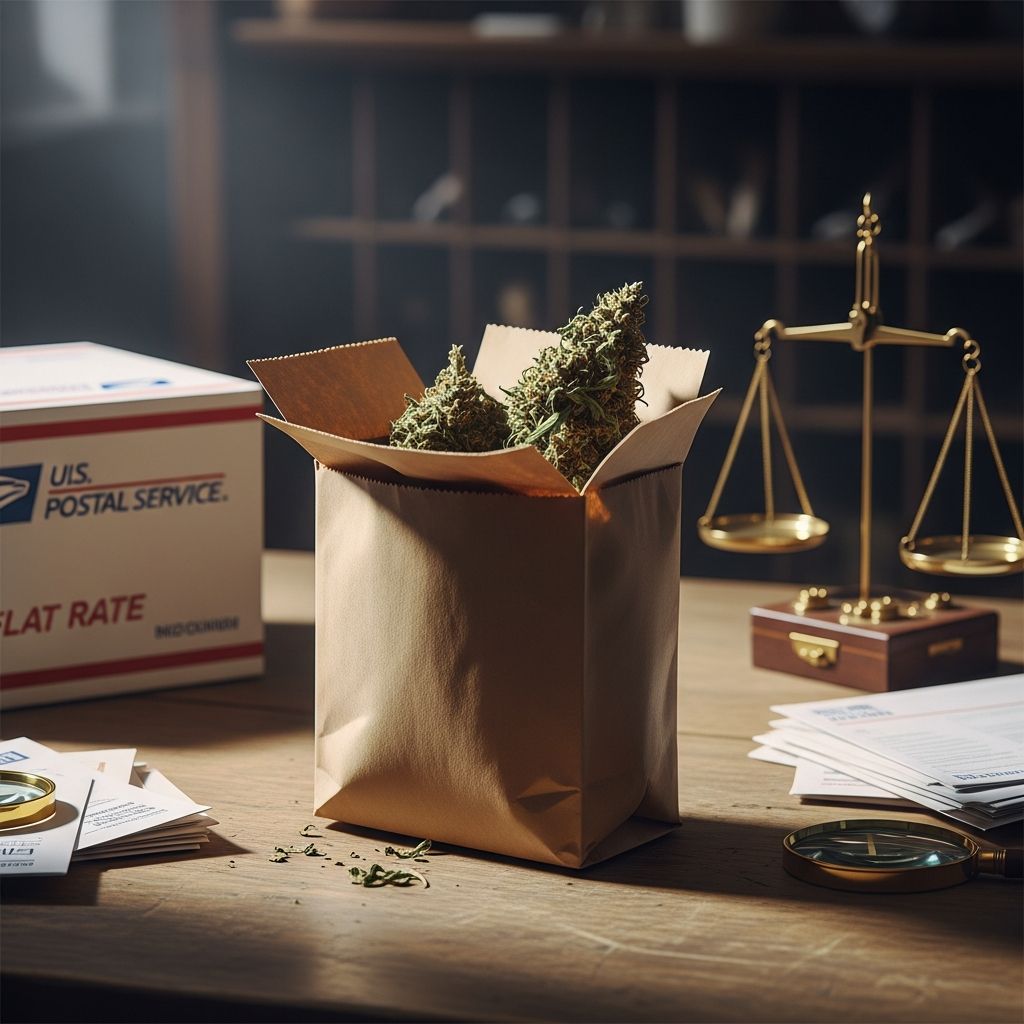
As more states legalize cannabis for medical and recreational use, people often assume that mailing marijuana is just another way to deliver a legal product. Under federal law, that assumption is wrong: sending marijuana through the mail remains a serious offense, even when the shipment starts and ends in states where cannabis is lawful.
This guide explains how federal and state laws interact, the role of the U.S. Postal Service (USPS) and private carriers, why hemp is treated differently from marijuana, and what legal risks individuals and businesses face when cannabis travels in a package.
1. Federal Law: Why Mailing Marijuana Is Still a Crime
At the federal level, marijuana is a controlled substance under the Controlled Substances Act (CSA). As of 2025, marijuana is classified in Schedule I, reserved for drugs that the federal government considers to have a high potential for abuse and no accepted medical use, although there is an ongoing process considering rescheduling to Schedule III.
Even if rescheduling occurs, marijuana would remain a federally controlled substance, meaning the basic prohibitions on manufacture, distribution, and possession still apply.
1.1 Distribution and trafficking through the mail
Under federal drug laws, using the mail to send marijuana can amount to distribution or drug trafficking, not just simple possession. The CSA prohibits knowingly or intentionally distributing a controlled substance, or using a communication facility (including the postal system or private carriers) to facilitate a drug offense.
Key consequences of mailing marijuana under federal law include:
- Felony charges for distributing or possessing with intent to distribute marijuana
- Potential enhanced penalties based on the weight of cannabis involved
- Separate offenses for each package or mailing event
- Exposure to related charges, such as money laundering, if payments are involved
1.2 Federal law overrides state legalization
Dozens of states have legalized medical or adult-use marijuana, but these laws do not change federal rules. State reforms mostly restrict state and local enforcement, not federal authority. Congress has temporarily limited the U.S. Department of Justice (DOJ) from spending funds to interfere with state-legal medical cannabis programs, but that protection does not clearly cover private mailing of marijuana for non-medical reasons, nor does it apply to every federal agency.
Because mailing typically involves interstate commerce or federal facilities (post offices, mail trucks, and sorting centers), federal law is front and center. A package that never crosses a state line may still be under federal jurisdiction if it uses USPS or another carrier subject to federal regulation.
2. USPS and Private Carriers: Different Companies, Same Problem
There is an important distinction between the U.S. Postal Service, a federal agency, and private carriers like UPS and FedEx. Yet when it comes to marijuana, the end result is similar: packages containing cannabis are generally prohibited.
| Carrier | Legal Status for Marijuana | Approach to Hemp |
|---|---|---|
| USPS | Mailing marijuana is illegal under federal law. | Permits certain hemp products that comply with the 2018 Farm Bill and USPS rules. |
| UPS | Prohibits marijuana shipments under its terms of service. | Allows limited hemp shipments with strict documentation and compliance. |
| FedEx | Broadly bans cannabis and THC products in any amount as a matter of company policy. | Treats many hemp-derived ingestibles as prohibited, regardless of legality under federal law. |
2.1 USPS: Federal agency, federal drug law
Because USPS is part of the federal government, it is directly bound by the CSA. Mailing marijuana through USPS is considered using a federal service to commit a federal drug crime. Postal inspectors are federal law enforcement officers with authority to:
- Investigate suspicious packages and postal records
- Seek warrants to open parcels when probable cause exists
- Coordinate with other federal agencies and prosecutors for criminal charges
USPS guidance distinguishes between marijuana (still illegal) and hemp that meets the definition set by the 2018 Farm Bill, but it does not authorize mailing of state-legal recreational or medical cannabis.
2.2 Private carriers: Contract rules layered on top of federal law
UPS and FedEx are not federal agencies, so their policies come from their own contracts and risk assessments. However, they still operate within the framework of federal drug law. A shipment that violates their terms can also be a federal criminal offense; the contract does not replace the law.
Common features of private-carrier policies include:
- Explicit prohibitions on marijuana and THC-containing products, regardless of state law
- Rights to inspect, refuse, or destroy packages that appear to violate company rules
- Cooperation with law enforcement when illegal drugs are detected
3. Hemp vs. Marijuana: Why Some Cannabis Can Travel
Not all cannabis plants and products are treated the same under federal law. The 2018 Agriculture Improvement Act (commonly called the 2018 Farm Bill) removed “hemp” from the definition of marijuana, creating a narrow but important exception.
3.1 Legal definition of hemp
Under federal law, hemp is cannabis and derivatives of cannabis with a delta-9 THC concentration not exceeding 0.3% on a dry weight basis. Hemp and hemp-derived products that meet this threshold are no longer Schedule I controlled substances, provided all statutory and regulatory conditions are met.
This opened the door for legal interstate commerce in hemp, including shipment through common carriers, subject to USDA regulations and applicable state laws.
3.2 Hemp products in the mail: Still not simple
Even for hemp, compliance is not automatic. To qualify as lawful hemp:
- The plant material or product must meet the 0.3% delta-9 THC ceiling.
- Production usually must comply with a licensed hemp program approved by USDA or a state/tribal authority.
- Some states restrict or ban intoxicating hemp-derived cannabinoids, adding a patchwork of local rules.
Carriers often require additional documentation, such as certificates of analysis (COAs), business licenses, and written certifications that shipments comply with all federal and state laws. Failure to provide these can result in seized packages and discontinued shipping accounts.
4. State Laws, Federal Enforcement, and the Emerging Policy Landscape
Public attitudes and state laws toward cannabis are evolving rapidly, but mail-related law has not shifted nearly as quickly. Understanding the gap between state reform and federal authority is essential for anyone considering shipping marijuana or hemp products.
4.1 Expanding state legalization vs. federal classification
Many states now allow:
- Medical marijuana programs
- Adult-use (recreational) retail markets
- Home cultivation within set limits
Yet at the federal level, marijuana remains a controlled substance, even as the federal government considers moving it from Schedule I to Schedule III. Rescheduling would ease certain research restrictions and change tax treatment for businesses, but it would not automatically authorize mailing cannabis through USPS or private carriers.
4.2 Federal enforcement priorities and resources
Historically, federal enforcement has often focused on large-scale trafficking and cases involving weapons, organized crime, or distribution to minors. However, that is a matter of prosecutorial discretion, not a legal right to ship marijuana.
Congressional and agency reports have highlighted that federal resources to police the emerging marketplace for hemp-derived THC products are limited and that enforcement approaches remain uncertain. This uncertainty does not legalize conduct; it only affects how likely certain violations are to be investigated or prosecuted.
4.3 Interstate commerce and federal agencies
Rescheduling or eventual descheduling of marijuana would not eliminate all federal oversight. Other federal laws, such as those enforced by the Food and Drug Administration (FDA), would continue to regulate cannabis-based products that are marketed as foods, dietary supplements, or drugs. For interstate shipments, FDA and other federal agencies may impose labeling, safety, and manufacturing requirements—separate from criminal law—that affect both marijuana and hemp businesses.
5. What Happens If You Get Caught Mailing Marijuana?
Consequences of mailing marijuana range from relatively minor administrative actions to severe criminal penalties, depending on the facts of the case, the amount involved, and the person’s prior criminal history.
5.1 Package interception and investigation
Typically, when a carrier or postal inspector suspects that a package contains drugs, they may:
- Flag or temporarily hold the package
- Use trained dogs or X-ray screening
- Apply for a search warrant based on probable cause
- Conduct a controlled delivery to identify the sender or recipient
Evidence gathered from a suspect package can support federal or state charges for drug offenses, conspiracy, or related crimes, depending on the jurisdiction and facts.
5.2 Potential criminal penalties
Because mailing marijuana often qualifies as distribution rather than simple possession, penalties can be substantial. Federal law sets punishment ranges based on factors like drug quantity and prior convictions. Sanctions in serious cases may include:
- Years of imprisonment
- Large fines
- Forfeiture of assets allegedly tied to drug activity
- Supervised release conditions after prison
Even in less serious cases, a drug conviction can affect immigration status, professional licenses, government benefits, and firearm rights.
5.3 Civil and contractual consequences
Beyond criminal penalties, shippers face non-criminal repercussions, such as:
- Permanent bans from using specific carriers
- Loss of business shipping accounts
- Insurance complications or denial of claims
- Potential civil suits if others are harmed
6. Practical Takeaways for Individuals and Businesses
Whether you are an individual considering mailing cannabis to a friend or a business exploring direct-to-consumer sales, several overarching principles emerge from current law and policy.
6.1 For individuals
- Mailing marijuana through USPS is illegal under federal law, regardless of state legalization.
- Using private carriers does not circumvent the law; it simply adds contractual violations to potential criminal exposure.
- Labeling a package as something else does not cure the underlying offense and may add allegations of fraud or false statements.
- Even small quantities sent as “gifts” can still be charged as distribution.
6.2 For businesses
- Avoid shipping marijuana products across state lines unless and until federal law clearly permits it.
- For hemp operations, closely track federal hemp definitions, USDA rules, and state-by-state restrictions on hemp-derived cannabinoids.
- Monitor each carrier’s cannabis and hemp policies; these internal rules often change faster than statutes or regulations.
- Maintain robust documentation (COAs, licenses, test results) for compliant hemp shipments, and be prepared for audits or inspections.
- Consult qualified legal counsel before building any business model that relies on mailing cannabis or hemp-derived intoxicants.
7. Frequently Asked Questions (FAQs)
Q1: If my state has legal recreational marijuana, can I mail cannabis within the same state?
No. Even if both the sender and recipient are in the same legal-weed state, using USPS or a private carrier to send marijuana still violates federal law because marijuana remains a federally controlled substance.
Q2: Is it legal to ship CBD products?
It depends. CBD derived from hemp that meets the federal definition (no more than 0.3% delta-9 THC and produced in compliance with applicable programs) may be lawful to ship, subject to carrier policies and state restrictions. Products made from marijuana, or hemp items with higher THC levels or noncompliant production, can still be illegal.
Q3: Can law enforcement open my mail to look for marijuana?
First-class letters and packages are generally protected by the Fourth Amendment, meaning law enforcement usually needs a search warrant supported by probable cause to open them. However, if a warrant is granted, postal inspectors and other officers can lawfully inspect and seize drug-containing parcels.
Q4: Will rescheduling marijuana to Schedule III make it legal to mail?
Not automatically. Moving marijuana from Schedule I to Schedule III would still keep it under the Controlled Substances Act; distribution and possession without proper authorization would remain illegal under federal law. Congress and federal agencies would need to change additional rules before mailing state-legal cannabis became lawful.
Q5: Are there any safe ways to move marijuana between states?
Currently, transporting marijuana across state lines is generally illegal under federal law, even between two legal states. Licensed commercial supply chains sometimes operate under state regulations within a single state, but interstate movement is a distinct and more legally sensitive issue. Individuals should not assume that personal transport or mailing is safe or lawful.
References
- Can You Ship Hemp THC in 2025? UPS Adult-Signature Rules & Carrier Policies — CannabisRegulations.ai Blog. 2025-03-15. https://www.cannabisregulations.ai/cannabis-and-hemp-regulations-compliance-ai-blog/shipping-hemp-thc-2025-ups-fedex-usps
- Federal Marijuana Rescheduling: Process and Impact — Drug Enforcement and Policy Center, The Ohio State University Moritz College of Law. 2025-03-01. https://moritzlaw.osu.edu/faculty-and-research/drug-enforcement-and-policy-center/research-and-grants/policy-and-data-analyses/federal-marijuana-rescheduling
- Federal Policy: Federal Cannabis Legislation in the 2025–2026 Session — Marijuana Policy Project. 2025-02-10. https://www.mpp.org/policy/federal/
- It’s “Unclear” How Feds Will Enforce Hemp THC Product Ban, Congressional Researchers Say — Marijuana Moment. 2025-04-22. https://www.marijuanamoment.net/its-unclear-how-feds-will-enforce-hemp-thc-product-ban-congressional-researchers-say-citing-limited-fda-and-dea-resources/
- Federal Cannabis Policy Is More Confusing Than Ever — Harris Sliwoski, Canna Law Blog. 2025-05-05. https://harris-sliwoski.com/cannalawblog/federal-cannabis-policy-is-more-confusing-than-ever/
Similar Articles








Read full bio of medha deb


