
Is It Illegal to Share Prescription Drugs?
Understanding the legal and health risks of giving prescription medication to someone else.
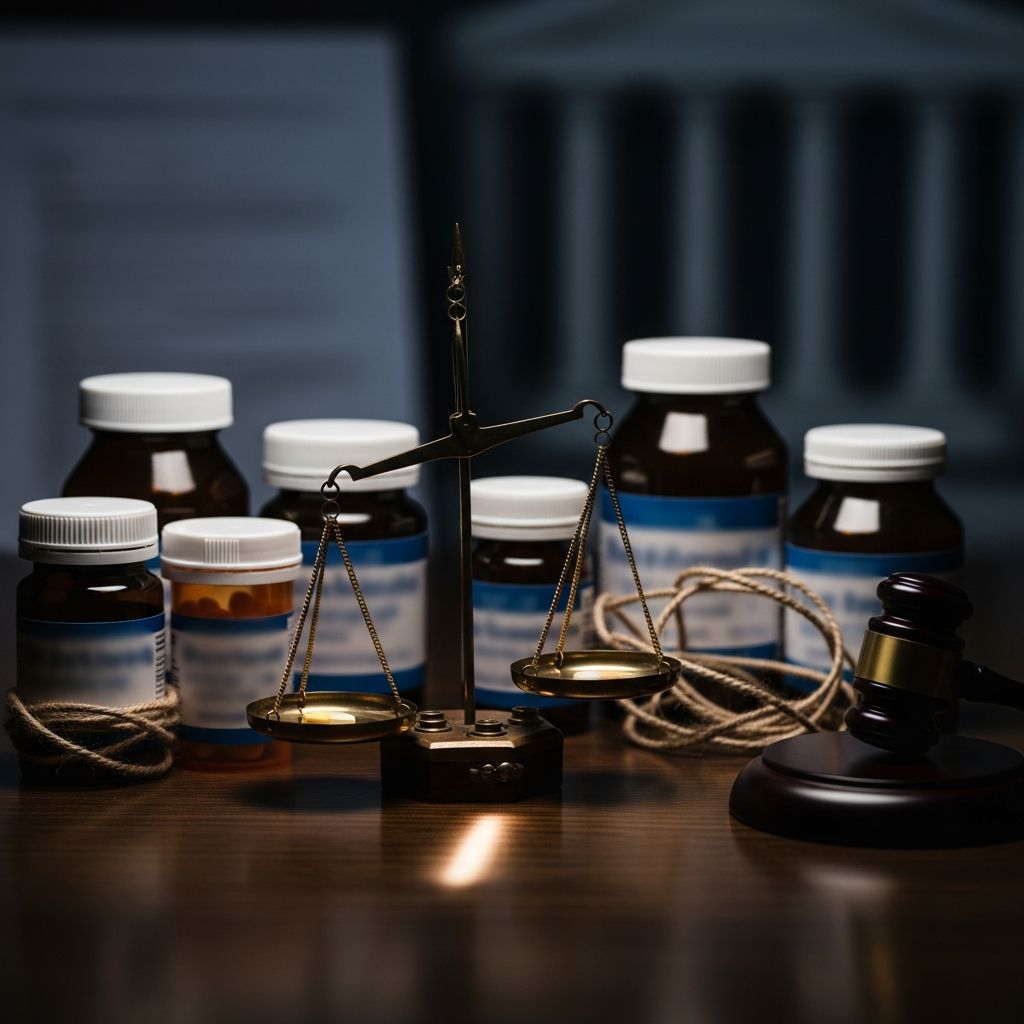
When Helping a Friend Crosses a Legal Line
Imagine a friend is in pain after a minor injury, and you offer them one of your prescription painkillers. Or a coworker is struggling to focus and asks for a stimulant pill you take for ADHD. In the moment, it may seem like a small, harmless gesture. But in reality, giving someone else your prescription medication can carry serious legal consequences, even if you’re not selling it and have no intention of breaking the law.
Across the United States, prescription drugs are tightly regulated, especially those classified as controlled substances. Federal and state laws treat the unauthorized transfer of these medications as a form of drug distribution, regardless of whether money changes hands. What many people don’t realize is that a well-meaning act can quickly turn into a criminal charge with long-term repercussions.
Why Prescription Drugs Are Treated Differently
Unlike over-the-counter medications, prescription drugs are only legally available to the person named on the prescription. This is because they are tailored to an individual’s specific medical condition, weight, age, and other health factors. A dose that is safe and effective for one person can be dangerous or even deadly for another.
Controlled substances, such as opioids, benzodiazepines, and stimulants, are subject to additional restrictions because of their potential for abuse, dependence, and diversion. These drugs are categorized into schedules under the federal Controlled Substances Act, with Schedule I being the most restricted and Schedule V the least. Common examples include:
- Opioid pain relievers (e.g., oxycodone, hydrocodone, morphine)
- Benzodiazepines for anxiety or sleep (e.g., alprazolam/Xanax, diazepam/Valium)
- Stimulants for ADHD (e.g., amphetamines/Adderall, methylphenidate/Ritalin)
- Sedatives and sleep aids (e.g., zolpidem/Ambien, eszopiclone/Lunesta)
Because of their potential for misuse, the law treats any unauthorized transfer of these medications as a serious offense, even if it’s just a single pill given to a friend.
How the Law Views Sharing Prescription Medication
From a legal standpoint, giving your prescription medication to someone else is not seen as simply “sharing” — it’s considered a form of drug distribution or delivery. Federal law, as well as most state laws, defines distribution as the transfer of a controlled substance, regardless of whether it is sold, traded, or given away for free.
Under the federal Controlled Substances Act, it is illegal for anyone to knowingly or intentionally distribute a controlled substance unless they are a licensed medical professional acting within the scope of their practice. This means that:
- You do not need to profit from the transaction.
- You do not need to be a repeat offender.
- You do not need to be dealing large quantities.
Even handing a single pill to a friend can be prosecuted as distribution, especially if the drug is a Schedule II or III controlled substance. Intent to help does not serve as a legal defense; the law focuses on the act of transferring the drug, not the motive behind it.
State Laws and How They Vary
While federal law sets a baseline, individual states have their own statutes that can be even stricter. In many states, giving prescription medication to someone else is treated as a drug distribution offense, which can be charged as a misdemeanor or felony depending on the drug and amount involved.
For example:
- In Texas, giving away prescription opioids or benzodiazepines can lead to state jail felony charges, with penalties ranging from 180 days to two years in jail for lower-level offenses, and up to 99 years for higher-level felonies involving large quantities or certain high-risk drugs.
- In Maryland, a person who gives Adderall or hydrocodone to someone without a prescription can face misdemeanor or felony distribution charges, with potential jail time and fines.
- In California, unauthorized transfer of a controlled substance is a “wobbler” offense, meaning it can be charged as either a misdemeanor or a felony depending on the circumstances and the defendant’s criminal history.
Some states also have specific laws that make it illegal to possess or use prescription drugs that are not prescribed to you, which means both the giver and the recipient can face criminal charges.
Common Scenarios That Can Lead to Charges
Many people end up in legal trouble not because they intended to break the law, but because they didn’t realize their actions were illegal. Common situations include:
- Helping a friend with pain: Giving a few opioid painkillers to someone after a minor injury or surgery.
- “Boosting” focus or energy: Sharing ADHD stimulants with a student or coworker to help them study or stay awake.
- Managing anxiety or sleep: Offering a benzodiazepine or sleep aid to someone who is stressed or having trouble sleeping.
- Sharing with family members: Giving a spouse, sibling, or child a medication that “worked for you” for the same condition.
- Leaving medication accessible: Leaving pills in a shared space where others can take them, which can still lead to charges if the drugs are later found in someone else’s possession.
In each of these cases, the person who provided the medication can be charged with distribution, while the person who took it can be charged with unlawful possession.
Penalties for Unauthorized Distribution
The consequences of sharing prescription drugs can be severe and long-lasting. Penalties depend on several factors, including:
- The type of drug (Schedule I–V classification)
- The quantity involved
- Whether the recipient is a minor
- The defendant’s prior criminal record
- Whether the incident involved aggravating factors (e.g., sale, trafficking, or harm to the recipient)
Typical penalties can include:
| Offense Level | Potential Jail/Prison Time | Fines | Other Consequences |
|---|---|---|---|
| Misdemeanor distribution | Up to 1 year in jail | Up to $1,000–$5,000 | Probation, community service, criminal record |
| Low-level felony | 1–3 years in prison | $5,000–$25,000 | Permanent felony record, loss of professional licenses |
| High-level felony (e.g., large quantity of opioids) | 2–99 years in prison | Up to $250,000 | Long-term incarceration, sex offender registration (in rare cases), deportation for non-citizens |
Even if the charges are reduced or dismissed, a criminal record can affect employment, housing, student loans, and professional licensing for years to come.
Health Risks That Make the Legal Risks Even Greater
Beyond the legal consequences, there are serious health dangers to sharing prescription medication. A drug that is safe for you may be harmful to someone else due to:
- Underlying medical conditions: A person with heart disease, liver problems, or respiratory issues may have a dangerous reaction to a medication that is safe for a healthy individual.
- Drug interactions: Prescription drugs can interact dangerously with other medications, supplements, or even over-the-counter products the person is already taking.
- Dosage issues: The correct dose for one person may be too high or too low for another, increasing the risk of overdose or inadequate treatment.
- Addiction and dependence: Controlled substances like opioids and benzodiazepines can lead to physical dependence and addiction, especially when used without medical supervision.
- Delayed proper care: Relying on someone else’s medication can delay a proper diagnosis and appropriate treatment for the underlying condition.
In some cases, sharing prescription drugs has led to hospitalization, overdose, or even death — outcomes that can also result in additional legal liability for the person who provided the medication.
What About Non-Controlled Prescription Drugs?
Not all prescription medications are classified as controlled substances. For example, many antibiotics, blood pressure medications, and certain antidepressants are not in the same legal category as opioids or stimulants. However, even with non-controlled drugs, there are still risks:
- It is still illegal under most state laws to dispense prescription medication to someone else, regardless of whether it is a controlled substance.
- Health risks remain, including allergic reactions, incorrect dosing, and drug interactions.
- If the drug is later found in someone else’s possession, it can still lead to questions about how they obtained it, potentially resulting in investigation or charges.
The safest and most legal approach is to never give prescription medication to anyone else, even if it seems harmless.
What to Do If You’re Facing Charges
If you’ve been charged with distributing or sharing prescription medication, it’s critical to take the situation seriously. Even if the incident seemed minor, the potential penalties can be life-altering. Steps to consider include:
- Remain silent: Do not discuss the incident with law enforcement or others without legal counsel present.
- Consult a criminal defense attorney: An experienced lawyer can review the charges, the evidence, and the circumstances to build a defense or negotiate a favorable outcome.
- Preserve evidence: Keep any records related to the prescription, such as pharmacy receipts, doctor’s notes, or text messages, as they may be relevant to your case.
- Understand your options: Depending on the jurisdiction and facts, possible outcomes may include dismissal, diversion programs, probation, or reduced charges.
Early legal intervention can make a significant difference in the outcome of a case.
How to Help Without Breaking the Law
It’s natural to want to help a friend or family member who is in pain or struggling. But there are safer, legal ways to support them:
- Encourage medical care: Urge them to see a doctor or go to urgent care for proper diagnosis and treatment.
- Offer over-the-counter options: For minor pain or discomfort, suggest appropriate OTC medications like acetaminophen, ibuprofen, or antihistamines, used as directed.
- Provide non-medical support: Offer to help with transportation, childcare, or other practical needs while they seek professional care.
- Be honest about your limits: Explain that while you want to help, giving prescription medication is both unsafe and illegal.
True support means helping someone get the right care, not putting them or yourself at legal and medical risk.
Frequently Asked Questions
Can I go to jail for giving one prescription pill to a friend?
Yes, in many jurisdictions, even giving a single pill of a controlled substance can lead to misdemeanor or felony distribution charges, especially if the drug is a Schedule II or III substance like an opioid or stimulant.
Is it illegal if I didn’t know the drug was controlled?
Ignorance of the law is generally not a defense. If the drug is classified as a controlled substance under federal or state law, the unauthorized transfer can still be prosecuted as distribution.
Can both the giver and the receiver be charged?
Yes. The person who gives the medication can be charged with distribution, while the person who receives and possesses it without a prescription can be charged with unlawful possession of a controlled substance.
What if I shared medication with someone who has the same prescription?
Even if the other person has a prescription for the same drug, sharing your pills with them is still illegal. Each prescription is issued for a specific individual, and transferring medication between patients is not permitted under pharmacy or drug laws.
Are there any exceptions to these rules?
Exceptions are extremely limited and typically only apply to licensed medical professionals acting within their scope of practice. In rare cases, some states have “Good Samaritan” or overdose prevention laws that protect individuals who seek emergency help, but these do not generally legalize the distribution of prescription drugs.
References
- Controlled Substances Act — U.S. Department of Justice, Drug Enforcement Administration. 2023. https://www.deadiversion.usdoj.gov/21cfr/cfr/
- Health and Safety Code Chapter 481 – Texas Controlled Substances Act — Texas Statutes. 2023. https://statutes.capitol.texas.gov/Docs/HS/htm/HS.481.htm
- Prescription Medication Sharing: A Systematic Review of the Literature — PMC, National Institutes of Health. 2014. https://www.ncbi.nlm.nih.gov/pmc/articles/PMC4025682/
Similar Articles








Read full bio of medha deb


