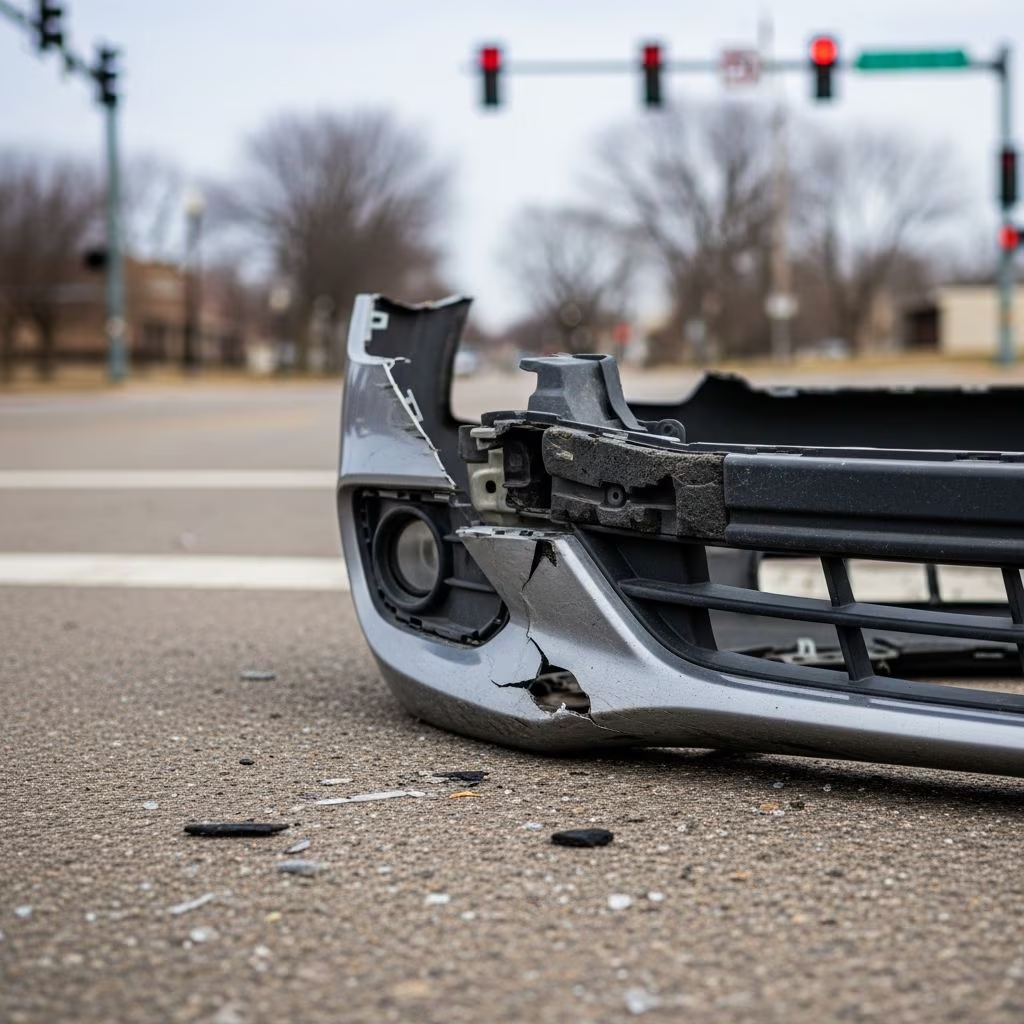
Iowa’s legal framework for car crashes prioritizes public safety, swift reporting, and fair compensation for victims. Drivers must follow strict protocols after collisions to avoid penalties and ensure proper documentation.
Immediate Steps After a Collision in Iowa
When involved in a car crash, safety comes first. Move vehicles off the roadway if possible without risking further harm, especially for minor property damage incidents. Iowa law mandates that drivers of operable vehicles clear the traveled portion immediately, relocating to the shoulder or median to minimize traffic disruption. Exchange contact and insurance details with other parties, and summon emergency services if injuries or significant damage occur.
- Check for injuries and provide aid without admitting fault.
- Alert law enforcement promptly for serious crashes involving personal harm or over $1,500 in property damage.
- Document the scene with photos of vehicles, road conditions, and visible injuries.
Failure to remain at the scene until obligations under related statutes are met constitutes a simple misdemeanor. For hazardous material transporters, instant notification to police radio or local peace officers is required, escalating to state patrol.
Official Reporting Mandates for Crashes
Iowa enforces rigorous reporting to aid investigations and insurance processes. Drivers in accidents causing injury, death, or property damage exceeding $1,500 must notify the county sheriff, state patrol, or nearest peace officer immediately via the quickest means. A detailed written report must follow within 72 hours to the Department of Transportation, unless police handle the investigation.
Law enforcement officers investigating qualifying crashes submit reports within 24 hours. Recent legislative proposals like HF 904 aim to adjust property damage thresholds and timelines, reflecting ongoing refinements to these rules.
| Crash Severity | Immediate Action | Written Report Deadline |
|---|---|---|
| Injury or Death | Notify officer/sheriff/state patrol ASAP | 72 hours (if not police-investigated) |
| Property Damage ≥ $1,500 | Notify if applicable; move vehicle | 72 hours (if not police-investigated) |
| Hazmat Involved | Notify police radio/peace officer immediately | Per investigation |
Determining Responsibility in Iowa Collisions
Iowa operates under a modified comparative negligence system, allowing recovery if the injured party is less than 50% at fault. Liability hinges on evidence like police reports, witness statements, and scene documentation. Courts apportion damages based on each party’s contribution to the crash.
For instance, if Driver A is 40% responsible and Driver B 60%, A recovers 60% of proven losses from B’s insurer. Exceeding 50% fault bars recovery entirely. This encourages thorough evidence gathering post-crash.
Insurance Requirements and Post-Crash Rate Changes
All Iowa motorists must carry minimum liability coverage to protect others in at-fault scenarios. Optional collision and uninsured/underinsured motorist (UM/UIM) coverages safeguard personal interests. Over 11% of drivers remain uninsured, per industry data, heightening UM/UIM importance.
Filing claims often triggers premium hikes, even for non-at-fault victims, due to insurer risk assessments. Victims may negotiate rate increase compensation from at-fault parties’ insurers or pursue accident forgiveness if policy-included. Changing carriers or legal action against responsible drivers offers alternatives.
- Liability Minimums: $20,000 bodily injury per person, $40,000 per accident, $15,000 property damage.
- Claim Options: Own insurer (UM/UIM), at-fault driver’s insurer, or lawsuit.
- Documentation Tips: Secure police/other driver reports, verify coverages, photograph scene.
Seeking Medical Care and Its Legal Impact
Prompt medical evaluation post-crash documents injuries crucial for claims. Delays can undermine credibility. Follow provider directives to build a strong treatment record, bolstering compensation pursuits for medical bills, lost income, and pain.
In shared-fault cases, documented care supports partial recovery proportional to non-liability percentage.
Compensation Avenues for Crash Victims
Victims pursue damages via insurance claims or litigation. Recoverable elements include economic losses (repairs, wages, therapy) and non-economic (suffering, emotional distress). Punitive awards are rare, reserved for egregious conduct.
At-fault driver’s insurer pays first; own UM/UIM covers shortfalls from uninsured parties. Lawsuits compel accountability when settlements fall short.
Deadlines for Legal Action
Iowa’s two-year statute of limitations for personal injury claims starts from the crash date, extendable for minors or concealed injuries. Property damage suits have a five-year window. Missing deadlines forfeits rights; consult counsel promptly.
When to Engage Legal Help
Complex crashes—multiple vehicles, disputes, severe injuries—warrant attorney involvement. Experts negotiate insurers, gather evidence, and litigate if needed, maximizing recoveries while countering lowball offers.
Contingency fees align interests, with no upfront costs.
Frequently Asked Questions About Iowa Car Crashes
What if I’m hit by an uninsured driver in Iowa?
Use your UM/UIM coverage after verifying the driver’s status via reports. Legal aid can pursue the at-fault party directly.
Do premiums always rise after a claim?
Often yes, even if not at fault, but accident forgiveness or at-fault reimbursements mitigate this.
Can I recover if partially responsible?
Yes, if under 50% at fault under modified comparative rules.
How soon must I report a crash with $2,000 damage?
Immediately notify authorities if injuries; written report within 72 hours unless police investigate.
Is leaving the scene ever allowed?
Only after safe vehicle removal and fulfilling exchange/reporting duties.
Preventing Crashes and Staying Compliant
Adherence to speed limits, sobriety, and distractions reduces risks. Regular vehicle maintenance and defensive driving further safeguard. Iowa’s evolving laws, like potential report threshold updates, underscore staying informed.
Post-crash, prioritize safety, documentation, and compliance to protect rights and facilitate recovery.
References
- Iowa Code Section 321.266: Reporting accidents — Iowa Legislature. 2025. https://www.legis.iowa.gov/docs/code/321.266.pdf
- Iowa Code Section 321.262: Leaving scene of traffic accident prohibited — Iowa Legislature. 2025. https://www.legis.iowa.gov/docs/code/321.262.pdf
- How Car Accidents Affect Your Insurance Rates in Iowa — McEnroe, McEnroe & Gotsch, P.L.C. Accessed 2026. https://www.msmcinjurylawyers.com/blog/car-accident/accident-insurance-effect/
- Bill Text: IA HSB297 | 2025-2026 — LegiScan. 2025. https://legiscan.com/IA/text/HSB297/id/3151592
- HF 904 – Iowa House (2025-2026) — Open States. 2025. https://open.pluralpolicy.com/ia/bills/2025-2026/HF904/