
Intoxicated Scooter Operation: Legal Risks and Consequences
Understanding DUI charges on electric scooters and how impaired riding affects your legal standing.
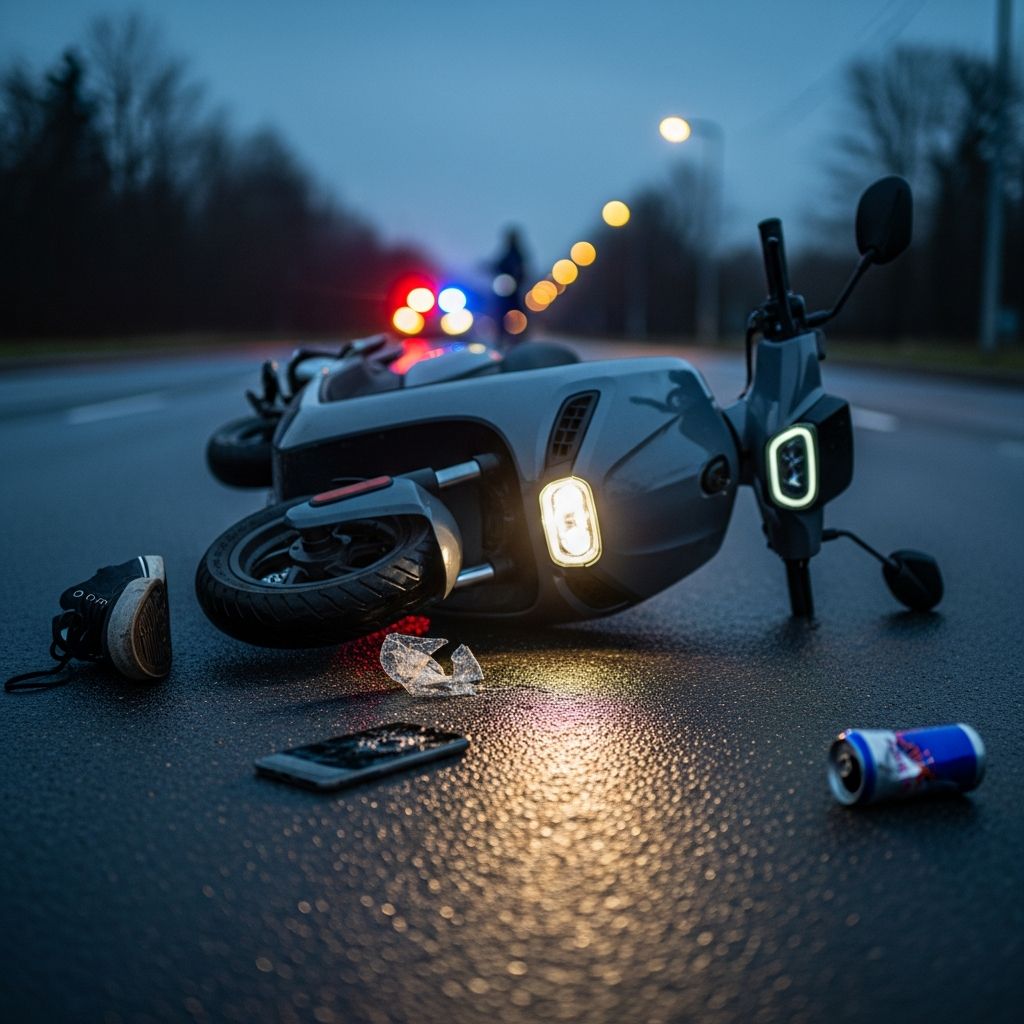
Understanding Legal Liability for Intoxicated Scooter Riding
Riding an electric scooter after consuming alcohol may seem like a safer alternative to driving a car, but it carries significant legal consequences in many jurisdictions. Contrary to common assumptions, operating a motorized scooter while impaired can result in arrest, criminal charges, and penalties comparable to traditional driving under the influence offenses. The distinction between casual recreational riding and legal transportation changes dramatically when alcohol or drugs are involved, transforming what appears to be a harmless activity into a prosecutable offense.
The legal landscape surrounding impaired scooter operation continues to evolve as municipalities and states grapple with the rapidly expanding use of micromobility devices. Law enforcement agencies have increasingly focused on enforcing impairment-related statutes against scooter riders, recognizing that intoxicated operation poses public safety risks. Understanding the specific laws in your jurisdiction is essential before using any motorized device after drinking.
How States Define Vehicles for DUI Purposes
The foundation of legal liability for intoxicated scooter operation lies in how individual states classify these devices under their motor vehicle statutes. Most jurisdictions employ broad definitions of “vehicle” that extend beyond traditional automobiles and motorcycles. When legislation defines a vehicle as any device capable of transporting persons or property on public roads or highways, electric scooters frequently fall within this expansive category.
Electric scooters equipped with motors generally trigger DUI statutes because they meet the core requirements of motorized conveyances. Some states explicitly list scooters in their motor vehicle codes, while others rely on the functional characteristics of the device—specifically the presence of an electric motor—to determine applicability. This distinction matters significantly because non-motorized kick scooters may escape DUI prosecution in some jurisdictions, though they can still result in public intoxication charges.
The California and Washington, D.C. approaches illustrate the strictness of some jurisdictions. Both require individuals to refrain from operating electric mobility devices “under the influence of alcohol or any drug,” creating a zero-tolerance standard regardless of blood alcohol concentration levels. Other states employ more nuanced approaches based on measurable intoxication thresholds.
Blood Alcohol Concentration Standards and Scooter Operation
Many states apply the standard legal blood alcohol concentration (BAC) limit of 0.08% to scooter operators, matching the threshold for automobile drivers over age 21. Some jurisdictions, however, maintain differing standards. Utah, for example, enforces a stricter 0.05% BAC limit across all operators of motorized vehicles, creating a lower threshold for intoxication-related charges.
Certain states distinguish between impairment-based prosecution and BAC-based prosecution. Tennessee, which classified electric scooters as motor vehicles in 2019, primarily enforces DUI statutes when riders exceed the legal BAC limit. This approach differs from zero-tolerance jurisdictions where any detectable impairment can trigger charges. Understanding whether your state requires measurable intoxication or focuses on functional impairment is crucial for legal planning and decision-making.
The BAC threshold also intersects with other factors like prior criminal history and accident involvement. Even if a rider’s BAC falls below the legal limit, causing property damage, injuring another person, or demonstrating unsafe operation can elevate charges or result in enhanced penalties.
When Law Enforcement Can Stop and Arrest Scooter Riders
Police officers possess authority to stop scooter riders who exhibit signs of impairment or violate traffic laws while operating these devices. Observable indicators of intoxication—such as weaving between lanes, inability to maintain balance, slow reaction times, or difficulty navigating intersections—provide legal justification for investigative stops. Once an officer initiates contact, they can conduct field sobriety tests and request chemical testing.
The legal foundation for arrests derives from the same principles governing automobile DUI enforcement. When a scooter qualifies as a motor vehicle under state law, the constitutional protections and investigative procedures applicable to drunk driving apply equally. Officers can request identification, observe signs of intoxication, and pursue standardized field sobriety testing protocols.
Accident involvement substantially increases arrest likelihood. If an intoxicated scooter rider collides with vehicles, pedestrians, or property, law enforcement typically conducts toxicology testing as part of accident investigation. Such incidents often result in enhanced charges, including potential felony classifications depending on injury severity and prior criminal history.
Testing and Chemical Analysis Requirements
Following arrest for scooter operation under the influence, law enforcement officers may request breath, blood, or urine testing to measure intoxication levels. Florida’s “implied consent” legal framework illustrates this process—drivers and operators impliedly consent to chemical testing by operating vehicles on public roads. Refusing a lawful test request typically results in administrative penalties, including driver’s license suspension, regardless of whether criminal DUI charges are ultimately pursued.
The testing process raises distinct legal questions when applied to scooter riders. While the core procedures remain consistent with automobile DUI investigations, some jurisdictions debate whether implied consent statutes technically apply to non-traditional vehicle operators. Despite these technical arguments, most prosecutions proceed forward with both criminal DUI charges and administrative license suspension consequences.
Chemical test results become critical evidence in prosecution cases. Breath tests detecting BAC levels exceeding the legal threshold create strong prosecutorial evidence, though challenges regarding testing procedures, device maintenance, and administrative accuracy remain viable defense strategies.
Criminal Penalties and Sentencing Considerations
First-time convictions for scooter operation under the influence typically carry penalties mirroring standard DUI sentences for automobile drivers. Courts frequently impose jail sentences, though initial sentences are often limited to six months for first offenses. Subsequent convictions trigger dramatically harsher consequences, potentially including one year or more of incarceration.
Monetary fines represent another significant penalty component. Courts assess financial penalties that increase substantially with each conviction. First-offense fines may range from hundreds to thousands of dollars, while repeat convictions can result in penalties doubling or tripling the initial amounts.
Probation periods extend the consequences well beyond incarceration. First-offense probation typically lasts one year, though repeat offenders face probation durations of several years. During probation, individuals must comply with strict conditions including regular court check-ins, avoidance of further criminal activity, and completion of mandated programs.
Court-Ordered Interventions and Rehabilitation Programs
Judges regularly require DUI conviction defendants to complete alcohol education and treatment programs. These mandatory courses examine substance abuse patterns, the dangers of impaired operation, and strategies for preventing future offenses. Course costs vary by jurisdiction but typically range from several hundred to over a thousand dollars.
Community service assignments constitute another standard sentencing component. Courts require defendants to donate 50 hours or more of unpaid labor to public agencies or nonprofit organizations. This penalty serves rehabilitative purposes while providing community benefit.
Professional licensing consequences may extend beyond criminal penalties. Individuals in regulated professions—including healthcare, law, engineering, and education—may face license suspension or revocation following DUI conviction. Such collateral consequences can effectively terminate careers and generate long-term financial hardship exceeding criminal penalties.
License Suspension and Driving Privileges Impact
DUI convictions on scooters can trigger driver’s license suspension even when the offense involves non-traditional vehicles. If state law classifies scooters as motor vehicles, conviction-related license suspensions apply broadly to all motorized vehicle operation. Initial suspensions typically begin at 180 days for first offenses, with longer suspensions or permanent revocation following repeat convictions.
The connection between scooter convictions and automobile driving privileges creates substantial practical consequences. Individuals whose driving privileges are suspended lose mobility for employment, medical care, and essential errands. Some jurisdictions offer restricted license options permitting operation for work-related purposes, though such accommodations remain discretionary.
If a prior DUI sentence specifically prohibits motor vehicle operation, riding electric scooters in that jurisdiction may technically violate probation or sentencing terms. Individuals with existing DUI convictions face heightened risk of additional charges if they subsequently operate any motorized device while impaired, as prosecutors can pursue enhanced charges based on prior offense history.
Ignition Interlock Devices and Scooter Convictions
Standard practice does not require ignition interlock device (IID) installation on electric scooters, e-bikes, or skateboards themselves, as these devices lack the internal combustion systems that interlock technology monitors. However, individuals convicted of scooter DUI offenses with multiple prior convictions or exceptionally high BAC levels may face IID requirements for any automobiles they operate, even though their specific offense involved a scooter.
This collateral consequence connects scooter convictions to automobile operation restrictions. An individual arrested for scooter operation under the influence who also owns a car may be required to install an IID in that vehicle as a condition of retaining driving privileges. The interlock device prevents engine ignition unless the driver provides an alcohol-free breath sample, effectively preventing intoxicated driving.
IID installation costs, monthly monitoring fees, and maintenance expenses create significant financial burdens extending for months or years following conviction. These costs compound the financial penalties imposed through fines and other sentencing components.
Insurance and Employment Ramifications
DUI convictions generate serious collateral consequences affecting insurance accessibility and employment prospects. Auto insurance companies significantly increase premiums—or may refuse coverage entirely—for drivers with DUI convictions. Though the scooter offense involves a non-traditional vehicle, insurance providers frequently consider the underlying impairment conviction when assessing risk profiles.
Employment discrimination based on criminal history creates barriers to professional advancement. Employers conducting background checks discover DUI convictions, potentially disqualifying candidates for positions, particularly those involving safety-sensitive responsibilities or professional licensing requirements. Some occupations—including commercial driving, healthcare, law enforcement, and education—face mandatory disqualification or suspension following impaired operation convictions.
Professional reputation damage extends beyond formal employment restrictions. Colleagues, clients, and professional associations may distance themselves from individuals with public intoxication-related criminal records, limiting networking opportunities and professional growth.
State-Specific Legal Frameworks and Variations
Individual states maintain distinct approaches to scooter DUI enforcement, creating significant geographical variation in legal consequences. Florida courts treat scooter operation offenses similarly to automobile DUI cases, with officers authorized to investigate, detain, and arrest riders exhibiting impairment signs. Virginia’s approach focuses specifically on whether scooters meet statutory definitions of mopeds based on seat height, wattage, engine size, and overall dimensions—creating a narrower application than some states.
Washington, D.C. and California enforce notably strict standards prohibiting any motorized device operation under alcohol or drug influence, regardless of BAC measurement. These jurisdictions prioritize public safety through zero-tolerance policies contrasting with states using BAC threshold-based determinations.
The evolving legal landscape reflects ongoing uncertainty in many jurisdictions. As scooter usage expands dramatically through dockless rental services and personal ownership, legislatures continue refining statutes and enforcement protocols. Individuals must research current laws in their specific jurisdiction, as statutes frequently change.
Building Effective Legal Defenses
Challenging scooter DUI prosecutions requires identifying weaknesses in the government’s case. Defense strategies may question whether the specific scooter model qualifies as a motor vehicle under state law, challenge the lawfulness of the initial investigative stop, contest the accuracy of chemical testing procedures, or attack field sobriety test administration. An experienced defense attorney can evaluate case-specific facts and develop tailored strategies addressing prosecution’s evidence.
Procedural defects in arrest protocols—such as failure to administer Miranda warnings, improper search and seizure, or testing conducted without proper consent—may result in evidence suppression, potentially weakening prosecution cases substantially. License suspension decisions sometimes contain independent challenges available alongside criminal DUI defense.
Practical Prevention and Risk Management Strategies
Avoiding intoxicated scooter operation represents the most effective risk management strategy. Individuals who consume alcohol should utilize alternative transportation methods including taxicabs, rideshare services, public transportation, or designated drivers. These alternatives eliminate legal and safety risks while reducing accident probability.
For individuals with prior DUI convictions, the consequences of subsequent scooter operation under the influence escalate dramatically. Second and third offenses trigger substantially harsher penalties, often including felony classification and extended incarceration. Prior offenders face enhanced sentences, longer license suspension, and potentially permanent driving privilege revocation.
Frequently Asked Questions Regarding Scooter DUI Charges
Q: Can you get arrested for riding an electric scooter after drinking in all states?
A: Legal liability depends on state classification of scooters as motor vehicles. Most states where scooters qualify as motor vehicles permit DUI arrest and prosecution, though specific standards vary. Some jurisdictions enforce zero-tolerance policies while others use BAC thresholds. Consult local legal resources for jurisdiction-specific information.
Q: What distinguishes motorized scooters from non-motorized kick scooters legally?
A: Motorized scooters contain electric motors and typically fall within motor vehicle definitions, triggering DUI statutes. Non-motorized kick scooters may escape DUI prosecution but can still result in public intoxication charges depending on jurisdiction.
Q: Will a scooter DUI conviction affect my automobile driving privileges?
A: If state law classifies scooters as motor vehicles and the conviction results in license suspension, automobile driving privileges typically face suspension as well. The extent of impact depends on jurisdiction-specific statutes and sentencing terms.
Q: Can prior scooter DUI convictions count toward felony enhancement in subsequent cases?
A: Yes, many jurisdictions count prior scooter DUI convictions as qualifying offenses for felony enhancement in subsequent DUI cases. This dramatically increases potential penalties and incarceration exposure.
Q: Are ignition interlock devices required for scooter DUI convictions?
A: Standard IID installation on scooters is not required or feasible. However, individuals with multiple convictions or high BAC levels may face IID requirements for automobiles they operate.
Q: How long do license suspensions typically last for scooter DUI convictions?
A: Initial suspensions typically begin at 180 days for first offenses, increasing significantly for repeat convictions. Some jurisdictions impose permanent license revocation following multiple convictions.
References
- Can You Get a DUI on an Electric Bike or Scooter? — Intoxalock. 2025. https://www.intoxalock.com/knowledge-center/dui-on-electric-bikes-scooters-skateboards
- Can you get a DUI on a Scooter or E-Bike in Florida? — Full Focus Law. 2025. https://fullfocuslaw.com/dui/can-you-get-a-dui-on-a-scooter-or-e-bike-in-florida/
- Can you get a DUI on a Scooter in Florida? — Hersem Law. 2025. https://www.hersemlaw.com/can-you-get-a-dui-on-a-scooter-in-florida/
- Golf Carts, E-Bikes, and Scooters: Understanding Florida’s Evolving Micromobility Laws — Wiseman Trial Law. 2025. https://www.wisemantriallaw.com/blog/golf-carts-e-bikes-and-scooters/
- Can You Get a DUI on a Scooter? The Legal Reality Explained — Scheuer Man Law. 2025. https://www.scheuermanlaw.com/blog/can-you-get-a-dui-on-a-scooter/
- Can You Get a DUI on a Motorized Scooter? What You Need to Know — Gyroor. 2025. https://gyroorboard.com/de/blogs/learn-with-gyroor/can-you-get-a-dui-on-a-motorized-scooter-what-you-need-to-know
Similar Articles








Read full bio of medha deb


