
Concrete Scars: The Legacy of Infrastructural Segregation
How mid-century highways divided cities and modern efforts to heal them.
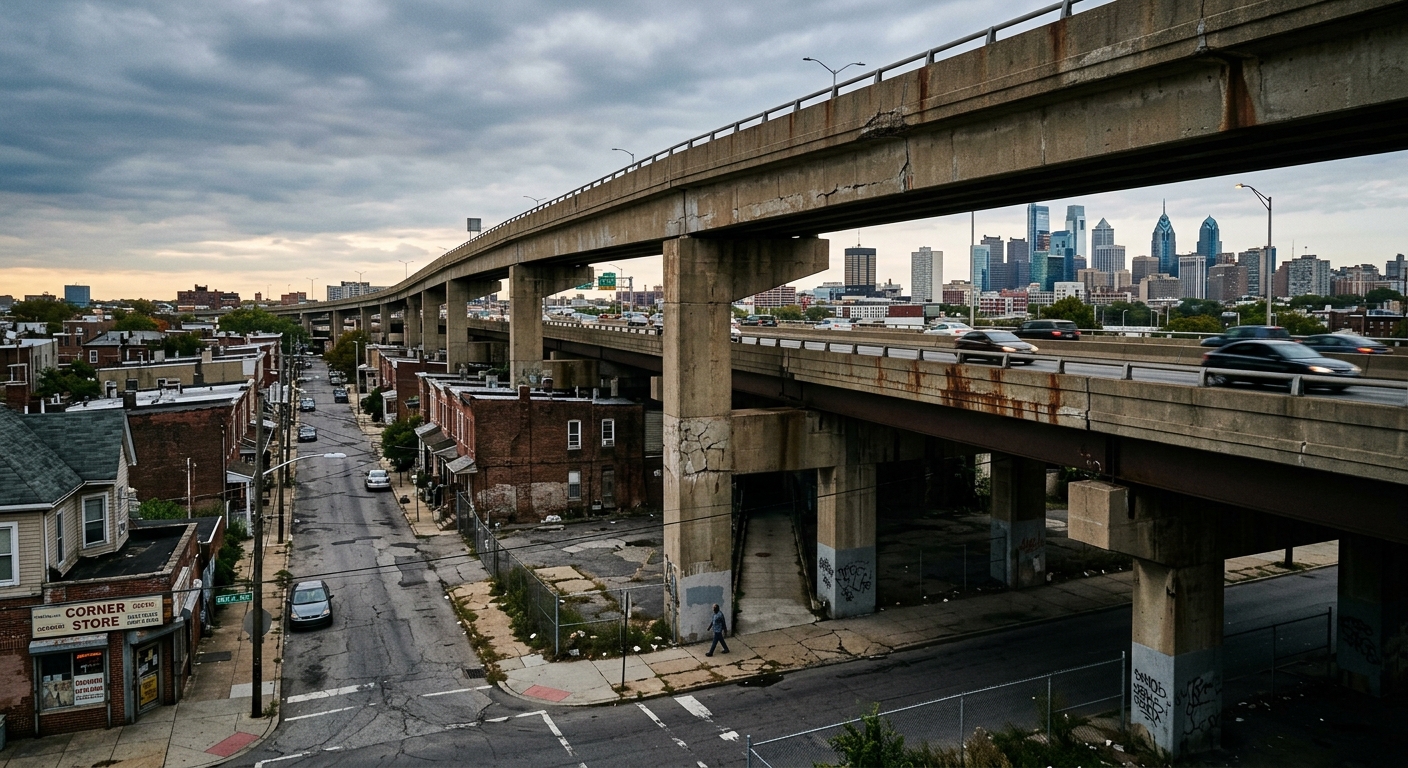
The Dawn of the Interstate and the Blueprint of Division
The mid-twentieth century brought about a transformative era in American transportation, fundamentally altering the geographical and social landscape of the nation. The passage of the Federal-Aid Highway Act in the 1950s catalyzed an unprecedented boom in infrastructure, promising seamless connectivity, rapid economic revitalization, and a robust national defense network. However, beneath the veneer of progress and modernization lay a profound and devastating reality for minority populations across the United States. The expansive asphalt and concrete ribbons that connected the burgeoning, predominantly white suburbs served a dual, much darker purpose within the urban core: they functioned as weapons of systemic segregation, deliberately routed through thriving Black and immigrant neighborhoods.
This calculated approach to urban planning did not merely displace residents; it dismantled generational wealth, erased cultural epicenters, and erected towering physical barriers that institutionalized racial divides for decades to come. Planners and municipal leaders of the era frequently utilized the construction of massive interstate viaducts as a tool for what they euphemistically termed “urban renewal.” In practice, civil rights advocates and displaced residents correctly identified this process as targeted removal. The routing of these massive thoroughfares was rarely dictated by the path of least geographical resistance, but rather by the path of least political resistance, targeting marginalized groups who lacked the immediate political capital to halt the bulldozers.
Redlining and the Paving of Prosperity
To fully grasp how specific neighborhoods became targets for the wrecking ball, one must examine the institutionalized practice of redlining that preceded the highway boom. Beginning in the 1930s, federal agencies like the Home Owners’ Loan Corporation (HOLC) created color-coded maps of American cities to assess mortgage lending risk. Neighborhoods with predominantly Black, immigrant, or low-income populations were invariably outlined in red and deemed “hazardous” for long-term financial investment.
This federal designation initiated a vicious cycle of capital starvation. Because banks refused to issue mortgages or business loans in redlined areas, property values stagnated, and municipal governments systematically divested from these neighborhoods, neglecting basic services and infrastructure upkeep. Two decades later, when highway planners began surveying cities for the new interstate system, these deliberately underfunded neighborhoods were officially labeled as “blighted.” This designation provided local governments with the legal and moral cover needed to invoke eminent domain, seizing properties at rock-bottom prices under the guise of civic improvement.
The synergy between redlining and highway construction was a masterclass in structural inequality. The very government mechanisms that actively prevented minority residents from accumulating property wealth subsequently used that manufactured poverty as justification to seize their homes and businesses. The destruction was framed as a necessary sacrifice for the greater good of urban modernization, though the “greater good” primarily benefited suburban commuters and commercial freight operations, leaving inner-city residents to bear the entirety of the socioeconomic cost.
The Dissection of Vibrant Micro-Economies
Across the nation, the blueprint of highway construction played out with chilling consistency. While the historical narrative often focuses strictly on the physical displacement of residents, the true, long-lasting catastrophe was the systematic destruction of localized micro-economies. Before the heavy machinery arrived, these neighborhoods—though perhaps redlined and denied equitable municipal services—were frequently self-sustaining cultural and economic hubs.
These tight-knit wards housed Black-owned grocers, pharmacies, theaters, jazz clubs, law offices, and medical practices. Because segregation barred minorities from participating fully in the broader city economy, these neighborhoods necessitated absolute self-reliance. The businesses within them circulated money internally, allowing families to build a semblance of generational wealth despite overwhelming systemic barriers. When the interstates tore through these cultural epicenters, they did not just demolish buildings; they obliterated complex, interdependent economic ecosystems.
Business owners who lost their storefronts to eminent domain were rarely compensated enough to relocate and rebuild in equivalent areas. Residents were scattered, severing the deep social ties and community support networks that had long served as a buffer against racial discrimination. Many displaced families were funneled into newly constructed, densely packed public housing projects, which effectively concentrated poverty and further isolated minority populations from the economic vitality of the broader city. The generational wealth that was poised to be passed down was instead buried under millions of tons of concrete.
The Lingering Smog of Environmental Injustice
The consequences of routing interstates through minority neighborhoods extend far beyond the initial trauma of displacement and economic disenfranchisement. For the residents who remained in the shadows of these towering concrete viaducts, a new, insidious threat emerged: environmental racism. Highways are chronic, relentless polluters, serving as massive corridors for diesel-burning freight trucks and hundreds of thousands of idling passenger vehicles daily.
Decades of environmental research have demonstrated that communities located adjacent to major roadways suffer from disproportionately high rates of severe health issues. The continuous emission of fine particulate matter (PM2.5), nitrogen oxides, and volatile organic compounds creates a toxic microclimate. Children growing up in these environments exhibit significantly elevated rates of asthma, reduced lung function, and other chronic respiratory illnesses. Furthermore, the constant barrage of noise pollution from heavy traffic has been linked to elevated stress levels, sleep disturbances, and long-term cardiovascular disease.
Additionally, the massive footprint of concrete and asphalt exacerbates the urban heat island effect. These neighborhoods, often already lacking in green spaces and tree canopies due to historical municipal neglect, absorb and radiate immense amounts of solar heat. During summer months, temperatures in these highway-adjacent zones can be dangerously higher than in greener, wealthier parts of the same city, increasing the risk of heat-related illnesses and driving up cooling costs for low-income families.
Demolition and Displacement: Quantifying the Human Cost
To understand the multi-faceted devastation caused by infrastructural segregation, it is necessary to categorize the cascading impacts that have spanned multiple generations. The table below outlines the primary spheres of disruption experienced by these targeted communities.
| Impact Category | Historical & Ongoing Consequences |
|---|---|
| Economic Disenfranchisement | Destruction of minority-owned businesses; loss of property values; disruption of localized wealth circulation; inadequate eminent domain compensation. |
| Social Fragmentation | Displacement of tight-knit communities; severing of cultural and religious ties; forced relocation into segregated public housing projects. |
| Health & Wellness | Exponential increases in asthma and respiratory diseases due to PM2.5 exposure; cardiovascular stress from chronic noise pollution. |
| Environmental Degradation | Amplification of the urban heat island effect; contamination of local soil and water runoff; systemic lack of restorative green spaces. |
Reimagining the Concrete Divide: The Shift Toward Restorative Infrastructure
As the massive infrastructural projects of the mid-twentieth century reach the end of their structural lifespans, American cities find themselves at a crucial, historic crossroads. The crumbling, obsolete concrete viaducts present an opportunity not just for straightforward repair, but for deep, societal reckoning and restitution. A growing, powerful movement among urban planners, environmental justice advocates, and local community members is actively pushing to tear down these divisive highways entirely rather than rebuilding them in place.
The leading alternative in this restorative urban planning movement is the “community grid” concept. Instead of routing high-speed, elevated traffic through the heart of a city, the community grid approach disperses traffic across a network of street-level boulevards and pedestrian-friendly avenues. This strategy aims to physically stitch the fractured urban fabric back together. By removing the imposing concrete barriers, cities can reclaim acres of valuable land for affordable housing, community parks, and localized commercial development, effectively returning the space to the communities that were initially fractured.
Federal recognition of this injustice has finally begun to materialize. Initiatives aimed at reconnecting communities have been established to provide vital funding for cities willing to dismantle their exclusionary infrastructure. While removing a highway cannot magically reverse decades of systemic economic and health disparities, it represents a necessary first step toward restorative justice. It signals a shift from an era where infrastructure was weaponized to one where urban design is leveraged to heal, integrate, and empower.
Frequently Asked Questions (FAQs)
What is redlining and how did it affect highway construction?
Redlining was a discriminatory practice initiated in the 1930s by federal agencies and banks, marking minority and low-income neighborhoods in red on maps to indicate they were “hazardous” for investment. This led to a lack of loans and municipal funding, causing property values to drop. Decades later, highway planners labeled these artificially devalued areas as “blighted,” making them cheap and legally easy targets for demolition and interstate routing.
How did the Federal-Aid Highway Act impact minority communities?
While the Federal-Aid Highway Act aimed to connect the country and stimulate the economy, local planners often routed these massive highways directly through thriving Black and immigrant neighborhoods. This displaced hundreds of thousands of residents, destroyed minority-owned businesses, and created physical barriers that entrenched racial segregation in urban centers.
What is environmental racism in the context of urban infrastructure?
Environmental racism refers to the disproportionate burden of environmental hazards placed on marginalized communities. In the context of infrastructure, it manifests as routing highly polluting highways through minority neighborhoods, subjecting the remaining residents to severe air pollution (like PM2.5), noise pollution, and elevated urban heat, which lead to chronic health issues such as asthma and heart disease.
What is a “community grid” alternative?
A community grid is an urban planning approach designed to replace elevated highways or sunken expressways with a network of street-level, pedestrian-friendly boulevards. This concept disperses traffic evenly, removes the physical and psychological barriers dividing neighborhoods, and reclaims land for housing, parks, and local businesses, aiming to reconnect and revitalize the urban core.
References
- History of the Interstate Highway System — Federal Highway Administration (FHWA). 2023-10-15. https://highways.dot.gov/highway-history/interstate-system/50th-anniversary/interstate-highway-system
- Reconnecting Communities Pilot Program — U.S. Department of Transportation. 2024-02-12. https://www.transportation.gov/grants/reconnecting-communities
- Research on Near Roadway and Other Traffic Pollution — Environmental Protection Agency (EPA). 2023-08-30. https://www.epa.gov/air-research/research-near-roadway-and-other-traffic-pollution
Similar Articles








Read full bio of medha deb


