
Indoor Slip and Fall Hazards: A Practical Legal Guide
Understand how indoor conditions lead to slip and fall accidents, when property owners are liable, and what evidence protects your claim.
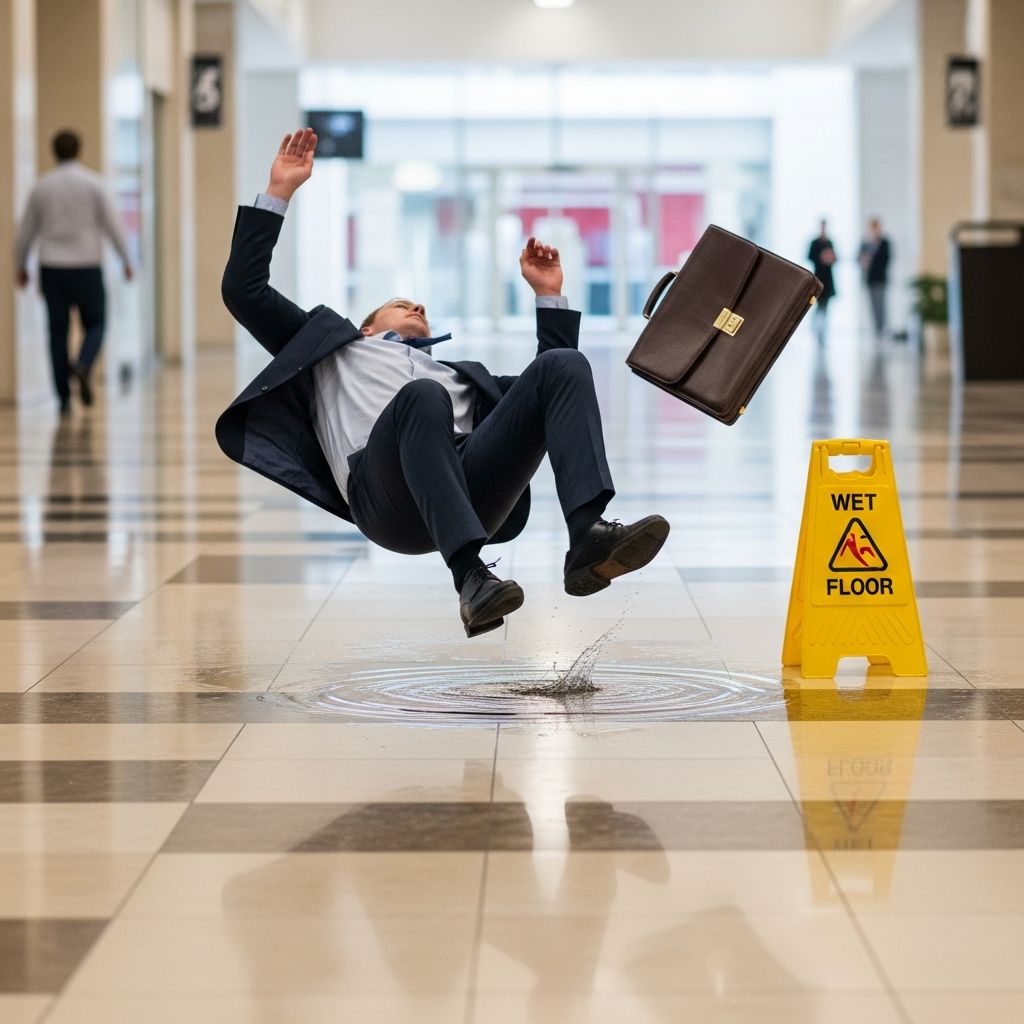
Indoor slip and fall accidents are among the most common sources of premises liability claims in homes, stores, office buildings, and other public or private interiors. Falls are a leading cause of injury in the United States, sending millions of people to emergency departments each year, particularly older adults. When unsafe indoor conditions are the result of careless maintenance or poor safety practices, injured people may pursue compensation through a personal injury claim.
This guide explains the primary indoor hazards that lead to slip and fall incidents, how premises liability law generally applies, and what steps to take if you are hurt on someone else’s property.
What Makes an Indoor Slip and Fall a Legal Claim?
Not every fall inside a building gives rise to a successful lawsuit. Premises liability law focuses on whether the property owner, occupier, or manager failed to act with reasonable care in keeping the space safe for lawful visitors.
Although details vary by state, most indoor slip and fall claims involve four basic elements:
- Duty of care: The owner or occupier owed you a legal duty to keep the premises reasonably safe.
- Breach: They failed to fix, warn about, or reasonably inspect for a hazardous condition.
- Causation: The unsafe condition directly caused your slip, trip, or fall.
- Damages: You suffered actual harm, such as medical bills, lost wages, or pain and suffering.
Indoor conditions leading to slip and fall claims generally arise in one of two ways:
- The owner or staff created the dangerous condition (for example, mopping without posting warning signs).
- The hazard existed long enough that a reasonable person would have discovered and remedied it (for example, a long-standing leak causing puddles in a hallway).
Common Indoor Conditions That Cause Slip and Fall Accidents
Many indoor hazards are predictable and preventable with basic maintenance and safety planning. The following categories frequently appear in slip and fall case files and safety statistics.
1. Wet, Slick, or Contaminated Floors
Slippery flooring is one of the most widely recognized sources of indoor falls. Liquids, cleaning agents, and polishing products reduce traction and make it easy to lose footing.
Typical sources of slick floors include:
- Spills from food, drinks, or merchandise in grocery stores, restaurants, and retail shops
- Water tracked in from rain or snow near entryways and lobbies
- Recently mopped floors without adequate warning signs or barriers
- Leaking pipes, appliances, or ceiling leaks that pool on walking surfaces
- Over-waxed or polished tile and wood floors that become excessively glossy
Building operators are expected to promptly address spills and leaks, use absorbent mats in predictable problem areas, and post visible warnings until surfaces are safe to walk on.
2. Uneven, Broken, or Poorly Installed Flooring
Uneven surfaces turn everyday walking into a tripping hazard. They are especially dangerous in busy public interiors, where people may be distracted or carrying bags.
Problem flooring conditions can include:
- Loose or broken tiles in hallways, bathrooms, or lobbies
- Raised edges where one flooring type transitions to another (for example, carpet to tile)
- Worn, rippled, or bulging carpet that catches shoes or walkers
- Gaps, holes, or soft spots in wood subfloors
- Improperly secured thresholds and floor strips at doorways
Routine inspections and timely repairs are critical. Failing to correct these issues after notice can support a negligence finding in a premises liability case.
3. Clutter, Obstructions, and Hidden Hazards
Trip hazards are often the result of poor housekeeping practices and disorganized workspaces. Simple clutter can create serious risk, particularly in corridors and stairwells used as emergency routes.
Common indoor obstructions include:
- Cords, power strips, and extension cables stretched across walkways
- Boxes, trash bags, or merchandise stacked in aisles or near exits
- Open cabinet doors or drawers jutting into paths
- Loose floor mats that bunch up or curl at the corners
- Small objects, packaging, or debris left on polished or hard surfaces
Good safety practice requires keeping pathways clear and rerouting or securing cords and cables so they do not create unexpected obstacles.
4. Inadequate Lighting and Poor Visibility
Even minor irregularities are more dangerous when visitors cannot see them. Poor lighting contributes to indoor falls by hiding changes in elevation, spilled materials, or obstacles.
Examples of visibility-related hazards include:
- Dim or burned-out bulbs in stairwells and parking garages
- Poorly lit corridors where flooring transitions are unclear
- Glare from overly bright lights reflecting off shiny floors
- Shadows created by uneven lighting that conceal steps or ramps
Property owners should regularly check and maintain lighting fixtures, particularly in high-risk locations like stairs, ramps, entrances, and restrooms.
5. Unsafe Stairs, Ramps, and Handrails
Falls on stairs frequently result in more severe injuries because of added height and momentum. Building codes and safety standards treat stair design, tread depth, and handrails as critical protection measures.
Stair and ramp-related hazards include:
- Missing, loose, or unstable handrails on one or both sides
- Worn or broken stair treads and edges
- Steep or irregular steps with inconsistent height or depth
- Slippery stair surfaces with no non-slip strips or coverings
- Poor lighting at landings and top or bottom steps
When a property fails to meet basic building or fire code requirements for stairs and ramps, that violation can be powerful evidence of negligence in a slip and fall claim.
6. Poor Maintenance and Lack of Inspection
Many indoor slip and fall accidents are not the result of a single spill or trip hazard but a pattern of poor maintenance. Over time, small issues accumulate into dangerous conditions.
Indicators of systemic maintenance problems include:
- No documented schedule for inspecting floors, stairs, and common areas
- Repeated complaints about leaks, broken tiles, or loose carpeting without repair
- Overflowing trash, debris on floors, and chronically cluttered walkways
- Long-standing water damage or mold from unresolved leaks
- Lack of written safety procedures for cleaning, mopping, or handling spills
Courts often look at whether the owner had a reasonable system in place to discover and correct hazardous conditions. A complete absence of such systems can support a finding that the owner breached their duty of care.
Who Is Responsible for an Indoor Slip and Fall?
Determining legal responsibility depends on the relationship between the injured person and the property, as well as the owner or occupier’s conduct. Although each state uses its own terminology, some common categories and concepts appear across U.S. law.
| Visitor Type | Typical Examples | General Duty Owed* |
|---|---|---|
| Invitee | Store customers, hotel guests, office visitors | Highest duty: inspect for hazards, fix them, or provide clear warnings |
| Licensee | Social guests, some non-paying visitors | Warn of known dangers not obvious to the visitor; avoid willful or wanton harm |
| Trespasser | Person entering without permission | Limited duty: generally avoid intentional harm; special rules may protect children |
*Actual standards vary by state statute and case law and may use different classifications or a general reasonableness test.
Key Liability Factors
In evaluating responsibility for an indoor slip and fall, lawyers and insurers typically examine:
- Knowledge of the hazard: Did the owner know or should they have known about the condition?
- Reasonable response time: How long did the condition exist before the fall?
- Corrective actions: Were repairs, cleanup, or warning signs used appropriately?
- Compliance with codes: Did the property meet relevant building, fire, and safety codes?
- Visitor conduct: Was the injured person acting reasonably (for example, not running or ignoring obvious warnings)?
Many states also apply comparative negligence rules, which can reduce a victim’s recovery if their own carelessness contributed to the fall.
Typical Injuries from Indoor Slip and Fall Events
Falls can cause anything from minor bruises to life-changing trauma. Older adults are particularly vulnerable; the U.S. Centers for Disease Control and Prevention (CDC) reports that falls are a leading cause of injury-related death and nonfatal injuries among people 65 and older.
Common injury types include:
- Sprains and strains to ankles, knees, wrists, and shoulders
- Fractures, especially hip, wrist, and arm fractures in older adults
- Back and spinal injuries, including herniated discs
- Head trauma, including concussions and traumatic brain injuries
- Soft tissue damage causing long-term pain and reduced mobility
Severe injuries often require surgery, rehabilitation, home health care, and long-term pain management, all of which can be compensable in a premises liability case when negligence is proven.
What to Do After an Indoor Slip and Fall Accident
Steps taken immediately after a fall can significantly affect both recovery and any potential legal claim. Acting quickly helps preserve critical evidence while ensuring that medical needs are addressed.
1. Seek Prompt Medical Attention
- Get evaluated even if injuries seem minor; some conditions, such as concussions, worsen over time.
- Explain to your provider exactly how the fall occurred and what body parts struck the ground.
- Keep copies of medical records, imaging results, and bills, as they document your damages.
2. Report the Incident in Writing
- Notify a manager, building supervisor, or property owner as soon as reasonably possible.
- Ask to complete a written incident report and request a copy for your records.
- Confirm that the date, time, and location of the fall are accurately noted.
3. Preserve Evidence from the Scene
- Take clear photographs or video of the exact area where you fell, including any visible hazard.
- Capture the condition of floors, lighting, warning signs (or lack of them), and surrounding objects.
- Write down names and contact details of any witnesses.
- Keep the shoes and clothing you were wearing; do not wash or discard them.
4. Avoid Giving Detailed Statements Without Advice
- Be cautious about recorded statements to insurance companies before consulting legal counsel.
- Avoid speculating about fault or minimizing your injuries when speaking with adjusters or staff.
- Do not sign releases or settlement documents without understanding your rights.
5. Consider Consulting a Personal Injury Attorney
- Premises liability cases often turn on technical questions of notice, building codes, and comparative fault.
- An attorney can evaluate the strength of your claim, gather additional evidence, and negotiate with insurers.
- Many lawyers offer free initial consultations and work on a contingency fee basis, meaning fees are typically collected only if there is a recovery.
Preventing Indoor Slip and Fall Accidents
From a safety standpoint, most indoor slip and fall hazards can be reduced with systematic housekeeping, sensible design, and attention to building standards. Many of the same measures that prevent injuries also reduce legal exposure for property owners.
Risk-Reduction Practices for Property Owners and Managers
- Establish and document regular inspection schedules for floors, stairs, and common areas.
- Promptly repair or replace damaged flooring, loose mats, and broken tiles.
- Use non-slip coatings in areas prone to moisture, such as kitchens and restrooms.
- Provide stable, code-compliant handrails and guardrails on all stairways and ramps.
- Maintain adequate lighting in corridors, stairwells, parking decks, and entrances.
- Train employees on proper cleanup procedures, including immediate spill response and warning sign placement.
- Keep aisles and exits free from clutter, cords, and stored materials.
Frequently Asked Questions About Indoor Slip and Fall Claims
Q: Do I automatically have a case if I fall inside a store or building?
A: No. To succeed in a claim, you must generally show that the owner or occupier failed to use reasonable care in addressing a dangerous condition and that this negligence directly caused your injuries.
Q: How long do I have to file a slip and fall lawsuit?
A: Each state has a statute of limitations that sets a deadline for filing personal injury lawsuits. These time limits can be as short as one or two years, so you should consult a lawyer as soon as possible to learn the deadline that applies to your situation.
Q: What if I was partly at fault for my fall?
A: Many states use comparative negligence rules, which can reduce your compensation if you were partially responsible (for example, by ignoring warning signs or running). In some jurisdictions, you may be barred from recovery if your share of fault exceeds a specific threshold.
Q: Can poor lighting alone make a property owner liable?
A: It can, especially if inadequate lighting made it difficult to see hazards such as steps, spills, or floor level changes, and the owner failed to correct the problem within a reasonable time after knowing about it.
Q: What damages can I recover in an indoor slip and fall case?
A: Depending on your state’s law and the facts of your case, recoverable damages may include medical expenses, lost income, reduced earning capacity, pain and suffering, and in severe cases, future care costs and home modifications.
References
- Preventing falls in older persons — American Geriatrics Society Clinical Practice Guideline. 2010-12-01. https://pubmed.ncbi.nlm.nih.gov/21028979/
- Important Facts about Falls — Centers for Disease Control and Prevention (CDC). 2024-01-25. https://www.cdc.gov/falls/facts.html
- Premises Liability: A Legal Overview — Congressional Research Service. 2012-01-05. https://sgp.fas.org/crs/misc/R42663.pdf
- Slips, Trips, and Falls — Occupational Safety and Health Administration (OSHA). 2020-11-10. https://www.osha.gov/sites/default/files/publications/OSHA3666.pdf
- NFPA 101: Life Safety Code — National Fire Protection Association. 2024-01-01. https://www.nfpa.org/codes-and-standards/all-codes-and-standards/list-of-codes-and-standards/detail?code=101
Similar Articles








Read full bio of medha deb


