
The Relentless Legal Labyrinth: Indigenous Women and Asylum
Despite securing safety, Indigenous women face intense legal battles for asylum.
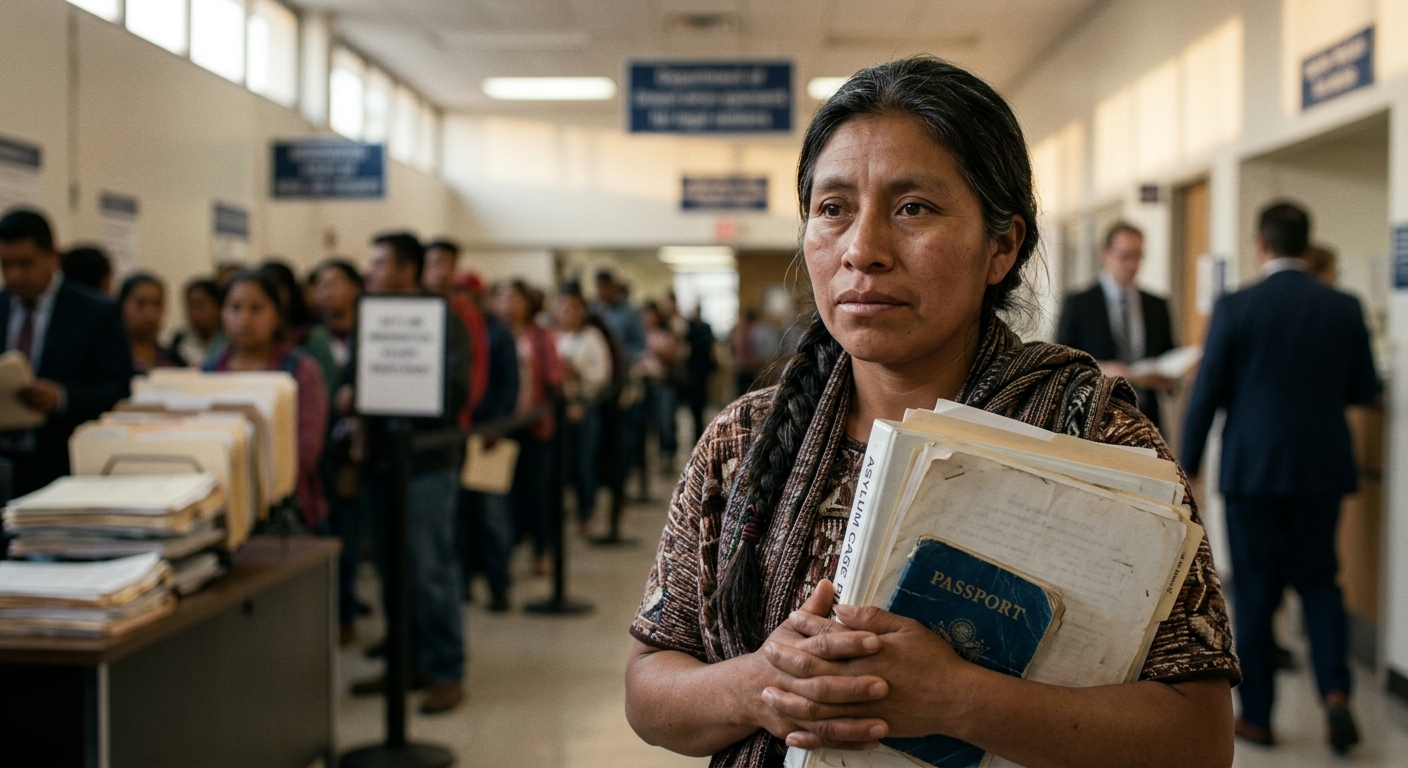
The Illusion of Sanctuary: When Reaching Safety is Only the Beginning
For many vulnerable populations fleeing profound violence, crossing the United States border is envisioned as the definitive end to a harrowing, life-threatening journey. The reality, however, is often a devastating paradox. This is particularly true for Indigenous women seeking asylum, who routinely discover that reaching physical safety on American soil merely marks the beginning of an aggressive and protracted legal war. Even in rare instances where these migrants successfully secure humanitarian release, temporary parole, or a favorable initial asylum ruling from an immigration judge, federal authorities frequently retaliate with relentless appeals.
The bureaucratic machinery of the United States immigration system operates with a prosecutorial zeal, relentlessly challenging the presence of traumatized individuals who have already proven their credible fear of persecution. By examining the intersection of systemic discrimination, extreme language barriers, and aggressive federal litigation strategies, we uncover the hidden complexities that Indigenous women face long after they have escaped the immediate threats of their home countries. This ongoing struggle highlights a profound disconnect between the nation’s stated humanitarian obligations and the punitive administrative practices that consistently prioritize deportation metrics over due process and human rights.
Systemic Drivers of Displacement: Fleeing Generational Persecution
The migration of Indigenous populations from Central America is not a modern anomaly but the direct consequence of deeply entrenched, generational persecution. In countries such as Guatemala, Mexico, and Honduras, Indigenous communities—including the Maya, Garifuna, and Lenca peoples—endure systemic marginalization that touches every aspect of their socioeconomic existence. Historical disenfranchisement has resulted in devastating poverty, a stark lack of political representation, and targeted violence from state and non-state actors alike.
For Indigenous women, these systemic issues are radically amplified. They are frequently subjected to gender-based violence and forced labor from an alarmingly young age, often finding themselves coerced into domestic labor where they are isolated in urban households and subjected to severe emotional, physical, and sexual abuse by their employers. Because of their marginalized status, local law enforcement agencies routinely ignore their pleas for help. When Indigenous individuals become vocal advocates for their community’s land rights or basic human dignity, they are routinely targeted by organized crime syndicates or corrupt state officials.
Fleeing their ancestral homelands is rarely a choice made for economic convenience; it is a desperate, fundamental survival tactic. The state often outright refuses to investigate crimes committed against Indigenous women, offering them no protection from local cartels or abusive cartels. Consequently, internal relocation within their own countries is futile, leaving international asylum as the only viable mechanism to preserve their lives and the lives of their children. By the time an Indigenous woman reaches the southern border of the United States, she carries the profound trauma of both acute personal violence and centuries of institutionalized colonial abuse.
The Humanitarian Crisis at Externalized Borders
Before even setting foot inside an American immigration courtroom, asylum seekers must survive the perilous gauntlet of externalized border policies. Initiatives like the Migrant Protection Protocols (often referred to as the “Remain in Mexico” policy) and sweeping public health expulsions have fundamentally altered the asylum landscape. Under the guise of national security and public administration, these policies systematically dismantle the internationally recognized right to seek safe harbor. These frameworks forcefully strand desperate families in makeshift, highly dangerous refugee camps along the northern Mexican border, in border cities like Matamoros, Nuevo Laredo, and Tijuana.
The conditions within these sprawling encampments are notoriously catastrophic. Residents are forced to weather extreme temperature fluctuations—from blistering daytime heat to freezing winter nights—while living in fragile, heavily populated tents devoid of proper sanitation, running water, or consistent food supplies. More terrifying than the environmental exposure, however, is the constant threat of cartel violence.
Extortion, kidnapping, and sexual assault are rampant in these border cities, with migrants serving as highly profitable commodities for organized crime networks. Indigenous women are disproportionately vulnerable in these chaotic environments. Lacking the financial resources to secure safer lodging and often unable to speak Spanish fluidly, they become prime targets for exploitation. Human smuggling rings frequently prey upon them, promising safety but ultimately delivering them into modern-day slavery or ransom situations. The psychological toll of surviving a treacherous overland trek only to be corralled into a violently unstable camp is immeasurable, transforming the fundamental right to seek asylum into a grueling, life-threatening test of human endurance.
The Crisis of Linguistic Refoulement
One of the most insidious, yet rarely discussed, barriers facing Indigenous asylum seekers is the pervasive lack of adequate language access within the United States immigration system. Federal agencies consistently operate under the erroneous, blanket assumption that all migrants originating from Latin America are fluent Spanish speakers. In reality, a significant percentage of arriving asylum seekers speak only their native Indigenous languages, such as Mam, K’iche’, Q’eqchi’, or Ixil.
When immigration officials conduct initial border processing, critical credible fear interviews, or even complex court hearings in Spanish—without providing qualified, culturally sensitive interpreters—the results are legally and morally disastrous. Asylum seekers are inherently unable to accurately articulate the specific, horrific nature of the persecution they fled. They may answer “yes” or “no” to legally binding questions out of intense fear, deference to authority, or sheer confusion, thereby severely damaging their legal claims. This communication breakdown is not merely an administrative inconvenience; it is a fatal flaw in the administration of justice.
Legal scholars and human rights advocates refer to this systemic failure as “linguistic refoulement”—the practice of returning a refugee to a country where they face grave danger simply because language barriers prevented them from accessing legal protections. Despite federal mandates requiring meaningful language access across government agencies, the chronic shortage of certified Indigenous language interpreters means countless legitimate asylum claims are unjustly denied before they are even fully understood.
| Indigenous Language | Primary Region of Origin | Major Barrier in US Immigration Courts |
|---|---|---|
| Mam | Guatemala / Mexico | Severe shortage of certified legal interpreters leads to critical misunderstandings during credible fear interviews. |
| K’iche’ | Guatemala | Frequent misclassification as Spanish speakers results in compromised testimony and wrongful deportations. |
| Q’eqchi’ | Guatemala / Belize | Complex legal concepts lack direct translation, requiring highly specialized cultural liaisons rather than mere word-for-word interpretation. |
Bureaucratic Retaliation: The Federal Government’s Appellate Strategy
The cruelest chapter in the asylum process often occurs after a fragile legal victory has finally been won. When an Indigenous woman manages to overcome the monumental odds—securing competent legal representation, surviving the terrors of border camps, bridging the vast language gap, and successfully convincing an immigration judge or parole officer of her legitimate need for protection—her ordeal is rarely over. The Department of Homeland Security (DHS), which actively acts as the prosecutorial arm in immigration court proceedings, frequently launches aggressive appeals to overturn these protective grants.
This relentless appellate strategy is profoundly destabilizing and inflicts further trauma. Even after a migrant is officially paroled into the United States and joyfully reunited with family members who can support her, DHS attorneys may fight fiercely to revoke that protected status. They continually push motions to return the individual to detention centers or dangerous external border camps while the case drags through the appellate backlog. For a mother who believes she has finally secured safety for her child, the sudden realization that the federal government is actively campaigning to deport her is a source of profound, ongoing psychological terror.
Critics argue that this bureaucratic zeal effectively weaponizes the legal system against the most vulnerable populations. It treats asylum not as a fundamental humanitarian right enshrined in international law, but as an administrative loophole to be aggressively shuttered at all costs, regardless of the human lives at stake.
Navigating the Intersection of Race, Gender, and Immigration
The hurdles faced by Indigenous women in the asylum system cannot be accurately understood through a single, isolated lens; they are the direct result of deeply intersecting vulnerabilities. As migrants, they face rising xenophobia and the inherent disadvantages of navigating a foreign, highly adversarial legal system. As women, they are disproportionately impacted by gender-based violence, human trafficking, and the immense burden of protecting dependent children during their migration. As Indigenous people, they suffer from structural racism, cultural erasure, and a linguistic void that effectively silences their narratives.
This triple burden requires immigration adjudicators and border agents to possess a highly nuanced understanding of intersectional discrimination—a competency that is overwhelmingly absent in standard immigration proceedings. For instance, evaluating an asylum claim based solely on political violence while ignoring the deeply ingrained gender-based persecution typical in these regions paints a wildly incomplete picture of the danger the applicant faces. Until the legal framework acknowledges these compounding layers of marginalization, Indigenous women will continue to be evaluated through a fundamentally flawed and inequitable lens, constantly risking a return to the very violence they risked everything to escape.
A Blueprint for Humane Reform
Transforming this adversarial system requires decisive, structural policy shifts rather than incremental adjustments. First and foremost, the federal government must urgently scale its language access programs, actively recruiting and properly compensating interpreters who speak rare Indigenous dialects. The practice of linguistic refoulement must be wholly eradicated through mandatory, culturally competent linguistic screenings before any legal determinations or deportations are made.
Furthermore, government agencies must commit to better data disaggregation. Currently, Indigenous migrants are frequently lumped into broad administrative categories like “Hispanic” or “Latino,” which invisibilizes their specific needs and obscures the true scale of the language access crisis. By accurately tracking the demographics of incoming populations, agencies can preemptively deploy appropriate cultural resources.
Finally, agencies must reconsider their aggressive litigation postures. Prosecutorial discretion should be exercised to halt the endless, taxpayer-funded appeals against asylum seekers who have already demonstrated a credible fear of persecution. Humanitarian parole should be utilized as the default administrative stance for vulnerable populations, including mothers and unaccompanied children, rather than relying on punitive detention or externalized border camps. Meaningful reform demands recognizing the fundamental humanity of the displaced and shifting the institutional focus from relentless enforcement to the equitable administration of justice.
Frequently Asked Questions (FAQs)
What is “linguistic refoulement” in the context of immigration?
Linguistic refoulement occurs when an asylum seeker is deported back to a highly dangerous environment primarily because language barriers prevented them from properly communicating their asylum claim. It heavily impacts those who speak rare Indigenous languages but are forced by immigration authorities to navigate the legal system in Spanish or English.
Why do federal agencies appeal granted asylum cases?
The Department of Homeland Security acts as the prosecutor in immigration court. Even if an independent immigration judge grants asylum or humanitarian parole, DHS attorneys frequently appeal the decision to a higher board. This strategy is often employed to enforce strict immigration controls, maintain high deportation metrics, and deter future asylum claims, even when the applicant has proven their case.
What are the main drivers forcing Indigenous women to flee Central America?
Indigenous women face a compounding crisis of systemic racism, extreme poverty, and targeted gender-based violence. The inability and unwillingness of their home governments to protect them from local cartels, land disputes, and abusive labor practices leaves international asylum as their only viable means of long-term survival.
How does the “Remain in Mexico” policy uniquely harm mothers and children?
This policy forces mothers to wait in highly unstable, makeshift border camps for months or years, severely restricting their access to basic sanitation, maternal healthcare, and infant nutrition. Furthermore, the lack of secure shelter makes them prime targets for extortion, sexual assault, and kidnapping by local cartels while they desperately await their court dates.
References
- Improving Language Access in the U.S. Asylum System — Center for American Progress. 2023-05-25. https://www.americanprogress.org/article/improving-language-access-in-the-u-s-asylum-system/
- DHS Indigenous Languages Plan — Department of Homeland Security. 2023-10-19. https://www.dhs.gov/language-access
- Health Sciences Interprofessional Collaborative: A Perspective on Migration, COVID-19, and the Impact on Indigenous Communities — National Institutes of Health / PMC. 2021-06-03. https://www.ncbi.nlm.nih.gov/pmc/articles/PMC8344158/
Similar Articles








Read full bio of medha deb


