
Indigenous Voting Access and Ballot Collection Bans
How ballot collection bans threaten Native American voting access.
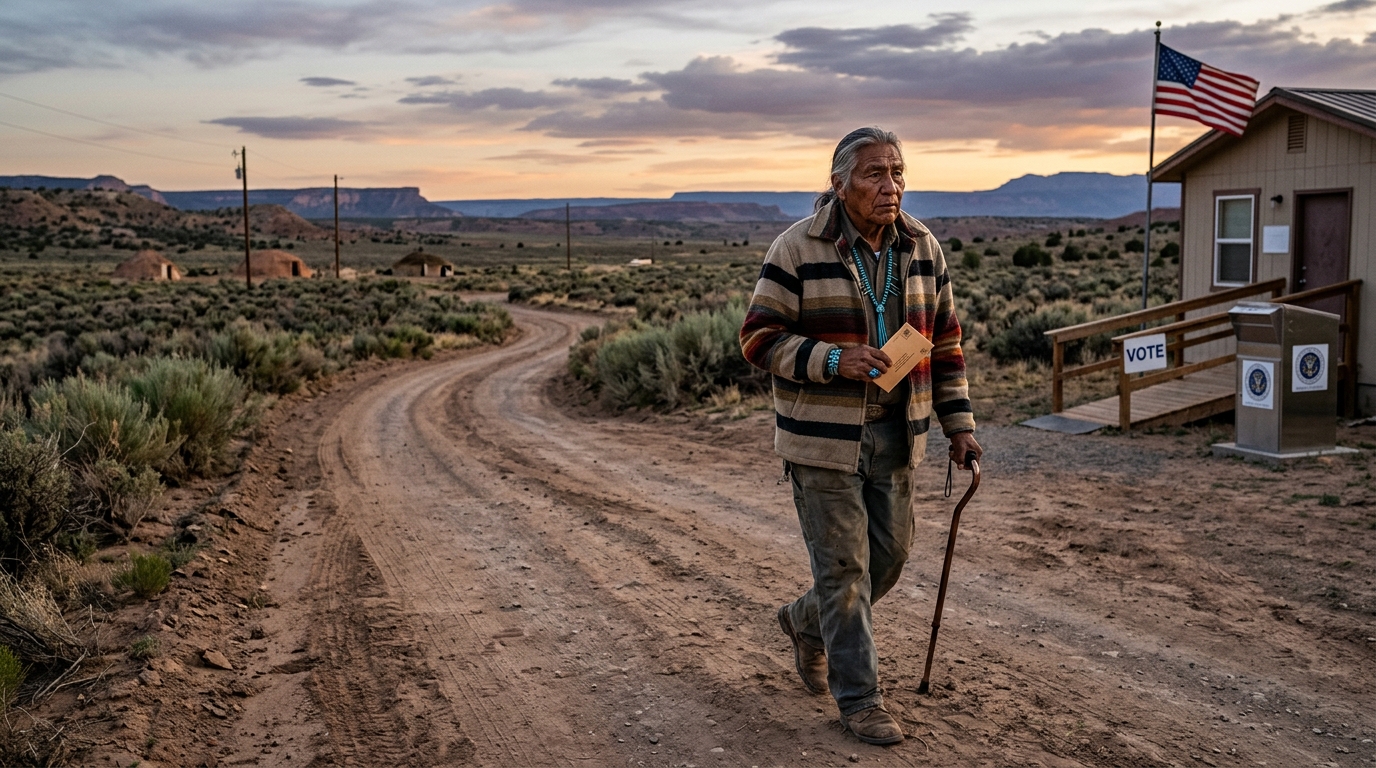
For nearly a century since the passage of the 1924 Snyder Act, which formally granted citizenship to Indigenous peoples in the United States, the right to vote has been a persistent battleground for Native Americans. While the legal right to cast a ballot exists on paper, the practical ability to exercise that right is frequently hindered by complex, systemic hurdles. In recent years, a surge of state-level election laws has targeted the specific methods that rural and marginalized communities use to participate in the democratic process. Among the most deeply consequential of these legislative efforts are bans on ballot collection.
In states with significant Indigenous populations, such as Montana, Arizona, and Nevada, ballot collection is not merely a modern convenience; it is an absolute geographical necessity. When state legislatures pass sweeping restrictions that criminalize or severely limit the ability of civic organizations, friends, and extended family to collect and submit sealed ballots on behalf of rural voters, they effectively silence a historically marginalized demographic. To understand why ballot collection bans have such a disproportionate impact on Native American voters, one must examine the unique infrastructural, geographical, and socioeconomic realities of life on rural reservations.
The Unique Topography and Infrastructure of Tribal Lands
The standard American voting experience—receiving a ballot at a designated residential address, filling it out at the kitchen table, and leaving it in a mailbox for a postal worker to collect—is an alien concept for many Native Americans living on reservations. The foundational infrastructure that most urban and suburban voters take for granted simply does not exist in many remote tribal communities.
First and foremost is the issue of geographic isolation. Many reservations encompass vast expanses of rural land, meaning that post offices and county election offices are situated dozens of miles away from where people actually live. For example, residents of the Fort Peck Indian Reservation in Montana may have to drive up to 68 miles round-trip just to reach the nearest post office. In other communities, the nearest county election headquarters might be over a hundred miles away. This isolation is compounded by a lack of reliable public transportation and the high costs associated with maintaining a personal vehicle.
Furthermore, residential mail delivery is practically non-existent in many of these areas. Instead of having mail delivered to their homes, residents must rely on post office boxes, which are often shared among multiple families. This lack of traditional street addresses creates a cascading series of problems:
- Voter Registration Hurdles: Without a standard street address, registering to vote becomes a bureaucratic nightmare, as election systems often require precise physical addresses to assign precincts.
- Irregular Mail Access: Because checking the mail requires a long journey, voters may only retrieve their mail once every week or two, drastically shortening the window they have to receive, complete, and return a mail-in ballot.
- Weather and Road Conditions: During the crucial weeks of November elections, severe weather can render the dirt and gravel roads common on reservations completely impassable, making a trip to a distant drop box physically impossible.
When these infrastructural deficits are combined, the notion of easily returning a mail-in ballot or driving to an in-person polling place becomes a luxury rather than a guaranteed right.
Deconstructing the Necessity of Ballot Collection
To bridge the massive geographical and infrastructural gaps on reservations, Indigenous communities have long relied on community-based ballot collection. This practice involves designated individuals—often community leaders, organizers from non-partisan voting rights groups, or extended family members—traveling door-to-door to collect sealed, completed absentee ballots and delivering them in bulk to the county election office or an official drop box.
This localized system is an adaptation born of necessity. An organizer with a reliable four-wheel-drive vehicle can make the 100-mile round trip to the county seat, ensuring that dozens of elderly, disabled, or economically disadvantaged voters have their voices heard. For tribal elders, who may have limited mobility or lack access to a vehicle, this form of assistance is the only way they can realistically participate in an election.
Unfortunately, this vital community service has been increasingly stigmatized by political rhetoric that labels it “ballot harvesting.” While opponents of ballot collection argue that such laws are necessary to prevent voter fraud and maintain election integrity, extensive reviews and judicial findings have repeatedly shown that fraud associated with ballot collection is virtually non-existent on tribal lands. Instead of protecting elections, broad prohibitions on ballot collection strip away the single most effective tool that rural Indigenous voters have to overcome systemic disenfranchisement.
Legislative Hurdles and Judicial Pushback
The push to ban or severely restrict ballot collection has gained immense traction over the past decade. State legislatures have introduced and passed bills that make it a criminal offense for anyone other than an immediate family member or caregiver to return another person’s ballot. This strict definition of “family” often ignores the complex, extended kinship networks that are foundational to many Native American cultures.
The legal landscape surrounding these bans has been volatile. Civil rights organizations, including the Native American Rights Fund (NARF) and the American Civil Liberties Union (ACLU), have aggressively challenged these laws in court, arguing that they violate constitutional protections and the Voting Rights Act by intentionally or effectively discriminating against minority voters.
The table below illustrates the stark contrast in voting accessibility that makes ballot collection essential for Indigenous voters compared to their urban counterparts:
| Accessibility Factor | Urban/Suburban Voters | Rural Indigenous Voters |
|---|---|---|
| Residential Mail Delivery | Standard daily delivery to home addresses. | Rare; reliance on distant P.O. boxes. |
| Distance to Polling Location | Typically within 1 to 5 miles. | Often 30 to 100+ miles round-trip. |
| Road Infrastructure | Paved, regularly plowed streets. | Often unpaved, prone to weather closures. |
| Impact of Collection Bans | Minimal; multiple easy alternative options exist. | Severe; eliminates the only viable voting method for many. |
In notable judicial decisions, state courts have sometimes recognized the discriminatory impact of these laws. Judges have temporarily blocked or struck down specific pieces of legislation after reviewing “cold, hard data” proving the disparate burden placed on Native American voters. However, the legal battles are far from settled. Following the U.S. Supreme Court’s ruling in Brnovich v. Democratic National Committee, which upheld an Arizona ballot collection ban and narrowed the interpretation of Section 2 of the Voting Rights Act, state legislatures have felt emboldened to pass even stricter voting regulations.
Systemic Ramifications for Indigenous Representation
The consequences of ballot collection bans extend far beyond the logistical frustration of election day. When a state enacts laws that functionally suppress the Native American vote, it disrupts the balance of democratic representation and undermines tribal sovereignty. Voting is the primary mechanism through which citizens influence public policy, secure funding for community infrastructure, and elect representatives who understand their unique socioeconomic challenges.
When Indigenous voter turnout is artificially depressed by logistical barriers, tribal communities lose their political leverage. This can result in diminished funding for essential services such as healthcare through the Indian Health Service (IHS), public education, and infrastructure development on reservations. Furthermore, it prevents Native Americans from electing county commissioners, state legislators, and federal representatives who will advocate for their land and water rights.
The U.S. Commission on Civil Rights has formally recognized these profound inequities. In advisory memorandums, the Commission has noted that the combination of geographical isolation, lack of residential addressing, and hostile state legislation creates an environment where exercising the franchise requires an unreasonable and disproportionate effort from Native American citizens.
Charting a Course for Electoral Equity
Addressing the crisis of Indigenous voter disenfranchisement requires a multi-faceted approach that respects tribal sovereignty while ensuring equitable access to the ballot box. Advocates for voting rights emphasize that the solution is not to punish voters for their geographical isolation, but to adapt election systems to meet the needs of all citizens.
One primary goal is the passage of comprehensive federal protections, such as the proposed Native American Voting Rights Act (NAVRA). This legislation aims to establish baseline standards for voting access on tribal lands. Key provisions of NAVRA and similar advocacy efforts include:
- Mandating On-Reservation Polling Places: Requiring states to provide polling locations and drop boxes within the boundaries of reservations, drastically reducing travel times.
- Protecting Ballot Collection: Establishing federal protections that allow designated community members to collect and return ballots for voters residing on tribal lands.
- Expanding Address Flexibility: Forcing election systems to accept tribal identification cards and non-traditional addresses for the purpose of voter registration.
- Consultation Requirements: Mandating that state and local election officials consult with tribal governments before making changes to polling locations or voting procedures that affect reservation communities.
Until federal mandates guarantee equitable access, the defense of the Native vote will continue to rely on relentless litigation and the dedication of grassroots organizers. By fighting against restrictive ballot collection laws, these advocates are not just defending a logistical process; they are fighting for the fundamental right of Indigenous communities to be recognized, heard, and valued in the American democratic system.
Frequently Asked Questions (FAQ)
- What exactly is ballot collection?
- Ballot collection is a practice where voters who are unable to easily access a post office, drop box, or polling location entrust their sealed, completed ballots to a designated individual (such as a community organizer, neighbor, or extended family member) to deliver on their behalf.
- Why is ballot collection so important for Native American voters?
- Many Native Americans living on rural reservations do not have residential mail delivery and must travel vast distances (often on unpaved roads) to reach the nearest post office or polling site. Ballot collection allows community members to pool resources and ensure that everyone’s vote is counted, overcoming immense geographical and infrastructural barriers.
- Why are states banning ballot collection?
- Proponents of ballot collection bans argue they are necessary to prevent voter fraud and “ballot harvesting.” However, comprehensive reviews have found no significant evidence of widespread fraud related to this practice on tribal lands. Critics argue these bans are politically motivated efforts that disproportionately suppress minority voter turnout.
- How do missing street addresses affect voting?
- Without standard street addresses, reservation residents struggle to register to vote because election databases require precise physical locations to assign precincts. It also prevents election officials from mailing ballots directly to voters’ homes.
- What is the Native American Voting Rights Act (NAVRA)?
- NAVRA is a proposed piece of federal legislation designed to eliminate systemic barriers to voting for Indigenous peoples. It would mandate polling places on reservations, protect the practice of ballot collection, and require the acceptance of tribal IDs for voter registration and identification purposes.
References
- Voting Access for Native Americans in Montana — U.S. Commission on Civil Rights. 2021-07-15. https://www.usccr.gov/files/2021-07/Montana-Voting-Access-Advisory-Memo.pdf
- Obstacles at Every Turn: Barriers to Political Participation Faced by Native Americans — Native American Rights Fund (NARF). 2020-06-04. https://vote.narf.org/obstacles-at-every-turn/
- How Voter Suppression Laws Target Native Americans — Brennan Center for Justice. 2022-05-23. https://www.brennancenter.org/our-work/analysis-opinion/how-voter-suppression-laws-target-native-americans
- Tribal Organizations Urge Congress to Protect Native American Voting Rights — Native American Rights Fund. 2022-01-14. https://narf.org/protect-native-american-voting-rights/
Similar Articles








Read full bio of Sneha Tete


