
Indiana Car Crash Legal Guide: Steps, Deadlines, Coverage
Essential rules, timelines, fault rules, and recovery steps for Indiana vehicle collision victims.
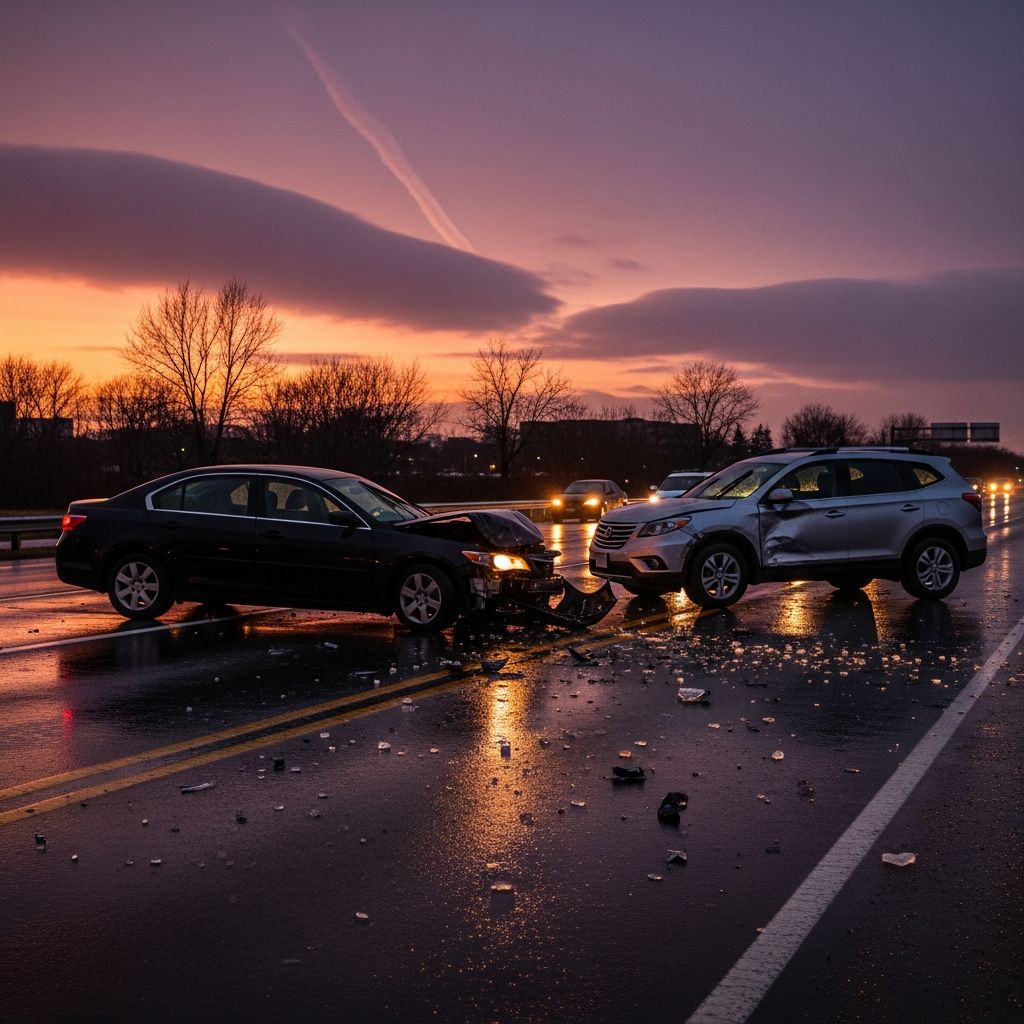
Vehicle collisions in Indiana demand swift action and legal awareness to protect your rights. This guide details key regulations on fault assignment, claim deadlines, insurance obligations, and compensation processes, empowering drivers to handle post-crash scenarios effectively.
Understanding Fault in Multi-Party Collisions
Indiana employs a modified comparative negligence framework, meaning fault percentages directly influence claim outcomes. Under this system, victims can pursue damages if their responsibility does not exceed 50% of the incident’s cause.
The fact-finder, typically a judge or jury, evaluates evidence like police reports, witness accounts, and reconstruction analyses to apportion blame among all involved parties, including drivers, pedestrians, or even equipment providers. For instance, if Driver A bears 70% fault for ignoring a traffic signal and Driver B contributes 30% through excessive speed, Driver B remains eligible for reduced compensation.
- Pure comparative negligence contrast: Unlike states allowing recovery regardless of fault level, Indiana bars claims where the claimant exceeds 50% responsibility.
- Government defendant exception: Claims against state or local entities invoke stricter pure contributory negligence, disqualifying recovery for any claimant fault.
- Evidence scrutiny: Behaviors such as distracted operation, failure to yield, or improper signaling undergo rigorous review.
This approach ensures equitable resolutions but requires precise documentation from the outset to minimize assigned fault.
Critical Timelines for Filing Claims
Time constraints govern all car crash claims in Indiana, with a standard two-year statute of limitations for personal injury and property damage from the accident date. Codified in Indiana Code § 34-11-2-4, this deadline mandates court filing, not mere insurance notifications or negotiations.
Exceptions alter these timelines significantly:
| Claim Type | Deadline | Key Statute |
|---|---|---|
| Personal Injury (medical costs, pain, lost income) | 2 years from crash | Ind. Code § 34-11-2-4 |
| Property Damage (vehicle repair) | 2 years from crash | Ind. Code § 34-11-2-4 |
| Against State of Indiana | 270 days notice | Tort Claims Act |
| Against Local Government | 180 days notice | Tort Claims Act |
The discovery rule may extend personal injury clocks in latent injury cases, starting from when harm becomes reasonably apparent through diligence. Missing these windows forfeits all recovery potential, underscoring the need for immediate legal consultation.
Mandatory Insurance Coverage Requirements
Indiana mandates minimum liability coverage for all registered vehicles: $25,000 per person for bodily injury, $50,000 per accident for bodily injury, and $25,000 for property damage. These thresholds aim to provide baseline protection but often prove inadequate for serious crashes involving medical evacuations or long-term care.
Victims without sufficient uninsured/underinsured motorist (UM/UIM) coverage face undercompensation risks. Policyholders should verify UM/UIM inclusions to safeguard against at-fault drivers with lapsed or minimal policies.
Right-of-Way and Intersection Responsibilities
Intersections represent high-risk zones, governed by Indiana Code § 9-21-8-31, which obligates drivers to yield to vehicles posing immediate hazards. T-bone impacts, common in these scenarios, hinge on proving the striking driver’s failure to yield as the primary cause.
Insurance adjusters often counter with partial fault arguments, citing victim speed or inattention, leveraging the 51% bar to diminish payouts. Thorough investigation, including sheriff reports and scene diagrams, proves essential for establishing clear liability.
Rear-End Collision Liability Principles
Presumptions favor the front vehicle in rear-end crashes, but Indiana’s modified fault system permits shared responsibility. Factors overturning rear-driver liability include sudden stops without cause, following too closely, or brake light failures.
Comprehensive evidence gathering—dashcam footage, mechanical inspections, and telematics data—determines precise fault shares, preventing unjust reductions in awards.
Steps to Take Immediately After a Crash
Prioritize safety and evidence preservation post-collision:
- Ensure medical evaluation, even for minor symptoms, to document injuries.
- Contact law enforcement for an official report, crucial for fault disputes.
- Exchange details with other parties without admitting fault.
- Photograph scene, vehicles, and injuries before changes occur.
- Notify your insurer promptly while avoiding recorded statements until advised.
- Consult an attorney to navigate claims and deadlines.
These actions fortify your position against insurer tactics aimed at minimizing liability.
Compensation Categories Available to Victims
Successful claims encompass economic and non-economic damages:
- Economic: Medical expenses, wage loss, rehabilitation, property repairs.
- Non-economic: Pain, suffering, emotional trauma, life quality impacts.
Under modified fault, awards deduct the claimant’s percentage; exceeding 51% eliminates eligibility. Governmental claims demand flawless compliance to access these remedies.
2026 Trial Procedure Updates Impacting Cases
Recent amendments to Indiana Rules of Trial Procedure, effective 2026, refine discovery processes. Prohibitions on general objections compel specific responses, enhancing evidence transparency in crash litigation. Parties must now identify withheld responsive materials, streamlining preparations and reducing delays.
Upcoming Traffic Law Changes for 2026
Nationwide shifts, including Indiana, enforce stricter hands-free driving by 2026, eliminating grace periods. Primary enforcement escalates penalties for handheld device use, potentially influencing fault determinations in distraction-related crashes.
Frequently Asked Questions
What if I’m mostly at fault in an Indiana crash?
If assigned over 50% fault, recovery is barred under modified comparative negligence.
How long do I have to sue after a car accident?
Generally two years, but government claims require notice within 180-270 days.
Does rear-ending always mean I’m liable?
No, fault depends on circumstances like sudden stops or signals.
What are Indiana’s minimum auto insurance limits?
$25/50/25 for bodily injury and property damage.
Can I get paid if hurt by a government vehicle?
Yes, but any fault may bar recovery under pure contributory rules.
References
- Navigating Indiana’s Modified Comparative Negligence Rule in Car Crash Cases — Protect Your Rights. 2024. https://www.protectyourrights.com/navigating-indianas-modified-comparative-negligence-rule-in-car-crash-cases/
- Statute of Limitations for Car Accident Claims in Indiana — Yosha Law Firm. 2024. https://yoshalawfirm.com/what-is-the-statute-of-limitations-for-car-accident-claims-in-indiana/
- Legal Rights and Insurance Limits Following a T-Bone Crash — Langer & Langer. 2026-01-13. https://www.langerandlanger.com/news/wayne-county-car-accident-legal-rights-and-insurance-limits-following-a-t-bone-crash/
- Who is Liable for a Rear-End Car Accident in Indiana? — Personal Injury Lawyers. 2024. https://www.pilawyers.com/blog/who-is-liable-for-a-rear-end-car-accident-in-indiana/
- New Year, New Rules: The 2026 Amendments to the Indiana Rules of Trial Procedure — Barsumian Law. 2025. https://www.barsumianlaw.com/blog/new-year-new-rules-the-2026-amendments-to-the-indiana-rules-of-trial-procedure/
- Big Changes in 2026 Traffic Laws — AOL. 2025. https://www.aol.com/articles/big-changes-2026-traffic-laws-200006399.html
Similar Articles








Read full bio of Sneha Tete


