
The Imperative of Electoral Equity: Why Every Ballot Matters
Discover why counting every vote is fundamental for racial justice.
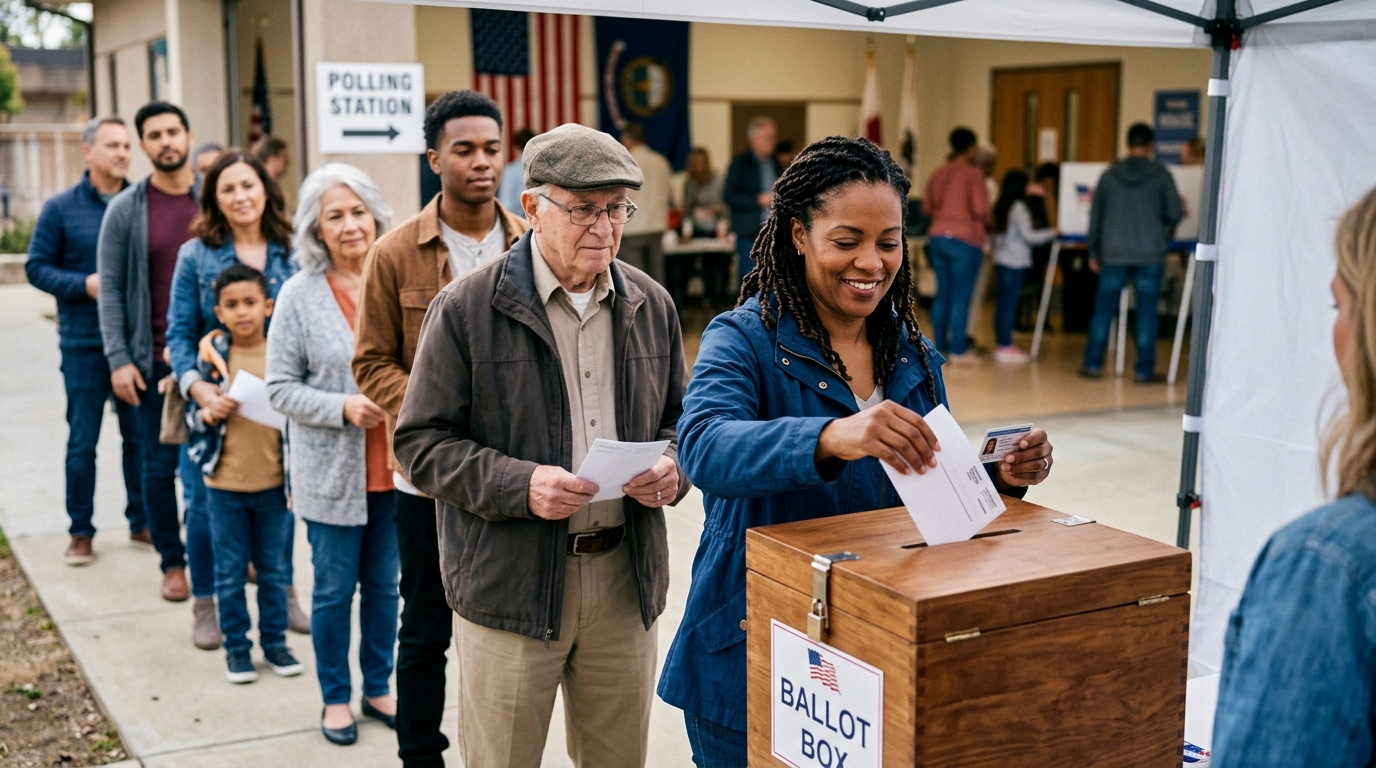
The foundation of any healthy democracy rests upon a simple premise: every eligible citizen’s voice must carry equal weight, and every legitimate ballot must be counted. In the United States, however, the journey toward achieving true electoral equity has been consistently fraught with systemic obstacles and deep-seated inequities. While the modern electoral system is frequently heralded globally as a beacon of democratic participation, a closer examination reveals a persistent undercurrent of disenfranchisement that disproportionately affects marginalized communities. The demand that every single vote be tallied is not merely an administrative preference; it is a fundamental pillar of racial justice. When election processes prioritize speed or artificial deadlines over accuracy, the voices most likely to be silenced are those of Black, Indigenous, and other communities of color.
Understanding the intersection of voting rights and racial justice requires examining the historical context of voter suppression, analyzing the contemporary hurdles that voters face, and recognizing the critical importance of an equitable ballot-counting process. Only by addressing these systemic issues can a society realize the true promise of a representative democracy.
The Deep Roots of Voter Disenfranchisement
To comprehend the modern landscape of voting rights, one must look backward. The history of the United States electorate is intrinsically linked to the struggle for racial equality. Following the Civil War and Reconstruction, a systematic effort emerged to roll back the newly acquired constitutional rights of Black Americans. Through the implementation of insidious legal barriers—most notably poll taxes, literacy tests, and restrictive grandfather clauses—millions of citizens were effectively barred from participating in the democratic process.
These historical tactics were designed with a discriminatory purpose: to maintain the political marginalization of minority populations. The civil rights movement of the mid-20th century brought these glaring injustices to the forefront, culminating in the monumental passage of the Voting Rights Act of 1965. This landmark legislation, heavily enforced by the Department of Justice, was instrumental in dismantling many legally sanctioned barriers to the ballot box. It outlawed discriminatory voting practices and established federal oversight of elections in jurisdictions with a documented history of voter suppression.
For decades, the Voting Rights Act stood as the primary bulwark against electoral discrimination, enabling an unprecedented surge in minority political participation. However, the dismantling of key provisions by the Supreme Court in recent years has ushered in a new era of electoral challenges. While methods have evolved, the underlying effect remains painfully similar: the creation of structural impediments making it disproportionately difficult for citizens of color to vote.
Contemporary Hurdles to Ballot Access
Today’s landscape of voter suppression manifests through a complex web of administrative policies that depress minority voter turnout. One of the most pervasive modern challenges is the widespread implementation of strict voter identification laws. Proponents argue these measures prevent voter fraud, despite evidence showing such in-person fraud is vanishingly rare. In practice, strict ID requirements disproportionately impact marginalized groups who are less likely to possess government-issued forms of identification due to financial costs and logistical difficulties.
Furthermore, the physical infrastructure of voting often exacerbates socioeconomic inequities. The aggressive consolidation of polling places in predominantly Black, Latino, and Indigenous neighborhoods frequently results in unacceptably long wait times. When a voter is forced to stand in line for several hours just to cast a ballot, voting becomes a grueling test of endurance. It is a test many working-class individuals cannot afford to take due to inflexible work schedules or caregiving responsibilities.
The recent surge in mail-in voting has also brought entirely new disparities to light. While voting by mail expands access, academic studies highlight deeply troubling racial disparities in ballot rejection rates. Ballots cast by voters of color are frequently rejected at notably higher rates than those cast by white voters. These rejections are often due to minor technicalities, such as signature matching discrepancies. Because marginalized communities may have less access to comprehensive voter education resources, they are disproportionately penalized by rigid verification processes.
The Evolution of Voter Suppression Tactics
| Historical Era | Primary Suppression Tactics | Impact on Marginalized Communities |
|---|---|---|
| Post-Reconstruction to Mid-20th Century | Poll taxes, literacy tests, grandfather clauses, physical intimidation. | Near-total disenfranchisement of Black voters in the South; systemic political exclusion. |
| Late 20th Century | Racial gerrymandering, complex registration requirements, lack of language assistance. | Dilution of minority voting power; creation of structural barriers to equitable participation. |
| 21st Century (Present Day) | Strict voter ID laws, polling place closures, aggressive voter roll purges, mail-in ballot rejections. | Disproportionate wait times; significantly higher ballot rejection rates for minorities; depressed turnout. |
The Inherent Danger of Rushing Election Results
In our hyper-connected era of instant gratification, there is immense public pressure to declare election winners on the very night of the election. However, this demand for speed fundamentally conflicts with the meticulous nature of a secure ballot-counting process. The aggressive push to finalize results prematurely is not just an administrative issue; it is fundamentally a racial justice issue.
Counting every legitimate vote takes considerable time, particularly in densely populated urban centers which frequently have high concentrations of minority voters. These jurisdictions must process an enormous volume of ballots, including a massive percentage of mail-in and provisional ballots. Provisional ballots, often utilized by individuals whose registration status is in question due to roll purges, require careful individual verification. Similarly, processing mail-in ballots involves verifying signatures and carefully opening security envelopes—a labor-intensive process that legitimately extends beyond Election Day.
When commentators demand that counting abruptly stop at midnight on Election Day, they are effectively demanding the systemic disenfranchisement of hundreds of thousands of legally registered voters. History and demographic data tell us that ballots counted later in the process frequently belong to voters of color. Therefore, placing an arbitrary deadline on counting is a direct attack on the political power of marginalized communities. True election integrity means accurate, comprehensive results where every eligible voter’s voice is respected.
Strategies for Fostering True Democratic Participation
Addressing the glaring racial disparities in the electoral process requires a multi-faceted approach centered entirely on expanding access. According to comprehensive data from the U.S. Census Bureau, voter turnout continues to exhibit significant, persistent gaps based on race and ethnicity, underscoring the urgent need for systemic policy reform.
One highly effective step is the widespread adoption of ‘notice and cure’ processes for mail-in ballots. If a voter makes a minor error on their absentee envelope, such as a mismatched signature, they should be promptly notified by election officials and given a reasonable opportunity to correct the mistake. This simple administrative safeguard can prevent tens of thousands of legitimate votes from being needlessly discarded, a practice that currently disproportionately affects minority voters.
Additionally, expanding early voting periods and standardizing weekend voting can significantly alleviate the pressure on Election Day and provide flexibility for working-class citizens. Investing heavily in local election infrastructure is equally critical. Jurisdictions must be adequately funded to ensure that polling places in minority neighborhoods are fully staffed, well-equipped, and plentiful enough to permanently eliminate hours-long wait times.
Finally, proactive voter registration efforts, such as automatic voter registration at government agencies, can help close the participation gap. By completely removing bureaucratic hurdles, states can ensure that the active electorate accurately reflects the true diversity of the American population.
Conclusion: The Mandate of a Just Democracy
The fight for equitable voting rights is an ongoing, vital struggle that strikes at the heart of what it means to be a democracy. Racial justice demands unequivocally that the electoral process be entirely free from the overt discrimination of the past and the structural barriers of the present. Every single vote cast represents a unique voice and a critical stake in the future of the nation. When we allow arbitrary deadlines or systemic resource deficits to silence those voices, we fundamentally compromise the integrity of the democratic system. Ensuring that every vote is counted is a fundamental moral imperative required to build a truly equitable society.
Frequently Asked Questions (FAQ)
- Why is counting every vote considered a racial justice issue?
Voters of color often face greater hurdles in casting ballots. Their votes are more frequently cast via mail-in or provisional ballots, which legitimately take longer to verify, or are cast in densely populated urban areas requiring more processing time. Stopping counts prematurely disproportionately silences these minority voices.
- How do mail-in ballot rejections disproportionately affect minorities?
Academic studies consistently show that mail-in ballots from voters of color are rejected at higher rates than those from white voters. This is often due to minor technicalities like signature mismatches. Marginalized groups may have less access to voter education, leading to unequal and unjust disenfranchisement.
- What role does the Voting Rights Act of 1965 play today?
The Voting Rights Act of 1965 was a landmark piece of federal civil rights legislation aimed at eliminating overt voter suppression. While it historically protected minority voting rights, recent Supreme Court decisions have weakened key provisions, making contemporary advocacy for equitable voting access crucial.
- What is a ‘notice and cure’ process?
A ‘notice and cure’ policy requires local election officials to immediately inform voters if their mail-in ballot is slated for rejection due to a technical error and explicitly allows the voter a specific timeframe to correct the issue so their vote counts.
- Why are polling place closures harmful to electoral equity?
Closing polling places, especially in minority or low-income neighborhoods, directly leads to severely overcrowded facilities and extremely long wait times. This creates an enormous burden for individuals with inflexible work hours or family obligations, often preventing them from voting entirely.
References
- History Of Federal Voting Rights Laws — Department of Justice. 2017-07-28. https://www.justice.gov/crt/history-federal-voting-rights-laws
- 2020 Presidential Election Voting & Registration Tables Now Available — U.S. Census Bureau. 2021-04-29. https://www.census.gov/newsroom/press-releases/2021/2020-presidential-election-voting-and-registration-tables-now-available.html
- 400 million voting records show profound racial and geographic disparities in voter turnout in the United States — National Center for Biotechnology Information (NCBI). 2022-06-08. https://www.ncbi.nlm.nih.gov/pmc/articles/PMC9177119/
Similar Articles








Read full bio of medha deb


