
Impact of Proposed Hardline Immigration Policies in the US
Examining the legal, economic, and social fallout of mass deportation plans.
Introduction to Shifting Immigration Paradigms
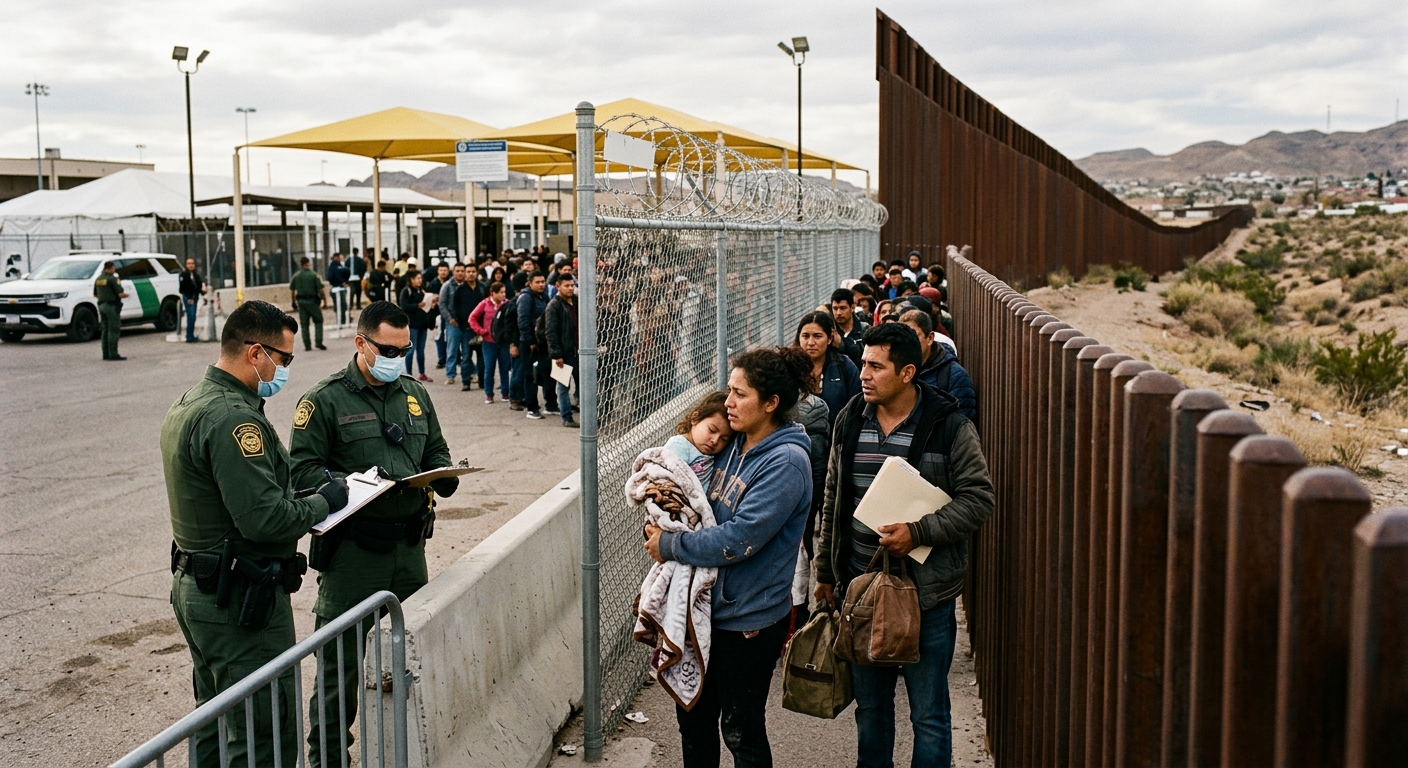
Immigration has long been considered the lifeblood of the United States, shaping its culture, driving its economic engines, and defining its national identity as a haven for those seeking freedom and opportunity. However, the discourse surrounding immigration policy in recent years has taken a sharp turn toward the restrictive, with some political figures proposing aggressive, hardline measures aimed at fundamentally altering the demographic and legal landscape of the country. Chief among these are the sweeping immigration policies proposed by hardline politicians for future administrations. These proposals go far beyond traditional border enforcement, envisioning a profound overhaul of the American immigration system that threatens to dismantle established constitutional norms, separate families, and disrupt local economies.
The ramifications of such extreme policy shifts cannot be overstated. From the logistical and moral challenges of mass deportations to the unprecedented use of military forces on domestic soil, these proposals represent a paradigm shift in how the United States interacts with newcomers and established immigrant communities. Furthermore, by targeting foundational legal tenets like birthright citizenship and utilizing public health mechanisms as tools for exclusion, these initiatives raise critical civil rights concerns. This article delves into the mechanics of these proposed hardline immigration policies, analyzing their legal viability, their economic fallout, and the deeply personal impact they would have on the fabric of American society.
The Logistics and Realities of Mass Deportation Proposals
One of the most prominent pillars of the proposed immigration crackdown is the execution of the largest domestic deportation operation in United States history. Proponents of this plan aim to remove millions of undocumented immigrants, an undertaking that raises severe logistical, economic, and humanitarian questions. According to an August 2025 analysis by the Pew Research Center, the unauthorized immigrant population in the U.S. reached an estimated 14 million. Attempting to locate, detain, process, and deport a population larger than the entire state of Pennsylvania would require an expansion of the federal immigration apparatus on an unimaginable scale.
The logistical hurdles are immense. Executing such a mass deportation agenda would necessitate the construction of sprawling detention camps, as current facilities are vastly insufficient to hold hundreds of thousands of individuals awaiting expedited immigration proceedings. The financial burden on American taxpayers would be astronomical, potentially costing hundreds of billions of dollars over several years. This massive expansion of Immigration and Customs Enforcement (ICE) capabilities would inevitably divert essential funds away from other critical national priorities, such as infrastructure, healthcare, and education.
Beyond the logistical and financial costs, the economic fallout of removing millions of workers from the U.S. labor force would be devastating. Undocumented immigrants are deeply integrated into key sectors of the American economy, particularly agriculture, construction, hospitality, and caregiving. The Migration Policy Institute has consistently highlighted that stripping the workforce of these essential contributors would trigger severe labor shortages, disrupt delicate supply chains, and exacerbate inflation. The agricultural sector could face catastrophic crop losses without the labor force required for harvesting. The economic shockwaves would reverberate across the entire national economy, leading to higher prices for everyday goods and destabilizing local markets that rely on immigrant consumer spending.
Deploying the Military on Domestic Soil
Perhaps one of the most alarming aspects of these hardline immigration proposals is the intention to utilize the United States military and the National Guard for domestic law enforcement and border control. Historically, the U.S. government has maintained a strict separation between the armed forces and civilian law enforcement. This principle is codified in the Posse Comitatus Act of 1878, which generally prohibits the federal government from using the Army or Air Force to execute domestic laws, including routine immigration enforcement, unless expressly authorized by Congress.
Proposals to bypass the Posse Comitatus Act often involve invoking the Insurrection Act of 1807, a law originally intended to allow the president to deploy troops to suppress rebellions or instances of severe domestic violence. Repurposing the Insurrection Act to treat undocumented immigration as a “rebellion” or “invasion” is viewed by legal scholars as an unprecedented and dangerous overreach of executive power. Using active-duty military personnel to conduct neighborhood sweeps, staff detention camps, or interrogate civilians fundamentally alters the relationship between the U.S. government and its populace, pushing the boundaries of domestic policing.
Furthermore, deploying National Guard units from cooperating states to regions that do not consent to their presence raises profound constitutional questions about state sovereignty and federalism. If a federal administration orders troops into a state whose governor actively opposes the action, it creates an immediate and volatile conflict between state and federal authorities. The militarization of civilian spaces would deeply damage community trust, particularly in diverse neighborhoods where military personnel, untrained in civilian de-escalation and constitutional policing standards, would be interacting with families on a daily basis.
Rewriting the Rules: Title 42, Ideological Tests, and Travel Bans
In addition to internal enforcement, the proposed immigration agenda seeks to drastically overhaul how individuals enter the United States legally, effectively shutting the door on specific vulnerable populations through executive fiat. A central element of this strategy is the revival and expansion of controversial border policies, such as Title 42. Originally a little-known public health provision, Title 42 was utilized during the COVID-19 pandemic to rapidly expel asylum seekers at the southern border without granting them the opportunity to present their claims for protection. Restoring such expulsion mechanisms under the guise of national security or generic public health threats violates international laws regarding non-refoulement and effectively dismantles the U.S. asylum system.
Beyond border expulsions, the proposed policies include the reinstatement and expansion of travel bans targeting specific regions and religious groups. The initial iteration of travel bans targeting Muslim-majority nations caused chaos at airports worldwide, separated families, and drew widespread international condemnation for institutionalizing religious discrimination. Expanding these bans to include more countries signals a retreat from the foundational American ideal of religious freedom and equality.
Even more troubling is the proposal to introduce “ideological screenings” for visa applicants. This measure would require individuals seeking entry to the United States to prove they share certain political or cultural ideologies deemed acceptable by the administration in power. Implementing ideological litmus tests for immigrants not only echoes the discriminatory practices of the Cold War era but also opens the door for massive subjective abuse by immigration officers, projecting an image of a nation fearful of diverse perspectives rather than strengthened by them.
The Assault on Birthright Citizenship
A cornerstone of the proposed anti-immigrant agenda is the aggressive legal effort to end birthright citizenship. Since the aftermath of the Civil War, the 14th Amendment of the U.S. Constitution has guaranteed that “All persons born or naturalized in the United States, and subject to the jurisdiction thereof, are citizens of the United States and of the State wherein they reside.” This amendment was specifically drafted to overturn the infamous Dred Scott decision and ensure that the children of formerly enslaved individuals were recognized as full citizens, establishing a clear and unequivocal standard for citizenship based on birthplace rather than lineage.
Hardline political factions have proposed eliminating this constitutional guarantee via executive order, arguing that the children of undocumented immigrants are not “subject to the jurisdiction” of the United States. Legal scholars and civil rights advocates overwhelmingly reject this interpretation, asserting that an executive order cannot rewrite a constitutional amendment. The historical consensus and over a century of Supreme Court precedent affirm that anyone born on U.S. soil is automatically a U.S. citizen.
The consequences of attempting to end birthright citizenship would be catastrophic. It would instantaneously create a permanent, expanding underclass of stateless children born within U.S. borders who are denied the rights, privileges, and protections of citizenship. These children would face immense barriers to accessing public education, healthcare, and future employment, entrenching multi-generational poverty. The attack on the 14th Amendment is a direct assault on the constitutional framework that guarantees equal protection under the law for everyone on American soil.
Collateral Damage: Families and Community Fabric
The most profound and lasting damage of these extreme immigration policies would be inflicted on the social fabric of American communities and the sanctity of the family unit. The resurgence of aggressive interior enforcement and the specter of mass deportations directly threaten mixed-status families—households where undocumented parents live alongside U.S. citizen children and spouses. The terror of waking up each day knowing a loved one could be snatched off the street, detained, and exiled creates a pervasive atmosphere of psychological trauma.
This environment of fear has documented, chilling effects on public safety and public health. When immigrant communities are heavily targeted, undocumented individuals and their legally present family members become terrified of interacting with any government entity. Victims of domestic violence, wage theft, and violent crimes become too afraid to contact the police, knowing that any interaction with law enforcement could lead to deportation. This breakdown in trust makes entire cities less safe, as criminals can operate with impunity in neighborhoods where residents are too frightened to report illicit activities. Additionally, families may avoid seeking necessary medical care or enrolling their children in essential social programs, deteriorating public health outcomes.
The proposed return to family separation policies, whether explicitly at the border or implicitly through interior deportations, stands as a stark moral failing. The trauma inflicted on children who are torn from their parents’ arms causes irreversible psychological damage. Tearing apart immigrant families does not secure the nation; it deeply wounds the very communities that make the United States vibrant, compassionate, and resilient.
Frequently Asked Questions on Proposed Immigration Policies
- What is the Posse Comitatus Act and how does it relate to immigration?
The Posse Comitatus Act of 1878 is a federal law that limits the powers of the federal government to use military personnel to enforce domestic policies within the United States. In the context of immigration, it generally prohibits the use of the Army and Air Force for civilian law enforcement tasks, such as conducting immigration raids, unless specifically authorized by Congress. - Can a president end birthright citizenship with an executive order?
Legal consensus strongly suggests that a president cannot end birthright citizenship via executive order. Birthright citizenship is enshrined in the 14th Amendment of the U.S. Constitution. Altering or eliminating this right would require a constitutional amendment, which involves a two-thirds majority vote in Congress followed by state ratification. - What is Title 42 and how was it used at the border?
Title 42 is a clause of the 1944 Public Health Services Act. During the COVID-19 pandemic, it was invoked to rapidly expel migrants and asylum seekers at the U.S.-Mexico border without giving them the opportunity to apply for asylum, effectively bypassing standard immigration proceedings under the guise of public health. - How many unauthorized immigrants currently live in the United States?
While exact figures fluctuate, recent analyses by organizations like the Pew Research Center estimated that the unauthorized immigrant population in the United States reached approximately 14 million individuals by 2025. These individuals are deeply embedded in the U.S. workforce and communities.
References
- What the data says about immigrants in the U.S. — Pew Research Center (Stephanie Kramer and Jeffrey S. Passel). 2025-08-21. https://www.pewresearch.org/short-reads/2025/08/21/what-the-data-says-about-immigrants-in-the-u-s/
- Changing Origins, Rising Numbers: Unauthorized Immigrants in the United States — Migration Policy Institute. 2025-10-05. https://www.migrationpolicy.org/research/unauthorized-immigrants-united-states
- The Posse Comitatus Act and Related Matters: The Use of the Military to Execute Civilian Law — Congressional Research Service. 2018-11-06. https://crsreports.congress.gov/product/pdf/R/R42659
- 14th Amendment — Constitution of the United States / Legal Information Institute, Cornell Law School. https://www.law.cornell.edu/constitution/amendmentxiv
Similar Articles








Read full bio of Sneha Tete


