
Immigration Enforcement and Victim Protection
The complex intersection of public safety and immigration enforcement.
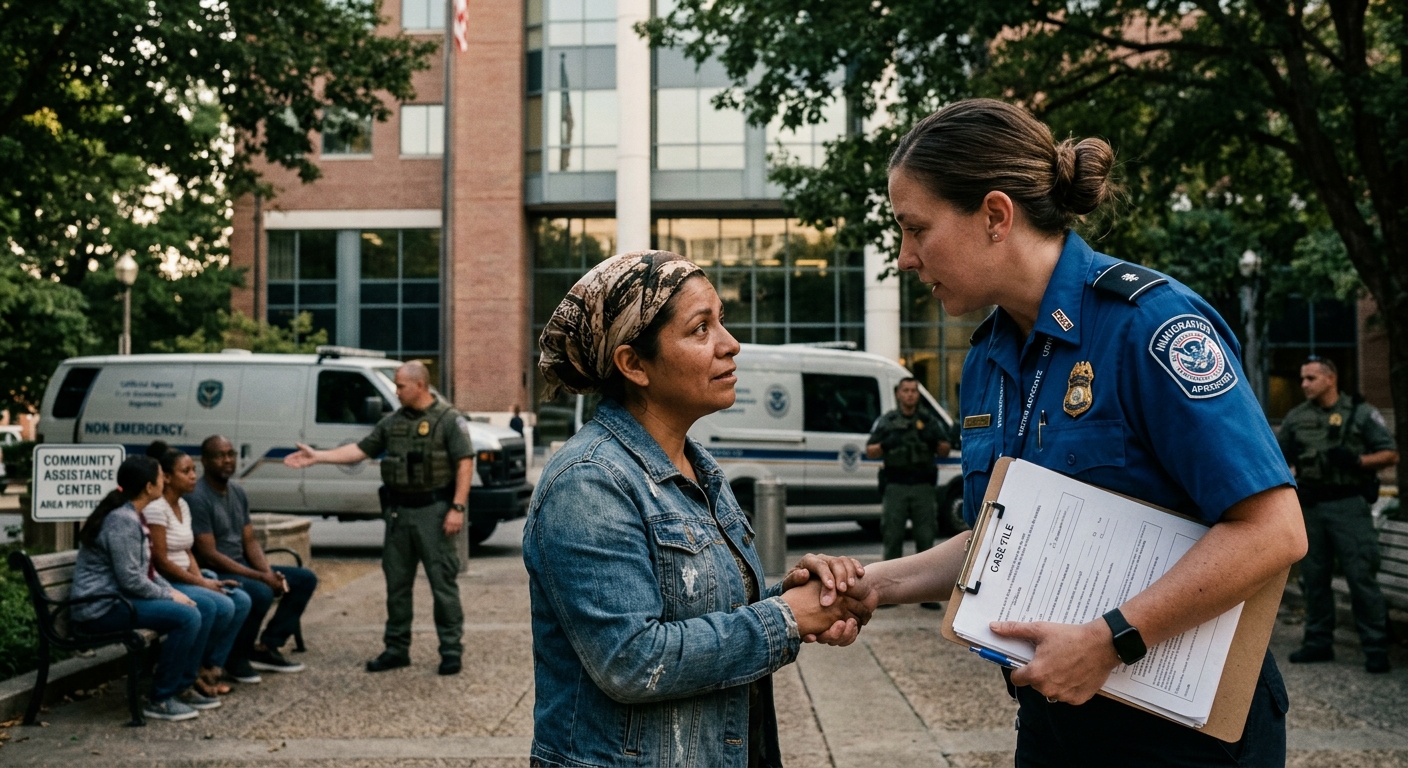
In the complex landscape of the United States legal system, a persistent and deeply consequential conflict exists between the strict enforcement of immigration laws and the fundamental necessity of protecting victims of violent crimes. When undocumented immigrants find themselves as the victims of, or crucial witnesses to, severe criminal activities, they often face a paralyzing dilemma: step forward to assist law enforcement and risk deportation, or remain in the shadows and allow perpetrators to walk free. This intersection of criminal justice and immigration policy frequently creates scenarios where public safety is inadvertently compromised by the very mechanisms designed to uphold the law.
The friction between federal immigration directives and local criminal prosecutions has been highlighted by high-profile incidents across the country. In instances where critical witnesses to mass casualties or violent assaults are swept up in routine traffic stops and subsequently deported by U.S. Immigration and Customs Enforcement (ICE), the broader implications for the justice system become starkly apparent. In the United States, law enforcement agencies depend heavily on the vigilance and cooperation of the public. When an entire segment of the population is too terrified to report crimes due to the looming threat of deportation, the justice system fractures. The resulting environment allows criminals to act with impunity, knowing their victims lack the legal protections required to seek justice safely. To understand this multifaceted issue, it is essential to examine the legal frameworks intended to protect undocumented victims, the systemic enforcement overlaps that undermine these protections, and the evolving federal policies aimed at reconciling this critical divide.
The Vital Role of Immigrant Witnesses in Criminal Proceedings
Public safety relies inherently on the trust and cooperation of the community. Law enforcement agencies across local, state, and federal levels depend on victims and bystanders to report crimes, identify suspects, and provide testimony in court. When a significant portion of a community fears interaction with the police, a dangerous vacuum is created—one that malicious actors routinely exploit. Perpetrators of domestic violence, human trafficking, and workplace exploitation often specifically target undocumented individuals, leveraging the victim’s fear of deportation as a tool for silence and control.
When an undocumented witness is deported before they can testify, the immediate consequence is the potential collapse of a criminal case. Prosecutors lose the evidentiary foundation necessary to secure a conviction, meaning violent offenders may remain on the streets to reoffend. However, the secondary, long-term consequence is far more damaging: the “chilling effect.” Word spreads rapidly within immigrant neighborhoods when a victim or witness is penalized for coming forward. Consequently, crime rates can become artificially suppressed in official statistics because incidents simply go unreported, while the actual prevalence of crime and victimization within those enclaves surges unchecked. This dynamic forces undocumented individuals into the shadows, exacerbating their vulnerability.
Prominent law enforcement leaders, district attorneys, and civic leaders have repeatedly emphasized that effective policing is impossible without community trust. If victims believe that a call to 911 will lead to their family’s separation, the loss of their livelihood, or their own immediate removal from the country, they will endure abuse rather than seek help. Thus, protecting immigrant victims is not merely a matter of humanitarian concern or immigrant advocacy; it is a foundational pillar of comprehensive public safety that benefits the entire nation.
The U-Visa System: A Bridge Built but Strained
Recognizing the necessity of protecting undocumented victims to foster law enforcement cooperation, the U.S. Congress created the U nonimmigrant classification through the passage of the Victims of Trafficking and Violence Protection Act in 2000. This pivotal legislation established the U nonimmigrant status (commonly known as the U-visa) and the T nonimmigrant status (T-visa). The U-visa serves a dual purpose: strengthening law enforcement’s ability to investigate crimes, and protecting victims who have suffered substantial mental or physical abuse and are willing to assist authorities.
Key Distinctions Between U-Visas and T-Visas
| Feature | U-Visa (Crime Victims) | T-Visa (Trafficking Victims) |
|---|---|---|
| Primary Purpose | Protects victims of specific qualifying crimes (e.g., assault, domestic violence, kidnapping). | Protects victims of severe forms of human trafficking. |
| Law Enforcement Certification | Strictly required via Form I-918, Supplement B signed by a certifying official. | Encouraged, but not strictly required if specific exemption conditions are met. |
| Statutory Cap | Limited to 10,000 principal visas per fiscal year. | Limited to 5,000 principal visas per fiscal year. |
| Path to Residency | Eligible to apply for Lawful Permanent Residency (Green Card) after 3 years of continuous physical presence. | Eligible to apply for a Green Card after 3 years, or upon conclusion of the trafficking investigation. |
While the U-visa serves as a critical bridge, the system is severely bottlenecked. By statute, USCIS is limited to issuing a maximum of 10,000 U-visas per fiscal year to principal petitioners. Because the demand heavily outweighs this arbitrary limit, a massive backlog has accumulated, and the statutory cap has been met every year since fiscal year 2010. As a result, victims often wait half a decade or longer just to have their petitions fully adjudicated.
During this agonizing waiting period, victims exist in a precarious legal limbo. To mitigate this, USCIS implemented a “Bona Fide Determination” process, which allows the agency to conduct an initial review of pending U-visa petitions. If the petition is deemed bona fide, the victim can be granted deferred action and employment authorization while they wait for a final adjudication under the annual cap. Despite this improvement, the staggering backlog continues to leave countless cooperating witnesses vulnerable to sudden detention if they are encountered by immigration enforcement before their initial review is processed.
Systemic Bottlenecks and Local Enforcement Overlap
The vulnerabilities of the U-visa system are exacerbated by routine overlaps between local law enforcement and federal immigration authorities. Many deportations of cooperating witnesses do not originate from targeted ICE raids, but rather from minor infractions such as routine traffic stops. An undocumented individual might be pulled over for a broken taillight or an expired vehicle registration. During the stop, if the local police share data with federal databases, ICE may automatically be alerted to the individual’s presence and undocumented status.
When ICE identifies a deportable individual in local custody, they frequently issue an “ICE detainer” or an immigration hold. This administrative document requests that the local or state law enforcement agency detain the individual for an additional 48 hours beyond their scheduled release time, allowing federal agents to arrive and assume custody. If an undocumented victim of a violent crime is arrested for an unpaid traffic ticket and a detainer is honored, they can be transferred to ICE custody and fast-tracked for removal before local prosecutors even realize their star witness is gone. The speed of this process leaves little room for legal intervention or clarification of the individual’s role in a pending criminal investigation.
Furthermore, specialized frameworks such as the 287(g) program delegate certain federal immigration enforcement powers directly to state and local police officers. Under these agreements, local deputies undergo training to interrogate individuals about their immigration status, check federal databases, and initiate deportation proceedings directly from local jails. Critics argue that such programs dangerously blur the lines between local policing and federal immigration enforcement, stripping away the neutrality that local police need to encourage undocumented crime victims to come forward. When local police are viewed concurrently as federal immigration agents, the vital safety net for victims completely unravels, leaving local authorities disconnected from the communities they are sworn to protect.
Federal Policy Shifts: The Push for a Victim-Centered Approach
In response to mounting criticism from civil rights groups, legal advocates, and local prosecutors, federal immigration authorities have periodically attempted to adjust their enforcement guidelines to better protect victims. Recent directives from federal immigration agencies have explicitly instructed personnel to adopt a “victim-centered approach”. Under these updated policies, absent exceptional circumstances, ICE officers are directed to refrain from taking civil immigration enforcement actions against individuals who are known beneficiaries of victim-based immigration benefits or who have pending applications for such benefits.
Furthermore, official agency policy requires ICE to exercise prosecutorial discretion to minimize any effect that immigration enforcement may have on the willingness of victims and witnesses to call the police and pursue justice. Prosecutorial discretion allows ICE officers and attorneys to decide whether to initiate, pause, or terminate enforcement actions based on the totality of the circumstances. The overarching objective is to minimize the chilling effect and to ensure that ICE’s operations do not inadvertently sabotage local and federal criminal investigations.
However, the execution of these policies on the ground can be inconsistent. Because prosecutorial discretion relies heavily on the individual judgment of field agents and requires that the agent actually knows the person is a victim, systemic gaps remain. A victim arrested in a rapid traffic stop may not have the opportunity, or the legal representation necessary, to communicate their status as a cooperating witness before the deportation machinery engages. Policy directives, while crucial, are only as effective as the training, oversight, and inter-agency communication that accompany them.
The Path Forward: Rebuilding Trust in Vulnerable Communities
Reconciling immigration enforcement with the imperative of victim protection requires comprehensive, multi-tiered reforms. True public safety dictates that perpetrators of violence face justice, which in turn demands a legal environment where all victims can safely seek help.
- Decoupling Local Policing from Immigration Enforcement: To rebuild community trust, many jurisdictions are adopting “sanctuary” or “safe city” policies that clearly separate the duties of local police from those of federal immigration agents. By declining to honor non-judicial ICE detainers or participating in 287(g) agreements, these municipalities ensure that interacting with local police does not trigger automatic deportation.
- Expanding and Expediting the U-Visa Program: Legislative action is fundamentally necessary to address the statutory cap on U-visas. Increasing the annual limit from 10,000 to a number that accurately reflects the demand would eliminate the decade-long backlogs. Additionally, increasing funding for USCIS to expedite the bona fide determination process would ensure that victims receive prompt work authorization and protection from removal.
- Enhanced Inter-Agency Communication: There must be robust, formalized communication channels between local district attorneys, local police, and federal immigration agencies. If an individual is designated as a crucial witness or a victim, that status should be immediately visible and respected across all law enforcement databases to prevent accidental deportations.
- Guaranteed Access to Legal Counsel: Navigating the intersection of criminal courts and immigration proceedings is nearly impossible without professional legal assistance. Providing undocumented victims with expanded access to legal counsel ensures they can swiftly file for protective statuses like the U-visa and assert their rights if detained.
Ultimately, a society’s commitment to justice is measured by how it treats its most vulnerable members. By prioritizing the safety and protection of undocumented crime victims, the legal system not only upholds basic human rights but also fortifies the foundation of public safety for everyone.
Frequently Asked Questions
Can an undocumented immigrant report a crime without fear of deportation?
While laws and local policies vary significantly by jurisdiction, an undocumented immigrant can generally report a crime. Many local police departments have adopted policies prohibiting officers from asking victims about their immigration status. Additionally, victims of qualifying crimes may be eligible for a U-visa, which provides temporary legal status and protection from deportation in exchange for cooperating with law enforcement.
What happens if a U-visa applicant is placed in removal proceedings?
If an individual has a pending, bona fide U-visa petition, ICE policies generally dictate that the agency should exercise prosecutorial discretion and halt removal proceedings. The individual should immediately notify their immigration judge and ICE attorneys of their pending U-visa status. Retaining legal representation is absolutely critical in these scenarios to ensure that federal protective policies are properly applied to the case.
Do local police have to comply with ICE detainers?
Compliance with ICE detainers is largely voluntary unless mandated by specific state laws. An ICE detainer is an administrative request, not a judicial warrant signed by a judge. Many cities and counties have enacted local ordinances that restrict or completely prohibit law enforcement from holding individuals beyond their local release time solely based on an ICE detainer, specifically to encourage immigrant communities to interact safely with local police.
Why is there such a long wait for a U-visa?
The U-visa backlog is primarily caused by a statutory cap set by the U.S. Congress, which allows only 10,000 principal U-visas to be issued each fiscal year. Because the number of victims applying far exceeds this legal limit, a massive, multi-year backlog has formed, leading to wait times that can currently span longer than five years.
References
- Chapter 1 – Purpose and Background – USCIS Policy Manual — U.S. Citizenship and Immigration Services. 2021-06-14. https://www.uscis.gov/policy-manual/volume-3-part-c-chapter-1
- I-918, Petition for U Nonimmigrant Status — U.S. Citizenship and Immigration Services. 2026-03-04. https://www.uscis.gov/i-918
- Using a Victim-Centered Approach with Alien Crime Victims (Directive 11005.3) — U.S. Immigration and Customs Enforcement. 2025-05-16. https://www.ice.gov/doclib/news/releases/2021/11005.3.pdf
- Prosecutorial Discretion: Certain Victims, Witnesses, and Plaintiffs — U.S. Immigration and Customs Enforcement. 2011-06-17. https://www.ice.gov/doclib/foia/prosecutorial-discretion/certain-victims-witnesses-plaintiffs.pdf
Similar Articles








Read full bio of medha deb


