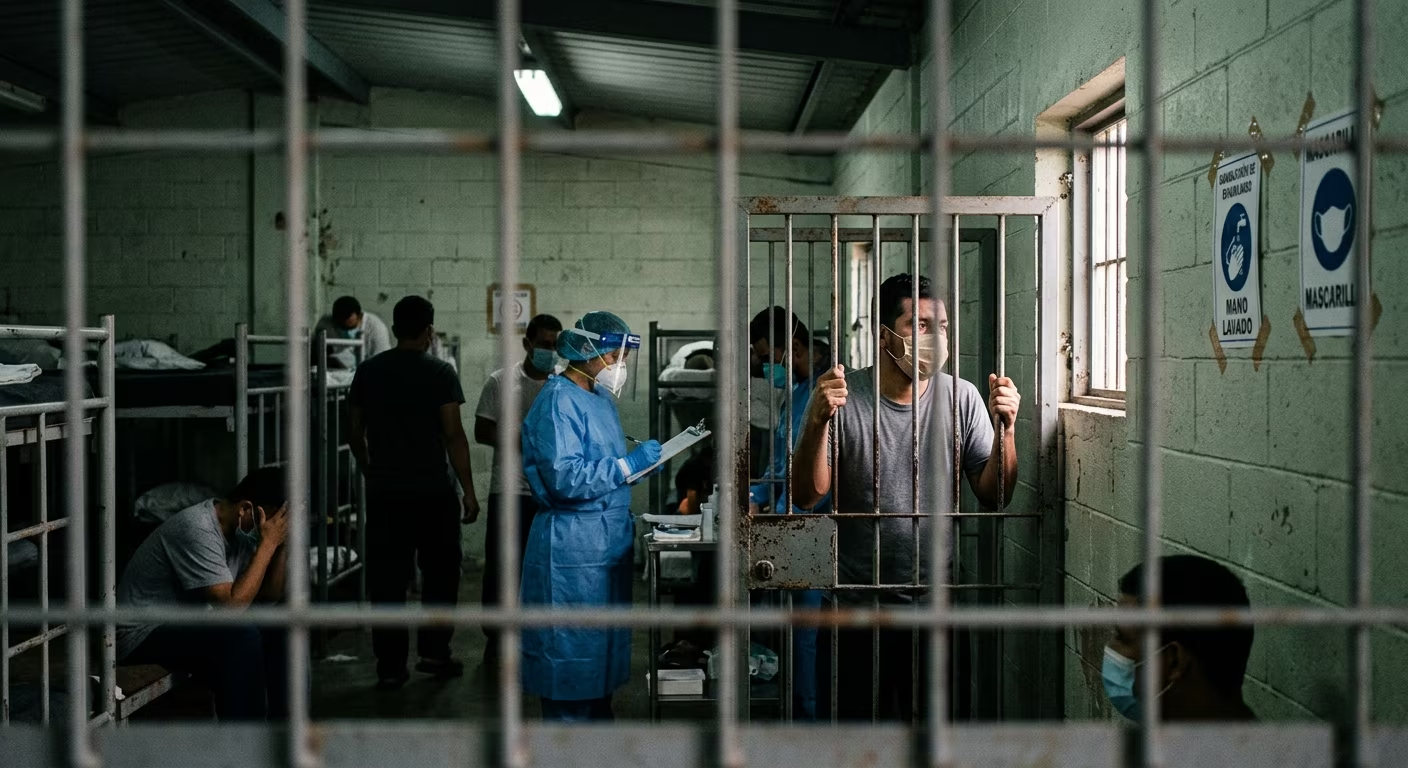
The rapid spread of infectious diseases across the globe invariably lays bare the structural weaknesses of institutions meant to protect human life. Among the most profoundly affected, yet frequently invisible, are populations held within administrative confinement. During the peak of the COVID-19 pandemic, the conditions within immigration detention centers became a focal point of intense scrutiny, illustrating a severe collision between public health mandates and enforcement policies. For tens of thousands of individuals, existing within the walls of a detention facility during a highly communicable viral outbreak translated into an inescapable, heightened risk. Unlike the broader public, who could adopt physical distancing, implement remote work paradigms, or secure advanced personal protective equipment (PPE), detained immigrants found themselves trapped in environments fundamentally incompatible with infectious disease mitigation.
This analysis explores the multi-faceted ordeal of experiencing immigration lockup during a severe health crisis. By examining physical confinement conditions, institutional responses, and the profound human rights implications, we uncover why these facilities act as concentrated vectors for disease. The pandemic did not merely introduce a new threat to these centers; it acted as a magnifying glass, exposing long-standing vulnerabilities, systemic healthcare deficits, and the inherent, lethal dangers of mass administrative detention. The daily fear of infection was compounded by the anguish of linguistic isolation, the suspension of legal proceedings, and the terrifying prospect of suffering a severe medical emergency far from family and community support.
The Architecture of Vulnerability: Life Inside Lockup
Immigration detention centers in the United States and globally are often constructed and operated similarly to high-security correctional facilities, despite their classification as administrative, civil holding centers. The architecture of these spaces relies heavily on communal living, rendering basic infectious disease control virtually impossible. Detainees are frequently housed in expansive, open-bay dormitories containing dozens of bunk beds positioned mere feet apart. When an airborne or highly contagious pathogen enters such an environment, the spatial limitations dictate the inevitability of rapid transmission. The daily reality for a detained individual during a pandemic is characterized by chronic anxiety and unavoidable physical exposure.
Several structural and logistical challenges define this vulnerability:
- Inability to Isolate: Space constraints mean that healthy individuals are perpetually mixed with those who may be asymptomatic or pre-symptomatic carriers of a virus.
- Shared Sanitation Facilities: Bathrooms, showers, and dining halls are communal spaces. Surface transmission and respiratory exposure in these frequently poorly ventilated common areas are incredibly high.
- Inadequate Ventilation Systems: Many facilities rely on outdated HVAC systems that continuously recirculate stagnant indoor air rather than introducing fresh outdoor air, allowing viral particles to linger and concentrate within the dormitories.
- Restricted Access to Hygiene Products: During the early stages of a pandemic, detainees frequently report heavily rationed access to basic sanitizing agents, including soap, hand sanitizer, and effective surface disinfectants.
- Linguistic Barriers: Critical public health announcements, hygiene instructions, and symptom reporting protocols are frequently disseminated only in English or Spanish, entirely marginalizing individuals who speak indigenous languages or other less common dialects.
These architectural realities systematically strip detainees of their autonomy over personal health. The fundamental public health directive—to separate oneself from potential infection—is denied by the very nature of their confinement.
The Public Health Paradox: Amplifying Disease Outbreaks
From an epidemiological perspective, places of detention create a perfect storm for disease proliferation. The high turnover rate of immigration lockups—where individuals are continuously transferred between local jails, federal staging areas, and long-term detention centers—facilitates the rapid cross-country movement of pathogens. A virus introduced by an incoming detainee, a staff member, or a contracted vendor can sweep through a densely populated dormitory in a matter of days.
Public health experts and infectious disease specialists have repeatedly emphasized that carceral health is inextricably linked to community health. Detention facilities do not exist in vacuums; they are highly porous environments. Guards, healthcare workers, administrative staff, and food service employees commute between the facility and their home communities daily. A massive outbreak within an immigration center inevitably spills over, heavily burdening local hospital systems and fueling broader community transmission rates.
In these high-risk settings, chronic medical conditions severely exacerbate the danger. A significant portion of the detained immigrant population suffers from untreated or poorly managed pre-existing conditions—such as hypertension, asthma, diabetes, and cardiovascular ailments. These often stem from histories of poverty, arduous and physically taxing migration journeys, or limited healthcare access in their countries of origin. When exposed to a novel virus, these pre-existing vulnerabilities translate into disproportionately higher rates of severe illness and hospitalization.
Public Health Directives vs. Detention Realities
The gap between recommended safety measures and the reality of detention is vast. The following table highlights these dangerous discrepancies:
| Standard Public Health Directive | Reality in Immigration Detention Facilities | Consequence for Detained Populations |
|---|---|---|
| Maintain a physical distance of at least 6 feet from others. | Housed in crowded open-bay dormitories with bunk beds spaced roughly 2 to 3 feet apart. | Accelerated and unavoidable airborne transmission of pathogens. |
| Frequent handwashing with soap and use of alcohol-based sanitizers. | Rationed access to soap; alcohol-based sanitizers are almost universally banned as contraband. | Increased risk of surface-based viral and bacterial transmission. |
| Immediate medical isolation of symptomatic individuals in a clinical setting. | Use of punitive solitary confinement cells for medical quarantine, lacking constant medical oversight. | Widespread self-concealment of symptoms leading to silent, unmanaged outbreaks. |
| Routine and widespread prophylactic testing. | Testing is often delayed, aggressively rationed, or entirely unavailable to asymptomatic individuals. | Unchecked viral spread by asymptomatic or pre-symptomatic carriers. |
Institutional Protocols and the Stigma of Quarantine
When a public health emergency is declared, institutional protocols must rapidly pivot to prioritize health, safety, and transparency. However, the bureaucratic nature of immigration enforcement agencies frequently results in sluggish, reactionary, and inadequate responses. The heavy reliance on private, for-profit contractors to operate a vast majority of detention beds further complicates the implementation of standardized healthcare protocols. Profit-driven operational models sometimes disincentivize costly medical interventions or the rapid, mass distribution of expensive medical-grade supplies.
One of the most alarming aspects of being locked up during a public health crisis is the institutional conflation of medical isolation with punitive segregation. Public health guidelines mandate that exposed or infected individuals be quarantined in a dignified, medically appropriate setting with access to entertainment, communication, and constant clinical monitoring. In immigration lockups, facilities often completely lack dedicated medical isolation wards. Consequently, administrators repurpose the Special Management Units (SMUs)—commonly recognized as solitary confinement.
Placing a physically ill and deeply frightened individual in a stark concrete cell designed for disciplinary action has profound, multi-layered negative effects:
- Reluctance to Report Symptoms: Detainees, terrified of the psychological torture and isolation of solitary confinement, often choose to hide their symptoms. This self-concealment severely undermines any institutional contact tracing and outbreak management efforts.
- Degraded Medical Care: Individuals isolated in segregation units rarely receive the continuous, proactive medical monitoring required for a rapidly progressing infectious disease.
- Mental Health Deterioration: Extreme isolation exacerbates the profound trauma many immigrants already carry, leading to severe spikes in clinical depression, anxiety, and suicidal ideation.
Furthermore, even amidst known outbreaks, authorities frequently continued the practice of transferring detainees between different facilities to manage bed space or facilitate deportations. This logistical shuffling acts as an epidemiological nightmare, continuously seeding new viral outbreaks in previously uncontaminated facilities.
The Human Rights Imperative and Calls for Decongestion
The intersection of stringent immigration enforcement and global public health raises acute human rights questions. Under established international human rights law, states hold an absolute obligation to ensure the health, safety, and basic dignity of individuals deprived of their liberty. When a government detains a person, it assumes full responsibility for their medical care and their protection from foreseeable, preventable harm.
During the height of the COVID-19 pandemic, global health entities, including the World Health Organization (WHO) and the United Nations (UN), recognized that mitigating viral spread within detention centers required one primary, non-negotiable action: drastically reducing the physical population. Advocacy groups, civil rights organizations, and coalitions of medical professionals formed a unified front to demand the immediate release of vulnerable detainees. The ethical rationale was clear and unwavering: if a facility cannot guarantee a safe environment, holding non-violent individuals in civil, administrative detention becomes a form of cruel, inhuman, and degrading treatment.
Legal mechanisms, primarily habeas corpus petitions, became vital tools for civil rights lawyers fighting to free detainees whose underlying health conditions made them incredibly susceptible to severe illness. Decongestion strategies, such as releasing individuals on humanitarian parole or heavily utilizing community-based alternatives to detention (ATD), proved essential. ATDs allow immigrants to safely navigate their legal proceedings while residing in the community, often supported by comprehensive case management. These alternatives not only respect the fundamental human right to health but are also vastly more economically sustainable and logistically practical during a widespread emergency.
Looking Forward: Preparing for the Next Crisis
The harsh lessons learned from managing immigration lockups during a global pandemic must heavily inform future policy and systemic reform. It is an undeniable, scientifically backed fact that densely confined spaces will always remain inherently vulnerable to infectious disease outbreaks. Therefore, the default mechanism for immigration management cannot continue to rely heavily on mass detention.
Comprehensive governmental oversight, rigorous and entirely independent health inspections, and mandatory, transparent reporting of epidemiological data must be permanently institutionalized. Furthermore, national emergency response frameworks must explicitly include and prioritize detained populations, ensuring they receive equitable access to life-saving vaccines, rapid testing, and advanced medical care, rather than being treated as an expendable afterthought. The legacy of this crisis serves as a stark warning about the profound ethical, legal, and public health limits of mass incarceration.
Frequently Asked Questions (FAQs)
Why are immigration detention centers considered uniquely high-risk for disease outbreaks?
Immigration detention centers are structurally designed for high-density communal living, rendering social and physical distancing impossible. Shared open-bay dormitories, communal bathrooms, and crowded dining halls effortlessly facilitate the rapid transmission of airborne and surface-dwelling pathogens. Furthermore, high population turnover rates introduce constant opportunities for new viral infections to enter the facility.
What is the difference between true medical isolation and solitary confinement in these facilities?
True medical isolation involves keeping an infected person in a specialized, comfortable healthcare setting to prevent the spread of disease while providing continuous, proactive medical treatment. In stark contrast, due to a severe lack of resources and specialized space, many detention centers use punitive solitary confinement cells to isolate sick detainees. This harsh practice deeply discourages people from reporting illnesses.
Did international organizations intervene or provide recommendations regarding detained immigrants during the pandemic?
Yes. Major intergovernmental entities, including the United Nations Network on Migration and the World Health Organization, strongly urged sovereign governments to rapidly reduce overcrowding in all detention centers. They explicitly recommended releasing medically vulnerable individuals and heavily utilizing community-based alternatives to detention to prevent catastrophic public health outcomes.
How do disease outbreaks inside detention centers affect the broader surrounding public?
Detention centers are inextricably connected to their surrounding local communities. Facility staff, armed guards, contracted healthcare workers, and food vendors enter and exit the enclosed facility daily. If a severe outbreak occurs within the center, these staff members can easily contract the virus and carry it back to their families, accelerating broader community transmission and heavily straining local hospital infrastructure.
References
- Preventing the Spread of COVID-19 in Immigration Detention Centers Requires the Release of Detainees — PubMed Central (PMC). 2020-10-08. https://www.ncbi.nlm.nih.gov/pmc/articles/PMC7542284/
- COVID-19 & Immigration Detention: What Can Governments and Other Stakeholders Do? — United Nations Network on Migration. 2020-04-30. https://migrationnetwork.un.org/sites/g/files/tmzbdl416/files/docs/un_network_on_migration_wg_atd_policy_brief_covid-19_and_immigration_detention_0.pdf
- Promoting the health of refugees and migrants during COVID-19 pandemic — World Health Organization (WHO). 2021-03-26. https://www.who.int/activities/promoting-the-health-of-refugees-and-migrants-during-covid-19-pandemic