
Immigrant Protest Rights: Protections and Pitfalls
Understand your constitutional rights and immigration risks when joining peaceful protests as a green card holder or DACA recipient.
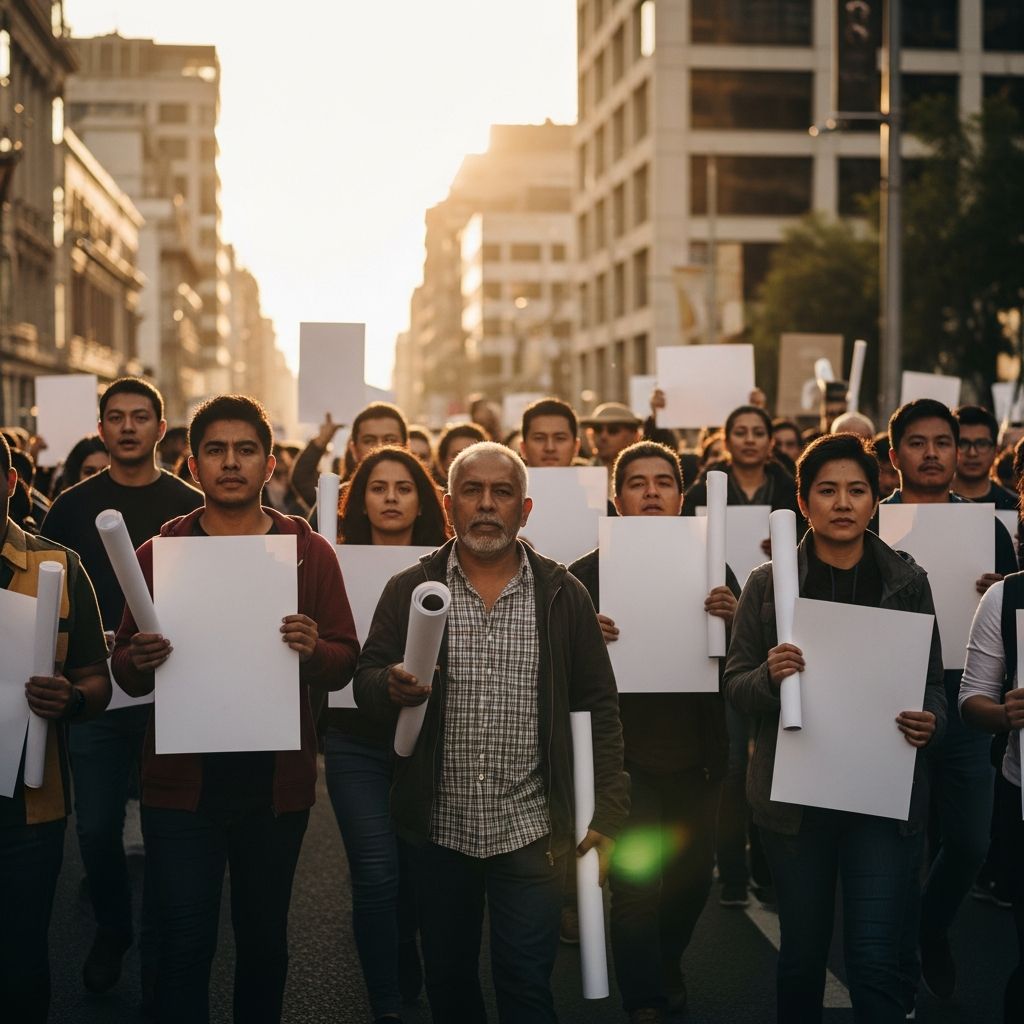
Non-citizens in the United States, including lawful permanent residents (green card holders) and DACA recipients, possess fundamental constitutional rights to participate in peaceful demonstrations. The First Amendment safeguards free speech and assembly for everyone on U.S. soil, regardless of status. However, unique immigration vulnerabilities mean that even minor legal encounters during protests can jeopardize residency or renewal applications.
Constitutional Safeguards for All Protesters
The U.S. Constitution extends robust protections to individuals exercising their voice in public forums. Everyone, from citizens to undocumented immigrants, can legally gather in public spaces to express views, provided activities remain non-violent and do not infringe on others’ rights. Key rights include:
- Freedom of speech: Voicing opinions on political, social, or economic issues without government censorship.
- Right to assemble: Joining others in parks, sidewalks, or streets for rallies and marches.
- Petitioning the government: Demanding policy changes through organized demonstrations.
These protections apply universally, but courts may not always enforce them equally for non-citizens, particularly in high-stakes scenarios.
Special Considerations for Green Card Holders
Lawful permanent residents enjoy strong legal standing but must navigate potential threats to their status. Federal law requires carrying proof of status, such as a green card, during public activities. Recent cases highlight risks: for instance, a Columbia University student faced deportation attempts after a protest-related citation, underscoring how administrative actions can target residency.
Green card holders should prioritize compliance with local laws. Activities like blocking roadways or trespassing can lead to charges classified as crimes of moral turpitude or aggravated felonies, triggering removal proceedings. Even arrests without convictions may complicate naturalization or travel reentry.
| Scenario | Potential Impact on Green Card | Mitigation Steps |
|---|---|---|
| Peaceful attendance | Minimal risk if no arrest | Carry green card; stay observant |
| Minor misdemeanor arrest (e.g., disorderly conduct) | Possible ICE scrutiny; denial of benefits | Invoke silence; seek counsel immediately |
| Conviction for serious offense | Deportation risk; status revocation | Avoid escalation; consult immigration attorney pre-event |
DACA Recipients: Heightened Vulnerabilities
Deferred Action for Childhood Arrivals (DACA) provides temporary protection from deportation but offers no path to permanent status. Participation in protests carries elevated risks, as any criminal charge—even dismissed—can disqualify renewals. DACA guidelines emphasize maintaining “good moral character,” and law enforcement interactions often lead to ICE notifications.
Recipients should assess personal circumstances before attending. Factors like pending applications or prior records amplify dangers. Safety planning is crucial: inform trusted contacts of your location and have attorney details handy.
Risks Across Immigration Categories
While green card holders and DACA recipients face specific hurdles, other non-citizens encounter parallel issues:
- Undocumented individuals: First Amendment rights exist, but arrests frequently result in detention and deportation proceedings.
- Visa holders (students, workers): Violations can void visas and bar future entry.
- Asylum seekers: Protest involvement may undermine credibility claims or delay approvals.
Common pitfalls include failure to disperse when ordered, physical altercations, or property damage, all escalating to federal immigration scrutiny.
Practical Strategies for Safe Participation
To balance activism with status preservation, adopt proactive measures:
- Research the event: Verify organizers promote non-violence; avoid those with histories of unrest.
- Prepare documentation: Green card holders must carry theirs; others should know rights without disclosing status.
- Use safety tools: Carry a ‘red card’ summarizing Fourth and Fifth Amendment rights, available from university international offices.
- Plan communication: Share your itinerary with family; designate a legal contact.
- Monitor dynamics: Exit if tensions rise or police issue dispersal orders.
Alternative engagement includes online advocacy, letter-writing campaigns, or volunteering, minimizing physical risks.
Encountering Law Enforcement: What to Do
Interactions with police or ICE demand calm assertion of rights. Core principles:
- Remain silent: State clearly, “I invoke my right to remain silent and request a lawyer.” Do not discuss immigration status, birthplace, or entry method.
- Refuse searches: Without a warrant or probable cause, politely decline consent.
- Avoid resistance: Comply with orders to avoid additional charges.
- Post-arrest: Demand a bond hearing; do not sign documents without counsel.
Police may query ICE databases, so even brief detentions can initiate reviews. Non-citizens should never provide false information or flee, as this worsens outcomes.
Historical Context and Recent Developments
Protest rights have evolved through landmark rulings affirming non-citizen protections. Yet, administrations have targeted activists, as seen in arrests of immigrant leaders opposing policies. As of 2025, evolving enforcement under new leadership heightens caution, with cases like those at Columbia University illustrating swift status challenges.
Green card holders retain due process and equal protection rights, but proactive legal consultation is advisable amid shifting priorities.
Frequently Asked Questions
Can green card holders be deported for protesting?
Peaceful protesting alone does not lead to deportation. However, arrests or convictions for related crimes can initiate proceedings, especially for moral turpitude offenses.
Does DACA protect against protest-related arrests?
No, DACA offers no immunity; charges can prevent renewals and expose individuals to ICE.
Should I carry my green card to a protest?
Yes, federal law mandates it for lawful permanent residents.
What if a protest turns violent?
Leave immediately to avoid association with unlawful acts.
Can I refuse to answer police questions?
Yes, invoke your Fifth Amendment right to silence.
Conclusion: Informed Activism
Empowered by constitutional guarantees, immigrants can contribute to democratic discourse through protests. Yet, informed decisions—balancing passion with prudence—preserve hard-won status. Consult immigration attorneys for tailored advice, ensuring voices amplify without silence from unintended consequences.
References
- No Kings? Know Your Rights: Immigration Law Guidance for Protest Participants and Bystanders — Lehigh Valley Immigration Lawyers. 2024. https://www.lehighvalleyimmigrationlawyers.com/blog/no-kings-know-your-rights-immigration-law-guidance-for-protest-participants-and-bystanders
- Can Immigrants Protest in the U.S.? Know Your Rights — Boundless. 2025. https://www.boundless.com/blog/rights-immigrant-protests
- Protesting As An Immigrant: Your Rights And Potential Risks During Anti-ICE Protests — Xavier Law Firm. 2024. https://www.xavierlawfirm.com/blog/protesting-as-an-immigrant-your-rights-and-potential-risks-during-anti-ice-protests/
- Immigrants’ Participation in Protests – Rights — National Immigration Law Center (NILC). 2025-07-17. https://www.nilc.org/resources/immigrant-participation-in-protests-rights/
- What are the constitutional rights of green card holders? — National Constitution Center. 2025. https://constitutioncenter.org/blog/what-are-the-constitutional-rights-of-green-card-holders
- Participating in a Protest? Know Your Rights and Risks — Yale Office of International Students & Scholars. 2025. https://oiss.yale.edu/campus-community-life/for-students/legal-considerations/know-your-rights/participating-in-a-protest-know-your-rights-and-risks
Similar Articles








Read full bio of medha deb


