
The Illusion of Justice: Failure of Military Tribunals
How extrajudicial tribunals undermined American values and failed accountability.
Introduction
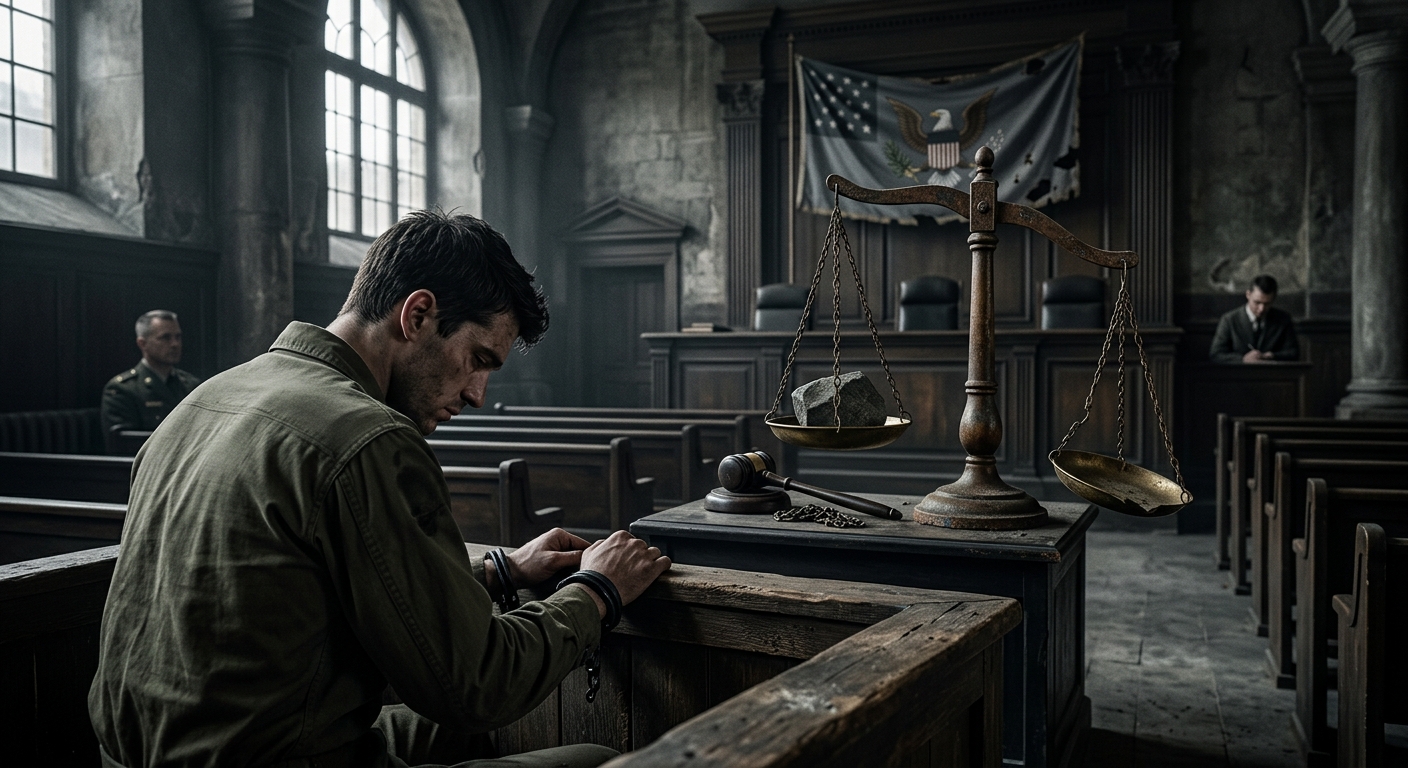
Following the devastating attacks of September 11, 2001, the United States government embarked on an unprecedented reshaping of its national security and legal apparatus. At the center of this transformation was the establishment of the detention facility at Guantánamo Bay and the subsequent creation of military commissions intended to try suspected terrorists outside the bounds of the traditional American judicial system. Driven by a desire for swift retribution and unhindered executive authority, these extrajudicial tribunals were heralded as necessary tools in the global conflict against stateless militant groups. However, the reality of the military commission system has proven to be a stark departure from the foundational American ideals of impartiality, due process, and objective truth.
Instead of delivering robust and unquestionable justice, the system has become a convoluted legal quagmire, characterized by endless delays, constitutional controversies, and an alarming consolidation of presidential power. By intentionally bypassing the federal court system, lawmakers and executive officials created a framework that prioritized convictions over fairness, yet ironically failed to achieve either effectively. This deep dive examines the foundational flaws of the military commissions, the manipulation of international legal definitions, and the overwhelming evidence suggesting that traditional civilian courts remain the most capable venue for handling terrorism-related offenses.
A System Built on Shifting Sands
The architectural foundation of the military commissions at Guantánamo Bay was inherently flawed from its inception. It was constructed not upon established legal precedent or a careful balancing of constitutional rights, but rather upon a reactionary desire to circumvent the perceived constraints of both international humanitarian law and the domestic federal court system. The Military Commissions Act (MCA) of 2006, signed into law following Supreme Court rulings that invalidated earlier iterations of the tribunals, attempted to provide a legislative veneer to practices that fundamentally contradicted the Uniform Code of Military Justice (UCMJ) and historical norms.
This parallel justice system was designed with built-in advantages for the prosecution, drastically lowering the bar for evidence admissibility and allowing for the consideration of statements obtained under highly coercive, often brutal conditions. By sidestepping the rigorous evidentiary standards of Article III federal courts, the architects of the military commissions prioritized expediency and state secrecy over institutional integrity. Yet, paradoxically, the tribunals failed even at their primary goal of speed. The legal framework was so entirely unprecedented and vaguely constructed that defense attorneys, human rights advocates, and even military prosecutors found themselves continuously bogged down in years of preliminary hearings and complex appellate challenges. The very mechanisms designed to bypass the friction of the civilian courts ended up creating a labyrinthine bureaucracy that produced little more than a perpetual state of legal gridlock.
The “Unlawful Enemy Combatant” Designation
Central to the operation of the military commissions—and their most persistent legal vulnerability—was the invention and codification of the “unlawful enemy combatant” category. Traditional international law, particularly as outlined in the Geneva Conventions, categorizes individuals in armed conflict primarily as either lawful combatants (who are entitled to formal prisoner of war status and immunity from prosecution for lawful acts of war) or civilians (who are immune from direct attack unless they directly participate in hostilities).
The MCA of 2006 effectively bypassed these globally recognized norms by codifying a hybrid classification. This designation stripped detainees of the protections afforded to formal prisoners of war while simultaneously subjecting them to military prosecution, a status not recognized by standard international treaties. Under this framework, the executive branch granted itself the extraordinary latitude to designate individuals as unlawful enemy combatants based on criteria that were often classified, highly circumstantial, or derived from enhanced interrogation techniques.
The fragility of this legal construct became glaringly apparent during the protracted trials of several high-profile detainees. In instances where the government’s case failed to meet even the uniquely broad definitions outlined by the commissions, the system collapsed upon itself. When technical defaults occurred—such as a ruling that an individual did not strictly fit the precise parameters of an “unlawful enemy combatant” at the time of their initial status review—prosecutors were left scrambling, and charges were inexplicably dropped or indefinitely delayed. This exposed the tribunals not as a robust instrument of justice, but as a fragile house of cards, highly vulnerable to the slightest procedural or definitional challenge.
Slaps on the Wrist and Decades in Limbo
Perhaps the most confounding outcome of the military commission system is its bizarre track record regarding sentencing, plea deals, and ultimate resolution. The detention camp at Guantánamo Bay was ostensibly reserved for the “worst of the worst”—individuals allegedly posing an imminent, existential threat to the United States. Yet, the actual outcomes of the military tribunals have frequently resembled bureaucratic face-saving exercises rather than proportionate, severe justice.
In several notable and controversial cases, individuals who had been held in austere confinement for half a decade or more were offered plea deals resulting in shockingly lenient sentences. Some detainees, after years of physical and psychological isolation, accepted plea agreements that mandated mere months of additional confinement, often accompanied by strict gag orders prohibiting them from publicly discussing the conditions of their detention, the nature of their charges, or the methods of their interrogation.
This dynamic creates a profound cognitive dissonance that dissatisfies observers across the political spectrum. For those demanding severe punishment and permanent incapacitation for individuals involved in terrorism, a system that hands down nine-month sentences is a catastrophic failure of security. Conversely, for civil liberties advocates demanding the release and exoneration of individuals swept up by mistake or held without credible, untainted evidence, the extortionate nature of these plea deals—where pleading guilty is the only viable exit strategy—is equally repugnant.
Furthermore, the dismissal of charges or the completion of a short sentence does not guarantee actual freedom. Because the underlying rationale for detention at Guantánamo relies heavily on the executive branch’s wartime authority rather than criminal conviction, individuals who “win” their cases on technicalities or finish their sentences often find themselves thrown back into administrative limbo. They are forced to await the opaque deliberations of periodic status review boards to determine if they still pose a residual threat, meaning they can remain imprisoned indefinitely despite the total collapse of the criminal case against them.
Executive Overreach and the Erosion of Due Process
The persistent defense of the military commissions by successive political administrations points to a deeper, more systemic motivation: the preservation and expansion of unilateral executive power. The tribunals operate fundamentally as an extension of the Commander-in-Chief’s authority, effectively bypassing the legislative oversight and judicial checks and balances that are the bedrock of the American constitutional republic.
By insisting that the theatre of war extends indefinitely across the globe and completely absorbs the realm of criminal justice, proponents of the military commissions have sought to normalize a permanent state of legal exceptionalism. In this environment, the fundamental rights that traditionally define American jurisprudence—the right to an impartial and independent jury, the right to confront one’s accusers without relying on hearsay, and the absolute prohibition on evidence tainted by torture—are treated as negotiable inconveniences rather than inalienable guarantees.
This massive concentration of power undermines the institutional integrity of the United States. It signals to the international community that American adherence to the rule of law is purely conditional, applied robustly in times of peace but quickly discarded at the first sign of peril. The military commissions have functioned less as a legitimate venue for uncovering the truth and holding the guilty accountable, and more as a theater designed to validate the sweeping national security directives formulated by political operatives. This prioritizes raw authority over constitutional fidelity, setting a dangerous precedent for future global conflicts.
The Proven Alternative: Article III Federal Courts
The failures, delays, and ethical compromises of the Guantánamo military tribunals are all the more glaring when contrasted directly with the undeniable success of the established federal criminal justice system. While the military commissions have spent over two decades securing only a handful of final convictions—many of which have been overturned, renegotiated, or marred by endless appeals—Article III federal courts have quietly and efficiently processed hundreds of complex international terrorism cases.
The United States Department of Justice, utilizing the existing, constitutionally sound framework of the federal judiciary, has consistently demonstrated that it is fully capable of handling highly sensitive national security cases. Federal judges are well-versed in mechanisms like the Classified Information Procedures Act (CIPA), which provides a tested, secure methodology for utilizing classified intelligence in open court without compromising state secrets or methods. Federal prosecutors have successfully secured lengthy, unimpeachable sentences for high-profile terrorists in civilian courts, including the perpetrators of the 1993 World Trade Center bombing and the conspirators behind the 1998 U.S. embassy bombings in East Africa.
These civilian trials provide exactly what the military commissions critically lack: global legitimacy. When a terrorist is convicted in a federal court, the verdict is recognized worldwide as the result of a fair, rigorous, and transparent process. There are no credible allegations of “kangaroo courts” or show trials, because the federal system relies on the same robust evidentiary standards applied to any other serious federal crime. By abandoning this proven apparatus in favor of untested, easily manipulated military tribunals, the government not only delayed justice for the victims of terrorism but also handed a massive propaganda victory to extremist organizations who continually point to Guantánamo as evidence of American hypocrisy.
A Legacy of Compromised Ideals
The decades-long experiment with extrajudicial military commissions has proven to be a costly and embarrassing misadventure in American legal history. What began as a panicked, fear-driven response to an unprecedented tragedy rapidly devolved into a self-perpetuating bureaucracy that failed to achieve its primary objectives. It did not provide swift justice. It did not cleanly incapacitate the guilty without sparking massive international controversy. And it fundamentally failed to protect the innocent from prolonged, arbitrary detention without trial.
As long as the apparatus of indefinite detention and exceptional military tribunals remains intact, the moral authority of the United States remains deeply compromised. True strength in the face of terrorism does not require the abandonment of democratic principles; rather, it demands the rigorous and unwavering application of them. Transitioning all remaining viable cases to the federal courts, adhering strictly to the laws of evidence, and ending the policy of indefinite detention is the only logical path forward. It is essential to restore the integrity of the American justice system and ensure that the pursuit of national security is never again allowed to unconditionally eclipse the demands of the Constitution.
Frequently Asked Questions (FAQs)
- What exactly is an unlawful enemy combatant?
An “unlawful enemy combatant” is a highly controversial legal classification codified heavily by the U.S. government post-9/11 via the Military Commissions Act. It refers to individuals accused of engaging in or supporting hostilities against the United States who do not qualify for the traditional protections of lawful combatants (such as prisoners of war) under the Geneva Conventions, often because they operate without official state uniforms or recognized military command structures. - Why were military commissions established instead of using federal courts?
The executive branch originally established military commissions primarily to streamline the prosecution of foreign terrorism suspects without being constrained by the strict evidentiary and procedural rules of Article III federal courts. The aim was to easily protect classified intelligence and secure rapid convictions, though the system ultimately proved far slower, more convoluted, and more legally vulnerable than the existing civilian courts. - What happens to a detainee if military commission charges are dropped?
Because of the parallel system of indefinite wartime detention, a detainee whose criminal charges are dropped or dismissed on technical grounds does not automatically go free. They are typically held in administrative military detention and become subject to Periodic Review Boards, which assess whether they still pose a generalized security threat, meaning they can remain imprisoned for years without any formal charges. - How do federal courts compare to military commissions in handling terrorism?
Federal courts boast a highly successful and efficient track record, having convicted hundreds of individuals for international and domestic terrorism offenses since 2001. They utilize established, constitutionally tested procedures for handling classified information and their verdicts carry immense international legitimacy, whereas military commissions have resulted in very few convictions and have been mired in two decades of legal gridlock.
References
- Fact Sheet: The Military Commissions Act of 2006 — The White House (George W. Bush Archives). 2006-10-17. https://georgewbush-whitehouse.archives.gov/news/releases/2006/10/20061017-1.html (This older source is uniquely authoritative as it is the original executive summary of the foundational legislation discussed.)
- Fact Sheet: Prosecuting and Detaining Terror Suspects in the U.S. Criminal Justice System — U.S. Department of Justice. 2009-06-09. https://www.justice.gov/archive/opa/pr/2009/June/09-ag-564.html (Provides historical baseline data from the DOJ proving the efficacy of federal courts over military commissions.)
- Military Commissions Act of 2006: Definition of Unlawful Enemy Combatant — Human Rights Watch. 2006-10-02. https://www.hrw.org/news/2006/10/02/military-commissions-act-2006
- Better Management Oversight and Internal Controls Needed to Ensure Accuracy of Terrorism-Related Statistics — Office of Justice Programs. 2012-09. https://www.ojp.gov/ncjrs/virtual-library/abstracts/better-management-oversight-and-internal-controls-needed-ensure
Similar Articles








Read full bio of Sneha Tete


