
The Illusion of Humane Confinement: Immigrant Detention
Rebranding detention cannot erase the human cost of confinement.
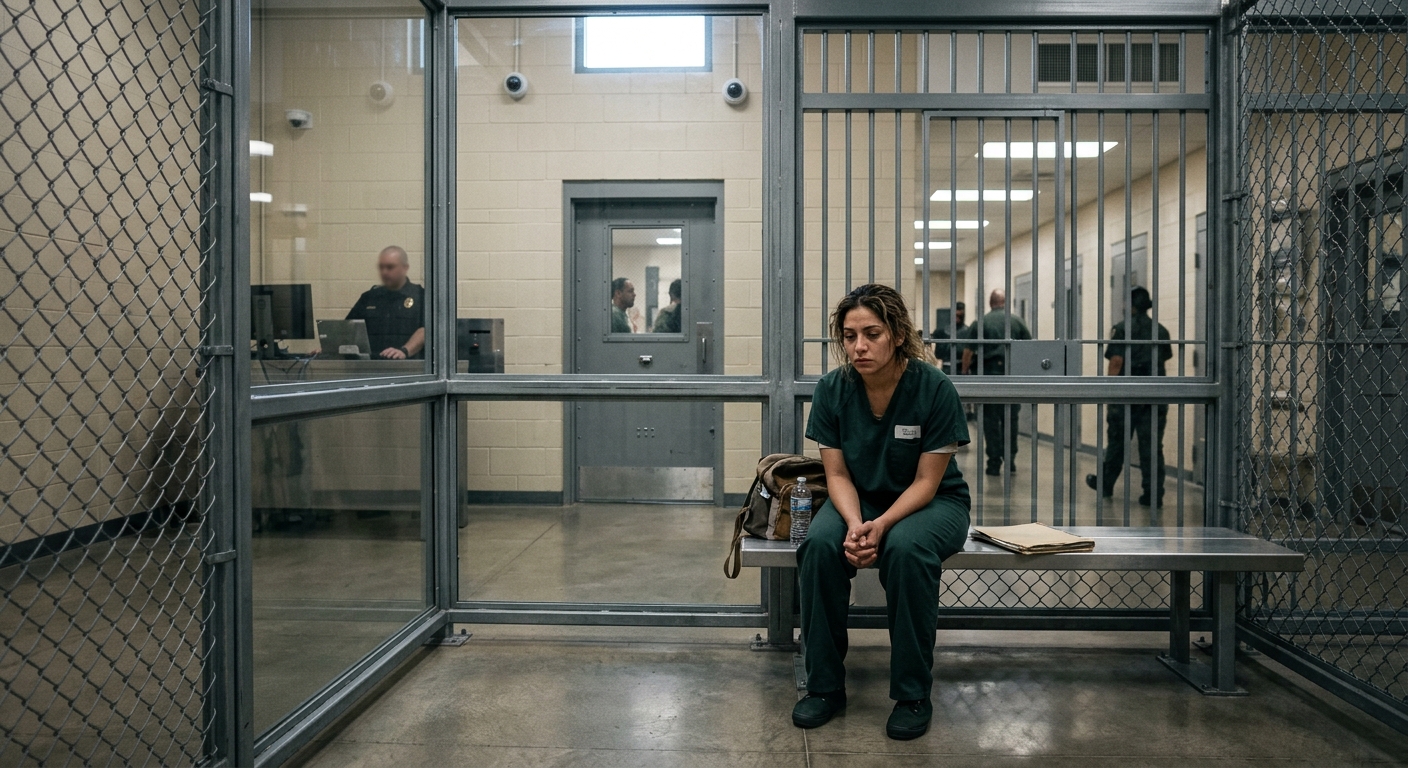
The Façade of Reform in Immigration Confinement
In recent years, the public discourse surrounding immigration enforcement has increasingly featured coordinated attempts to soften the image of incarceration. Authorities and private government contractors frequently employ euphemistic terminology, attempting to rebrand traditional lockups and holding facilities as “family residential centers,” “annexes,” or “processing hubs.” However, beneath the sterile, bureaucratic vocabulary lies an undeniable and harsh reality: an institution that systematically strips individuals of their freedom of movement, dictates their daily schedules under threat of discipline, and enforces strict compliance through armed guards and constant surveillance is, fundamentally, a prison. This ongoing rebranding effort serves primarily as a strategic public relations maneuver rather than a meaningful shift in policy, human rights compliance, or living conditions.
Attempting to sanitize the image of immigrant confinement does not neutralize the inherent harm inflicted upon those detained within its walls. When families, asylum seekers, and undocumented individuals are placed in these facilities, they are subjected to the exact same psychological and physical pressures as any other incarcerated population. The architectural aesthetics might be slightly altered for public consumption—perhaps a coat of bright paint on the cinderblock walls, the inclusion of a rudimentary playground in the courtyard, or officers wearing polo shirts instead of tactical gear—but the perimeter is still heavily secured, and the doors remain locked. The fundamental power dynamic remains heavily skewed, leaving vulnerable populations completely dependent on a system that is often ill-equipped or unwilling to handle their complex, individual needs. The illusion of humane confinement is a deeply dangerous narrative because it pacifies public outrage while allowing systemic abuses to continue operating unchecked behind closed doors.
Analyzing the Psychological Toll of Confinement
The impact of physical detention on the human psyche is profound, enduring, and extensively documented by medical professionals. For immigrants, many of whom are actively fleeing persecution, targeted violence, or extreme poverty in their home countries, the experience of being locked away serves as a massive compounding trauma. The environment of any detention center, regardless of its official designation or aesthetic presentation, is inherently punitive and stressful. The total lack of personal agency, the terrifying uncertainty of their complex legal cases, and the constant, looming threat of deportation create a pressure cooker of chronic anxiety and deep despair.
Recent academic and medical analyses severely undercut the narrative of harmless confinement. A comprehensive 2025 study examining the health-related experiences of detained immigrants highlighted that a significant portion of detainees suffer from diagnosed mental illnesses, most commonly severe depression and Post-Traumatic Stress Disorder (PTSD). The research indicates that the incidence of poor general health, extreme difficulties accessing mental health services, and exposure to deeply punitive measures like solitary confinement are alarmingly high within these facilities. For individuals who enter the immigration system already carrying the heavy burden of pre-existing trauma from their journeys or their home countries, the rigid, carceral environment dramatically exacerbates their mental health conditions, often leading to severe, sometimes irreversible psychological deterioration.
Trauma and Long-term Effects on Vulnerable Populations
Children and adolescents are particularly susceptible to the damaging, long-term effects of confinement. The developmental regressions, behavioral issues, and chronic fear consistently observed in detained minors demonstrate unequivocally that there is no safe or acceptable way to incarcerate a child. Even in facilities explicitly designed and marketed to house family units, the intense stress of the carceral environment bleeds directly into the family dynamic. Parents, actively stripped of their autonomy, parental authority, and basic ability to provide for or protect their children, often experience a profound and debilitating sense of helplessness. The trauma inflicted during these periods of confinement does not simply vanish upon a family’s release; it frequently manifests as long-term emotional and psychological scars that severely hinder successful integration, educational attainment, and emotional recovery for years to come.
The Intersection of Profit and Immigration Enforcement
A critical, often under-discussed factor in the rapid expansion and stubborn persistence of the immigrant detention apparatus is the government’s heavy reliance on private, for-profit prison corporations. A vast majority of immigration detention beds in the United States are owned and operated by private corporate entities that essentially view incarcerated immigrants as a lucrative, perpetually renewable revenue stream. This profit-driven model inherently creates a perverse incentive structure where the primary, overriding goal of the facility operators is to maximize shareholder returns, often at the direct and immediate expense of the health, safety, and dignity of the detainees they are contracted to hold.
Economic Incentives Over Human Welfare
When a corporation’s bottom line is directly and inextricably tied to minimizing daily operational costs, the essential services provided to detainees inevitably and severely suffer. Staffing levels are frequently kept to the absolute bare minimum required by loose contracts, leading to wildly inadequate supervision, increased tensions, and elevated risks of violence or medical neglect. Nutritional food quality, basic hygiene supplies, access to legal resources, and recreational opportunities are also prime, easy targets for corporate cost-cutting measures. The superficial rebranding of these facilities does absolutely nothing to alter this fundamental economic conflict of interest. A “residential center” operated by a massive for-profit prison conglomerate is still subject to the exact same aggressive cost-saving mandates and profit margins as a standard maximum-security penitentiary. This systemic prioritization of financial profit over basic human dignity ensures that true, meaningful reform is virtually impossible within the current privatized framework.
Deficiencies in Healthcare and Basic Services
One of the most consistently alarming aspects of the immigrant detention system is the chronic, systemic failure to provide adequate medical and mental health care to those inside. While official government standards and oversight policies may mandate comprehensive healthcare services on paper, the grim reality on the ground often tells a starkly different and tragic story. Detainees, advocacy groups, and whistleblowers frequently report massive systemic barriers to accessing necessary medical attention, ranging from casually dismissed complaints and dangerously delayed treatments to the outright denial of life-saving care.
For individuals struggling with chronic illnesses, physical disabilities, or acute medical emergencies, the detention environment can quickly become a life-threatening situation. Insurmountable language barriers, a severe lack of culturally competent medical care, and the inherent, pervasive skepticism of custodial staff often result in a deadly culture of medical neglect. Mental health services, on the rare occasions they are available, are typically rudimentary at best and focused strictly on immediate crisis management or sedation rather than genuine therapeutic intervention. The ongoing reliance on solitary confinement as a crude tool to manage individuals experiencing acute mental health crises is a glaring, tragic example of how the system routinely defaults to punitive measures rather than compassionate medical care. A facility simply cannot be considered a “model” or a “humane” environment if it consistently fails to protect the basic physical health and well-being of the human beings it forcibly confines.
Viable and Compassionate Alternatives to Detention
The prevailing political narrative that mass physical detention is an unavoidable, absolute necessity for maintaining immigration enforcement is demonstrably false. Numerous global human rights organizations, legal experts, and policy researchers strongly advocate for the vast expansion of Alternatives to Detention (ATDs). These alternatives, which emphasize community-based case management, comprehensive social support, and legal guidance rather than physical confinement, offer a far more humane, vastly more cost-effective, and highly practical approach to navigating the complexities of the immigration system.
The United Nations High Commissioner for Refugees (UNHCR) has repeatedly and forcefully emphasized that physical detention should only ever be utilized as a measure of absolute last resort. According to comprehensive UNHCR guidelines and global data, community-based alternatives to detention are significantly cheaper—often costing only a tiny fraction of what it takes to maintain a single detention bed—and they yield remarkably high compliance rates with immigration proceedings and court dates. By providing asylum seekers and vulnerable migrants with reliable access to legal counsel, adequate housing, and community integration services, ATDs ensure that individuals can actively pursue their legal claims with dignity and stability. U.S. Immigration and Customs Enforcement (ICE) does maintain its own ATD programs utilizing tracking technology and case management. However, human rights advocates firmly argue that holistic, community-supported programs should entirely replace, rather than merely supplement, the vast and damaging network of physical detention centers.
The Legal and Human Rights Framework
The ongoing, heavy reliance on large-scale immigration detention raises profound and serious concerns under international human rights law. The universal human right to liberty and strict protection from arbitrary detention are foundational global principles that are frequently and systematically undermined by the routine, administrative incarceration of migrants. Seeking asylum is a recognized international legal right, not a criminal act, yet asylum seekers are regularly subjected to harsh carceral environments that perfectly mimic the criminal penal system.
The persistent attempt to spin these facilities as “model prisons” or benign, welcoming residential centers completely fails to address the deep legal and moral transgressions inherent in their daily operation. True adherence to international human rights standards requires a fundamental, ground-up paradigm shift away from enforcement-heavy, punitive immigration policies toward holistic systems that prioritize human dignity, strict due process, and community integration. As long as the basic infrastructure of mass physical confinement remains solidly in place, any superficial changes to facility names, staff uniforms, or aesthetic presentation will remain an empty, cynical gesture that fails to protect the vulnerable.
Frequently Asked Questions (FAQs)
- What exactly does the term “Alternatives to Detention” (ATD) mean?
Alternatives to Detention refer to a broad variety of established programs and policies that allow immigrants and asylum seekers to remain safely in the community while their ongoing immigration cases are being actively processed, rather than being held in physical confinement. These successful programs can include community-based case management, comprehensive legal support services, and housing assistance. - Why do human rights advocates argue that renaming facilities doesn’t solve the problem?
Renaming a facility from a “detention center” to a “processing hub” or “family residential center” does absolutely nothing to change the physical realities of confinement. Detainees still lack basic freedom of movement, are subject to strict custodial rules, are separated from society, and suffer the exact same psychological traumas associated with traditional incarceration. - Are private companies heavily involved in immigrant detention?
Yes, a highly significant percentage of immigrant detention facilities are owned and operated by private, for-profit prison corporations. Critics strongly argue that this creates a dangerous financial incentive to incarcerate more individuals and ruthlessly cut costs on essential, life-saving services like healthcare, staffing, and food. - How does physical detention affect the mental health of immigrants?
Detention has a profoundly negative and often lasting impact on mental health. Extensive medical studies show extremely high rates of severe depression, chronic anxiety, and PTSD among detained populations. The agonizing uncertainty of their legal status, combined with the total loss of autonomy, severely exacerbates psychological distress.
References
- The health-related experiences of detained immigrants with and without mental illness — Elsevier Ltd. / NIH. 2025-01-04. https://pubmed.ncbi.nlm.nih.gov/
- Options for governments on open reception and alternatives to detention — UNHCR. https://www.unhcr.org/
- Detention Management — U.S. Immigration and Customs Enforcement (ICE). 2026-04-09. https://www.ice.gov/detain/detention-management
Similar Articles








Read full bio of Sneha Tete




