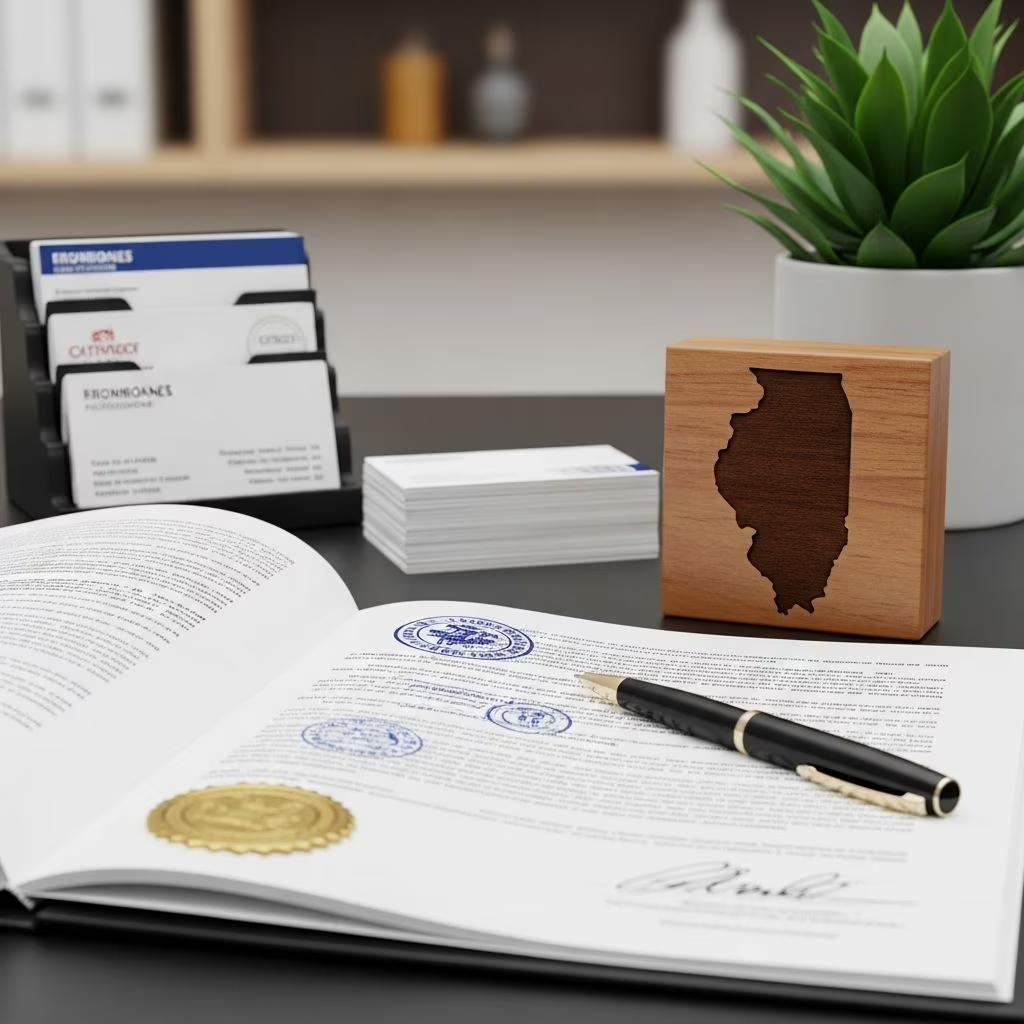
Understanding Illinois Business Licensing Requirements
Launching a business in Illinois involves navigating a multi-layered regulatory landscape that differs from many other states. Unlike some jurisdictions that require a universal business license for all enterprises, Illinois takes a more targeted approach to business regulation. Understanding what licenses and registrations your business needs is essential before you open your doors, as failing to obtain proper documentation can result in penalties and operational disruptions.
Illinois businesses typically need to comply with requirements at three distinct regulatory levels: state-level registration, local municipal licensing, and potentially federal licensing depending on your industry. The specific requirements vary dramatically based on your business type, location, and the services or products you offer. This guide walks you through each layer of the licensing process to ensure your enterprise starts on solid legal footing.
State-Level Registration and the Department of Revenue
Every business operating in Illinois must establish a presence with the state by registering with the Illinois Department of Revenue (IDOR), regardless of whether you need additional licenses. This registration requirement applies to sole proprietorships, partnerships, limited liability companies, and corporations alike. The Department of Revenue issues a Certificate of Registration and assigns a taxpayer identification number, both of which are mandatory credentials for conducting business legally within the state.
The Department of Revenue registration process is straightforward and, importantly, free for most businesses. You have two options for completing this registration:
- Online registration through the MyTaxIllinois portal, which offers convenience and immediate processing
- Paper-based registration using Form REG-1, mailed directly to the Department of Revenue
When initiating the online registration process, you will encounter dropdown menus asking about your business structure. For limited liability companies, you must specify whether you operate as a multi-member LLC or single-member LLC, as this distinction affects your tax obligations and reporting requirements. The registration form requests fundamental business information including your company name, principal business address, contact details, and a description of your business activities.
If your business will collect sales tax from customers, you must complete Schedule REG-1-L as part of your registration application. This additional form establishes your sales tax license, which is essential if you sell tangible goods or certain services. Upon successful registration, the Department of Revenue will provide you with your Certificate of Registration and a state taxpayer identification number distinct from your federal EIN, both of which you must maintain and reference for tax filing purposes.
Local and Municipal Business Licensing
Beyond state registration, you must investigate and comply with local licensing requirements where your business will physically operate. City and county governments in Illinois often impose their own licensing mandates, and these requirements vary significantly across municipalities. Some cities require all businesses operating within their limits to obtain a general business license, while others impose licensing only on specific industries or occupations.
Chicago, as the state’s largest city, exemplifies this localized approach by requiring every business operating within city limits to obtain a City of Chicago business license. However, certain professional occupations regulated by the Illinois Department of Financial and Professional Regulation enjoy exemptions from city licensing requirements. Before assuming you need a local license, contact your city clerk’s office or visit your municipality’s business department website to determine your specific obligations.
Local licensing requirements fall into several categories:
- General business licenses: Required for all businesses operating in a municipality, regardless of industry
- Industry-specific licenses: Required only for certain types of businesses, such as food service establishments, hair salons, childcare facilities, or entertainment venues
- Zoning permits: Necessary to confirm your business activity aligns with local zoning ordinances for your property location
- Building permits: Required if you plan to construct, renovate, or significantly modify your business premises
- Certificates of occupancy: Documentation confirming your space meets all health, safety, and building code requirements
Contacting your local municipality is the most reliable way to identify your specific licensing obligations. City clerks and county administrators can provide comprehensive information about application procedures, fees, required documentation, and processing timelines. Many municipalities now offer online portals where you can research requirements and submit applications electronically, streamlining the process considerably.
Federal Licensing and Special Industry Requirements
Certain industries face federal licensing requirements in addition to state and local oversight. If your business operates in a federally regulated sector, you must obtain appropriate federal licenses and registrations before commencing operations. Federal requirements typically apply to industries involving safety risks, consumer protection, financial services, or national security considerations.
Common industries with federal licensing requirements include:
- Alcohol manufacturing and distribution (regulated by the Alcohol and Tobacco Tax and Trade Bureau)
- Firearms manufacturing and sales (overseen by the Bureau of Alcohol, Tobacco, Firearms and Explosives)
- Radio and television broadcasting (requiring Federal Communications Commission approval)
- Transportation services by air (Federal Aviation Administration licensing) or water (Federal Maritime Commission oversight)
- Financial services and securities trading (Securities and Exchange Commission registration)
- Banking and lending institutions (Federal Reserve and Office of the Comptroller of the Currency involvement)
- Pharmaceuticals and medical devices (Food and Drug Administration approval)
If your business does not fall into these specialized categories, your federal obligations are typically limited to obtaining an Employer Identification Number (EIN) from the Internal Revenue Service and filing appropriate federal tax returns. The EIN, also known as a Federal Employer Identification Number, serves as your business’s federal tax identifier and is distinct from any state-issued taxpayer identification number.
Industry-Specific State Licensing in Illinois
Beyond the basic Department of Revenue registration, Illinois imposes occupational and professional licensing requirements for numerous industries. The Illinois Department of Financial and Professional Regulation (IDFPR) oversees licensing for dozens of professions and occupations, ensuring practitioners meet education, experience, and ethical standards.
Industries commonly requiring state licensing in Illinois include:
- Healthcare professions (medical doctors, nurses, dentists, therapists)
- Legal services and law practice
- Real estate sales and brokerage
- Insurance sales and brokerage
- Construction trades (contractors, electricians, plumbers)
- Cosmetology and barbering
- Childcare and educational services
- Alcohol distribution and sales (through the Liquor Control Commission)
- Transportation services (commercial trucking through the Commerce Commission)
- Securities and investment advisory services
If your business operates in any regulated profession, contact the relevant regulatory agency or visit the IDFPR website to understand specific application requirements, examination prerequisites, renewal schedules, and fee structures. Professional licensing ensures consumer protection and maintains industry standards, so compliance is non-negotiable.
Sales Tax Registration and Obligations
If your Illinois business sells tangible goods or certain taxable services, sales tax registration is mandatory. Sales tax obligations apply to businesses operating in physical locations as well as those conducting business entirely online with Illinois customers. The registration process is integrated into your Department of Revenue registration; you simply complete the sales tax schedule (Schedule REG-1-L) when submitting your initial business registration.
Once registered for sales tax, you must collect tax from customers at the point of sale, report collected taxes to the state, and remit payments according to the Department of Revenue’s established schedule. Failure to properly register, collect, and remit sales tax exposes your business to significant penalties and back-tax liability. If you are uncertain whether your specific products or services are subject to sales tax, the Department of Revenue provides detailed guidance on its website and through customer service phone support.
Assumed Name Registration (DBA)
If your business will operate under a name different from your legal business entity name, you must register that assumed name, commonly called a “doing business as” or DBA. Sole proprietorships, general partnerships, and professional service corporations are required to register assumed names with the clerk of the county where they conduct business. Limited liability companies and corporations that choose to operate under an alternate name must also complete this registration.
The assumed name registration process requires filing with your county clerk and, in most cases, publishing notice of your assumed name in a local newspaper. Illinois law typically requires publication once per week for three consecutive weeks in a newspaper circulating in your county. You must then submit proof of publication to the county clerk to complete the registration. This process protects your business name and prevents other entities from operating under identical or confusingly similar names within your county.
Zoning and Building Compliance
Before leasing or purchasing commercial space, verify that your intended business use complies with the property’s zoning classification. Zoning ordinances designate areas for residential, commercial, industrial, or mixed-use purposes and restrict certain business activities within each zone. If your business does not align with the current zoning designation, you have two options: locate your business in a properly zoned area, or apply for a special use permit allowing your business to operate in the current zone.
Special use permits typically require demonstrating that your business will not negatively impact the surrounding neighborhood, that you can meet specific operational requirements, and that the permit benefits the community. The application and approval process can be time-consuming and may involve public hearings, so plan accordingly if you need a special use permit.
If you plan to construct, renovate, or significantly modify your business premises, you must obtain building permits from your local building department. The permit process involves submitting detailed plans describing the work, paying applicable fees, and undergoing inspections at various stages of construction. For substantial projects, you may need to hire professional architects or engineers to prepare plans and ensure compliance with building codes.
Timeline and Cost Considerations
The timeline for obtaining business licenses and registrations varies considerably depending on your industry, location, and the complexity of your business operations. State Department of Revenue registration typically processes within days if submitted online. Local municipal licensing may take weeks or longer, particularly if your city or county experiences high application volume or if your business requires special hearings or inspections.
Most state-level registrations are free, including your Certificate of Registration from the Department of Revenue. However, local business licenses typically involve application fees ranging from modest amounts to several hundred dollars depending on your municipality and business type. Industry-specific licenses and federal registrations may involve substantially higher costs. Budget for these expenses when calculating your startup costs.
Frequently Asked Questions About Illinois Business Licensing
Q: Does Illinois require all businesses to have a statewide business license?
A: No, Illinois does not impose a statewide general business license requirement. However, all businesses must register with the Department of Revenue to obtain a Certificate of Registration and taxpayer identification number. Additionally, specific industries and local municipalities may require additional licenses and permits.
Q: How long does it take to register with the Illinois Department of Revenue?
A: Online registration through MyTaxIllinois typically processes within one to three business days. Paper-based registration using Form REG-1 may take longer depending on mail processing and department workload. You can begin operations once you receive your Certificate of Registration and taxpayer ID.
Q: What is the difference between an EIN and an Illinois taxpayer ID?
A: Your EIN (Employer Identification Number) is your federal tax identifier issued by the Internal Revenue Service. Your Illinois taxpayer ID is a state-specific identifier issued by the Department of Revenue. Both are necessary for federal and state tax compliance, and they serve different regulatory purposes.
Q: Do online businesses need to register in Illinois if they have no physical location in the state?
A: If your online business has customers in Illinois, you must register with the Illinois Department of Revenue. This applies even if you have no physical office or inventory location in Illinois. The registration requirement is based on conducting business with Illinois customers, not physical presence.
Q: How do I know if my business requires a local license in addition to state registration?
A: Contact your city or county clerk’s office directly. Many municipalities now provide online resources explaining their specific licensing requirements based on business type. You can also visit your municipality’s official website or call the business licensing department for comprehensive information.
Q: Is there a fee to register with the Illinois Department of Revenue?
A: No, registration with the Department of Revenue is free for most businesses. However, if your business requires special industry-specific tax licenses or if you conduct business subject to additional state taxes, those registrations may involve fees.
Q: What happens if I operate without proper licenses and registrations?
A: Operating without required licenses can result in significant penalties, fines, mandatory closure orders, and potential criminal liability depending on the severity and nature of the violation. Regulatory agencies can also assess back taxes and penalties for unpaid obligations. It is essential to obtain all required registrations and licenses before commencing operations.
References
- Illinois Business License Requirements for LLC (2026) — LLC University. 2026. https://www.llcuniversity.com/illinois-llc/business-licenses-permits/
- Obtain a Business License in Illinois — CT Corporation / Wolters Kluwer. 2026. https://www.wolterskluwer.com/en/solutions/ct-corporation/illinois-business-license
- How to Get a Small Business License in Illinois — Nolo Legal Encyclopedia. 2025. https://www.nolo.com/legal-encyclopedia/how-get-small-business-license-illinois.html
- Business Registration — Illinois Department of Revenue. 2026. https://tax.illinois.gov/businesses/registration.html
- Registrations, Licenses & Permits — State of Illinois Official Government Website. 2026. https://www.illinois.gov/business/registration-licenses-permits.html