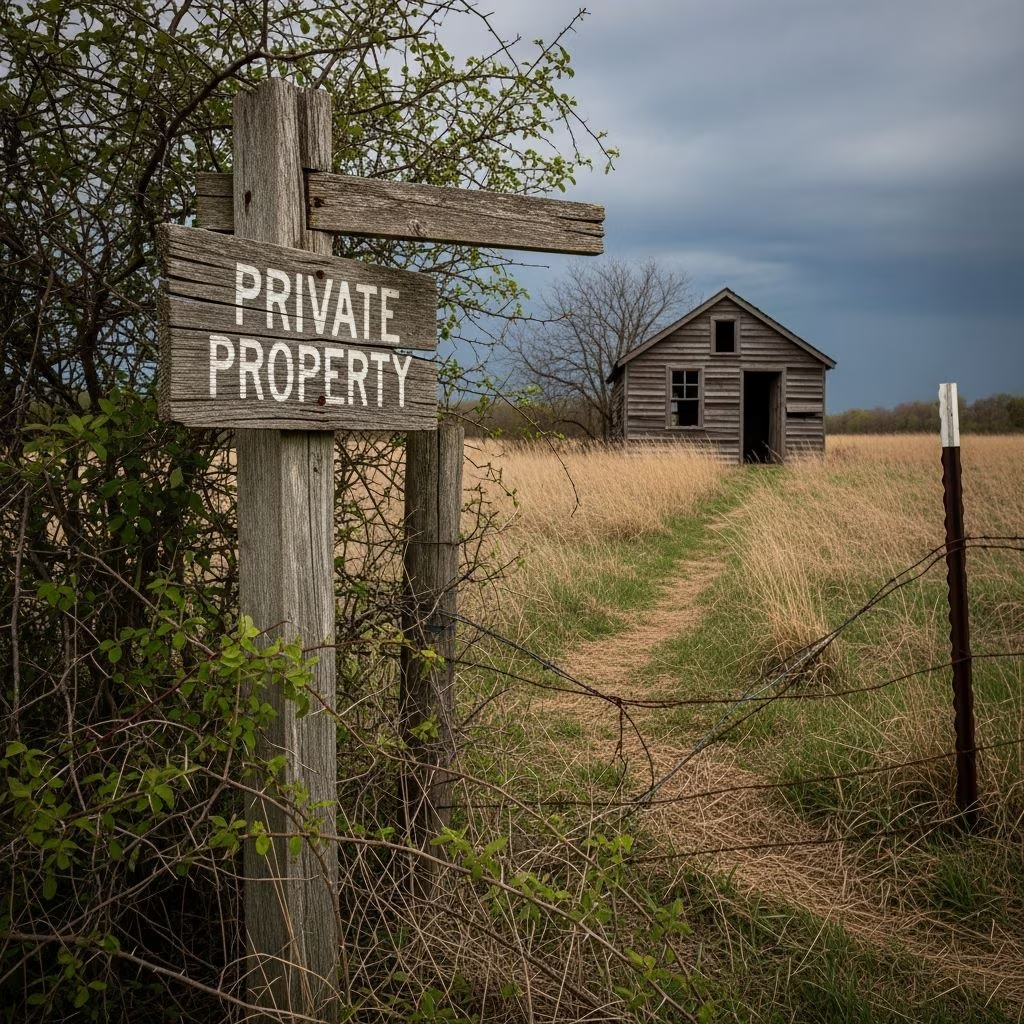
Adverse possession allows individuals to gain legal title to property they do not own by meeting strict statutory conditions over time. In Illinois, governed primarily by 735 Illinois Compiled Statutes Section 5/13-101 et seq., claimants must demonstrate possession that is continuous, hostile, actual, open, notorious, exclusive, and under a claim of title for specified periods.
Core Principles of Adverse Possession in Illinois
The doctrine rewards productive land use while punishing negligent owners who fail to assert rights. Courts require clear and convincing evidence from claimants, placing the burden on them to overcome the true owner’s presumption of title. Possession must be hostile—without permission—and treat the land as one’s own.
- Hostile Possession: Use inconsistent with the true owner’s rights, regardless of intent. Mistaken belief in ownership suffices; no malice needed.
- Actual Possession: Physical control, like farming, building, or maintaining the land.
- Open and Notorious: Visible to anyone, including the owner, via obvious activities such as fencing or landscaping.
- Exclusive: Claimant alone uses the property, not shared with the public or owner.
- Continuous: Uninterrupted for the statutory period, though minor gaps may not disqualify if overall use is steady.
Government-owned land, including state parks or municipal properties, is immune, preventing claims against public holdings.
Statutory Time Periods for Claims
Illinois offers tiered durations based on circumstances, shorter than many states’ uniform 20 years.
| Scenario | Duration | Additional Requirements |
|---|---|---|
| Standard Possession (No Title or Taxes) | 20 Years | Continuous hostile possession under claim of title. |
| With Record Title | 7 Years | Possession plus valid-appearing record title. |
| Color of Title + Taxes | 7 Years | Defective but plausible title document; taxes paid. |
| Judicial Foreclosure Invalid Title | 2 Years | Possession from flawed foreclosure sale; taxes paid. |
Color of title means a written instrument suggesting ownership, even if flawed, shortening the period when paired with tax payments.
Role of Property Taxes in Shortening Possession Time
Paying taxes bolsters claims, especially under color of title. Claimants must cover state, county, and municipal levies during the period, proving good-faith investment. Without taxes, the full 20 years applies. Exempt entities like nonprofits follow modified rules.
Eligible Claimants: Who Can Pursue Adverse Possession?
Nearly anyone occupying the land can claim, including neighbors, squatters, or former tenants, provided elements are met. No citizenship or residency required, but proof demands court action via quiet title lawsuit.
- Neighbors expanding boundaries through mowing or fencing.
- Squatters treating vacant lots as homes after years of exclusive use.
- Buyers under defective deeds who pay taxes and possess openly.
Minors or incapacitated persons may toll the period until majority or recovery. Claims fail if permission exists, converting possession to tenancy.
Real-World Examples of Successful Claims
Consider a rural landowner fencing a strip of neighbor’s field for grazing over 20 years openly. Courts uphold title transfer despite no initial hostility. Urban vacant lot: A resident builds a garage, pays utilities (proxy for taxes), and maintains exclusively for seven years with color of title—claim viable.
Foreclosure scenario: Post-invalid sale, possessor occupies and pays taxes for two years; shortened path applies.
Defenses and Strategies for Property Owners
Owners can interrupt claims by eviction, fencing, posting notices, or leasing. Regular inspections prevent unnoticed possession. Statutes of limitations bar owner suits after periods lapse, so vigilance is key.
- Grant permission in writing to negate hostility.
- File lis pendens or quiet title preemptively.
- Monitor taxes; unpaid by claimant weakens their case.
If squatter files, contest with evidence of ownership deeds, recent use, or interruptions.
Legal Process to Establish Adverse Possession
Claimants file a complaint to quiet title in circuit court, serving the record owner. Evidence includes affidavits, photos, tax receipts, and witness testimony. Judges weigh factors holistically; success rates low without ironclad proof.
Costs include attorney fees ($5,000+), surveys, and filings. Successful claimants gain marketable title, extinguishing prior interests.
Frequently Asked Questions (FAQs)
What is the standard time for adverse possession in Illinois?
The baseline is 20 consecutive years of qualifying possession, reducible to 7 or 2 years with title documents or tax payments.
Does intent matter in adverse possession claims?
No—courts disregard whether possession was knowing trespass or honest mistake; results control.
Can government property be claimed adversely?
Generally no; state and local public lands are exempt from claims.
How do taxes affect the claim timeline?
Payment under color of title cuts time to 7 years; essential for shorter paths.
What should owners do if suspecting a claim?
Act swiftly: evict, document ownership, or seek injunction to preserve rights.
Recent Developments and 2025 Considerations
As of 2025, no major statutory changes, but courts emphasize stricter proof amid urban squatting rises. Landowners should title-search regularly. Consult attorneys for parcel-specific advice; laws evolve via case law.
Adverse possession remains rare—less than 1% of disputes succeed—due to evidentiary hurdles. It incentivizes land stewardship while safeguarding diligent owners.
References
- Adverse Possession Laws: 50-State Survey — Justia. 2023. https://www.justia.com/real-estate/home-ownership/owning-a-home/adverse-possession-laws-50-state-survey/
- What to Do if Someone is Using Adverse Possession Against You — Wood + Lamping LLP. 2023-10-12. https://www.wshlaw.net/blog/what-to-do-if-someone-is-using-adverse-possession-against-you
- Who Can Claim Property Based on Adverse Possession in Illinois? — Nolo. 2024. https://www.nolo.com/legal-encyclopedia/who-can-claim-property-based-adverse-possession-illinois.html
- Legal Memorandum: Adverse Possession of a Vacant Lot — Legal Research. 2007-12-01. https://legalresearch.com/litigation-advisor/litigation-pathfinder/issue-finder/legal-memorandum-adverse-possession-of-a-vacant-lot/
- Illinois Squatters Rights: A 2025 Guide — FirstService Residential. 2025. https://www.fsresidential.com/illinois/news-events/articles/illinois-squatters-rights-2025-guide/
- Buying a Home Common Questions — Illinois Legal Aid Online. 2024. https://www.illinoislegalaid.org/legal-information/buying-home-common-questions
- 735 ILCS 5/ Code of Civil Procedure — Illinois General Assembly. 2025-01-01. https://www.ilga.gov/legislation/ILCS/details?MajorTopic=RIGHTS+AND+REMEDIES&Chapter=CIVIL+PROCEDURE&ActName=Code+of+Civil+Procedure.&ActID=2017&ChapterID=56&ChapAct=735+ILCS+5%2F&SeqStart=101500000&SeqEnd=104000000&Print=True