
Illegal Car Mods: Understanding State Vehicle Laws
Learn how state and federal rules affect custom exhausts, lift kits, tint, lighting, and other popular car modifications.
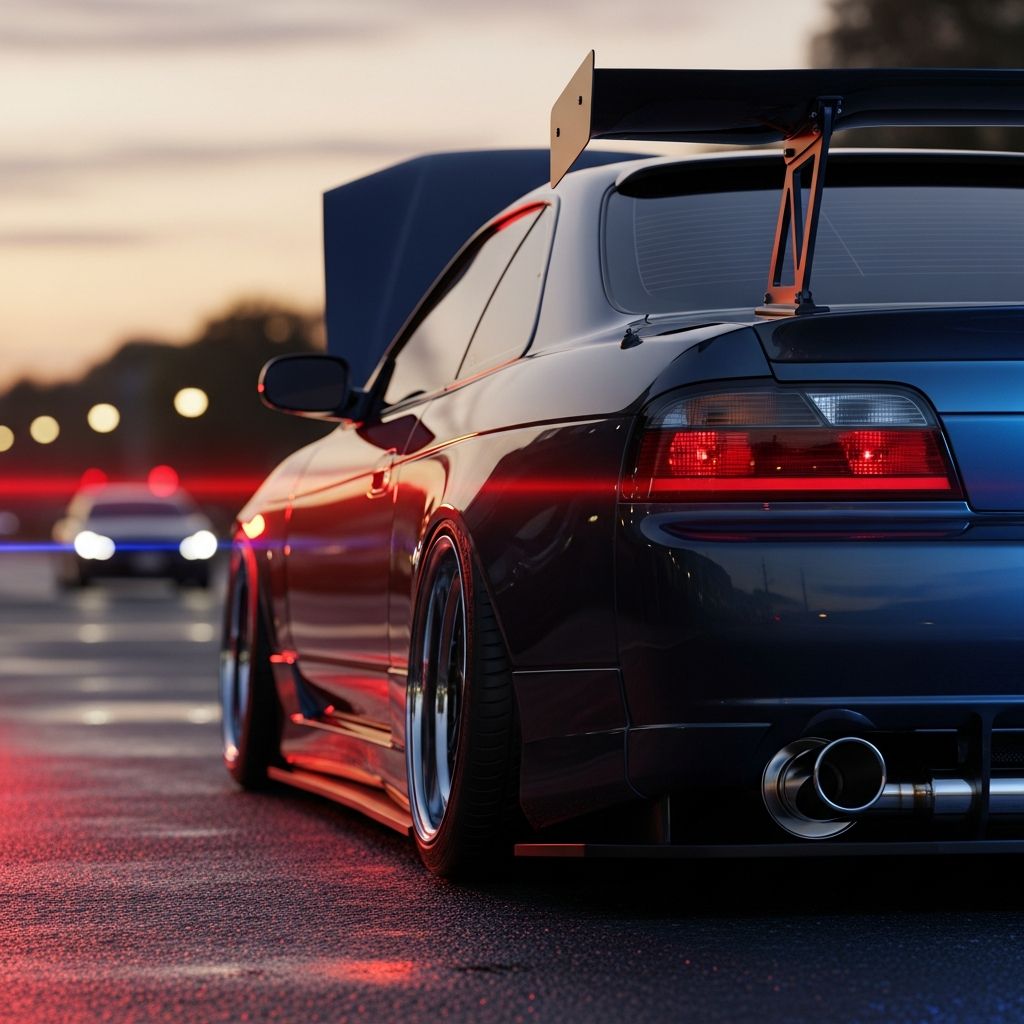
Many drivers personalize their vehicles with louder exhausts, darker tint, or lifted suspensions, but not every upgrade is legal on public roads. This guide explains how federal and state laws regulate vehicle modifications, which changes most often lead to tickets, and how to customize a car while staying compliant.
How Vehicle Modification Laws Work in the U.S.
Vehicle modification rules are shaped by a combination of federal safety standards and state-specific traffic laws. Understanding that division is the first step to avoiding unlawful changes.
Federal Safety Standards vs. State Rules
At the national level, the National Highway Traffic Safety Administration (NHTSA) issues the Federal Motor Vehicle Safety Standards (FMVSS), which set performance and safety requirements for new vehicles and certain replacement equipment. These rules cover critical systems such as:
- Braking performance and anti-lock brakes
- Lighting and reflectors (headlamps, tail lamps, turn signals)
- Seat belts, airbags, and child restraint anchorage
- Fuel system integrity and crashworthiness
- Tires, rims, and electronic stability control
Manufacturers must meet FMVSS to sell vehicles in the U.S., but once a car is on the road, states take the lead in regulating most owner-installed modifications.
State vehicle codes typically:
- Adopt federal rules as a baseline for safety and emissions
- Add stricter limits on noise, lighting, height, or tint
- Define inspection requirements and penalties for violations
Why States Restrict Certain Car Mods
Lawmakers usually justify restrictions on aftermarket modifications on three grounds:
- Road safety: Preventing changes that reduce visibility, stability, or control (e.g., extreme lifts, over-dark tint).
- Noise and quality of life: Limiting exhaust and stereo volume to protect nearby residents from excessive noise.
- Environmental protection: Enforcing federal and state emissions standards and deterring tampering with catalytic converters and engine controls.
Because each state balances these factors differently, a modification that is legal in one state may result in a citation or even vehicle impoundment in another state.
Common Types of Vehicle Modifications Regulated by Law
While every state has its own code, several categories of modifications are frequently targeted by legislation and enforcement.
Exhaust Systems and Noise Limits
One of the most heavily regulated areas is the exhaust system. Many states prohibit altering exhausts in a way that makes a vehicle louder than the factory configuration or above a specific decibel limit.
- Installing muffler delete or bypass systems is often illegal.
- Aftermarket exhausts must usually include functional mufflers and cannot exceed state or local noise limits.
- Local ordinances may impose stricter decibel caps or time-of-day restrictions on loud vehicles.
In some states, violations can result in significant fines, and repeat offenses can escalate to criminal penalties, including short jail terms, particularly when combined with other traffic offenses.
Window Tint and Windshield Obstructions
Window tint laws typically regulate:
- How dark tint may be on front, rear, and side windows (often expressed as visible light transmission percentage).
- Whether reflective or mirror-like finishes are permitted.
- Placement of sun strips or decals on the windshield.
States commonly require higher light transmission on the windshield and front side windows to maintain driver visibility and allow law enforcement to see inside during traffic stops. Some states also treat objects hanging from the mirror (e.g., large ornaments, tags) as unlawful obstructions to the driver’s view.
Lighting, Colors, and Underbody Kits
Lighting modifications are closely scrutinized because color and intensity affect how other road users perceive a vehicle. Typical restrictions include:
- Limits on headlamp brightness and beam aim, usually through adoption of federal lighting standards.
- Prohibitions on using red or blue forward-facing lights or strobe patterns that imitate emergency vehicles.
- Rules on underglow lighting, often banning certain colors or requiring that lights not be visible beyond the vehicle’s silhouette.
Improper lighting can lead not only to tickets but also to accusations of impersonating emergency services if the vehicle appears similar to police or fire vehicles in color and pattern.
Suspension Lifts, Lowering, and Body Height
Altering a vehicle’s ride height affects its center of gravity, bumper alignment, and crash compatibility. States may regulate:
- Maximum or minimum bumper or frame height based on vehicle weight class.
- Use of lift blocks or stacking suspension components beyond certain limits.
- Extreme lowering that risks contact between body and road or compromises steering and braking.
The goal is to ensure that modified vehicles can still interact safely with other vehicles and pedestrians in a collision, and that headlights and bumpers remain within predictable ranges.
Emissions Systems and Engine Tuning
Federal law under the Clean Air Act prohibits removing or tampering with emissions control devices, such as catalytic converters, exhaust gas recirculation valves, and onboard diagnostics systems. Many states incorporate these rules into their inspection programs.
- “Rolling coal” style diesel modifications, which intentionally produce excess black smoke, are banned in numerous states under anti-tampering and smoke opacity rules.
- Engine remapping and aftermarket tuners are unlawful when they disable or bypass emissions monitors or controls.
- In states with periodic inspections, vehicles that fail OBD checks or tailpipe emissions tests cannot be legally registered until repaired.
Wheels, Tires, and Body Kits
While wheels and tires are often modified without issue, states may intervene where safety is affected:
- “Stretched” tires and extremely low-profile combinations that increase blowout risk may draw enforcement if they fail safety inspections.
- Sharp or protruding body kit elements can violate unsafe equipment laws.
- Oversized wheels that interfere with speedometers or brake performance may fail inspection where mechanical checks are required.
How Strict Are Different States?
Some states are known for rigorous enforcement of vehicle modification laws, while others are relatively permissive. The main differences often involve noise, emissions, and inspection requirements.
| State Category | Typical Characteristics |
|---|---|
| Stricter states | Comprehensive safety and emissions inspections; tight limits on exhaust noise and tint; aggressive enforcement of emissions tampering. |
| Moderate states | Some inspection or test requirements; noise and tint rules exist but may be unevenly enforced. |
| Lenient states | Limited periodic inspection; more flexibility for lift kits, exhausts, and tint, provided federal laws (especially emissions) are not violated. |
Even in more lenient jurisdictions, local ordinances can impose additional limits on noise or parking, so city and county regulations should not be overlooked.
Penalties for Illegal Vehicle Modifications
Consequences for unlawful modifications vary widely but can be serious, particularly when combined with other traffic violations or when the modification contributes to a crash.
Typical Consequences
- Traffic citations and fines: These are the most common outcomes, often classified as equipment or noise violations.
- Correctable “fix-it” tickets: In some states, drivers can avoid higher fines by returning the vehicle to legal condition and showing proof of correction.
- Vehicle impoundment: For repeated violations or severe non-compliance (e.g., disabled emissions systems, unsafe suspension), authorities may tow or impound the vehicle until repaired.
- Criminal charges: In extreme cases involving deliberate tampering, fraud (such as VIN alterations), or endangerment, violations can be charged as misdemeanors or felonies.
Impact on Insurance and Liability
Illegal or undisclosed modifications can also affect insurance coverage and civil liability:
- Insurers may increase premiums or deny coverage if a high-risk modification is discovered after a crash.
- If an unlawful modification is found to have contributed to an accident (for example, reduced visibility from dark tint or unstable suspension), it may be cited as evidence of negligence in a civil lawsuit.
- Some policies require owners to report significant modifications to maintain full coverage.
Legal vs. Illegal Mods: Examples and Best Practices
Not all modifications are problematic. Many upgrades can be performed safely and legally if the right components are used and applicable rules are followed.
Commonly Permitted Modifications (When Done Correctly)
- Cosmetic body changes such as vinyl wraps, decals, and modest spoilers that do not block lights or plates.
- Upgraded wheels and tires that match or exceed the vehicle’s load and speed ratings and do not cause rubbing or steering interference.
- Moderate window tint that complies with state visible light transmission limits and preserves windshield visibility.
- Audio system upgrades used within legal noise limits and without disabling required safety chimes or alerts.
- Performance exhausts that retain catalysts and mufflers and meet decibel and emissions standards.
Upgrades That Often Lead to Tickets
- Exhaust modifications that increase sound far above stock levels.
- Very dark front window tint or tinted windshields.
- Flashing or colored lights that mimic emergency vehicles.
- Extreme lifts or drops that alter bumper height beyond legal limits or cause headlights to dazzle oncoming traffic.
- Removal of catalytic converters or installation of devices that disable emissions monitors.
How to Check Whether a Modification Is Legal
Because laws change and differ across states, verifying the legality of a modification before installation is essential.
Steps for Researching Modification Laws
- Review your state vehicle code: Most departments of motor vehicles (DMVs) or state legislatures publish traffic and equipment laws online, including sections on noise, lighting, and inspections.
- Consult emissions and inspection programs: States with emissions or safety inspections often list disqualifying modifications or devices on official program websites.
- Ask local law enforcement or inspection stations: Officers and licensed inspectors can often clarify how rules are applied in practice.
- Check manufacturer and aftermarket documentation: Reputable parts manufacturers may indicate whether their products meet federal or state standards.
When to Speak With a Lawyer
Consider seeking legal advice from a traffic or consumer law attorney when:
- You receive a citation you believe is based on a misinterpretation of the law.
- Your vehicle has been impounded or you face criminal charges tied to modifications.
- You are involved in a collision and there are allegations that your modifications contributed to the crash or violated regulations.
A lawyer familiar with local traffic and equipment laws can review the citations, evaluate whether enforcement was proper, and help contest tickets or negotiate outcomes where appropriate.
Frequently Asked Questions (FAQs)
Q: Are all aftermarket parts legal if they are professionally installed?
No. Professional installation does not guarantee legality. Parts that increase noise, alter emissions systems, or change lighting colors can still violate state or federal equipment rules, regardless of who installs them.
Q: Can my car fail inspection just because of a loud exhaust?
Yes, in states that include noise or exhaust system checks in their safety or emissions inspection programs, excessively loud or modified exhausts can lead to a failed inspection until corrected.
Q: Is window tint allowed on every window of my car?
Most states allow some level of tint, but they usually restrict how dark it may be on the windshield and front side windows. Rear windows are often subject to more lenient limits, but you must check the specific percentages allowed in your state.
Q: What happens if I move to another state with stricter modification laws?
When you register your vehicle in a new state, it must comply with that state’s equipment and inspection requirements, even if the modifications were legal where they were installed. You may need to adjust or remove certain parts to pass inspection and avoid citations.
Q: Can illegal modifications affect my insurance claim after a crash?
Potentially. If an insurer determines that an undisclosed or illegal modification increased risk or contributed to the crash or injury, it may affect coverage decisions or lead to disputes over claim amounts, particularly when policy terms required disclosure of such changes.
References
- Federal Motor Vehicle Safety Standards (FMVSS) — National Highway Traffic Safety Administration. 2023-01-01. https://www.nhtsa.gov/laws-regulations/federal-motor-vehicle-safety-standards-fmvss
- Community Noise — World Health Organization. 2021-03-01. https://www.who.int/teams/environment-climate-change-and-health/noise
- Noise Pollution — U.S. Environmental Protection Agency. 2023-05-15. https://www.epa.gov/clean-air-act-overview/air-pollution-current-and-future-challenges#noise
- Overview of the Clean Air Act and Air Pollution — U.S. Environmental Protection Agency. 2023-04-20. https://www.epa.gov/clean-air-act-overview
- Transportation and Insurance — National Association of Insurance Commissioners. 2022-11-10. https://content.naic.org/consumer-resources/transportation
Similar Articles








Read full bio of Sneha Tete


