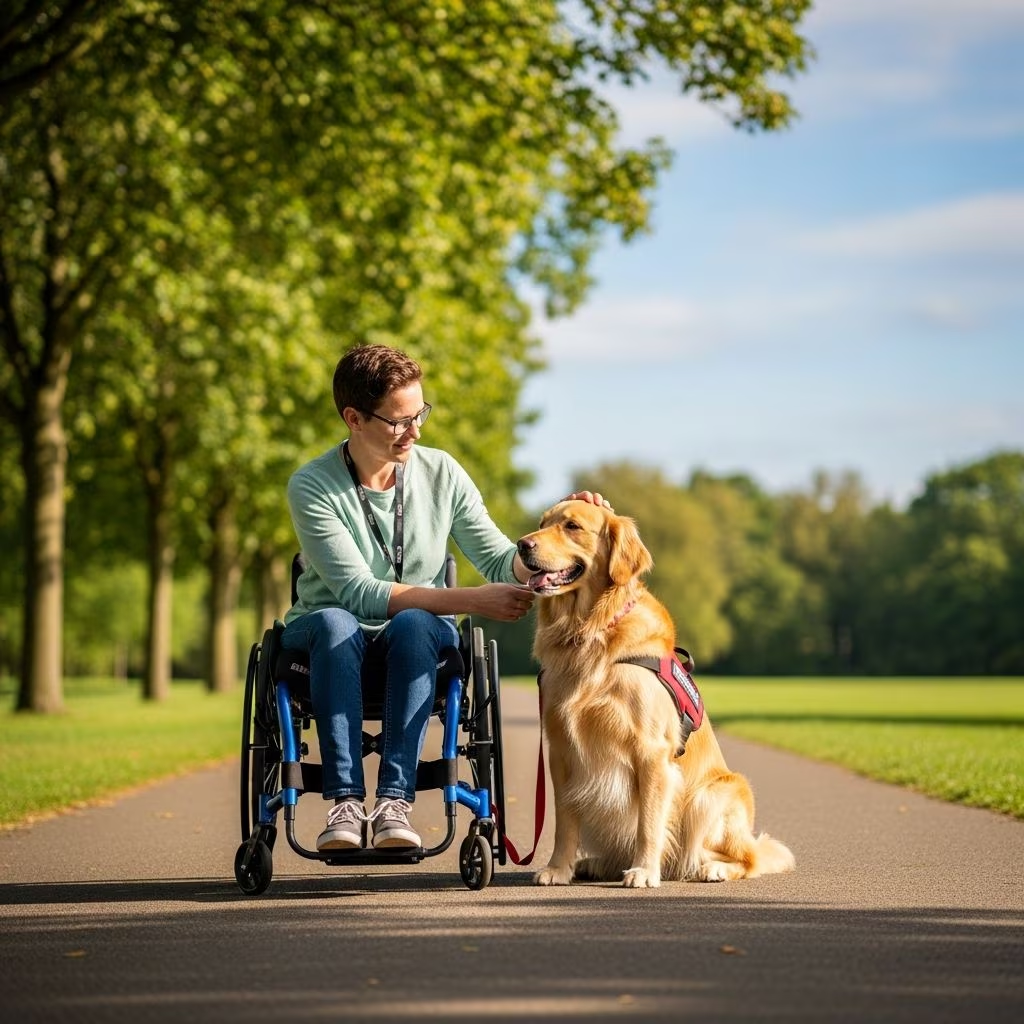
Understanding Service Animals in Idaho: A Comprehensive Legal Overview
Idaho residents with disabilities have specific legal protections when using service animals or assistance dogs in public spaces, housing, and transportation. These protections are rooted in both federal Americans with Disabilities Act (ADA) requirements and Idaho state law. Understanding the distinction between service animals and emotional support animals, as well as knowing your rights and responsibilities, is essential for disabled individuals and business owners alike.
How Idaho Defines Service Animals
Idaho law aligns closely with federal ADA standards when defining what qualifies as a service animal. Under Idaho Code § 56-701A(5), a service animal is specifically a dog that has been individually trained to perform work or tasks for a person with a disability. The disability may be physical, sensory, psychiatric, intellectual, or mental in nature. This definition is deliberately narrow and excludes other species, whether trained or untrained.
Notably, the ADA recognizes an exception to this dog-only rule: miniature horses may qualify as service animals under specific circumstances. When a miniature horse serves as a service animal under the ADA, Idaho law extends the same legal protections to the miniature horse as it does to service dogs. However, all other animals—regardless of their training level or temperament—do not qualify as service animals under Idaho law.
Service Animals in Training: Special Protections
Idaho law recognizes and protects dogs that are currently being trained to become service animals. Importantly, businesses, public programs, and workplaces must allow access to service animals in training, the same as fully trained service animals. To identify a dog in training, Idaho Code requires that the dog wear a jacket, collar, scarf, or similar identifying article.
This protection extends to individuals who are actively socializing or training a dog for service purposes. The person conducting this training has the same legal right to bring the dog in training into public accommodations as someone with a disability who uses a fully trained service animal.
Public Accommodations and Access Rights
Under Idaho law, individuals with disabilities accompanied by a service dog cannot be denied access to public accommodations. The law explicitly protects access to:
- Hotels and motels
- Cafes and restaurants
- Elevators and public buildings
- Common carriers and public transportation facilities
- Housing available for sale or rent
- Any other public place within the state
Importantly, public accommodations cannot charge an admission fee, surcharge, or any additional cost for allowing a service animal on the premises. However, if the service animal causes damage to the property, the handler is responsible for paying to repair that damage.
Control and Behavioral Requirements for Service Animals
While service animals have broad access rights, Idaho law does impose specific requirements regarding how these animals must be managed in public settings. Service animals must be harnessed, leashed, or tethered at all times, except in situations where such devices would interfere with the animal’s ability to perform its trained tasks. For example, a dog trained to retrieve items for someone with mobility limitations may need to move without a leash to complete its task effectively.
When a leash or harness would genuinely interfere with the service animal’s work, the handler must maintain control through alternative means, such as voice commands, hand signals, or other effective control methods. The animal must remain under the handler’s control at all times.
Additionally, service animals must be housebroken and well-behaved. A service animal that is out of control and the handler does not take effective action to manage it can be excluded from the public accommodation. Similarly, a service animal that is not housebroken may be removed from the premises. When exclusion occurs, the individual with a disability should still be provided the opportunity to participate in the service, program, or activity without the animal present.
When Service Animals May Be Denied Access
Idaho law permits the denial of service animal access in specific, limited circumstances. A public accommodation may exclude a service animal if it:
- Poses a direct threat to the health and safety of others (such as aggressive behavior involving biting, snapping, or lunging)
- Is out of control and the handler does not take corrective action
- Is not housebroken
- Is poorly groomed in a way that creates a health hazard
Exclusion decisions must be based on the individual animal’s actual behavior or conduct, not on assumptions about the animal’s breed, size, or appearance. Even dogs from breeds subject to breed restrictions elsewhere are exempt from such restrictions when serving as service animals.
Service Animals in Housing: Tenant and Landlord Rights
Federal housing laws provide protections for assistance animals in rental and owned housing. These protections allow individuals with disabilities to request reasonable modifications to housing accommodations and to have their service animals present, even in properties with no-pet policies.
A landlord may exclude a service animal from housing only if the animal poses a threat to the health or safety of other residents or the property, and no reasonable accommodation can reduce that threat. Importantly, the exclusion decision must be based on evidence of the animal’s actual conduct or behavior, not on the animal’s breed, size, or type.
Idaho’s Human Rights Act prohibits property owners from discriminating against individuals seeking to rent or purchase property based on disability. Property owners must make reasonable modifications to the property to allow someone with a disability to fully use and enjoy the property. While this law does not specifically address service animals, it provides a framework for disability accommodation in housing.
The Distinction Between Service Animals and Emotional Support Animals
A critical distinction exists between service animals and emotional support animals (ESAs). Service animals are dogs trained to perform specific tasks or work for someone with a disability. Emotional support animals, by contrast, provide comfort through their presence alone, without being trained to perform specific disability-related tasks.
Under Idaho law, emotional support animals do not have the same public access rights as service animals. An ESA cannot legally enter a restaurant, shop, or other public accommodation simply because it provides emotional comfort. Emotional support animals are primarily protected under federal housing laws, which allow them in housing even when no-pet policies are in place, provided the individual has a disability-related need for the animal.
Idaho has no specific state laws addressing emotional support animals beyond what federal law provides. Those seeking to establish an ESA’s housing rights should reference the Fair Housing Act and federal guidance from the Department of Housing and Urban Development (HUD).
What Questions Can Be Asked About Service Animals
Idaho law, consistent with ADA regulations, restricts what business owners and staff can ask about service animals. If it is immediately obvious what task or work a service animal performs—such as guiding a blind individual or alerting a deaf person to sounds—no questions should be asked.
When the service animal’s purpose is not obvious, only two specific questions are permitted:
- Is the dog required because of a disability?
- What work or task has the dog been trained to perform?
Business staff cannot ask about the specific nature of the person’s disability, require medical documentation, demand certification or licensing proof, request special identification cards, or ask the dog to demonstrate its trained tasks. These restrictions exist to protect the privacy of individuals with disabilities and to prevent discrimination.
Legal Penalties for Service Dog Misuse and Interference
Idaho law imposes serious criminal penalties for false claims about service animal status and for interfering with legitimate service animals. Falsely claiming that a pet dog is a service animal to bring it into public accommodations is prohibited and can result in criminal charges.
Using a service dog to falsely claim disability benefits or treatment is specifically classified as a misdemeanor under Idaho Code § 18-5811A. Additionally, intentionally interfering with a service animal—such as approaching a disabled person or service dog handler in a way that impedes their use of the assistance dog—is a misdemeanor offense that can result in up to six months imprisonment and fines between $50 and $1,000.
Denying a person with a disability legitimate access to public accommodations because of their service animal may also constitute a misdemeanor under Idaho Code § 18-5812A. Individuals who are wrongfully denied service dog access can contact local law enforcement to enforce their rights.
Service Dog Registration and Licensing Requirements
Idaho law does not require service dogs to have special documentation, unique dog tags, or certification in order to access public accommodations. However, municipal clerks handling dog licensing cannot issue a license tag identifying a dog as a service animal unless the applicant provides written evidence that the dog meets the legal definition of a service animal.
This distinction is important: while service animals do not need special credentials to exercise their public access rights, municipalities can require proof when issuing official service dog identification tags for licensing purposes.
Religious Organizations and Private Clubs: Limited Exemptions
Idaho’s public accommodations law does have limited exceptions. Religious organizations are exempt from complying with service dog access rules even when they offer secular services, such as operating a daycare center open to children regardless of religious affiliation. Private clubs are also exempt, with one important exception: when private clubs make facilities available to nonmembers, those facilities must comply with service dog access requirements.
Comparing Service Animals Across Contexts: Workplace and Educational Settings
Service animal protections apply consistently across public-facing contexts. Educational institutions, government agencies, and private businesses must all comply with the same service dog access rules. Individuals should be able to bring their service animals to classes, offices, courtrooms, and other areas where the public is generally allowed.
Frequently Asked Questions About Idaho Service Dog Laws
Q: Can a business owner ask to see certification or licensing documents for a service dog?
A: No. Under Idaho law, business owners cannot require certification, licensing proof, medical documentation, or special identification cards. Only the two permitted questions may be asked if the service animal’s purpose is not immediately obvious.
Q: What is the difference between a service animal and a therapy dog?
A: Therapy dogs are trained to provide comfort to multiple people in settings like hospitals or nursing homes, but they do not perform tasks for a specific person with a disability. Therapy dogs do not have public access rights like service animals do.
Q: Can a landlord charge a pet deposit for a service animal?
A: No. Service animals are not pets and landlords cannot charge pet fees, deposits, or surcharges for service animals, even in properties with no-pet policies. However, the handler remains liable for any damage caused by the animal.
Q: Are there size or breed restrictions for service animals in Idaho?
A: No. Service animals are exempt from breed bans and size restrictions. Even dogs of breeds typically restricted are protected when they serve as legitimate service animals.
Q: What should I do if I am denied access with my service animal?
A: Document the incident with details about the business, date, and interaction. Contact your local police as denial of service dog access may be a misdemeanor under Idaho Code § 18-5812A. You may also file a civil complaint under Idaho Code § 56-705.
Q: Can emotional support animals access public accommodations like service animals?
A: No. Emotional support animals have limited protections under federal housing law but do not have public access rights. Only service animals trained to perform specific disability-related tasks have public accommodation access rights.
References
- Idaho Code § 56-701A et seq. – Service Animal Statutes — State of Idaho Legislature. Accessed 2026. https://legislature.idaho.gov/statutesrules/idaho-code/title-56/chapter-7/
- ADA Requirements: Service Animals — U.S. Department of Justice Civil Rights Division. 2010. https://www.ada.gov/resources/service-animals-2010-requirements/
- ADA Title II Service Animal FAQ — Disability Rights Idaho. 2025. https://www.disabilityrightsidaho.org/
- Fair Housing Act and Service Animals — U.S. Department of Housing and Urban Development. Accessed 2026. https://www.hud.gov/program_offices/fair_housing_equal_opp/animals_peia
- Service Animal Law Comparison Sheet — Northwest ADA Center. Accessed 2026. https://nwadacenter.org/