
How ICE Partnerships Threaten Local Community Safety
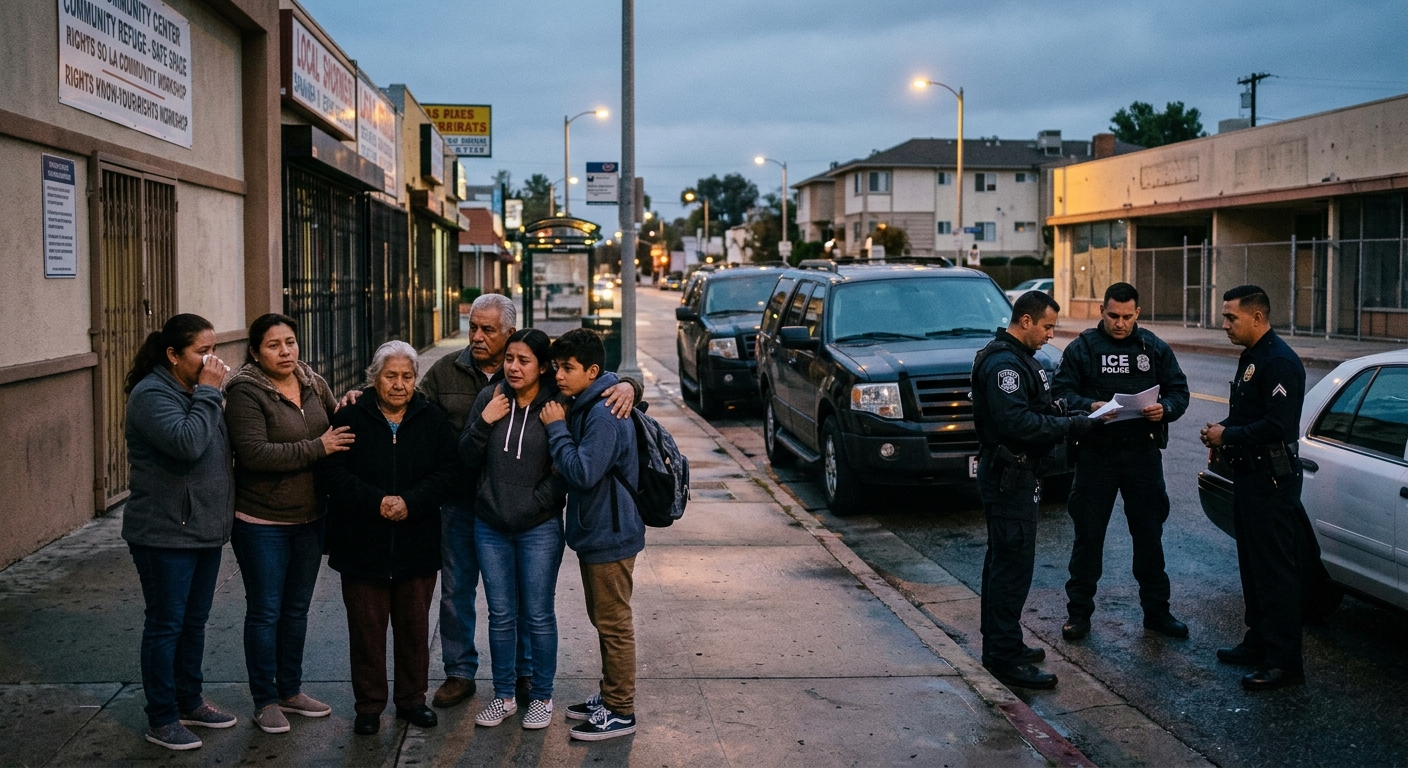
Local police acting as ICE agents erodes trust and destroys community safety.
Introduction
Effective community policing relies on one foundational pillar: trust between law enforcement officers and the residents they are sworn to protect. When this trust is compromised, the entire infrastructure of public safety begins to crumble. Over the past few decades, federal initiatives aimed at intertwining local policing with federal immigration enforcement have systematically eroded this vital relationship. At the center of this controversy is the federal governments delegation of immigration authority to local officers. Proponents argue that such partnerships act as a force multiplier for federal authorities, ostensibly keeping communities safe from transnational crime. However, a closer examination of the data, community impact, and legal ramifications tells a vastly different story.
Deputizing local police officers to act as de facto immigration agents creates an environment of fear, encourages racial profiling, and ultimately makes neighborhoods significantly less safe for everyone. By fundamentally altering the role of local law enforcement, these programs replace protective community guardians with federal enforcers, silencing victims and empowering criminals who know their offenses will go unreported.
The Mechanics of Deputized Immigration Enforcement
To understand the profound impact of these federal-local partnerships, it is essential to examine their legislative origins. The Illegal Immigration Reform and Immigrant Responsibility Act of 1996 fundamentally altered the landscape of interior immigration enforcement. Specifically, Section 287(g) of the Immigration and Nationality Act allows the Department of Homeland Security to enter into formal memorandums of agreement with local and state law enforcement agencies . Under these agreements, local police and sheriff’s deputies are granted the authority to perform the functions of federal immigration officers.
This delegated authority manifests primarily in a few distinct models:
- The Jail Enforcement Model: This allows local deputies to identify and process individuals who are already in local custody for removable offenses. Officers can interrogate detainees about their immigration status and issue detainers to hold them until federal agents arrive.
- The Warrant Service Officer Program: A more recent iteration, this model permits state and local officers to execute administrative warrants on individuals within their detention facilities, streamlining the transfer of custody without requiring extensive federal training.
- The Task Force Model: Under this framework, local officers may interrogate and arrest individuals suspected of immigration violations during routine police operations, such as traffic stops and neighborhood patrols.
While the stated goal of these memorandums is to enhance public safety by removing dangerous individuals from the streets, the operational reality is far more insidious. By blurring the jurisdictional lines between criminal law enforcement and civil immigration regulation, the program fundamentally alters the mandate of local officers. Rather than focusing resources on solving violent crimes, investigating burglaries, or engaging in community outreach, participating departments are incentivized to divert their time and taxpayer dollars toward federal immigration objectives .
The Catastrophic Loss of Community Trust
The most immediate and devastating consequence of deputizing local police is the chilling effect it has on community cooperation. Law enforcement agencies cannot function effectively in a vacuum; they rely heavily on tips from the public, witness testimonies, and the willingness of victims to step forward. When local police are viewed as an extension of federal immigration enforcement, undocumented immigrants—and even their lawful resident or citizen family members—become terrified of interacting with authorities.
This fear is not unfounded. For a domestic violence survivor, the decision to call 911 becomes a dangerous gamble. Seeking protection from an abuser could inadvertently result in the survivors own deportation or the separation of their family. Consequently, many choose to endure abuse rather than risk interaction with law enforcement. This dynamic isolates vulnerable populations, trapping them in dangerous situations and creating shadow communities where the rule of law is effectively suspended.
Furthermore, this erosion of trust extends beyond immigrant communities. When a significant portion of a city’s population refuses to report suspicious activities or cooperate with investigations, crimes go unsolved. Witnesses to armed robberies, hit-and-runs, and gang violence remain silent. Criminal organizations are acutely aware of this vulnerability and often deliberately target immigrant communities, knowing that their victims are effectively disenfranchised from the justice system. The result is a paradox where a program ostensibly designed to enhance safety actually provides cover for predatory criminal behavior .
Fomenting Racial Profiling and Civil Rights Abuses
Integrating immigration enforcement into daily policing also creates fertile ground for severe civil rights violations and systemic racial profiling. When local officers are authorized to investigate immigration status, the visual cues they rely on are almost exclusively based on race, ethnicity, and language. This inevitably leads to a disproportionate targeting of Hispanic, Black, and Asian residents, regardless of their actual citizenship status.
In jurisdictions operating under these federal agreements, there is a documented increase in pretextual policing. Officers may use minor traffic infractions—such as a broken taillight, a failure to signal, or jaywalking—as an excuse to stop, interrogate, and detain individuals they suspect might be undocumented. This practice not only violates the Fourth Amendment protections against unreasonable searches and seizures but also fundamentally violates the Equal Protection Clause.
The psychological toll of this constant surveillance is profound. Entire communities are forced to live in a state of perpetual anxiety, altering their daily routines to avoid any potential contact with law enforcement. Parents may avoid driving their children to school, individuals may forgo necessary medical treatment, and congregants may stop attending religious services. This pervasive atmosphere of fear, often described by legal scholars as contributing to a state of slow deportation, strips residents of their dignity and creates a hostile environment where individuals are treated as suspects based solely on their appearance .
The Empirical Evidence: How Aggressive Enforcement Breeds Crime
Despite the political rhetoric championing these federal-local partnerships as vital crime-fighting tools, empirical data paints a starkly different picture. Extensive academic research and sociological studies have consistently failed to find any meaningful reduction in violent or property crimes associated with the implementation of these agreements. In fact, evidence suggests that these programs can inadvertently lead to higher victimization rates.
A comprehensive study published by the Institute for Policy Research at Northwestern University investigated the public safety implications of interior immigration enforcement. The researchers discovered that expanded enforcement did not reduce overall criminal offending. More alarmingly, the study found that such policies actually increased the rate of crime committed against Hispanic individuals . The data demonstrated a direct correlation between heightened immigration enforcement and a decreased likelihood of Hispanic victims reporting crimes to the police.
Similarly, analyses from the National Institute of Justice have highlighted how intricate the relationship is between immigration and crime reporting. The data reveals that traditional crime metrics are heavily skewed by the suppression of reporting in immigrant communities . When victims do not come forward, crime statistics may artificially deflate, giving a false impression of safety while actual victimization runs rampant. This empirical evidence dismantles the core justification for these programs, proving that sacrificing civil liberties does not yield a safer society.
The Financial and Legal Repercussions for Local Jurisdictions
Beyond the immediate social and public safety costs, participating in federal immigration enforcement carries substantial financial and legal risks for local municipalities. While the federal government provides some training and may cover certain administrative costs, the vast majority of the financial burden falls squarely on local taxpayers. Local departments must absorb the costs of extended jail stays, the salaries of officers diverted from routine duties, and the administrative overhead of managing federal detainers.
More significantly, local jurisdictions open themselves up to massive liability. Because federal immigration law is notoriously complex, local officers with minimal training are highly prone to making errors. When a local police department unlawfully detains a United States citizen or a lawful permanent resident based on a flawed immigration detainer, the municipality is held legally responsible.
Over the past decade, numerous cities and counties have been forced to pay millions of dollars in settlements to individuals whose constitutional rights were violated by officers acting under the guise of immigration enforcement. The lack of stringent federal oversight means that local governments are left holding the bag when their officers cross constitutional boundaries.
Toward True Public Safety: The Case for Decoupling
Recognizing the destructive nature of these agreements, a growing number of cities, counties, and law enforcement leaders are actively choosing to sever ties with federal immigration enforcement. By adopting policies that strictly limit local police involvement in civil immigration matters, these jurisdictions are taking critical steps toward repairing fractured relationships with their communities.
Decoupling local policing from immigration enforcement is not about harboring criminals; it is about prioritizing local public safety. When a city declares that its police officers will not ask about immigration status, it sends a powerful message to its residents: law enforcement is there to protect and serve everyone, regardless of where they were born. This approach encourages victims to step forward, ensures that witnesses can testify without fear of retaliation, and allows police officers to focus on their primary mandate of investigating and preventing severe crimes.
True community safety requires investment in holistic, community-based solutions rather than punitive enforcement measures. Building trust requires time, transparency, and a commitment to equitable treatment. By rejecting federal partnerships that turn local cops into immigration agents, communities can begin to heal the wounds of racial profiling and create environments where every resident feels secure and valued.
Conclusion
The delegation of federal immigration authority to local police forces represents one of the most counterproductive public safety policies in modern law enforcement. Under the guise of cracking down on crime, these programs systematically dismantle the foundational trust required for effective policing. They foster environments rife with racial profiling, subject vulnerable populations to civil rights abuses, and expose local municipalities to severe financial liabilities. Most importantly, the empirical data unequivocally shows that they make communities less safe by silencing victims and emboldening criminals. True public safety is achieved not through fear and division, but through robust, inclusive community policing that protects the rights and dignity of all residents.
Frequently Asked Questions
What is Section 287(g) of the Immigration and Nationality Act?
Section 287(g) is a provision in U.S. immigration law allowing the Department of Homeland Security to partner with local law enforcement. It delegates specific immigration powers to local officers, letting them interrogate and detain individuals for civil immigration violations.
How do local immigration partnerships affect crime reporting?
When local police enforce immigration laws, undocumented immigrants and their families become afraid of interacting with authorities. Studies show this fear creates a chilling effect, leading to significant decreases in the reporting of violent crimes and domestic abuse.
Does deputizing local police actually reduce crime rates?
No. Empirical studies indicate that aggressive interior immigration enforcement does not reduce overall crime. In many cases, it leads to increased victimization of Hispanic residents because perpetrators know these individuals are less likely to seek help from the police.
What are the financial risks for local governments that participate?
Local governments face substantial financial risks through civil litigation. Because local officers often lack deep expertise in complex federal immigration law, they frequently make unconstitutional stops. Municipalities are often sued for these civil rights violations, resulting in large settlements paid by taxpayers.
What is the alternative to these federal enforcement agreements?
Many jurisdictions implement policies that strictly separate local policing from federal immigration enforcement. By doing so, they focus their resources on local criminal investigations and community policing strategies, which helps rebuild trust, encourages crime reporting, and enhances overall public safety.
References
- Delegation of Immigration Authority Section 287(g) Immigration and Nationality Act — U.S. Immigration and Customs Enforcement. 2020-10-09. https://www.ice.gov/identify-and-arrest/287g
- Immigration Enforcement and Public Safety — Institute for Policy Research, Northwestern University. 2024-02-05. https://www.ipr.northwestern.edu/news/2024/immigration-enforcement-and-public-safety.html
- Research into Immigration and Crime: Advancing the Understanding of Immigration, Crime, and Crime Reporting at the Local Level — National Institute of Justice. 2024-12-01. https://nij.ojp.gov/library/publications/research-immigration-and-crime-advancing-understanding-immigration-crime-and
- The Road to Slow Deportation — Duke Law Scholarship Repository. 2025-02-27. https://scholarship.law.duke.edu/dlj/vol74/iss5/1/
Similar Articles








Read full bio of medha deb




