
The Humanitarian Bottleneck: Fleeing Persecution for a Closed Border
Analyzing the intersection of Central American political repression and restrictive U.S. border asylum policies.
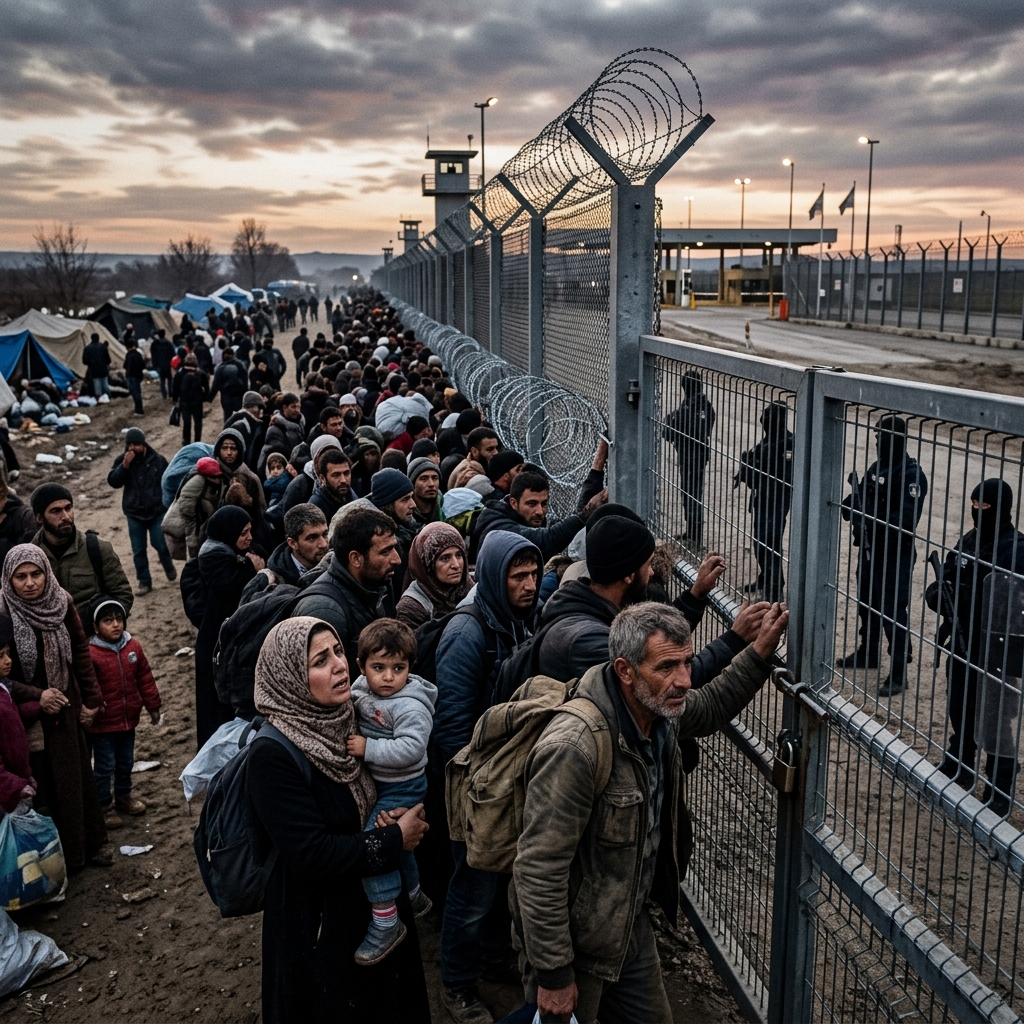
The global landscape of forced migration is increasingly defined by a devastating paradox: as political violence and authoritarian repression surge in vulnerable regions, the democratic nations historically viewed as sanctuaries are aggressively fortifying their borders. This dynamic has created a severe humanitarian bottleneck at the United States-Mexico border, where thousands of individuals fleeing state-sponsored violence find themselves trapped in a dangerous legal and physical limbo. The intersection of domestic immigration policy, international human rights obligations, and regional instability has birthed a crisis that cannot be ignored. For many, the journey represents a desperate flight from life-threatening persecution, making the closed doors at the border not just an administrative hurdle, but a matter of life and death.
The Genesis of Flight: Political Instability and State Repression
To understand the bottleneck at the border, one must first examine the root causes of mass displacement in the Americas. A prominent example is the ongoing socio-political crisis in Nicaragua, which has triggered one of the largest exoduses in the Western Hemisphere in recent history. Following the eruption of civil protests in April 2018, the national government responded with a severe and systematic crackdown on dissent.
According to comprehensive documentation by Amnesty International, the state’s response escalated rapidly from the use of lethal force against demonstrators to a highly organized machinery of repression . This includes arbitrary detentions, the forced closure of thousands of non-governmental organizations, and the unprecedented, internationally condemned tactic of arbitrarily stripping political dissidents, journalists, and human rights defenders of their nationality. When a state actively persecutes its citizens for holding opposing political views or participating in peaceful assemblies, it generates a massive class of individuals who meet the rigorous international definition of a refugee.
The United Nations High Commissioner for Refugees (UNHCR) notes that hundreds of thousands of individuals from Nicaragua have been forcibly displaced since the crisis began, seeking refuge in neighboring Costa Rica, the United States, and beyond . These individuals are not traditional economic migrants seeking better job opportunities; they are survivors of intense state violence who have dodged bullets and evaded arbitrary imprisonment, only to be forced out of their homeland to survive. Their flight is a direct consequence of a deteriorating human rights environment where the rule of law has been weaponized against the populace.
The Perilous Migration Corridor Through the Americas
The agonizing decision to flee is merely the beginning of a harrowing ordeal. The migration corridor stretching from Central America up through the vast expanse of Mexico is notoriously treacherous. Asylum seekers must navigate a gauntlet of physical, psychological, and profound financial dangers, often traveling on foot or via unsafe, illicit transportation networks.
While in transit, migrants frequently fall prey to organized crime syndicates and corrupt local authorities. Extortion, kidnapping for ransom, and human trafficking are rampant across these routes. For individuals who have already experienced severe trauma in their home countries—such as physical torture, political imprisonment, or the violent disappearance of family members—this brutal journey severely exacerbates their psychological distress and physical vulnerability.
Because many flee under the cover of darkness with few resources, they are forced to rely on illicit smuggling networks just to survive the elements and border crossings. The journey through Mexico is particularly lethal; heavily armed cartels control vast swaths of the migration routes and view displaced people not as humans in need, but as highly lucrative commodities to be exploited. By the time these asylum seekers finally reach the northern border of Mexico, they are often utterly destitute, deeply traumatized, and desperately hoping for the protection promised by established international asylum frameworks.
Navigating the U.S.-Mexico Border Labyrinth
Upon reaching the U.S.-Mexico border, individuals fleeing persecution confront a dizzying, constantly shifting array of restrictive immigration policies that effectively halt their journey. While fundamental U.S. law dictates that any foreign national physically present in the United States or arriving at a port of entry may seek asylum regardless of their immigration status, executive actions and border management strategies have severely complicated this inherent right .
In recent years, the U.S. government has implemented various administrative mechanisms to deter irregular migration and heavily manage border encounters. Following the expiration of the pandemic-era Title 42 public health order—which allowed for the rapid, widespread expulsion of migrants without so much as an asylum hearing—the administration introduced complex new rules. Notably, recent executive orders and administrative actions have severely curtailed the ability to claim asylum when unauthorized border crossings exceed certain daily thresholds, subjecting many to immediate expedited removal without a standard credible fear screening .
Furthermore, the government’s heavy reliance on the CBP One mobile application to schedule processing appointments at official ports of entry has created an invisible, digital wall. For people fleeing sudden state violence, who often lack stable internet access, functioning smartphones, or the luxury of time to wait months in dangerous border towns, this digital requirement can act as an insurmountable barrier to legal protection.
| Policy Aspect | Traditional Asylum Framework | Recent Border Enforcement Directives |
|---|---|---|
| Access to Claims | Anyone physically present can claim asylum. | Access capped or restricted during high crossing volumes. |
| Screening Process | Guaranteed credible fear interview by a USCIS officer. | Increased use of expedited removals without mandated screenings. |
| Entry Method | Arrival at any point across the border allows for claims. | Heavy mandate on using the CBP One app for pre-scheduled appointments. |
The Humanitarian Toll of Border Stagnation
The immediate and visible result of these restrictive policies is the creation of massive, makeshift refugee encampments in northern Mexican border towns. Cities like Matamoros, Tijuana, and Ciudad Juárez now host tens of thousands of asylum seekers who are forced to live in squalid, precarious conditions while they wait weeks or even months for a rare opportunity to present their legitimate claims to U.S. authorities.
Living in this state of indefinite, agonizing limbo takes a profound humanitarian toll on the displaced. Basic human necessities such as clean drinking water, adequate sanitation, and essential medical care are alarmingly scarce. More concerning, these border regions are dominated by cartel factions that specifically target stranded, defenseless migrants. Kidnappings, sexual violence, and targeted extortion are daily realities. The very individuals who fled severe persecution in countries like Nicaragua find themselves trapped in environments that replicate the violence and pervasive fear they so desperately sought to escape.
Vulnerable Populations in Transit
Within this volatile bottleneck, certain demographic groups face uniquely compounded risks that threaten their immediate survival:
- Political Dissidents: Individuals whose faces and identities are known to their home governments are at high risk of transnational repression. Activists stranded in border towns remain highly visible and vulnerable to political violence.
- Women and Girls: Gender-based violence is epidemic along the entire migration trail. Women waiting indefinitely at the border are disproportionately targeted for sexual exploitation, assault, and forced trafficking.
- Unaccompanied Minors: Children traveling without guardians face catastrophic risks of abduction and forced recruitment into violent criminal enterprises operating along the border.
- Indigenous Communities: These groups often face severe, intersectional discrimination not only in their home countries but also from other migrants and local authorities during transit, frequently lacking access to critical translation services.
International Law and the Principle of Non-Refoulement
The current landscape of border policies raises profound and urgent questions regarding compliance with established international human rights obligations. The absolute cornerstone of international refugee law, primarily established by the historic 1951 Refugee Convention and its expansive 1967 Protocol, is the non-derogable principle of non-refoulement. This principle strictly and unequivocally prohibits nations from returning individuals to a country where they face serious, imminent threats to their life or freedom.
When border management strategies prioritize rapid, systemic expulsions or drastically limit the number of asylum claims processed on a daily basis, they risk fundamentally violating non-refoulement. Denying fleeing individuals the vital opportunity to articulate a credible fear of persecution to a highly trained asylum officer inherently risks sending them directly back into the hands of their violent persecutors. While maintaining national border security is undeniably a legitimate state interest, international legal frameworks dictate that it cannot and must not supersede the fundamental human right to seek asylum from state-sponsored violence and terror.
Policy Alternatives and Pathways to Reform
Addressing this immense border bottleneck requires a fundamental paradigm shift from policies of deterrence to strategies of managed, humane, and efficient processing. Legal scholars, humanitarian organizations, and human rights advocates propose several actionable solutions to alleviate the crisis. First, surging financial and human resources to the asylum system—including rapidly hiring more trained asylum officers and immigration judges—would drastically reduce historical backlogs and ensure timely, fair legal adjudications for all applicants.
Second, massively expanding legal, alternative pathways for migration, such as specialized humanitarian parole programs and regional processing centers in South and Central America, could allow individuals to seek vital protection without undertaking the perilous, deadly journey to the U.S. border. Finally, holistically addressing the systemic root causes of migration through targeted, rigorous diplomatic pressure and robust financial support for civil society within authoritarian regimes is absolutely essential to curbing mass displacement at its very source.
Frequently Asked Questions (FAQs)
1. What is the difference between an asylum seeker and a refugee?
While both groups are fleeing severe persecution based on race, religion, nationality, political opinion, or membership in a particular social group, the primary distinction lies in their physical location. A refugee receives legal protection and status while still outside of the United States, often in a third country. An asylum seeker is an individual who is already physically present at the U.S. border or within the country and is actively requesting legal protection.
2. What exactly is a “credible fear” interview?
A credible fear interview is a critical, initial screening conducted by a specialized asylum officer. During this confidential interview, the applicant must demonstrate a “significant possibility” that they can establish eligibility for asylum before an immigration judge. If they pass this screening, they are generally allowed to remain in the U.S. to pursue their full legal case.
3. How has the CBP One mobile app changed border processing?
The CBP One app was introduced to streamline and digitize the scheduling of processing appointments at official ports of entry. While intended to create an orderly system, it has faced widespread criticism because many vulnerable asylum seekers lack access to smartphones, reliable internet, or electrical power, effectively stranding them in dangerous border areas for months while they try to secure a digital appointment.
4. What does the legal term “non-refoulement” mean?
Non-refoulement is a fundamental, binding principle of international law that forbids a country receiving asylum seekers from returning them to a country in which they would be in likely danger of persecution based on legally protected grounds. It serves as the bedrock of global refugee protection frameworks.
5. Why are people currently fleeing Nicaragua in such high, unprecedented numbers?
Since the violent suppression of mass civil protests in 2018, the Nicaraguan government has systematically dismantled democratic institutions and relentlessly targeted political opponents. Severe economic collapse, widespread arbitrary arrests, the shuttering of civil society organizations, and the stripping of citizenship from dissidents have created a highly hostile environment, forcing hundreds of thousands to flee for their safety and freedom.
References
- Nicaragua: The year ends with systematic repression and a streamlined state strategy against any form of dissent — Amnesty International. 2024-12-17. https://www.amnesty.org/en/documents/amr43/7533/2024/en/
- Americas Forcibly Displaced and Stateless Persons Visualisation — UN High Commissioner for Refugees (UNHCR). 2023. https://data.unhcr.org/en/dataviz/109
- Obtaining Asylum in the United States — U.S. Citizenship and Immigration Services (USCIS). 2025-10-17. https://www.uscis.gov/humanitarian/refugees-and-asylum/asylum/obtaining-asylum-in-the-united-states
- What do President Biden’s border policies mean for asylum seekers? — International Rescue Committee (IRC). 2024-11-01. https://www.rescue.org/article/what-do-president-bidens-border-policies-mean-asylum-seekers
Similar Articles








Read full bio of Sneha Tete


