
The Human Cost of Discriminatory Policing on Trans Lives
How profiling and outdated laws criminalize trans lives.
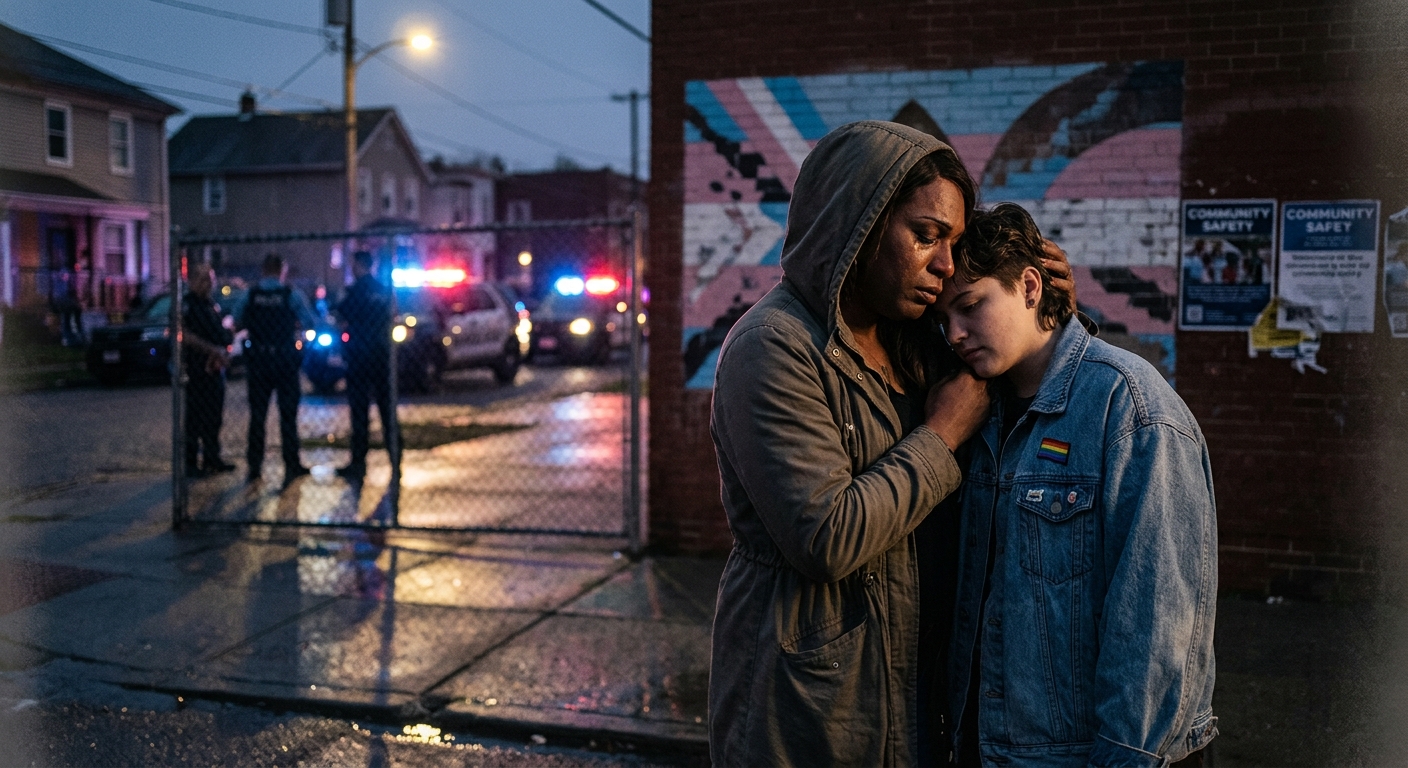
It is a fundamental expectation within any democratic society that individuals can navigate public spaces, secure lodging, and participate in everyday life without becoming the targets of unwarranted law enforcement scrutiny. However, for marginalized communities—and specifically for transgender individuals—this basic freedom is frequently compromised. The legacy of discriminatory policing creates a hostile environment where simply existing authentically can lead to intense surveillance, harassment, and even unjust arrests. This systemic issue highlights a critical intersection of civil rights, law enforcement bias, and outdated legal frameworks.
The criminalization of marginalized identities is not a new phenomenon, but its application against transgender people, particularly transgender women of color, reveals deep-seated prejudices within the criminal justice system. From arbitrary stops on the street to complications arising from mismatched identification documents, transgender individuals face unique vulnerabilities. To understand the human cost of these policies, one must examine the deceptive laws that enable profiling, the bureaucratic barriers to legal recognition, and the traumatic realities of incarceration for those who fall victim to an unequal system.
The Pervasive Phenomenon of “Walking While Trans”
One of the most insidious forms of discriminatory policing is colloquially known as “walking while trans.” This phrase captures the lived reality of many transgender women who are profiled, stopped, and harassed by law enforcement officers under the guise of enforcing minor ordinances . Historically, police departments have weaponized broadly written statutes, such as loitering or “manifesting prostitution” laws, to target transgender individuals who are merely walking down the street, waiting for public transit, or standing outside local businesses.
Because these laws rely heavily on the subjective interpretation of law enforcement officers, they are ripe for abuse. An officer’s implicit bias regarding gender expression and race often dictates who is deemed “suspicious.” Consequently, transgender women of color are disproportionately targeted, based on harmful stereotypes that erroneously conflate transgender identity with sex work. This aggressive over-policing transforms everyday activities into high-risk scenarios, stripping individuals of their dignity and perpetuating a cycle of systemic disenfranchisement.
The Intersection of Race and Gender Identity
It is impossible to discuss discriminatory policing without acknowledging the compounding effects of race. The intersectionality of being both a person of color and transgender creates a hyper-vulnerability to state-sanctioned violence and profiling. Data consistently demonstrates that Black and Latinx transgender women endure the highest rates of police harassment and physical violence. This reality underscores the urgent need for intersectional approaches to criminal justice reform that address both racial and gender-based prejudices simultaneously.
The ID Crisis: When Bureaucracy Becomes a Catalyst for Arrest
Another major vector for discriminatory policing stems from bureaucratic barriers surrounding legal identification. In modern society, presenting identification is a routine requirement—whether checking into a hotel, opening a bank account, or undergoing a routine traffic stop. However, when a transgender person presents an ID that displays a deadname or an incorrect gender marker, this routine interaction can rapidly escalate into a dangerous encounter with law enforcement.
Service providers, such as hotel clerks or bank tellers, may view a mismatched ID with unwarranted suspicion, wrongly assuming fraud or identity theft. Instead of resolving the discrepancy with basic customer service, these individuals sometimes call the police. Once law enforcement arrives, the systemic lack of understanding regarding transgender issues often results in the individual being detained or arrested simply for presenting identification that does not reflect their current gender presentation. The barriers to obtaining accurate documentation are steep, leaving many transgender individuals in a permanent state of legal jeopardy.
Common Barriers to Legal Identification Updates
| Barrier | Description | Real-World Impact |
|---|---|---|
| Financial Costs | Fees for court petitions, background checks, and new document issuance. | Prohibitive for low-income individuals, delaying necessary legal updates. |
| Legal Complexity | Navigating complex court systems and understanding required paperwork. | Without legal counsel, the process is easily derailed or abandoned. |
| Publication Rules | Mandates in some jurisdictions to publish name changes in local newspapers. | Increases the risk of being targeted, outed publicly, and facing employment discrimination. |
Isolation and Trauma: Transgender Individuals in Custody
When discriminatory policing leads to an arrest, the ensuing experience within the penal system is often harrowing. Custodial environments are highly gendered, and the placement of inmates is typically based on anatomy assigned at birth rather than gender identity. This policy places transgender individuals—particularly transgender women housed in male facilities—at an extraordinarily high risk of physical and sexual violence .
To mitigate this risk, jail administrators frequently rely on “protective custody.” In practice, however, protective custody often translates to solitary confinement or placement in isolated medical units. Rather than providing a safe environment, this practice punishes the victim. Incarcerated transgender people may spend up to 23 hours a day in total isolation, denied access to communal areas, recreational activities, and programming available to the general population. The psychological toll of solitary confinement is severe and well-documented, leading to long-term trauma, anxiety, and depression. Being locked in a medical unit for days or weeks simply for being transgender is an egregious violation of basic human rights and dignity.
A Broken System: Data on Discrimination and Distrust
The anecdotal evidence of discrimination is overwhelmingly supported by empirical data. Comprehensive studies, including those conducted by the Williams Institute and the National Center for Transgender Equality, paint a stark picture of the relationship between transgender communities and law enforcement [2, 5].
- High Rates of Harassment: The National Transgender Discrimination Survey found that a significant portion of respondents who interacted with police experienced direct harassment, ranging from verbal abuse to physical assault .
- Assumptions of Criminality: A disproportionate number of transgender women report that police officers automatically assumed they were engaged in sex work during routine encounters [1, 5].
- Reluctance to Report Crimes: Due to a history of mistreatment, over half of transgender individuals indicate they would feel uncomfortable or actively afraid to call the police if they were the victim of a crime .
This widespread distrust creates a dangerous paradox. The very institutions designed to protect the public have alienated one of its most vulnerable demographics. When transgender individuals are afraid to seek help, perpetrators of hate crimes and domestic violence operate with impunity, knowing their victims are unlikely to turn to law enforcement.
The Path Forward: Legislative Repeals and Civil Rights Litigation
Reforming this broken system requires targeted legislative action, comprehensive policy overhauls, and robust civil rights litigation. One prominent victory in this ongoing struggle was the 2021 repeal of New York State’s loitering for the purpose of prostitution law, widely known as the “Walking While Trans” ban . By removing this archaic statute from the penal code, legislators eliminated a primary tool used by police to justify the arbitrary stops and harassment of transgender women of color.
While legislative repeals are critical, they must be accompanied by internal reforms within police departments. This includes mandatory, comprehensive training on gender identity, the implementation of strict anti-profiling policies, and accountability mechanisms for officers who engage in discriminatory behavior. Furthermore, civil rights lawsuits remain a vital tool for justice. When individuals who have been unjustly arrested or subjected to inhumane custodial conditions sue municipalities, they not only seek personal redress but also force systemic policy changes through legal settlements.
Achieving true equality requires a collective commitment to dismantling the prejudices woven into the fabric of the criminal justice system. Transgender individuals deserve to exist freely, safely, and authentically, without the looming threat of state-sanctioned discrimination.
Frequently Asked Questions (FAQs)
What does the phrase “walking while trans” refer to?
“Walking while trans” is a term used to describe the discriminatory profiling and harassment of transgender individuals—especially transgender women of color—by law enforcement. It highlights how everyday activities, such as walking down the street, are unjustly treated as suspicious behavior, often leading to arrests under vague loitering statutes.
Why is updating legal identification so difficult for transgender individuals?
Updating legal identification involves overcoming substantial bureaucratic hurdles. The process typically requires navigating complex court petitions, paying expensive filing fees, and, in some states, publishing the name change in a local newspaper. These financial and legal barriers leave many transgender people with identification that does not match their gender presentation, increasing their risk of harassment.
How does solitary confinement affect transgender people in custody?
Transgender individuals in custody are often placed in solitary confinement or isolated medical units under the guise of “protection.” However, this extreme isolation deprives them of human contact, recreational activities, and general population privileges. The prolonged isolation causes severe psychological trauma, anxiety, and exacerbates underlying mental health conditions.
What was the significance of New York repealing its loitering law in 2021?
In 2021, New York repealed a loitering statute that had been widely criticized as a tool for discriminatory policing against transgender and cisgender women of color . The repeal marked a significant legislative victory, signaling a shift toward protecting marginalized communities from arbitrary stops and arrests based on appearance rather than evidence of a crime.
Why are transgender individuals less likely to report crimes to the police?
Decades of profiling, misgendering, and outright harassment have fostered a deep distrust of law enforcement within the transgender community. Many fear that if they call the police for help, they will be met with skepticism, further victimized, or even falsely arrested themselves. This fear leaves them highly vulnerable to violence and exploitation.
References
- Police and Transgender and Gender Diverse People in the United States: A Brief Note on Interaction, Harassment, and Violence — PubMed Central (NIH). 2021-07-13. https://www.ncbi.nlm.nih.gov/pmc/articles/PMC8273617/
- New study documents pervasive and ongoing mistreatment of LGBTQ people by law enforcement — Williams Institute at UCLA School of Law. 2025-11-17. https://williamsinstitute.law.ucla.edu/press/lgbtq-law-enforcement-press-release/
- Walking While Trans: Profiling of Transgender Women by Law Enforcement, and the Problem of Proof — William & Mary Journal of Women and the Law. 2017-10-01. https://scholarship.law.wm.edu/wmjowl/vol24/iss1/2
- Senate To Repeal ‘Walking While Trans’ Law — New York State Senate. 2021-02-02. https://www.nysenate.gov/newsroom/press-releases/2021/senate-repeal-walking-while-trans-law
- Injustice at Every Turn: A Report of the National Transgender Discrimination Survey — National Center for Transgender Equality. 2011-01-01. https://transequality.org/issues/resources/national-transgender-discrimination-survey-full-report
Similar Articles








Read full bio of Sneha Tete




