
Behind the Bench: How TV Judge Shows Really Work
Explore the hidden legal mechanics, contracts, and production tricks that make TV courtroom shows look like real courts.
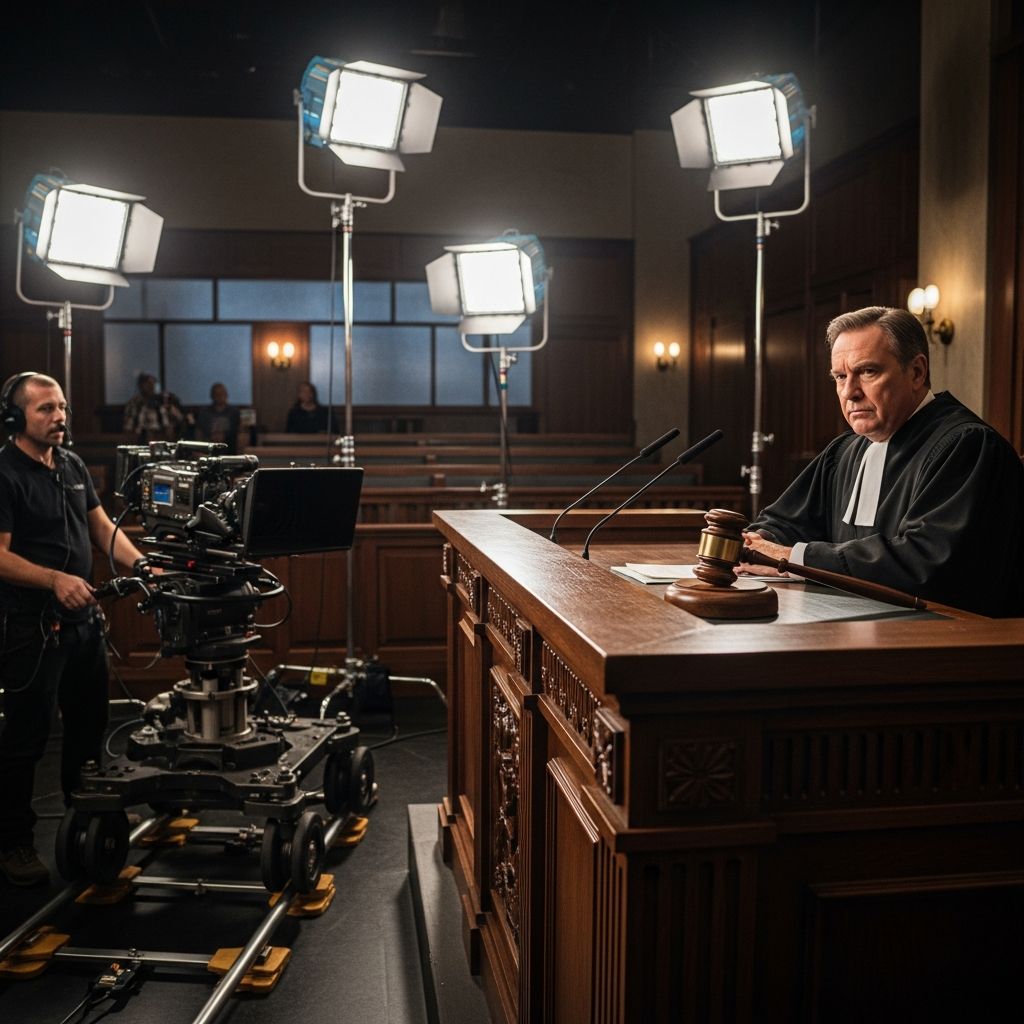
Television judge shows look like fast-paced courtrooms where real people fight over real disputes. But legally and procedurally, they operate very differently from traditional courts. This article unpacks what is real, what is staged, and how shows like Judge Judy turn small-claims conflicts into big entertainment.
From Courtroom to Soundstage: What Are TV Judge Shows?
Programs such as Judge Judy, Judy Justice, and similar series are best described as arbitration-based reality shows built around small-claims disputes. They combine real litigants and genuine legal disagreements with a tightly controlled production environment designed for television.
Instead of operating as official state or federal courts, these shows use a private process—binding arbitration—to resolve disputes while cameras roll. The set is styled to resemble a courtroom, but legally it is a studio where a private arbitrator hears cases under contracts the parties sign before taping.
Real Judge vs. Real Court: What Makes Judge Judy “Real”?
Judith Sheindlin, famous as Judge Judy, is a real former judge. She served as a family court judge in New York before transitioning to television. That experience shapes her no-nonsense style, but the environment she works in on TV is not an official court.
| Feature | TV Judge Show (e.g., Judge Judy) | Traditional Court |
|---|---|---|
| Legal status of decision | Binding arbitration award under contract | Judgment of a court with state authority |
| Judge’s role | Private arbitrator; often a former judge | Sitting judge appointed or elected by government |
| Procedural rules | Relaxed and controlled by show’s producers | Governed by statutes, rules of procedure, and evidence |
| Location | Television studio set | Government courthouse |
| Who pays the award | Generally the production, from a show fund | Defendant pays, subject to enforcement by court |
So the judge is often real; the courtroom is not. The decisions are genuine legal outcomes, but they come from private arbitration rather than the public court system.
Binding Arbitration: The Legal Engine Behind TV Courts
At the heart of nearly every TV judge show is a binding arbitration agreement. Before appearing, litigants sign contracts that:
- Submit their dispute to the TV judge as an arbitrator.
- Agree that the arbitrator’s decision is final and binding, similar to a small-claims judgment.
- Waive their right to have the same case heard in a regular court, except in narrow circumstances allowed by arbitration law.
- Allow the production to record, edit, and broadcast the proceedings.
Under U.S. law, arbitration is a recognized and widely used form of alternative dispute resolution (ADR), often governed by statutes such as the Federal Arbitration Act. Courts generally enforce written arbitration agreements as long as they meet basic fairness and contractual requirements.
This is how TV shows turn private disputes into televised cases without functioning as courts: the parties choose arbitration, the arbitrator happens to be a TV personality, and the hearing is packaged as entertainment.
Why So Many Small Claims? The Types of Disputes TV Courts Prefer
Television judge shows overwhelmingly focus on small-claims–style disputes—relatively low-dollar conflicts that are easier to understand and resolve quickly. Consistent with the real small-claims system used in many states, the disputes often involve:
- Unpaid loans between friends or relatives
- Security deposits and landlord–tenant disagreements
- Property damage from roommates, neighbors, or ex-partners
- Car accidents and repair bills in lower dollar ranges
- Pet disputes and other emotionally charged but modest-value conflicts
Real-world small-claims courts are designed to be faster and simpler than higher courts, with lower filing fees and limited monetary caps. That structure translates well to television, where cases must be easy to follow and resolved within minutes, not hours.
How Litigants Get on the Show
Most viewers assume people simply show up as they would in a regular courthouse. In reality, production teams actively recruit cases that are already filed in small-claims courts or submitted directly by the public.
Typical behind-the-scenes steps include:
- Reviewing small-claims filings or online submissions to identify disputes with dramatic potential.
- Contacting both sides to explain the show’s format, including that any award will be paid by the program, not directly by the losing party.
- Asking participants to withdraw or pause their court case in favor of binding arbitration on the show, where allowed by law.
- Having everyone sign appearance releases and arbitration contracts before taping.
The goal is to select cases that are legally straightforward yet emotionally compelling, so the judge can move quickly while still engaging the audience.
Who Really Pays: Money, Awards, and Appearance Fees
One of the biggest surprises for many viewers is how money flows on TV judge shows. The arbitrator’s award—the amount granted to the winning side—is typically paid out of a show-controlled fund, not from the losing party’s wallet.
While arrangements vary by program, common financial features include:
- Award fund: The show earmarks a pooled budget to satisfy judgments awarded on air.
- Appearance fees: Both plaintiffs and defendants often receive a stipend or per diem payment just for participating, as compensation for their time and travel.
- Travel and lodging: The production usually pays transportation and hotel costs for litigants.
- No collection battles: Because the show pays the award directly, the winner avoids the usual hassle of enforcing a small-claims judgment.
This payment structure reduces the financial risk for defendants while increasing the incentive for both sides to appear. At the same time, it gives producers more control over the outcome: they can afford to award full claims without worrying about a party’s ability to pay.
Editing, Time Limits, and the Pursuit of Drama
Real court hearings can be slow and complex; television cannot. To keep viewers’ attention, TV judge shows impose strict time limits and then heavily edit what viewers see.
Common production techniques include:
- Recording much longer hearings than the final air time.
- Cutting repetitive testimony, legal detail, and long pauses.
- Highlighting emotional exchanges, sharp questions, and turning points.
- Using voice-over introductions to summarize claims and defenses before the hearing even begins.
- Adding reaction shots from the gallery to underscore drama or humor.
These choices do not change the arbitrator’s decision, but they shape the narrative and can give the impression that complex disputes are always simple and quickly resolved.
Legal Limits: Rules of Evidence vs. TV Flexibility
In official courts, judges must follow formal rules of procedure and evidence that control what information can be considered and how it must be presented. TV judge shows operate under looser standards.
Because the proceeding is a form of private arbitration, the arbitrator and producers can:
- Relax strict evidence rules, allowing hearsay or informal documentation if they find it persuasive.
- Interrupt or question parties more aggressively than many court judges typically would.
- Limit the time each side has to speak, focusing on the facts most relevant to television storytelling.
In formal arbitration outside TV, parties also have flexibility to choose procedures that differ from court rules, as long as both sides agree and basic fairness is preserved. On TV, the participation contracts usually spell out that the arbitrator may use informal procedures and that the parties accept those conditions in advance.
The Business of Being a TV Judge
Television court shows are not public services; they are businesses built on ratings and advertising. Some of the most successful personalities, such as Judge Judy, have become among the highest-paid figures in entertainment, reportedly earning tens of millions of dollars annually.
This commercial reality influences the format:
- Cases are chosen not just for legal interest but for story value and audience appeal.
- Judges often cultivate a clear on-screen persona—strict, witty, compassionate, or combative—to differentiate the show.
- Producers track ratings closely and may tweak pacing, case selection, and set design to keep viewers engaged.
The legal framework (arbitration) provides the backbone of the show, but the business model drives how that framework is presented to the public.
What Viewers Should and Should Not Learn from TV Courts
Television judge shows can be a useful introduction to basic legal ideas, but they can also create misconceptions about how real courts operate. Viewers might reasonably learn:
- That small-claims disputes often involve everyday conflicts about money, property, and agreements.
- That judges (and arbitrators) expect parties to present evidence clearly and concisely.
- That written agreements and documentation are critical in any financial or personal deal.
However, viewers should be cautious about assuming that:
- Real hearings are always quick, emotional, and resolved in minutes.
- All judges speak and act like TV personalities.
- Informal behavior or banter that seems acceptable on TV would be appropriate in an actual courtroom.
- There is always a clear, dramatic moment when one side is obviously proven right or wrong.
Actual court systems operate under more detailed rules, have layered appeal rights, and often move far more slowly than television suggests.
Comparing TV Arbitration with Everyday Dispute Resolution
Outside of television, arbitration and mediation are widely used to resolve disputes in business, employment, consumer transactions, and international commerce. Major legal organizations and courts encourage ADR as a way to reduce costs and delays.
Key differences between televised arbitration and ordinary arbitration include:
- Privacy: Most arbitration is private and confidential; TV shows are public and designed for maximum exposure.
- Neutral selection: In ordinary cases, parties usually help select the arbitrator; on TV, the show chooses the judge.
- Procedural design: Off-camera arbitration often follows industry rules or institutional guidelines; television procedures are customized for viewing and storytelling.
Despite these differences, the underlying legal tool—binding arbitration—remains the same: a contractual agreement to let a neutral decision-maker resolve the conflict instead of going to court.
Frequently Asked Questions About TV Judge Shows
Q: Is Judge Judy a real judge?
A: Judith Sheindlin is a real former New York family court judge. On television she acts as a private arbitrator rather than a sitting government judge.
Q: Are the cases on TV judge shows real?
A: Yes, the disputes involve real people and genuine disagreements, typically small-claims–style conflicts. However, they are resolved through arbitration under contracts with the show, not through the public court system.
Q: Can the parties appeal the TV judge’s decision?
A: In most arbitration settings, including TV shows, appeal options are very limited. Courts generally enforce arbitration awards unless there is serious misconduct, fraud, or a fundamental violation of the agreement.
Q: Does the losing side really pay the judgment?
A: On many TV judge shows, the award is paid from a program-controlled fund rather than directly by the losing party, and both sides often receive appearance fees and travel coverage.
Q: Why do people agree to appear on these shows?
A: Participants may be attracted by free travel, guaranteed payment of any award, a chance to avoid collection problems, and the novelty of appearing on television. For some, the opportunity to have a fast decision from a well-known TV judge is also appealing.
References
- Judge Judy — Wikipedia (summary of show format and history). 2023-11-10. https://en.wikipedia.org/wiki/Judge_Judy
- How Does Judge Judy Work? — CountyOffice.org (YouTube explanatory video). 2025-02-25. https://www.youtube.com/watch?v=Wttxnwp7uUE
- Judy Justice — Grokipedia (overview of streaming successor show). 2024-06-01. https://grokipedia.com/page/Judy_Justice
- Is Judge Judy a Real Judge? — Burnett & Williams, P.C. 2017-08-22. https://burnettwilliams.com/judge-judy-real-or-fake/
- Alternative Dispute Resolution (ADR) — U.S. Courts, Administrative Office of the U.S. Courts. 2020-03-15. https://www.uscourts.gov/about-federal-courts/educational-resources/alternative-dispute-resolution
- Consumer Arbitration — American Bar Association. 2021-05-01. https://www.americanbar.org/groups/public_education/resources/law_issues_for_consumers/arbitration/
Similar Articles








Read full bio of Sneha Tete


