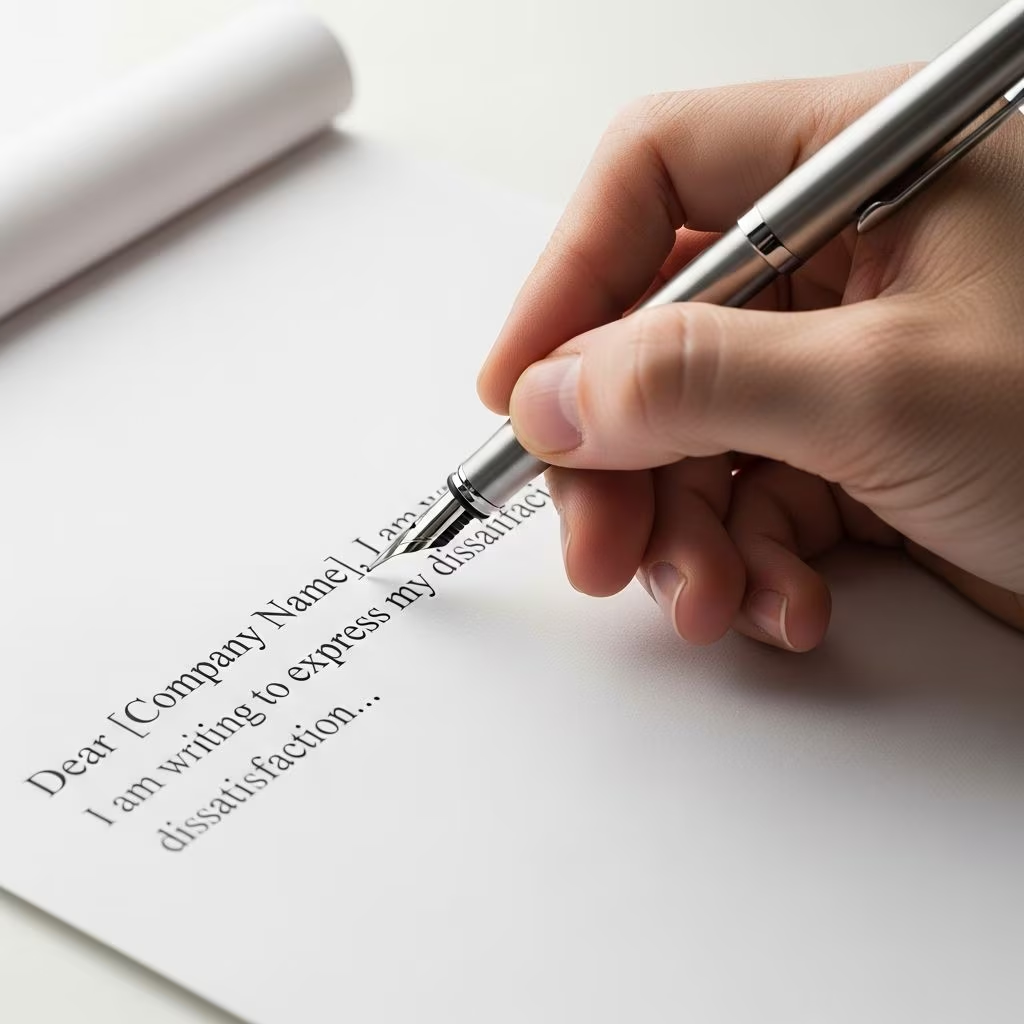
When a product fails, a service disappoints, or a company breaks its promises, a well-written customer complaint letter can be one of the most effective tools you have to fix the problem. Done correctly, it can help you secure a refund, repair, replacement, or other fair solution without going straight to court or government agencies.
This guide explains how to write a clear and persuasive complaint letter, what information to include, how to organize it, and how to follow up if the business does not respond. You will also find sample phrases, a formatting checklist, and practical FAQs.
Why Writing a Formal Complaint Letter Matters
Many consumer disputes can be resolved informally by speaking with a customer service representative, but putting your complaint in writing has important advantages.
- Creates a written record of what happened, when, and how you asked the business to fix it.
- Shows you are serious and organized, which often encourages a quicker and more thoughtful response.
- Clarifies your request so the company knows exactly what you want and by when.
- Supports later action if you need help from a consumer protection agency, ombudsman, or court.
Because of these benefits, many consumer agencies recommend making a written complaint as an early step when you cannot resolve an issue directly with staff.
Core Principles of an Effective Complaint Letter
Regardless of the specific issue, strong complaint letters share several key qualities.
| Principle | What It Means |
|---|---|
| Clear purpose | State early that you are writing to complain and what you want the business to do. |
| Fact-focused | Describe what happened using dates, amounts, and documents, not guesses or insults. |
| Polite but firm tone | Be respectful while making it clear you expect a fair resolution. |
| Specific remedy | Explain the outcome you are seeking, such as a refund, repair, replacement, or credit. |
| Supporting evidence | Refer to attached copies of receipts, contracts, photographs, or correspondence. |
| Reasonable deadline | Ask the business to respond or act by a specific date, giving them time to review. |
Information You Should Always Include
A good complaint letter makes it easy for the company to identify your account, understand the problem, and decide how to respond. Include the following details wherever possible.
1. Your contact details
- Full name
- Mailing address
- Telephone number
- Email address
Place this information at the top of a printed letter or near the signature block in an email so the business knows how to reach you quickly.
2. Company information
- Name of the company
- Department or Consumer Complaint / customer service division, if known
- Name and title of a contact person, if you have one
- The company’s mailing address or email address
Addressing your complaint to a specific person or department often improves the chances that it will be handled promptly.
3. Key reference numbers
- Order, account, or contract number
- Invoice or receipt number
- Serial or model number for products, if relevant
Put these references near the subject line or in the first sentences of the letter so the business can locate your records quickly.
4. Description of what you purchased or ordered
Describe in neutral, factual language:
- What you paid for (product or service name)
- Where you bought it (store, website, or location)
- When you paid or signed the agreement
- How much it cost
These basics help the company confirm that you are a customer and that the transaction actually took place.
5. Explanation of the problem
This part is the heart of your letter. Focus on what went wrong, not on your emotions.
- Describe what happened and when.
- Explain how the product failed, the service was poor, or the company did not meet its promises.
- Include any steps you already took to fix the problem, such as phone calls or visits to the store.
- Describe how the problem has affected you (financial loss, inconvenience, safety concerns, etc.).
6. What you want the business to do
Be specific and realistic about the solution you seek.
- Full or partial refund
- Repair at no extra cost
- Replacement with a functioning product
- Service to be repeated properly
- Correction of a billing or account error
- Non-monetary remedies, such as an apology or policy review
Stating your preferred outcome makes it easier for the business to evaluate and grant your request.
7. Supporting documents you are enclosing
Attach copies (not originals) of any documents that support your complaint, such as:
- Receipts or invoices
- Contracts, warranties, or terms of service
- Photographs of damaged goods
- Emails or letters exchanged with the company
- Shipping labels or tracking information
Clearly refer to these documents in the letter, for example: “Enclosed is a copy of my receipt dated …”.
Step-by-Step Structure for Your Letter
While the exact format can vary, the following sequence works well for most consumer complaints.
Step 1: Opening information
- Your name and contact details
- Date of the letter
- Company name and address
- Specific contact person and title, if available
- A brief subject or reference line with order or account number
Step 2: First paragraph – Purpose and context
Start with one or two sentences that:
- State that you are writing to complain about a particular product, service, or billing matter.
- Identify the relevant dates, product or service, and transaction location.
This alerts the reader immediately that the letter concerns a complaint and what it relates to.
Step 3: Middle paragraphs – What happened
Next, describe in a logical order:
- The problem you experienced (defect, delay, poor service, overcharge, etc.).
- Steps you have already taken to resolve it (phone calls, store visits, emails).
- What staff told you or promised, if relevant.
- The impact on you, such as extra costs, lost time, or safety issues.
Use short paragraphs and keep your explanations as clear and concise as possible.
Step 4: Final paragraph – What you expect
After explaining the facts, state clearly:
- The specific remedy you want (refund, repair, replacement, credit, or other action).
- A realistic deadline for a response or resolution (for example, within 10–14 days).
- That you may seek help from a consumer protection office, mediator, or other body if the problem is not resolved.
End with a polite closing, such as “Sincerely” or “Regards,” followed by your name and preferred contact method.
Style and Tone: How to Sound Professional and Persuasive
The way you phrase your complaint can strongly influence how seriously it is taken. Many consumer and legal guidance sites recommend a respectful but assertive style.
Do:
- Stay calm and objective. Focus on what happened and what you want, not on anger or insults.
- Be concise. Use short sentences and avoid unnecessary background that does not affect the dispute.
- Use formal language. Treat the letter as a business communication, even if you are writing by email.
- Be specific. Give dates, amounts, and names where possible, so the company can confirm your story.
- Show you understand your rights. If you know the relevant warranty or policy, briefly refer to it without threatening legal action immediately.
Avoid:
- Abusive language or personal attacks on staff.
- Threats you do not intend to carry out.
- Exaggerating what happened or leaving out important details that could be checked.
- Very long letters that are hard to follow.
Sending Your Complaint: Mail, Email, or Online Form?
How you send your complaint can matter, especially if you need proof that the company received it.
- Postal mail: A printed letter sent by a trackable service (such as certified mail) provides strong evidence of when and where it was delivered, which can be useful if the dispute escalates.
- Email: Convenient and fast. Many businesses respond quickly to email, and you can easily forward the entire thread later to a consumer agency.
- Online forms: Some companies require complaints through their websites. If you use a form, keep a screenshot or copy of what you submitted and any confirmation page.
Whichever method you use, always keep a complete copy of your letter and all attachments for your records.
Follow-Up: What to Do If You Do Not Get a Response
Sometimes a single letter is not enough. If you do not get a response by your requested deadline, consider the following steps.
- Send a second letter or email that briefly summarizes the situation, refers to your first complaint, and notes that you are still waiting for a response.
- Escalate within the company by writing to a higher-level manager, the company president, or the customer relations department.
- Contact a government or independent body, such as a local consumer protection agency, ombudsman, or legal aid office, and provide copies of your letters and documents.
- Consider dispute resolution options such as mediation, arbitration under the contract, or small claims court if your jurisdiction offers it.
Your original complaint letter becomes a valuable piece of evidence in all of these steps, showing that you tried to resolve the problem directly and in good faith.
Helpful Phrases You Can Adapt
Here are sample lines you can adapt to fit your own situation. Do not copy them word-for-word; instead, use them as inspiration to create your own sentences.
- “I am writing to report a problem with … that I purchased on … from … .”
- “I am disappointed because … .”
- “On [date], I contacted your customer service department by [phone/email] and was told that … .”
- “To resolve this issue, I am requesting … .”
- “Please respond in writing by [date] so we can avoid having to involve outside agencies.”
- “I have enclosed copies of my receipt, correspondence, and other relevant documents for your review.”
Frequently Asked Questions (FAQs)
Q1: Should I write a complaint letter even if I already called customer service?
Yes. Phone calls are useful, but a written complaint creates a permanent record of your issue, the dates involved, and what you are asking the business to do. It also gives you something concrete to show to consumer protection agencies or courts if you need further help later.
Q2: How long should a customer complaint letter be?
Aim for one page for most issues, or two at most if the dispute is complex. Courts, agencies, and companies usually prefer clear, concise letters that present key facts and requests without unnecessary detail.
Q3: Do I need to mention consumer protection laws in my letter?
You do not have to, but briefly referring to warranties, return policies, or other rights can show you have done your homework. If you mention a law or policy, keep it simple and accurate, such as referring to a written warranty or a published return policy.
Q4: Is email acceptable, or must I send a paper letter?
Email is widely accepted and often preferred for speed, and many businesses respond quickly to online complaints. However, for serious disputes or when a contract requires written notice, sending a printed letter by a trackable mail service can provide stronger proof that you gave formal notice.
Q5: What if the company ignores both my letter and my follow-up?
If reasonable attempts to resolve the matter directly fail, you can contact a consumer protection office, ombudsman, or legal aid service with copies of your letters, receipts, and any responses you did receive. They can explain your options, which may include mediation, regulatory complaints, or small claims court, depending on your location and the amount at stake.
References
- Sample Complaint Letter — Bucks County Consumer Protection. 2020-01-15. https://www.buckscounty.gov/407/Sample-Complaint-Letter
- Sample Complaint Letter to Send to a Business — Georgia Consumer Protection Division. 2022-06-01. https://consumer.georgia.gov/resolve-your-dispute/sample-complaint-letter-send-business
- How to Write a Consumer Complaint Letter — University of Illinois Student Legal Services. 2019-09-01. https://studentlegal.illinois.edu/resources/community/consumer-complaint-letter
- How to Write Complaints — Gallaudet University English Center. 2018-03-20. https://www.gallaudet.edu/student-success/tutorial-center/english-center/writing/how-to-write-letters/how-to-write-complaints/
- How To Write an Email Complaint in 6 Steps — Indeed Career Guide. 2022-03-28. https://www.indeed.com/career-advice/career-development/email-complaint
- How To Write An Effective Complaint Letter — Net Lawman. 2021-11-10. https://www.netlawman.co.uk/ia/complaints-letters
- An Example Complaint Letter — Scribendi. 2017-05-05. https://www.scribendi.com/academy/articles/example_complaint_letter.en.html