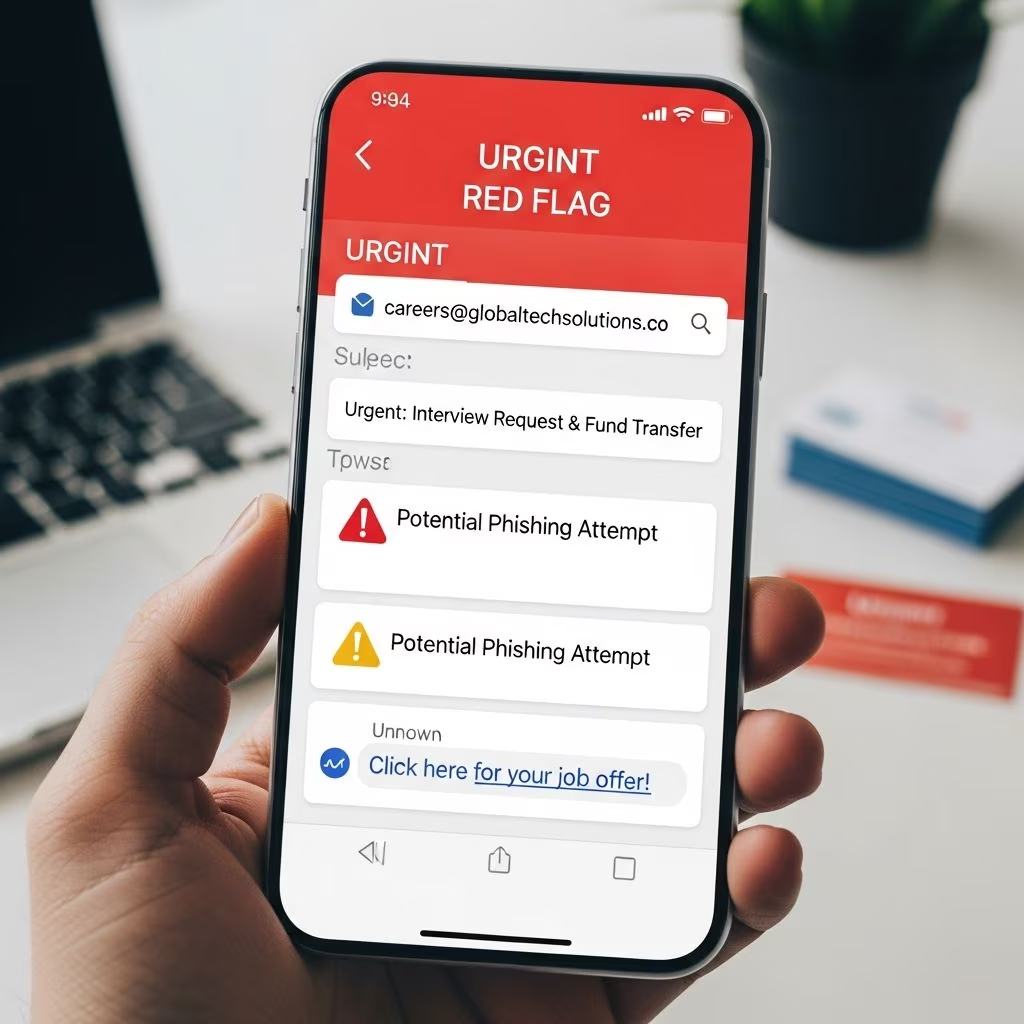
Job scams target people who are looking for work, promising great pay, flexible hours, or quick hiring, then stealing money or personal information instead. As more hiring happens online, it has become easier for scammers to pose as real employers or recruiters and harder for job seekers to tell what is real and what is fake.
This guide explains how job scams work, the red flags to watch for, how to protect yourself, and what to do if you have already shared information or lost money.
Why Job Scams Are So Common
Scammers follow opportunity. When many people are looking for work or extra income, criminals see a chance to exploit that pressure and urgency.
- Online recruiting is fast and impersonal. Many employers use job boards, online forms, and automated messages, which makes it easier for scammers to imitate their style.
- Remote and gig work have grown. Work-from-home roles, freelance contracts, and flexible jobs are now common, giving scammers believable cover stories for offers that never involve a face-to-face meeting.
- People share a lot of personal information when job-hunting. Resumes, social profiles, and portfolios give scammers details they can reuse to sound convincing or commit identity theft.
According to U.S. government consumer protection agencies, employment-related fraud is a recurring category in fraud reports, often involving requests for payment, personal data, or fake onboarding steps that cost victims money.
Typical Types of Job Scams
Fraudsters constantly invent new stories, but most job scams fall into a handful of patterns. Understanding these patterns makes it easier to recognize them when details change.
1. Fake Job Listings and Phony Employers
Scammers post ads that look like normal job listings on social media, job boards, or even in email newsletters. The role might be described as:
- “Customer service representative – remote”
- “Administrative assistant – work from home”
- “Brand ambassador – no experience needed”
Once you respond, they may:
- Rush you through a very short “interview” via messaging app
- Offer the job almost immediately with little or no screening
- Ask you for sensitive information or an upfront payment
In many cases, the company name, website, or recruiter profile is copied from a real business without permission, or slightly modified to look legitimate.
2. Check-Cashing and Overpayment Scams
In these schemes, the scammer pretends to be an employer paying you in advance. They might say they are sending you money to buy equipment, pay vendors, or cover training costs.
The pattern often looks like this:
- You receive a check or payment for more than you were expecting.
- They tell you to deposit it and quickly send a portion back via wire transfer, payment app, gift cards, or cryptocurrency.
- Later, your bank or credit union discovers the original check was fake and reverses the deposit, leaving you responsible for any money you sent out.
Even if the money appears in your account for a few days, that does not mean the check is valid. Under U.S. banking rules, financial institutions must make funds available quickly, but counterfeits can still be detected and reversed later.
3. Work-From-Home and Easy Money Scams
These scams promise high pay for simple tasks, especially for remote or part-time work. Common examples include:
- “Repackage and ship products”
- “Reship packages from home”
- “Get paid to process payments”
- “Earn thousands a week posting ads”
These offers frequently turn job seekers into unwitting helpers for money laundering or stolen goods distribution. In some cases, law enforcement may view the “employee” as part of the criminal activity, even if they did not understand what was happening.
4. Impersonation of Real Recruiters or Companies
Scammers may copy logos, email signatures, and LinkedIn profiles from well-known companies. They might even spoof official email addresses or use lookalike domains (for example, replacing a letter with a number).
Red flags in these impersonation scams include:
- Messages arriving from free email services instead of company domains
- Job offers that do not appear anywhere on the company’s official careers page
- Recruiters refusing to schedule a video call or use official channels
5. Training and Equipment Purchase Scams
Some fraudsters describe a real-sounding job but claim you must pay for mandatory training, certification, or special equipment upfront. They may promise to reimburse you later or say the fee is a condition of being hired.
Legitimate employers may require training or equipment, but they typically either provide it themselves or clearly explain the costs through official processes and written policies. Surprise demands for payment are a warning sign.
Warning Signs: How to Recognize a Job Scam
While no single sign proves an offer is fake, a combination of the following red flags should make you pause and investigate further.
| Red Flag | Why It Matters |
|---|---|
| Asked to pay money to get or keep the job | Legitimate employers do not charge you fees for being hired, training you, or setting up payroll. |
| Pressure to act immediately | Scammers create urgency so you do not have time to think, verify, or ask others. |
| Job offer with little or no interview | Real employers usually check qualifications and conduct at least one interview. |
| Requests for sensitive personal data early | They may ask for your Social Security number, birth date, or bank details before confirming the job. |
| Communication only by text or messaging app | Refusal to use company email, phone calls, or video meetings can signal an attempt to hide identity. |
| Pay that does not match the duties | Offers of unusually high pay for very simple work are a common lure. |
Protecting Yourself When You Look for Work
You can reduce your risk of job scams by slowing down, verifying details, and sharing information carefully. Many of these steps take only a few minutes but can prevent major losses.
Research Before You Respond
- Search the company name plus words like “scam” or “complaint.” Look for news articles, consumer alerts, or official warnings from government agencies.
- Check the employer’s official website. Confirm that the job posting exists there and that the contact information matches what you received.
- Look up the recruiter or hiring manager independently. Use professional networking sites or the company directory, not links in the message.
Government consumer protection sites and state attorneys general often publish alerts about current scams and enforcement actions involving fraudulent job offers.
Guard Your Personal and Financial Information
- Delay sharing sensitive data. A legitimate employer may ultimately need your Social Security number, bank account (for payroll), or tax forms, but usually not before there is a formal offer and written documentation.
- Use secure channels. Avoid sending documents with full Social Security numbers, IDs, or tax forms through unencrypted email or messaging apps when possible.
- Limit what appears in your resume. You can usually omit full birth dates, full Social Security numbers, and unnecessary identification numbers.
Be Cautious With Payments and Transfers
- Never pay to be hired. Application fees, training fees, or “placement costs” demanded by a supposed employer are major red flags.
- Do not move money on behalf of a new employer. If someone asks you to receive payments into your personal account and forward them, you may be pulled into money laundering activity.
- Be skeptical of checks from new employers. Wait for your financial institution to confirm that a check is fully cleared, and verify with the employer through a trusted phone number or website.
What To Do If You Suspect a Job Is a Scam
If something feels off, trust that instinct. You do not owe a stranger your data, money, or time. Use these steps to protect yourself and others.
Stop Contact and Preserve Evidence
- Stop sending messages, money, or documents.
- Take screenshots of messages, job ads, emails, and any payment requests.
- Save copies of checks, receipts, bank records, and shipping labels if you received or sent anything.
Report the Scam to Authorities
Reporting helps law enforcement track patterns, warn others, and in some cases recover money. In the United States, you can:
- Submit a fraud report to a national consumer protection agency. These agencies collect reports about fraud, scams, and bad business practices online and by phone.
- Report identity theft separately. If someone used your personal data to open accounts, file taxes, or access benefits, specialized federal resources provide recovery plans and sample letters to help you restore your identity.
- Contact your state or territory attorney general. Many state offices handle complaints about employment scams and can bring enforcement actions.
- Notify the real company if it was impersonated. Use contact information from the official website, not from the scam message.
Take Action if You Paid or Shared Information
The right steps depend on what you shared.
- If you sent money by card or electronic payment: Contact your bank, credit union, or card issuer immediately. Ask whether they can stop or reverse the transaction and follow their fraud procedures.
- If you paid with gift cards or cryptocurrency: Contact the platform used (such as the gift card company or crypto exchange) as soon as possible and explain that it was part of a scam. Recovery can be difficult, but fast reporting may help in some cases.
- If you provided your Social Security number: Watch for signs of identity theft, such as unfamiliar accounts or collection notices. Federal guidance recommends placing a fraud alert or credit freeze, and checking your credit reports regularly.
- If you shared login credentials: Change passwords immediately, enable multi-factor authentication where available, and update any other accounts that might use similar passwords.
Helping Friends, Family, and Communities Stay Safe
Job scammers often target people who feel financial pressure, including students, recent graduates, older adults, immigrants, and people who are unemployed or underemployed.
- Talk openly about job scams. Sharing your experiences and what you have learned can make others more skeptical of offers that sound too good to be true.
- Encourage verification. Offer to help older relatives or friends research companies and recruiters, especially if they are new to online job searching.
- Use official educational materials. National consumer protection agencies publish free resources you can share in classrooms, workshops, and community programs to teach people how to recognize scams.
Frequently Asked Questions (FAQs)
Q: Is it ever normal for an employer to ask for my bank account number?
A: Yes, but only after you have been formally hired and only to set up direct deposit or reimburse expenses. It should happen through official HR or payroll forms, not through a text message or casual email. If someone asks for banking details before a written offer or insists on unusual payment methods, treat it as suspicious.
Q: The recruiter says I must buy training or equipment first. Is that a scam?
A: It is a major red flag. Some professions do have licensing or training costs, but you should be able to verify those requirements independently through professional boards or official websites. If the recruiter pressures you to pay quickly or only through specific methods like gift cards or cryptocurrency, do not proceed.
Q: What should I do if I cashed a check from an employer and now my bank says it was fake?
A: Contact your bank or credit union right away, explain that you may be the victim of a scam, and ask what options you have to limit losses. Share any information about where the check came from. Then file a fraud report with a national consumer protection agency and notify local law enforcement if you were instructed to send money on to someone else.
Q: Can I trust job ads on well-known job boards?
A: Large job sites may screen postings, but scammers still slip through. You should treat every ad as a starting point, not a guarantee. Always research the company, confirm job details on its official website, and be wary of any offer that demands quick decisions or upfront payments.
Q: How can I check if my identity has been misused after a job scam?
A: Watch for unfamiliar accounts, collection calls, or mail about loans or benefits you never requested. You can obtain your credit reports from the nationwide credit reporting companies and review them for accounts or inquiries you do not recognize. Federal identity theft recovery resources provide detailed checklists and sample letters to help you dispute fraudulent information.
References
- Consumer Sentinel Network Data Book 2023 — Federal Trade Commission. 2024-02-08. https://www.ftc.gov/reports/consumer-sentinel-network-data-book-2023
- Bureau of Consumer Protection — Federal Trade Commission. 2024-06-05. https://www.ftc.gov/about-ftc/bureaus-offices/bureau-consumer-protection
- Fake Checks — Federal Deposit Insurance Corporation. 2022-11-18. https://www.fdic.gov/resources/consumers/money-smart/teach/weekly/fake-checks.html
- Identity Theft: What To Do Right Away — Federal Trade Commission. 2024-03-01. https://www.identitytheft.gov/steps
- National Association of Attorneys General: Consumer Protection — National Association of Attorneys General. 2023-05-12. https://www.naag.org/issue/consumer-protection/