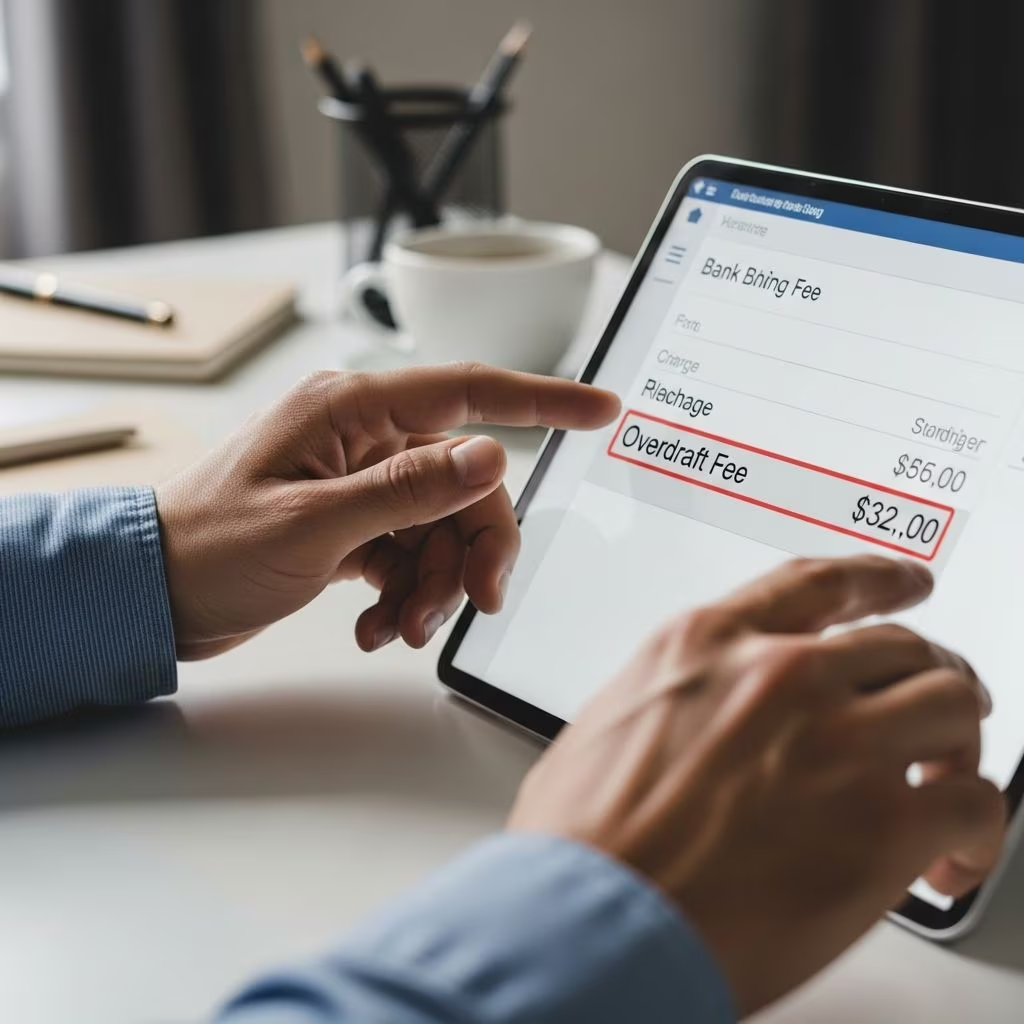
Being charged an overdraft fee can be stressful, especially if you did not expect your account to go negative. This guide explains how overdraft fees work, what your rights are under federal rules, how to ask your bank to remove a fee, and what to do if you believe the charge was unfair or incorrect.
Understanding What an Overdraft Fee Is
An overdraft happens when your bank or credit union pays a transaction even though you do not have enough money in your account to cover it. The institution then usually charges an overdraft fee, often around $35 per item at many banks.
Key points about overdraft fees:
- They are typically charged per transaction, not per day.
- They are different from nonsufficient funds (NSF) fees, which are usually charged when the bank declines a transaction instead of paying it.
- Overdraft fees are a significant source of fee income for large banks and have been the focus of recent regulatory reforms.
Common Situations That May Trigger an Overdraft
- ATM withdrawals that exceed your available balance
- One-time debit card purchases when your account does not have enough money
- Checks or online bill payments that post after your balance has dropped
- Preauthorized automatic payments (such as subscriptions or loan payments)
Federal law treats some of these transactions differently, particularly ATM and one-time debit card purchases, which are covered by special consent rules.
Your Rights Under Federal Overdraft Rules
Federal regulations give consumers specific protections related to overdraft fees on certain transactions. A key rule is found in the Consumer Financial Protection Bureau’s (CFPB) Regulation E, which implements the Electronic Fund Transfer Act.
Opt-In Requirement for ATM and One-Time Debit Card Overdraft Fees
For ATM withdrawals and one-time debit card transactions (like a single purchase at a store):
- Your bank cannot charge you an overdraft fee for these transactions unless you have affirmatively agreed (“opted in”) to the bank’s overdraft service for these types of payments.
- If you did not opt in, the bank may still decide to pay the transaction, but it cannot assess a fee for doing so.
- You have the right to revoke your opt-in at any time. Fees already charged before your revocation generally do not have to be reversed, but the bank must stop charging new fees on covered transactions once your revocation is implemented.
These protections apply to all financial institutions offering covered overdraft services, regardless of size.
Other Types of Transactions
For the following types of transactions, banks are allowed to charge overdraft fees without a separate opt-in under current federal rules, as long as their disclosures are accurate and compliant:
- Checks and paper drafts
- Recurring debit card payments (such as automatic monthly payments)
- ACH transfers and online bill payments
However, these fees remain subject to broader consumer protection laws against unfair or deceptive practices and to any state law requirements.
Recent Policy Developments on Overdraft Fees
Regulators have taken steps in recent years to address the cost and structure of overdraft programs:
- The CFPB issued a rule intended to treat many overdrafts at large banks similarly to credit, capping most fees at about $5 or requiring the bank to treat overdrafts as a loan with regular credit disclosures.
- Many large banks have voluntarily reduced or eliminated overdraft fees while still providing overdraft coverage.
- Overdraft practices remain an area of active policy debate and potential change.
Even as rules evolve, you retain the right to receive clear fee disclosures and to dispute charges that you believe are inaccurate or unfair.
First Steps When You See an Overdraft Fee
If you notice an overdraft fee on your statement, taking prompt and organized action can increase your chances of resolving the issue.
1. Review Your Transaction History Carefully
- Log in to your online or mobile banking and check the date and time of the transaction that triggered the fee.
- Compare the posting order of transactions: deposits, withdrawals, and card purchases.
- Confirm whether you were enrolled (opted in) to overdraft coverage for ATM and one-time debit card transactions.
- Look for repeated fees on the same day or multiple fees close together.
2. Gather Documentation
Before contacting your bank, collect:
- Account statements or screenshots showing the transactions and fees
- Any overdraft program disclosures you received when opening the account or later
- Notes on why you believe the fee was incorrect, unexpected, or unfair
Having this information ready will help you present a clear case to your bank representative.
How to Ask Your Bank to Reverse an Overdraft Fee
In many cases, banks will consider waiving an overdraft fee, especially if you rarely overdraw your account or if the charge appears to result from a misunderstanding.
Prepare What You Want to Say
When you contact your bank (by phone, online chat, in writing, or in person), be specific and polite. Consider mentioning:
- That you noticed an overdraft fee on a specific date and amount
- Why you did not expect the charge (for example, you believed you had enough funds or thought a deposit had already cleared)
- Whether this is your first overdraft or a rare occurrence
- That you are requesting a courtesy refund or reversal of the fee
Questions to Ask the Bank
- Which specific transaction triggered the overdraft fee?
- Was the overdraft related to an ATM or one-time debit card purchase, and if so, did I opt in to overdraft coverage?
- What is your policy on waiving or refunding overdraft fees?
- Can you review my account history and consider removing this fee?
- Are there alternative account options with lower or no overdraft fees?
Tips That May Improve Your Chances
- Contact the bank quickly after the fee appears.
- If you have been a long-time customer, mention your history and that you typically manage the account responsibly.
- If the fee resulted from a technical issue, delayed deposit, or unclear posting order, explain why you believe it was not reasonably avoidable.
When You Believe the Fee Was Improper or Unfair
Sometimes a fee may seem more than just unfortunate; you may believe it violated rules or was based on misleading information. Examples include:
- You were charged an overdraft fee on an ATM or one-time debit card transaction even though you never opted in to overdraft coverage.
- Your bank’s overdraft disclosures were confusing or inconsistent with how fees were applied.
- The bank reordered transactions in a way that maximized the number of overdraft fees, and you believe this practice was deceptive or not properly disclosed.
In such cases, you can escalate beyond an informal refund request.
Escalating Your Complaint Within the Bank
- Ask to speak with a supervisor or a specialist who handles fee disputes.
- Submit a written complaint through the bank’s secure message center or mailing address.
- Clearly state the facts, attach documentation, and explain the outcome you are requesting (such as reversal of specific fees and correction of any related account reporting).
Filing External Complaints
If you cannot resolve the matter directly with your institution, you may:
- File a complaint with the Consumer Financial Protection Bureau (CFPB), which accepts complaints about overdraft practices and forwards them to companies for response.
- Contact your state banking regulator or state attorney general’s office, many of which oversee unfair or deceptive banking practices and may publish guidance or take enforcement actions on overdraft issues.
When you file an external complaint, include as many details and documents as you can, including prior communications with the bank.
Preventing Future Overdraft Fees
Reducing or eliminating future overdraft fees often requires a combination of product choices, account settings, and daily money management habits.
Account and Service Choices
| Option | How It Helps | What to Ask Your Bank |
|---|---|---|
| Opt out of overdraft coverage for ATM and one-time debit card transactions | Transactions that would overdraw your account are typically declined instead of covered with a fee. | “Am I currently opted in to overdraft services for debit card and ATM transactions? How do I opt out?” |
| Low- or no-overdraft-fee accounts | Some banks offer checking accounts that limit or do not charge overdraft fees, sometimes as part of broader reforms. | “Do you offer accounts designed to minimize or eliminate overdraft fees?” |
| Linked savings or backup account | Funds can be transferred from a linked account to cover shortfalls, though some institutions may charge a transfer fee. | “Can I link a savings account or line of credit to automatically cover overdrafts, and what are the costs?” |
| Overdraft line of credit | Instead of a fee per transaction, overdrafts may be treated as a credit product with interest and disclosures similar to other loans. | “Do you offer an overdraft line of credit, and what are the interest rate and terms?” |
Day-to-Day Practices to Avoid Overdrafts
- Turn on low-balance alerts and overdraft notifications through your bank’s app, text messages, or email.
- Keep a simple spending log or budgeting app to track upcoming bills and subscriptions.
- Schedule automatic payments shortly after paydays, not just before.
- Maintain a small emergency cushion in your checking account, if possible.
Special Considerations for Vulnerable Consumers
Overdraft fees often fall disproportionately on consumers with lower incomes, those living paycheck to paycheck, and people with limited access to financial services. For these consumers, a few fees can quickly trigger account closures or negative records that make it harder to open new accounts.
If you are facing repeated overdraft fees:
- Ask your bank about basic, low-cost accounts with no overdraft fees.
- Seek help from a nonprofit credit counseling agency or local legal aid organization, which may offer free advice on managing accounts and handling fee disputes.
- Check whether community banks or credit unions near you offer small-dollar credit or low-fee accounts designed for customers trying to avoid overdrafts.
Frequently Asked Questions (FAQs)
Can my bank charge an overdraft fee if I never agreed to overdraft services?
For ATM and one-time debit card transactions, banks generally cannot charge an overdraft fee unless you have explicitly opted in to overdraft coverage for those transactions. For checks and recurring payments, separate opt-in is not required under federal rules, but fee disclosures must still be accurate and compliant.
Am I entitled to a refund of every overdraft fee I dispute?
Federal law does not guarantee a refund of overdraft fees in all circumstances. Banks often have discretion to waive fees as a courtesy, especially for first-time or infrequent overdrafts, and may be required to correct fees that were charged inconsistently with their disclosures or applicable regulations.
What if the overdraft happened because a deposit was delayed?
If a delay in deposit availability or a posting delay contributed to the overdraft, explain the situation to your bank and ask it to review the timing of deposits and withdrawals. Banks must follow funds-availability rules and clearly disclose their policies, and they may waive the fee if they determine the situation was not reasonably avoidable for you.
Can my account be closed because of overdraft fees?
Yes, repeated or unpaid overdrafts and related fees may lead some institutions to close an account, and in some cases negative information can be reported to account-screening databases, making it harder to open a new account elsewhere. If you are at risk of closure, contact your bank quickly to discuss payment options, possible fee waivers, or switching to a safer account.
How do I know if a new rule or law has changed my bank’s overdraft policy?
Regulatory changes—such as rules issued by the CFPB or guidance from the FDIC—may prompt banks to update their overdraft programs, fee levels, or account offerings. Banks are generally required to provide updated disclosures when they make certain changes to account terms, so reviewing mailed notices, email updates, and online disclosures is important.
References
- § 1005.17 Requirements for overdraft services — Consumer Financial Protection Bureau. 2024-03-01. https://www.consumerfinance.gov/rules-policy/regulations/1005/17
- Overdraft and Account Fees — Federal Deposit Insurance Corporation (FDIC). 2021-12-01. https://www.fdic.gov/consumer-resource-center/2021-12/overdraft-and-account-fees
- CFPB Closes Overdraft Loophole to Save Americans Billions in Fees — Consumer Financial Protection Bureau. 2024-12-12. https://www.consumerfinance.gov/about-us/newsroom/cfpb-closes-overdraft-loophole-to-save-americans-billions-in-fees/
- April 10, 2025 Press Release: Bill to Overturn CFPB Overdraft Rule Would Hurt Families — Minnesota Attorney General. 2025-04-10. https://www.ag.state.mn.us/Office/Communications/2025/04/10_OverdraftFees.asp
- Bill to Overturn CFPB Overdraft Fee Rule Would Hurt Families, Allow Big Banks to Keep $5 Billion in Excessive Fees — National Consumer Law Center. 2025-04-09. https://www.nclc.org/bill-to-overturn-cfpb-overdraft-fee-rule-would-hurt-families-allow-big-banks-to-keep-5-billion-in-excessive-fees/
- Myths vs. Facts – CFPB’s Overdraft Final Rule — American Bankers Association. 2025-03-15. https://www.aba.com/advocacy/policy-analysis/myths-vs-facts-cfpbs-overdraft-final-rule
- Overdraft Fees: Are Banks Charging You Illegally? — Sauder Schelkopf. 2023-08-10. https://sauderschelkopf.com/blog/overdraft-fees-are-banks-charging-you-illegally/