
How to Report a Crime in the United States
Understand when, where, and how to report crimes safely and effectively to the proper authorities.
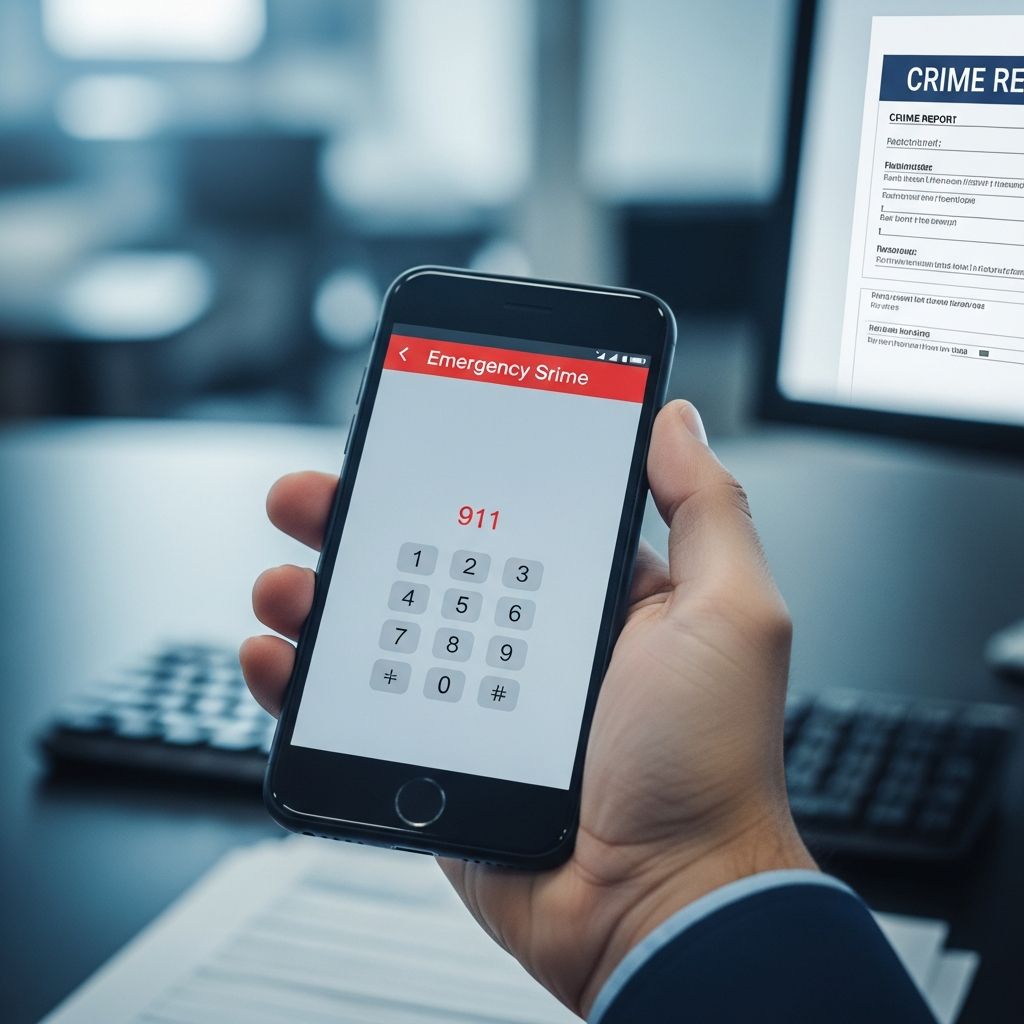
Knowing how to report a crime quickly and to the correct authority can protect you, help victims, and support law enforcement investigations. This guide explains the main options for reporting emergencies, local crimes, federal offenses, and cyber incidents in the United States, along with practical tips on what information to provide.
1. Start with Safety: Emergencies vs. Non-Emergencies
The first decision when you witness or experience a crime is whether the situation is an emergency. In the United States, life-threatening or time-critical situations must be reported immediately to local emergency services.
1.1 When to Call 911
Call 911 from any phone when:
- Someone is in immediate danger (for example, an assault or domestic violence in progress).
- You see a serious accident, fire, or medical emergency.
- You believe a crime is happening right now or is about to happen.
- You need urgent police, fire, or medical assistance.
Calls to 911 are routed to the nearest public safety answering point (PSAP), where trained dispatchers connect you with police, fire, or EMS resources.
1.2 When to Use Non-Emergency Options
Use non-emergency numbers or online forms if:
- The crime already happened and there is no immediate threat.
- You need to file a police report for documentation or insurance (for example, minor theft, vandalism, or lost property).
- You want to report suspicious activity that is not urgent.
Most local police departments list their non-emergency number on their official city or county website or on your local government information pages.
2. Local Crime Reporting: Police, Sheriff, and Campus Security
Many crimes are handled at the local level by city police, county sheriffs, or specialized agencies like transit or campus police. These agencies are usually your first point of contact for:
- Assault, theft, burglary, or vandalism
- Domestic violence and stalking
- Neighborhood disturbances or disorderly conduct
- Drug activity observed in your community
2.1 Ways to Contact Local Law Enforcement
You can usually contact local law enforcement in one or more of the following ways:
- In person: Visit the station front desk (hours and locations are posted on official websites).
- By phone: Call the non-emergency number for non-urgent issues, or 911 for emergencies.
- Online reporting: Many departments offer web forms for certain crimes like minor theft or property damage.
Local agencies document crimes and forward data to state and federal systems such as the FBI’s Uniform Crime Reporting (UCR) Program and the National Incident-Based Reporting System (NIBRS), which are used to analyze national crime trends.
2.2 What to Include in a Local Police Report
To help officers investigate, be prepared to share:
- Date, time, and location of the incident
- What happened, in chronological order
- Descriptions of people involved (appearance, clothing, vehicle, direction of travel)
- Any injuries or property damage
- Photos, video, or documents (if available)
Always ask for your report number, which you may need for follow-up, insurance, or legal proceedings.
3. Federal Crimes and National-Level Reporting
Some crimes fall under federal jurisdiction, especially when they cross state lines, involve federal property, or relate to national security. The U.S. Department of Justice (DOJ) lists multiple channels for reporting crimes or submitting complaints to federal components.
3.1 Contacting the FBI
The Federal Bureau of Investigation (FBI) investigates a range of federal crimes, including terrorism, public corruption, civil rights violations, organized crime, and major cybercrime.
Common ways to reach the FBI include:
- Online tips: Submit a tip through the FBI’s official tip form.
- Field offices: Call or visit your nearest FBI field office.
- Legal Attaché (“Legat”) offices: U.S. citizens abroad can contact FBI representatives located in U.S. embassies and consulates.
Law enforcement agencies across the country share standardized data with the FBI through UCR and NIBRS, enabling more accurate national crime estimates and trend analysis.
3.2 Other Federal Enforcement Agencies
Depending on the issue, other federal agencies may be the appropriate contact:
| Issue | Primary Federal Contact | Examples |
|---|---|---|
| Illegal drug trafficking | Drug Enforcement Administration (DEA) | Large-scale distribution, illegal online pharmacies, drug diversion |
| Firearms, explosives, arson | Bureau of Alcohol, Tobacco, Firearms and Explosives (ATF) | Arson for profit, firearms trafficking, explosives theft |
| Antitrust and competition | DOJ Antitrust Division | Price-fixing, bid-rigging, market allocation |
| Public corruption | FBI / DOJ Public Integrity | Bribery of public officials, election crimes |
The DOJ provides consolidated guidance on where to report specific federal crimes or misconduct on its official “Report a Crime or Submit a Complaint” page.
4. Reporting Online Crime, Fraud, and Scams
Cybercrime and internet-enabled fraud have grown significantly with increased online activity. The FBI’s Internet Crime Complaint Center (IC3) is the central hub for reporting many types of online crime.
4.1 What the Internet Crime Complaint Center (IC3) Does
IC3, operated by the FBI, collects complaints involving internet-enabled crimes such as:
- Phishing and email scams
- Online shopping fraud and auction scams
- Business email compromise and wire fraud
- Ransomware, hacking, and other cyber intrusions
- Romance scams and social media scams
Information submitted to IC3 is shared with FBI field offices and law enforcement partners to support investigations, identify patterns, and in some cases, freeze fraudulent transactions.
4.2 How to File an IC3 Complaint
To report a suspected internet crime through IC3:
- Go to the IC3 complaint website.
- Provide your contact details and describe the incident.
- Include transaction details, email addresses, website links, phone numbers, and any relevant screenshots.
IC3 explains that it may not respond individually to every complaint, but your information contributes to the broader understanding of cyber threats and supports law enforcement cases.
4.3 Other Cybercrime and Intellectual Property Resources
In addition to IC3, the DOJ and partner agencies provide channels for reporting:
- Intellectual property crimes such as counterfeit goods or piracy
- Computer hacking or unauthorized network access
- Spam or fraudulent emails that may indicate scams or phishing campaigns
DOJ’s cyber and fraud reporting pages describe where to send complaints based on the specific type of offense.
5. Hate Crimes, Civil Rights, and Vulnerable Victims
Some crimes specifically target individuals or groups based on protected characteristics like race, religion, national origin, sexual orientation, gender, gender identity, or disability. These may qualify as hate crimes or civil rights violations and often trigger federal interest.
5.1 Reporting Hate Crimes
If you believe a hate crime has occurred:
- Report immediately to your local police so they can respond and document the incident.
- Submit a tip to the FBI online or through your local FBI field office, especially if the crime involves serious violence or ongoing threats.
The DOJ encourages victims and witnesses to report hate crimes so that law enforcement can intervene, connect victims to services, and better understand patterns in bias-motivated incidents.
5.2 Civil Rights Violations
The DOJ’s Civil Rights Division handles complaints involving discrimination, police misconduct, and interference with federally protected rights. Examples include:
- Discrimination in housing, employment, or access to public services
- Misconduct by law enforcement officers, such as excessive force
- Threats or intimidation aimed at preventing someone from voting
You can typically file civil rights complaints through official DOJ online forms, which are separate from local police crime reports.
5.3 Specialized Hotlines for Vulnerable Populations
Certain groups, such as older adults and children, have additional reporting resources:
- National Elder Fraud Hotline: Offers support for older adults who experience financial crime or scams.
- Hotlines for human trafficking and missing children: Nationally recognized centers work with law enforcement to respond to these cases.
Using these specialized hotlines can connect victims to both law enforcement and victim assistance services.
6. Financial Crime, Public Corruption, and Government Misconduct
Crimes involving government programs, public officials, or complex financial schemes may involve multiple agencies. The DOJ highlights several categories with specific reporting routes.
6.1 Fraud, Waste, and Abuse
Fraud, waste, and abuse in government programs or DOJ-funded organizations can often be reported to an Inspector General (IG) office. Examples include:
- Misuse of grant funds
- Contractor overbilling or false claims
- Misconduct by DOJ employees or grant recipients
Inspector General hotlines and web forms allow employees, contractors, and the public to report suspected wrongdoing, often with options to remain anonymous.
6.2 Public Corruption and Bribery
Public corruption cases typically involve:
- Bribery of elected or appointed officials
- Kickback schemes
- Election-related crimes or voter fraud
These offenses are usually reported to the FBI or U.S. Attorney’s Offices and may also be flagged via public corruption hotlines listed by the DOJ.
6.3 Other Financial Crimes
The DOJ provides guidance on reporting:
- Bankruptcy fraud
- Mortgage and foreclosure scams
- Disaster-related fraud involving relief funds
Many of these crimes involve overlapping federal and state jurisdictions, so you may be referred to multiple agencies, such as U.S. Attorneys, the FBI, and Inspectors General.
7. Why Reporting Matters: Data, Trends, and Public Safety
Beyond addressing individual cases, crime reports support national efforts to understand and prevent crime. When local agencies document incidents, they share data with state and federal systems used for official crime statistics.
7.1 National Reporting Systems (UCR and NIBRS)
The FBI’s Uniform Crime Reporting (UCR) Program has historically collected basic information about crimes reported to law enforcement across the country. In recent years, the more detailed National Incident-Based Reporting System (NIBRS) has become the national standard for crime data reporting.
According to the Bureau of Justice Statistics (BJS), NIBRS captures richer details about incidents, including:
- A wider range of offenses (such as simple assault and identity theft)
- Types and value of property affected
- Demographic information about victims and offenders
- Weapons used and relationships between parties
As of mid-2024, all 50 states and the District of Columbia are certified to report crime data to NIBRS, with agencies covering more than 80% of the U.S. population contributing data.
7.2 How Your Report Helps
When you report crime:
- You increase the chance that offenders are identified and held accountable.
- You help law enforcement identify patterns, hotspots, and emerging threats.
- You contribute to national statistics that inform policy, funding, and prevention strategies.
Accurate crime reporting—both by citizens and by law enforcement agencies—is essential for evidence-based public safety decisions.
8. Practical Tips for Reporting Effectively
Regardless of the type of crime, a few best practices can make your report more useful:
- Act quickly: Report as soon as it is safe to do so; memories fade and evidence can be lost.
- Be specific: Provide concrete details rather than general impressions.
- Stay factual: Distinguish clearly between what you saw yourself and what others told you.
- Keep records: Save emails, receipts, screenshots, and reference numbers from any agency you contact.
- Follow instructions: Use official websites, phone numbers, or addresses provided by government agencies.
If you are unsure which agency is appropriate, start with local law enforcement or the DOJ’s general crime reporting guidance; they can often direct you to the right place.
Frequently Asked Questions (FAQs)
How do I know whether to call local police or a federal agency?
If a crime is happening right now or poses immediate danger, call 911 and let local responders handle it first. For complex cases involving multiple states, national security, or federal programs, local law enforcement or your U.S. Attorney’s Office can coordinate with the appropriate federal agencies such as the FBI or DOJ components.
Can I report a crime anonymously?
Many agencies accept anonymous tips, including some FBI, DEA, and ATF hotlines, as well as certain local tip lines. However, remaining anonymous may limit the ability of investigators to follow up with you or use your information as evidence.
Will I be informed of the outcome of my report?
In many cases, especially with high-volume systems like IC3, you may not receive detailed updates. For local police reports, you can usually contact the department, reference your report number, and ask how to check on the status of your case.
What if the crime happened online but the offender is in another state or country?
Online crimes that cross borders are common. You can report to IC3 for internet-enabled frauds and to your local police if there was financial loss or a direct threat. U.S. law enforcement agencies routinely coordinate across jurisdictions for cybercrime investigations.
Is making a false crime report a crime?
Yes. Knowingly filing a false police report or making false statements to law enforcement can itself be a criminal offense. Always report honestly and clarify when you are uncertain about details.
References
- National Incident-Based Reporting System (NIBRS) — Bureau of Justice Statistics, U.S. Department of Justice. 2024-05-01. https://bjs.ojp.gov/national-incident-based-reporting-system-nibrs
- Internet Crime Complaint Center (IC3) — Federal Bureau of Investigation. 2024-03-01. https://www.ic3.gov
- Report a Crime or Submit a Complaint — U.S. Department of Justice. 2024-02-01. https://www.justice.gov/action-center/report-crime-or-submit-complaint
- Uniform Crime Reporting (UCR) System — Office of Disease Prevention and Health Promotion, U.S. Department of Health and Human Services. 2023-09-01. https://odphp.health.gov/healthypeople/objectives-and-data/data-sources-and-methods/data-sources/uniform-crime-reporting-system-ucr
- The National Incident-Based Reporting System (NIBRS): Benefits and Issues — Congressional Research Service. 2021-12-10. https://crsreports.congress.gov/product/pdf/R/R46668
Similar Articles








Read full bio of Sneha Tete




