
How to Launch a Profitable Drive-In Movie Theater
A practical, step-by-step guide to planning, legal setup, financing, and operating a modern drive-in movie theater business.
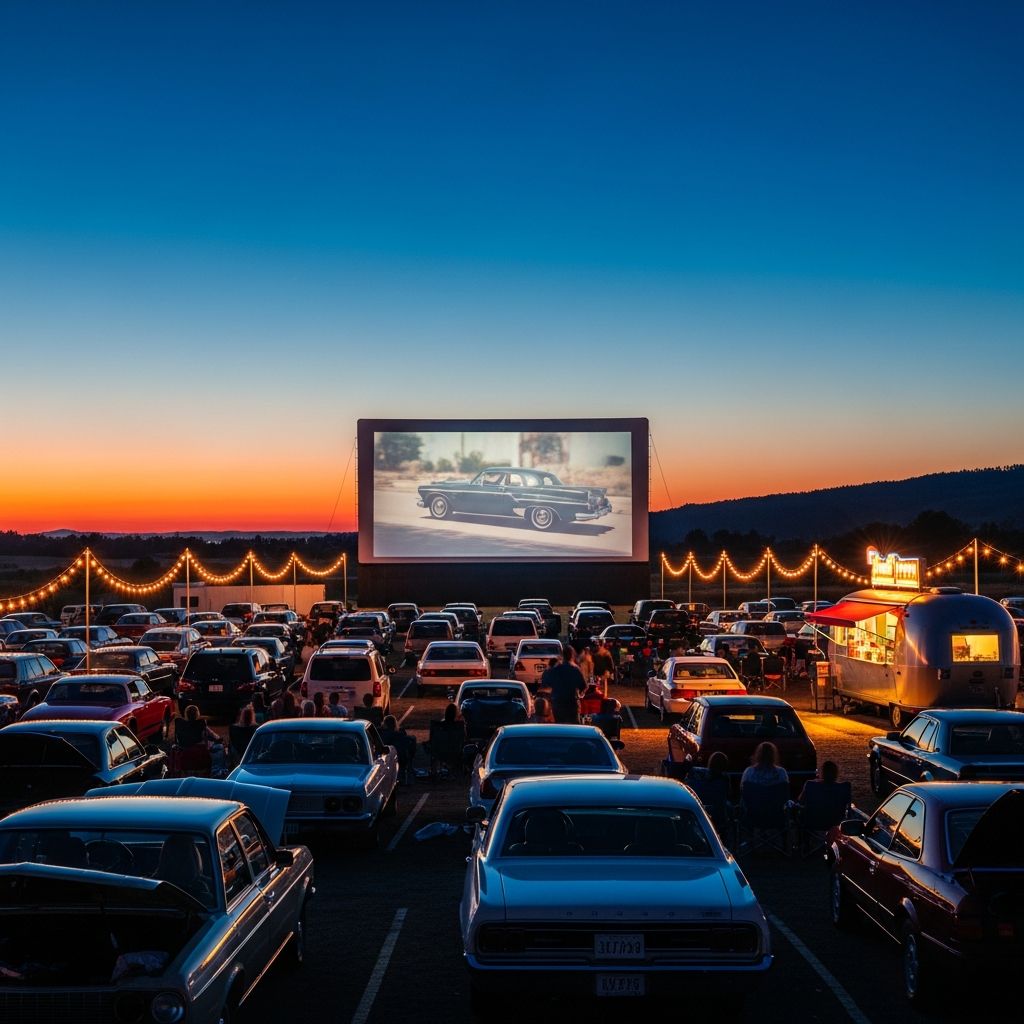
Drive-in movie theaters blend nostalgia with a resilient, outdoor entertainment model that can work in both small towns and larger metro areas. With careful planning, strong legal compliance, and smart operations, a drive-in can become a long-term, community-focused business rather than just a seasonal novelty.
Understanding the Drive-In Business Model
Before spending money on land or equipment, it is essential to understand how a drive-in theater typically generates revenue and what major costs you will face.
Primary Revenue Streams
- Ticket sales for nightly showings and special events.
- Concessions such as popcorn, soft drinks, candy, and hot foods.
- Advertising and sponsorships on-screen ads, local business partnerships, and branded events.
- Special programming like themed movie nights, private rentals, fundraisers, and live-streamed events.
In many theaters, concessions generate a significant share of profit compared with tickets, which are often constrained by film licensing fees and distributor terms.
Major Expense Categories
- Land or long-term lease for the site.
- Construction of screen, projection booth, restrooms, and concession facilities.
- Projection and sound equipment, including possible digital cinema systems.
- Film licensing fees and business permits.
- Utilities, insurance, payroll, ongoing maintenance, and marketing.
Starting a permanent drive-in usually requires substantial upfront capital; some analyses estimate total startup costs—from land preparation to projection equipment and concessions—can reach several hundred thousand dollars depending on location and scale.
Market Research and Site Selection
Choosing the right market and site will influence your long-term viability more than almost any other decision.
Assessing Demand and Competition
- Review local demographics: population density, average income, families with children, and tourism patterns.
- Map existing cinemas: multiplexes, independent theaters, and any current or historic drive-ins.
- Survey community interest via online polls, social media groups, or partnerships with local organizations.
- Examine seasonal weather patterns, hours of darkness, and local noise restrictions that may affect showing schedules.
Key Criteria for a Suitable Location
- Accessibility: close to main roads, with safe ingress and egress for vehicles.
- Space: adequate acreage to handle:
- Vehicle rows with clear sight lines
- Concession and restroom buildings
- Traffic circulation lanes and emergency access
- Low light pollution: minimal nearby streetlights and signage to protect picture quality.
- Zoning compatibility: land zoned (or rezoned) to allow outdoor theaters.
- Noise and neighborhood impact: distance from residential areas to reduce complaints.
| Factor | Why It Matters | What to Check |
|---|---|---|
| Size of parcel | Determines car capacity and revenue ceiling | Room for screen, 100–300+ cars, facilities, access roads |
| Local zoning | Legal ability to operate an outdoor theater | Use category, conditional uses, special permits |
| Light and noise | Impacts image quality and community relations | Streetlights, nearby businesses, noise ordinances |
| Traffic patterns | Customer convenience and safety | Peak-hour congestion, turning lanes, visibility |
Legal Structure, Licensing, and Compliance
Drive-ins must comply with both general business laws and specialized requirements governing film exhibition, land use, accessibility, and public safety.
Choosing a Business Entity
Most drive-ins operate as one of the following:
- Limited liability company (LLC), for flexible management with liability protection.
- Corporation (C-corp or S-corp), if you anticipate multiple investors and formal governance.
- Sole proprietorship or partnership, generally not recommended due to personal liability for debts and lawsuits.
Initial entity formation and ongoing obligations—such as annual reports and registered agent requirements—are governed by state law; state business departments and secretaries of state provide rules and registration systems.
Zoning, Building Codes, and Local Permits
- Confirm permitted use category with planning or zoning officials.
- Obtain any conditional use permits or variances required for:
- Outdoor entertainment
- On-site food preparation
- Outdoor signage and lighting
- Secure building permits for permanent structures and electrical work.
- Comply with local fire, egress, and occupancy codes, including emergency access lanes and extinguishers.
Municipal planning departments typically publish zoning maps and code requirements, and many require a public hearing process for new entertainment venues.
Film Licensing and Copyright Compliance
Public exhibition of commercial films requires obtaining licenses from authorized distributors. Simply buying or renting a DVD or streaming a movie does not grant public performance rights.
- Contact major film distributors or licensing agents that handle theatrical and non-theatrical licenses.
- Expect to pay film rental fees calculated as:
- A percentage of ticket revenue, and/or
- A guaranteed minimum per showing or per engagement
- Track attendance and gross receipts accurately to report to distributors.
In the United States, copyright law is governed by Title 17 of the U.S. Code; the U.S. Copyright Office provides guidance clarifying that public performances of copyrighted works typically require authorization from the rights holder or their agent.
Other Regulatory Obligations
- Business licenses from city or county authorities.
- Food service permits and health inspections for concessions, usually regulated by local health departments.
- Sales tax registration for ticket and concession sales where applicable.
- Accessibility compliance with disability access laws, such as the Americans with Disabilities Act (ADA) in the U.S., affecting parking, restrooms, and service counters.
Budgeting and Financing Your Drive-In
Once your concept and regulatory path are clear, you can assemble a financial plan and seek funding.
Estimating Startup Costs
While numbers vary widely by location and scale, typical expense categories include:
- Land acquisition or lease and site preparation (grading, surfacing, drainage).
- Construction of the screen, support structures, projection booth, restrooms, and concession building.
- Digital projection and sound equipment, including a potential FM audio system for car radios.
- Point-of-sale systems for tickets and concessions.
- Initial film licensing deposits and marketing launch budget.
- Opening inventory for concessions and supplies.
Some operators reduce initial costs by starting with a pop-up or seasonal model using inflatable screens, portable projectors, and rented spaces such as fairgrounds or parking lots before investing in a permanent site.
Potential Funding Sources
- Personal savings and contributions from friends and family.
- Bank loans or credit lines, potentially supported by collateral or guarantees.
- Small business loans or programs through public agencies. For example, the U.S. Small Business Administration (SBA) guarantees certain loans issued by banks to qualifying small businesses.
- Private investors or community investment initiatives.
- Crowdfunding campaigns tied to pre-sold tickets or founder memberships.
Designing the Theater Layout and Infrastructure
A safe, comfortable, and efficient layout enhances the movie-going experience and helps you reach your maximum nightly capacity.
Screen, Parking, and Traffic Flow
- Orient the screen away from major roads to reduce distraction and protect image quality.
- Use gentle ramps or angled parking rows to improve visibility from all vehicles.
- Design clear entrance and exit lanes with separate ticketing checkpoints when possible.
- Include wide turning areas for large vehicles and emergency access for first responders.
Projection and Sound Systems
- Select a projector with sufficient brightness and resolution for your screen size.
- Consider a digital cinema package (DCP)-compatible system if you plan to show first-run studio releases.
- Use an FM radio transmission system or high-quality external speakers for audio, verifying compliance with telecommunications rules where applicable.
Customer Facilities and Amenities
- Restrooms sized to your expected capacity and compliant with accessibility and health regulations.
- A concession area that allows efficient queuing and supports high-volume service during intermissions.
- Trash and recycling stations throughout the lot to maintain cleanliness.
- Low-glare lighting along walkways and buildings for safety without washing out the screen.
Building Your Brand, Programming, and Marketing
Once the physical site is planned, you must define your brand identity and how you will attract and retain patrons.
Brand Positioning and Customer Experience
- Choose a memorable name and visual identity that evoke fun, nostalgia, or local character.
- Decide whether you will emphasize:
- Family-friendly double features
- Retro or cult classics
- New releases
- Community events and live-streamed concerts or sports
- Standardize policies on outside food, seating outside vehicles, pets, and weather refunds.
Programming Strategy
- Coordinate with film distributors on release dates and availability.
- Use themed nights (e.g., horror marathons, family animation nights, local film showcases) to differentiate your schedule.
- Adjust showtimes to seasonal changes in sunset times.
- Collect customer feedback on genres and titles to refine your lineup.
Marketing Channels
- Maintain an up-to-date website with showtimes, ticketing, FAQs, and policies.
- Leverage social media platforms for trailers, event announcements, and community interaction.
- Partner with local schools, charities, and businesses for cross-promotion.
- Offer loyalty programs, email newsletters, and limited-time promotions.
Operations, Staffing, and Risk Management
Daily operations will determine whether your drive-in delivers consistent quality and manages risk effectively.
Key Staff Roles
- Manager: oversees staffing, scheduling, purchasing, and day-to-day problem solving.
- Projection and technical staff: maintain projection and sound equipment, test films, and troubleshoot issues.
- Ticketing staff: manage entry lines, verify online tickets, and handle cash where applicable.
- Concession crew: prepare food safely, manage inventory, and maintain cleanliness in food areas.
- Parking and security personnel: direct vehicles, enforce rules, and coordinate with emergency services if needed.
Health, Safety, and Insurance
- Comply with food safety standards and undergo routine health inspections.
- Develop written emergency procedures for severe weather, fire, medical issues, and evacuations.
- Carry appropriate insurance, such as general liability, property, workers’ compensation, and liquor liability if alcohol is served.
- Train staff in basic safety practices and customer service expectations.
Monitoring Performance
- Track attendance, ticket revenue, and concession sales per car.
- Analyze which film types and special events perform best.
- Monitor online reviews and address recurring concerns.
- Update your business plan and budgets annually to reflect new realities and opportunities.
Frequently Asked Questions About Starting a Drive-In
Q: Do I always need a license to show a movie at my drive-in?
Yes. Public showings of copyrighted movies require performance licenses from rights holders or distributors. Buying a DVD or streaming subscription does not grant public exhibition rights, and unlicensed public performances can expose you to legal claims and statutory damages.
Q: Can I serve cooked food and alcohol at a drive-in theater?
Many drive-ins operate full concession stands and some offer alcohol, but you must obtain the appropriate food service and, where applicable, alcohol licenses, and comply with local and state health, food handling, and alcohol service laws.
Q: Are there special accessibility rules for drive-in theaters?
Yes. Accessibility laws generally apply to parking areas, restrooms, ticketing and concession counters, and routes that patrons use on foot. Requirements can include accessible parking spaces, ramps or curb cuts, and accessible restroom facilities.
Q: How long does it usually take to open a drive-in?
Timelines vary, but once you secure a site, many operators spend several months or more on zoning approvals, building permits, construction, and equipment installation. Factoring in planning and financing, the entire process often takes at least a year for a permanent facility.
Q: Is a pop-up or seasonal drive-in a good way to start?
A temporary or mobile model using inflatable screens and rented lots can be a lower-cost way to test your market, refine your operations, and build a following before committing to a permanent site, though you still must comply with licensing and safety requirements.
References
- How to Start a Drive-In Theater Business — ClickUp. 2023-08-10. https://clickup.com/p/small-business/how-to-start-drive-in-theater-business
- Drive-In Movie Theater Startup Costs — Startup Financial Projection. 2023-06-15. https://startupfinancialprojection.com/blogs/capex/drive-in-movie-theater
- Copyright Law of the United States (Title 17) — U.S. Copyright Office. 2021-12-01. https://copyright.gov/title17/
- Small Business Resource Guide — U.S. Small Business Administration. 2024-01-05. https://sba.gov/business-guide
- Food Code 2022 — U.S. Food and Drug Administration. 2022-12-28. https://www.fda.gov/food/fda-food-code/food-code-2022
- 2010 ADA Standards for Accessible Design — U.S. Department of Justice. 2010-09-15. https://www.ada.gov/2010ADAstandards_index.htm
- Guide to SBA Loan Programs — U.S. Small Business Administration. 2023-09-20. https://www.sba.gov/funding-programs/loans
Similar Articles








Read full bio of medha deb


