
Defending the Right to Read: How to Launch a Banned Book Club
Empower your community and protect intellectual freedom by organizing a collective reading group dedicated to censored literature.
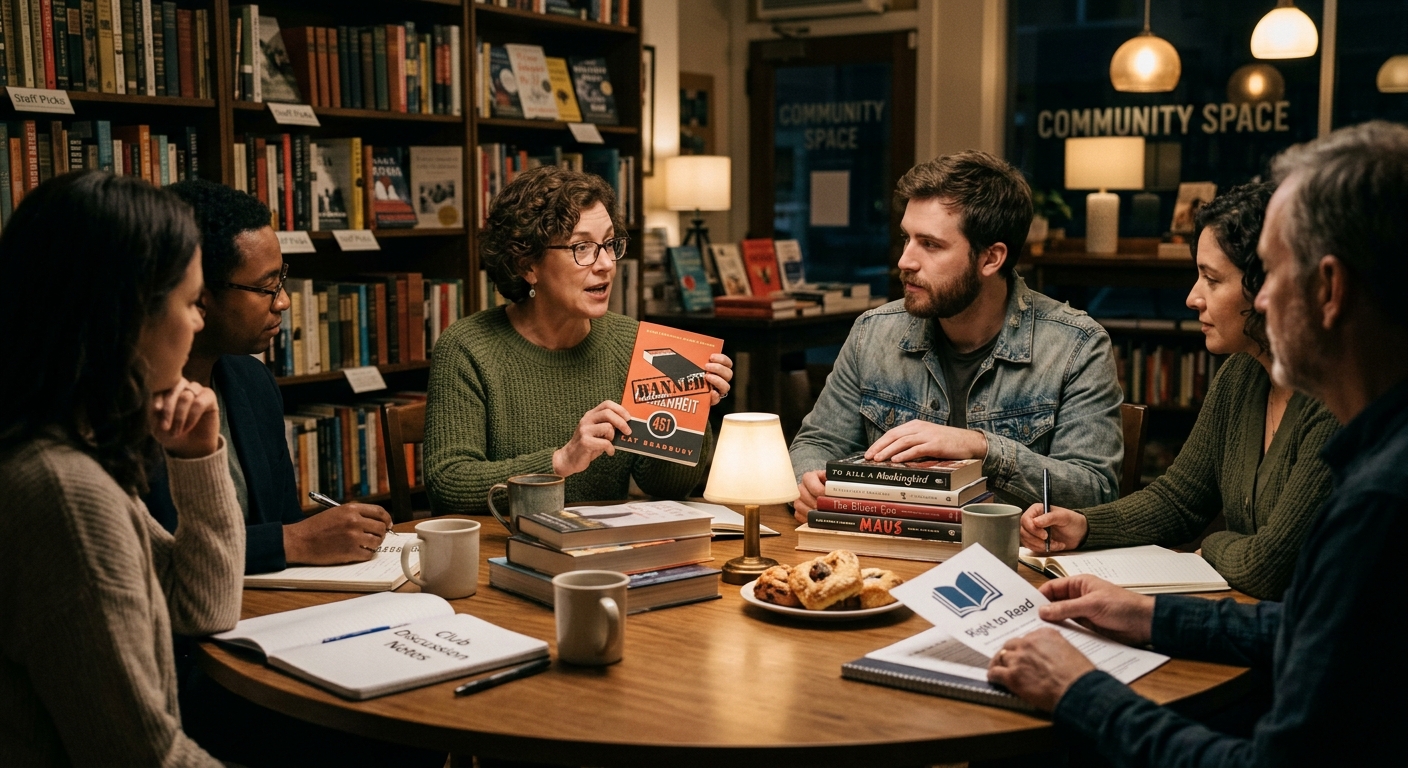
In democratic societies, access to information and a diversity of ideas serves as the bedrock of civic participation. Yet, across the United States, an unprecedented wave of censorship is sweeping through public schools and community libraries. The freedom to read, a fundamental pillar of intellectual liberty, is increasingly under siege as coordinated campaigns seek to remove literature that challenges the status quo or reflects marginalized identities. In response to this growing trend, ordinary citizens, students, and educators are reclaiming their intellectual agency by organizing banned book clubs. These reading groups serve not only as a sanctuary for challenged literature but also as a launchpad for community advocacy and First Amendment education.
Forming a collective reading group dedicated to censored literature is a powerful act of peaceful resistance. It transforms isolated acts of reading into a shared communal defense of free expression. This comprehensive guide will explore the current landscape of literary censorship, examine the constitutional protections surrounding the right to read, and provide an actionable, step-by-step blueprint for initiating and sustaining a banned book club in your community. By stepping up to protect the pages that others seek to burn or banish, communities are preserving the fundamental rights that underpin a free and open society.
The Escalating Crisis of Literary Censorship
To understand the urgency behind creating a banned book club, one must first grasp the sheer scale and organized nature of the modern censorship movement. The American Library Association (ALA) and PEN America, two of the nation’s premier organizations dedicated to free expression and literary advocacy, have documented a staggering escalation in attempts to restrict access to books over the past few years. According to the ALA’s Office for Intellectual Freedom, recent data reveals historic highs in censorship attempts. In 2025 alone, the organization tracked an alarming 4,235 unique titles targeted for removal or restriction in schools and public libraries. This represents a dramatic shift from historical norms, where challenges were typically isolated incidents driven by individual parents concerned about a specific book. Today, the ALA reports that 92 percent of book challenges are initiated by organized political pressure groups and government officials demanding mass removals of dozens or hundreds of titles at once.
Similarly, PEN America’s Index of School Book Bans recorded over 10,000 instances of book bans nationwide during the 2023-2024 academic year, marking a devastating 200 percent increase from the previous school year. This censorship is not random; it disproportionately targets specific narratives. Both the ALA and PEN America highlight that a vast majority of challenged books feature protagonists of color, explore LGBTQ+ identities, or delve into historical realities surrounding race and systemic inequality. By successfully removing these books, censors are effectively erasing the lived experiences of millions of Americans from library shelves, sending a chilling message to young readers about whose stories are deemed acceptable and whose are considered taboo.
The First Amendment and the Freedom to Read
The legal foundation for fighting book bans is deeply rooted in the United States Constitution, specifically the First Amendment. While the First Amendment explicitly protects the freedom of speech and the press, the U.S. Supreme Court has long recognized that these protections implicitly include the right to receive information and ideas. A banned book club operates on the foundational premise that intellectual freedom is a two-way street: the constitutionally protected right of the author to speak, and the equally vital right of the reader to listen, explore, and learn without government interference.
Historically, federal courts have stepped in to protect students’ rights to access information within educational environments. In the landmark 1982 case Board of Education v. Pico, the Supreme Court ruled that local school boards may not remove books from school library shelves simply because they dislike the ideas contained in those books. A plurality of the Court noted that school libraries are unique environments of voluntary inquiry, and the First Amendment rights of students are directly implicated when books are removed for narrow, partisan, or ideological reasons. Furthermore, the famous 1969 ruling in Tinker v. Des Moines Independent Community School District firmly established that public school students do not “shed their constitutional rights to freedom of speech or expression at the schoolhouse gate.”
Understanding these crucial legal precedents is empowering for anyone starting a banned book club. It provides members with the confidence and knowledge that their desire to read broadly and critically is not merely a rebellious personal preference, but a constitutionally protected civic right backed by decades of judicial history.
Why Organize a Reading Group for Challenged Literature?
While individuals can certainly seek out and read banned books on their own, there is immense, undeniable value in the collective experience of a book club. First and foremost, these collaborative groups break the deliberate isolation that censorship attempts to impose on controversial ideas. When a community comes together to read a challenged book, they validate the experiences, struggles, and identities depicted within its pages, fostering deep empathy, solidarity, and mutual understanding among members.
Moreover, banned book clubs actively encourage critical thinking and media literacy. Censors often extract single paragraphs, isolated images, or out-of-context quotes from a book to label the entire work as inappropriate, obscene, or dangerous. A dedicated reading group commits to evaluating the work in its entirety, analyzing its overarching literary merit, thematic depth, and educational value. This holistic, intellectual approach directly counters the bad-faith, reductive tactics often employed by political pressure groups seeking to banish literature.
Finally, these reading groups inherently act as incubators for civic engagement. A book club discussing the mechanisms and impacts of literary censorship naturally evolves into a group of highly informed citizens ready to defend their local public libraries and school boards from restrictive, anti-democratic policies.
A Step-by-Step Blueprint for Creating Your Reading Group
Launching a successful, sustainable banned book club requires thoughtful planning, clear communication, and an unwavering commitment to inclusivity. Here is a structured, phase-by-phase approach to getting your intellectual freedom initiative off the ground.
Phase 1: Establish Your Core Mission and Audience
Before selecting a book or setting a date, define the purpose and foundational goals of your group. Is this a student-led initiative aimed specifically at high schoolers navigating school district bans and seeking to understand restricted materials? Or is it a community-wide coalition encompassing parents, educators, local business owners, and residents eager to protect their public library? Defining your demographic is the most crucial first step, as it will fundamentally influence where you choose to meet, the types of books you select, the depth of the analysis, and the overall tone of your discussions. Once you have identified your audience, collaboratively draft a brief, clear mission statement. This guiding document should emphasize a commitment to intellectual freedom, mandate respectful and constructive dialogue, and highlight the celebration of diverse, marginalized narratives that are so frequently targeted by censors. Having a strong mission statement will also serve as a useful tool for recruiting members who align with your core values.
Phase 2: Secure a Safe and Accessible Venue
Finding the right space to hold your discussions is critical to the success of the club. If you are a student starting a club at school, you will likely need to find a supportive faculty sponsor to help secure a classroom, manage school district policies, and navigate any administrative red tape. If the school environment proves to be too hostile or restrictive due to ongoing censorship battles, look immediately for community alternatives. Independent bookstores, local coffee shops, community centers, and public library meeting rooms are excellent, welcoming options. For maximum accessibility—especially if your members are spread across different school districts or have mobility concerns—strongly consider establishing a hybrid or fully virtual meeting model using video conferencing platforms like Zoom or Google Meet.
Phase 3: Curating Your Reading List
Selecting the right books is arguably the most exciting part of the process, but it requires careful consideration to keep your members engaged and aligned with the club’s mission. It is highly recommended to consult the annual “Most Challenged Books” lists published by authoritative organizations like the American Library Association and PEN America. These lists provide a roadmap of the specific narratives currently under fire across the nation. To ensure variety and maintain a dynamic reading schedule, try to mix classic banned books—such as Ray Bradbury’s Fahrenheit 451, Harper Lee’s To Kill a Mockingbird, or George Orwell’s 1984—with contemporary, modern titles that are actively at the center of intense national debates. Reading older works provides essential historical context on how censorship has evolved, while discussing contemporary books anchors your club in the urgent, ongoing fight for free expression today.
Below is a table outlining frequently challenged thematic categories and examples of corresponding books that are currently targeted by modern censorship campaigns:
| Thematic Focus | Common Justification Used by Censors | Notable Examples to Read |
|---|---|---|
| LGBTQ+ Identities and Relationships | False claims of inappropriate sexual content or ideological “indoctrination” | Gender Queer by Maia Kobabe, All Boys Aren’t Blue by George M. Johnson |
| Racial History and Systemic Injustice | Accusations of promoting “critical race theory” or anti-authority sentiment | The Bluest Eye by Toni Morrison, The Hate U Give by Angie Thomas |
| Mental Health, Abuse, and Trauma | Deemed “too dark,” distressing, or unsuitable for adolescent readers | The Perks of Being a Wallflower by Stephen Chbosky, Nineteen Minutes by Jodi Picoult |
Phase 4: Fostering Constructive and Safe Dialogues
Challenged books often deal with heavy, complex, and deeply personal societal themes. Therefore, it is absolutely vital to establish strict ground rules for your discussions from the very first meeting. Encourage the use of “I” statements, practice active listening, and require all members to operate under the assumption of good faith. Remind participants that it is perfectly normal and acceptable to feel uncomfortable with certain topics, but that intellectual discomfort is a catalyst for personal growth, not a valid reason for censorship. If a selected book deals with intense trauma, violence, or abuse, be sure to provide clear content warnings well in advance so members can mentally prepare themselves or choose to opt out of specific sessions without fear of judgment.
From Discussion to Civic Action: Amplifying Your Impact
A banned book club achieves its highest potential when it transcends quiet, internal discussion and moves boldly into the realm of external community advocacy. Reading and analyzing the books is the essential first step; defending the right of others in your community to read them is the necessary next step. Transitioning from a reading group to an advocacy coalition can take many forms. Here are several effective ways your club can engage in community action:
- Attend Local Board Meetings: Local school boards and municipal library boards are often ground zero for contemporary censorship battles. Organize your members to attend these public meetings en masse. Prepare well-researched, calm, and articulate public comments defending specific targeted titles and advocating for the broader constitutional principle of intellectual freedom.
- Write Letters and Op-Eds: Amplify your collective voice by writing letters to the editor for local newspapers, sending emails to city council members, and contacting state representatives. Personal, heartfelt stories detailing how a challenged book positively impacted a reader’s worldview or provided comfort are incredibly persuasive tools against abstract censorship arguments.
- Host Community Events: Increase your visibility by partnering with local independent bookstores or community centers to host public “Read-Outs” during Banned Books Week (typically held in late September). Reading passages of banned books aloud in a public square or park is a highly visible, engaging, and historically effective form of peaceful protest.
- Support Library Funding and Staff: Organized censorship campaigns frequently escalate to threatening the funding of libraries that refuse to comply with book removal demands. Mobilize your club to vote in favor of local library levies, circulate petitions, and publicly express support and gratitude for the library staff and educators who often face severe harassment simply for doing their jobs.
Navigating Potential Pushback and Legal Considerations
Taking a public stance on intellectual freedom inevitably attracts opposition. It is critically important to be prepared for pushback from community members or pressure groups who support restrictive book policies. Maintain a stance of principled calmness and professionalism. Do not allow your group to be dragged into shouting matches; instead, rely firmly on empirical facts, the text of the First Amendment, and your club’s stated core mission.
If you are a public school student operating a club on campus, thoroughly familiarize yourself with your district’s specific policies regarding student organizations. Under the federal Equal Access Act, if a public secondary school allows non-curricular clubs to meet, it generally cannot discriminate against a club based on the philosophical, political, or religious content of its speech. If your school administration attempts to unlawfully block or disband your banned book club, numerous national organizations dedicated to civil liberties and free speech can often provide vital legal guidance and advocacy support.
The Enduring Power of Literature
Books are the mirrors in which we see our own humanity reflected, and the windows through which we come to understand the vast diversity of the world around us. The relentless push to ban books is, at its core, a tragic attempt to narrow the scope of human empathy and stifle intellectual exploration. By taking the initiative to start a banned book club, you are doing much more than simply reading a controversial novel; you are actively and bravely participating in the democratic process. You are tangibly demonstrating that ideas cannot be easily contained, that marginalized voices will absolutely not be silenced, and that the fundamental freedom to read remains an unbreakable, enduring pillar of a truly free society.
Frequently Asked Questions (FAQs)
1. Are banned book clubs legal for public school students to form?
Yes. Under the federal Equal Access Act, if a public high school allows other non-curricular clubs (such as a chess club, environmental club, or gaming group) to use school facilities, it generally cannot deny a banned book club the right to meet based solely on the content of their discussions. Public school students retain their First Amendment rights to peaceably assemble and debate ideas.
2. How can we access banned books if they have already been removed from our local school or public library?
If your local library or school has already removed the titles, consider utilizing interlibrary loan programs, which often bypass local district restrictions by sourcing books from outside municipalities. Additionally, many local independent bookstores offer deep discounts for registered book clubs. Digital libraries, such as the Brooklyn Public Library’s acclaimed “Books Unbanned” initiative, provide free e-card access to teens and young adults nationwide specifically to help them circumvent local censorship barriers.
3. What should our club do if we face protests or organized online harassment?
The physical and emotional safety of your members is paramount. If you face online harassment, coordinate to block and report the abusive accounts rather than engaging in digital arguments. If physical protests occur at your designated meeting location, ensure you have a clear, pre-established safety protocol. Partner closely with your venue’s management to securely handle entry, and never hesitate to contact local authorities if members feel physically threatened or unsafe. Focus your energy on maintaining your positive mission rather than fighting directly with detractors.
4. Can parents or adults participate in a student-led banned book club?
This entirely depends on the logistical structure and location of your club. If the club is an official student organization meeting on public school grounds during operational hours, adult participation may be strictly limited by district policy to approved faculty sponsors. However, if the club meets off-campus in a community space, intergenerational dialogue between students, parents, and community members can be incredibly enriching and powerful, provided the space remains intentionally centered on amplifying student voices.
5. Where can I find reliable, up-to-date data on current book bans and national challenges?
The most authoritative, comprehensive sources for tracking data on literary censorship in the United States are the American Library Association’s Office for Intellectual Freedom (OIF) and PEN America. Both of these respected organizations publish detailed annual reports that break down the sheer number of challenges, the specific titles targeted, the geographic hotspots for censorship, and the demographics of the authors who are most frequently affected.
References
- American Library Association releases 2025 Most Challenged Books List as National Library Week Begins — American Library Association. 2026-04-20. https://www.ala.org/news/press-releases/2026/04/american-library-association-releases-2025-most-challenged-books-list
- Nearly 200 Percent Surge in School Book Bans During 2023-2024 School Year — PEN America. 2024-11-01. https://pen.org/press-release/nearly-200-percent-surge-in-school-book-bans-during-2023-2024-school-year/
- Tinker v. Des Moines Independent Community School District, 393 U.S. 503 (1969) — United States Courts. 1969-02-24. https://www.uscourts.gov/educational-resources/educational-activities/facts-and-case-summary-tinker-v-des-moines
- Board of Education, Island Trees Union Free School District No. 26 v. Pico, 457 U.S. 853 (1982) — United States Supreme Court (via Library of Congress). 1982-06-25. https://supreme.justia.com/cases/federal/us/457/853/
Similar Articles








Read full bio of Sneha Tete


