
How to File a Complaint with the Federal Trade Commission
Learn when and how to file an effective complaint with the FTC, what to include, and what happens after you report a problem.
Understanding FTC Complaints: A Practical Consumer Guide
The Federal Trade Commission (FTC) is the main U.S. government agency that collects reports about fraud, scams, and unfair or deceptive business practices and shares those reports with thousands of law enforcement partners. Your complaint can help stop bad actors, alert regulators to new schemes, and improve protections for other consumers.
This guide explains when and how to file a complaint with the FTC, how to prepare the strongest possible report, and what to expect after you submit it.
When It Makes Sense to File a Complaint with the FTC
You should consider filing a complaint with the FTC when you experience problems that involve fraud, deception, or unfair practices affecting more than just a private dispute. Common examples include:
- Scams and fraud, such as fake sweepstakes, romance scams, or tech support scams.
- Imposter schemes, where someone pretends to be from the government, a familiar business, or a trusted person to get money or personal information.
- Deceptive advertising, including false claims about products, free trials that become subscriptions, or hidden fees.
- Unfair business practices, such as misleading refund policies or unauthorized charges.
- Privacy and data misuse, including misuse of personal data or broken promises in privacy policies.
The FTC does not resolve individual disputes the way a private attorney or small claims court might. Instead, it uses complaint information to investigate companies and individuals, bring enforcement cases, and share data with more than 2,000 law enforcement agencies in the U.S. and abroad.
Different Types of Problems and Where to Report Them
Not every problem belongs in the same place. Choosing the right reporting channel helps your information reach the right experts more quickly.
| Type of Issue | Best First Step | Where the FTC Fits In |
|---|---|---|
| Fraud, scams, imposter schemes, bad business practices | Report online through the FTC’s fraud reporting tools or by phone. | Complaint is added to secure law enforcement database and may support investigations. |
| Identity theft (someone opened accounts or used your info) | Use the FTC’s dedicated identity theft portal to create a recovery plan. | FTC helps generate letters and reports you can send to businesses and credit bureaus. |
| Telecom issues (phone, internet, TV billing or service) | File with the Federal Communications Commission (FCC). | FTC focuses on unfair or deceptive practices; FCC handles service and billing disputes. |
| Financial products (credit cards, loans, bank accounts) | Submit a complaint to the Consumer Financial Protection Bureau (CFPB). | FTC still uses fraud reports for enforcement; CFPB handles many specific financial complaints. |
Ways to File a Complaint with the FTC
The FTC offers several ways to file a complaint so that you can choose the one that is most convenient and accessible for you.
1. Filing Online from a Computer
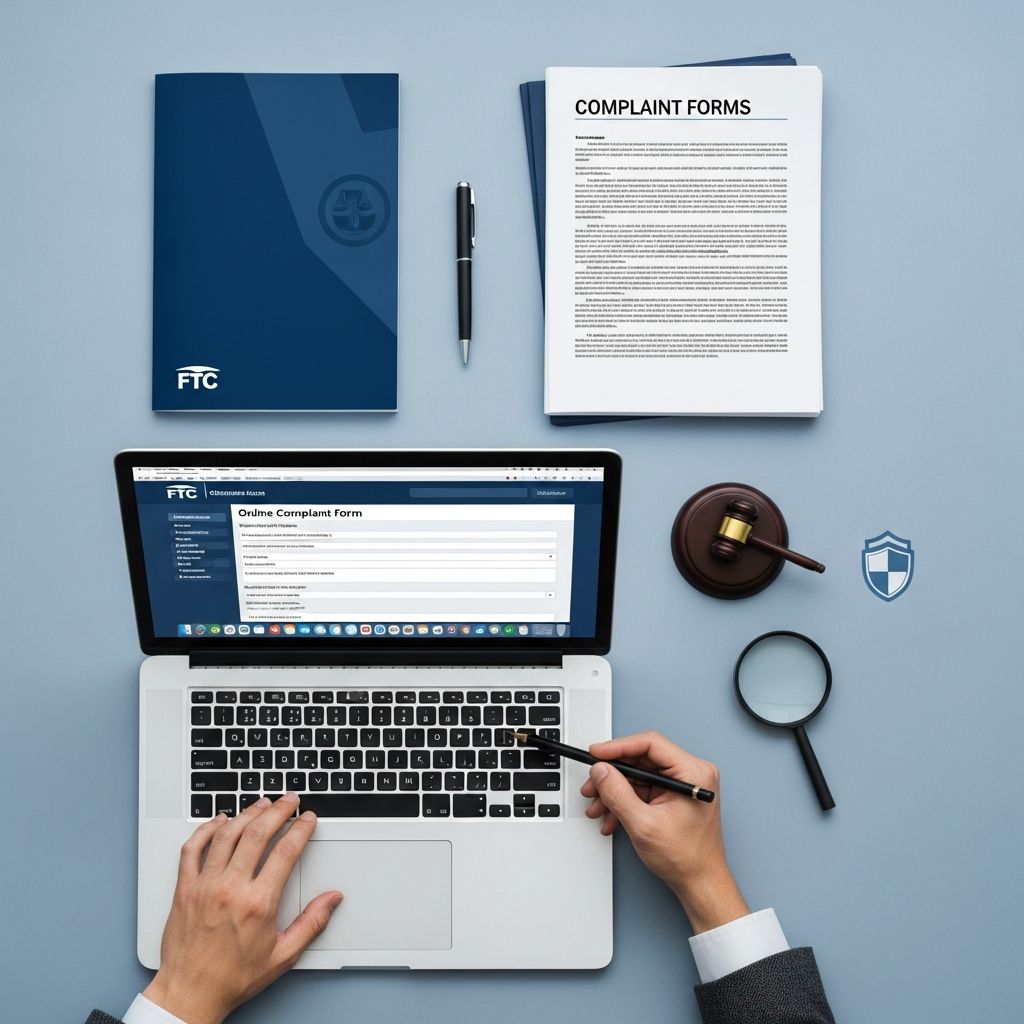
You can submit a complaint using the FTC’s web-based systems. The online forms guide you through a structured set of questions about what happened, who was involved, and how you were affected.
- The system walks you through step-by-step questions so you do not need to know legal terms.
- You can usually complete the process in a short session if you have your information ready.
- For identity theft, the FTC uses a specialized tool that builds a personalized recovery plan and generates letters you can send to companies and credit bureaus.
2. Using a Mobile Device
The FTC’s complaint tools are designed to work on smartphones and tablets with a simplified layout to make it easier to navigate on smaller screens.
- The mobile format rearranges questions for touch-friendly navigation.
- You do not need to install a separate app; the simplified version appears automatically when you visit from a mobile browser.
- For identity theft, the FTC still recommends using a desktop or laptop because of the volume and sensitivity of personal data you will need to enter.
3. Filing by Phone
If you prefer to speak with someone or cannot access the online tools, you can call the FTC’s consumer help line.
- You can talk with a representative who can help record the details of your experience.
- Phone assistance is available in English, Spanish, and often through interpretation services for other languages.
- The information collected by phone goes into the same secure complaint database used for online reports.
Information to Gather Before You File
Preparing before you file your complaint can make your report clearer and more useful to investigators. Try to gather:
- Basic details: dates, times, and how you first came into contact with the person or company.
- Names and contact information for the business or individual (web address, physical address, phone number, email, or social media handle).
- Money information: how much you paid or lost, the payment method (wire transfer, gift card, credit card, cryptocurrency, etc.), and where the payment was sent.
- Communications: copies or screenshots of emails, text messages, social media messages, invoices, ads, or contracts.
- Technical details if relevant, such as caller ID numbers, website URLs, or app names.
For identity theft cases, the FTC recommends also collecting your credit reports and any notices you received from banks, lenders, or debt collectors, because you may need those documents to dispute fraudulent accounts and correct your records.
Step-by-Step: Filing an Effective FTC Complaint
The specifics of the online form change depending on the type of problem you select, but most complaints follow a similar flow.
Step 1: Choose the Type of Problem
You will first be asked what kind of issue you are reporting. Typical choices include things like:
- Imposter scam (pretending to be government or a company)
- Online shopping or delivery problem
- Job, investment, or money-making scheme
- Prize, lottery, or sweepstakes scam
- Debt collection or credit repair concern
- Identity theft or misuse of personal information
Choosing the closest match helps route your complaint to the right category and makes the data more useful to law enforcement.
Step 2: Describe What Happened
You will then enter a narrative about the problem in your own words. To keep this clear and powerful:
- Start with a one-sentence summary of the issue (for example, “I paid for a product that never arrived.”).
- Explain how you found the business or person (ad, email, social media, phone call, or website).
- List key dates and amounts, focusing on the most important facts.
- Mention any promises the company or person made that turned out to be false or misleading.
- Note how the problem affected you (loss of money, damage to credit, exposure of personal information, etc.).
Step 3: Identify the Company or Individual
Next, you will be asked to provide as much identifying information as you can about the business or individual involved:
- Official business name (or the name used in ads or communications).
- Mailing address, website, or physical location if known.
- Phone numbers, email addresses, and usernames or IDs on platforms.
- Names of any specific employees or representatives who contacted you.
Even small details can help investigators connect your complaint to others about the same operation.
Step 4: Add Your Contact Information
The FTC will ask for your name and contact information. This is used to record your report and may be necessary if law enforcement needs to follow up. For fraud complaints, your personal details are not published or shared publicly; they go into a secure database used only by authorized agencies.
If you are filing a complaint on behalf of someone else, such as an older adult relative or a person with a disability, you will usually be asked to state your relationship and confirm that you have permission to submit the report for them.
What Happens After You Submit Your Complaint
Many people are unsure what to expect after clicking “submit.” Understanding the process can help set realistic expectations.
- Complaints are entered into Consumer Sentinel, a secure database that more than 2,000 civil and criminal law enforcement agencies use to spot trends, identify targets, and build cases.
- Your report may be combined with others to show patterns—such as many people reporting the same phone number or website.
- Agencies use the data to decide where to focus investigations and whether to bring enforcement actions.
- You typically will not receive individual case updates, because agencies do not investigate every complaint one by one, but your information is still important for the larger picture.
The FTC also uses complaint information to create consumer education materials and alerts about emerging scams, which can help prevent others from being harmed.
Special Situation: Reporting Identity Theft
If someone has misused your personal information—for example, by opening new accounts in your name, making charges on existing accounts, or using your Social Security number—you should use the FTC’s dedicated identity theft resource.
- You answer questions about what happened, and the tool creates a personalized recovery plan with specific steps.
- It generates letters and forms you can send to businesses, credit bureaus, and debt collectors to dispute fraudulent accounts.
- You can create an account to track your progress and update your plan as you complete tasks.
This identity theft report can also act as an official document you may need when working with police, creditors, and other organizations to repair the damage.
How Your Complaint Helps Protect Others
Even if you cannot get your money back through the FTC, your complaint still serves several critical purposes:
- Spotting new scams: Early complaints show regulators new tactics and fraud types as they emerge.
- Supporting lawsuits: Patterns of similar complaints can help agencies bring cases that stop illegal conduct and sometimes return money to consumers.
- Informing policy: Complaint data can influence rules, guidance, and industry standards aimed at preventing future harm.
- Educating the public: The FTC uses complaint trends to publish alerts and tips warning consumers about what to watch out for.
Tips for Staying Safe After You File
Filing a complaint is one step in protecting yourself. Consider these additional actions, especially if your situation involves money loss or exposed personal information:
- Monitor your bank and card accounts regularly for unauthorized charges.
- Check your credit reports for unfamiliar accounts or inquiries if you suspect identity theft.
- Use multi-factor authentication on email and financial accounts to reduce the risk of further compromise.
- Be cautious about follow-up calls or emails from people claiming to be government agents who can “fix” your loss for a fee—these are often additional scams.
Frequently Asked Questions (FAQs)
Q: Will the FTC get my money back?
Sometimes FTC cases result in refunds for groups of consumers, but the agency cannot act as your personal lawyer or guarantee that you will receive money. Your complaint is primarily used for law enforcement and prevention efforts.
Q: Is my personal information kept confidential?
The FTC stores complaints in a secure, non-public database that is accessible only to authorized law enforcement partners. Personal identifiers from your complaint are not posted publicly.
Q: Do I still need to contact the company directly?
Yes, for many disputes you may still want to contact the company to request a refund, correct a billing error, or close an account. The FTC focuses on patterns of wrongdoing rather than individual dispute resolution.
Q: Can I file a complaint if I am outside the United States?
The FTC accepts complaints from people in other countries, and your report can still help U.S. and international law enforcement. Many cross-border scams target people worldwide.
Q: Where should I report problems with my phone, internet, or TV provider?
For billing, service, and accessibility issues involving communications services, you can submit a complaint to the Federal Communications Commission (FCC), which operates a separate consumer complaint center for these issues.
References
- File a Consumer Complaint with the FTC from Your Mobile Device — Federal Trade Commission. 2014-05-08. https://www.ftc.gov/news-events/news/press-releases/2014/05/file-consumer-complaint-ftc-your-mobile-device
- File A Complaint (Video Transcript) — Federal Trade Commission. n.d. https://www.ftc.gov/media/71268
- File a Complaint with FTC OIG — Federal Trade Commission Office of Inspector General. n.d. https://www.ftc.gov/oig/hotline
- FCC Complaints — Federal Communications Commission. n.d. https://consumercomplaints.fcc.gov/hc/en-us
- IdentityTheft.gov — Federal Trade Commission. n.d. https://www.identitytheft.gov
- Submit a Complaint — Consumer Financial Protection Bureau. n.d. https://www.consumerfinance.gov/complaint/
Similar Articles








Read full bio of Sneha Tete


