
How to Become a Judge in California: A Comprehensive Guide
Understanding the essential qualifications, pathways, and selection process to become a judge in California.
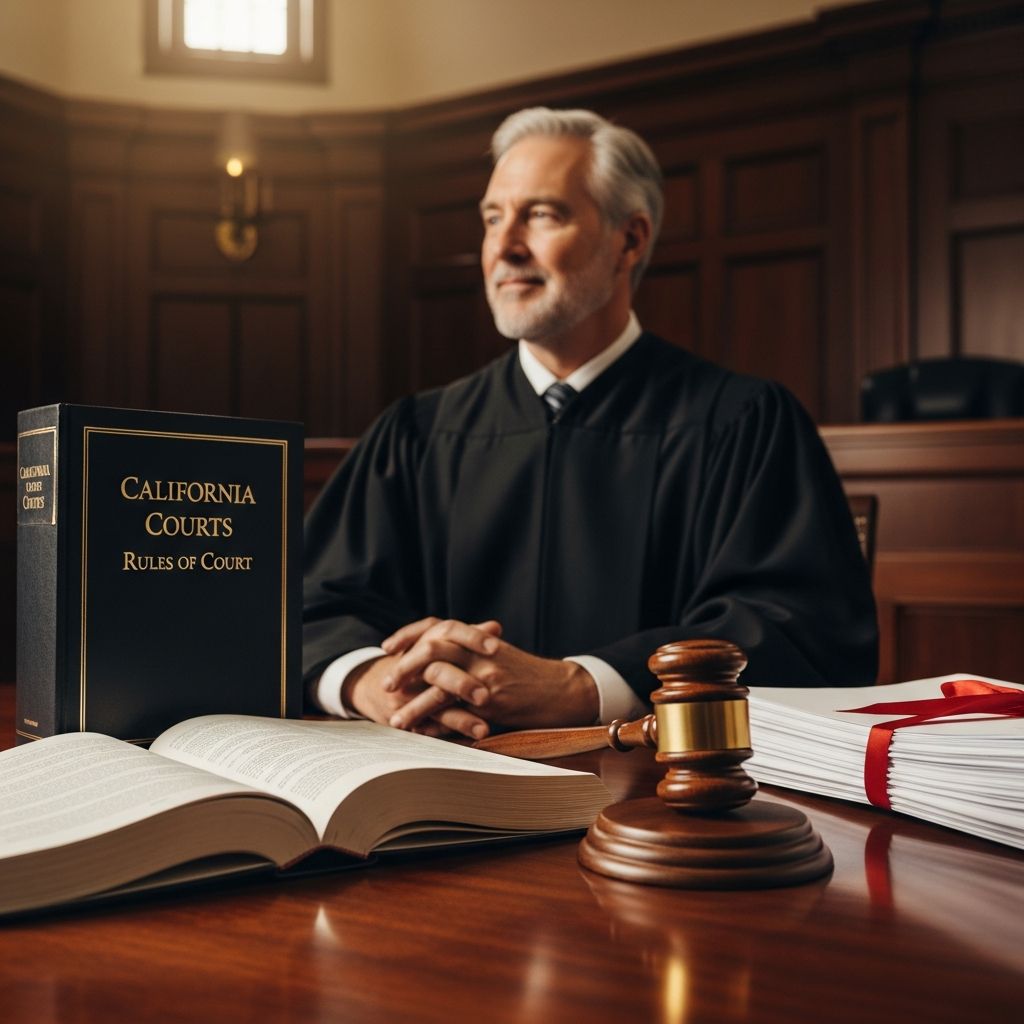
Introduction to Becoming a Judge in California
Becoming a judge in California represents a distinguished career milestone for many lawyers. Judges play a crucial role in interpreting laws, safeguarding justice, and maintaining the integrity of the legal system. This guide explains the qualifications necessary, the typical career pathways, the appointment and election processes, and the ethical standards that California judges must uphold. Whether you are a practicing attorney or a law student contemplating a future on the bench, understanding this complex journey is vital.
Minimum Qualifications: What It Takes Legally
Under California law, to be eligible for a judgeship in any court of record, a candidate must have been a member in good standing of the State Bar of California for at least 10 years immediately before appointment or election. This eligibility is detailed in the California Constitution, ensuring candidates have substantial legal experience and familiarity with the state’s legal system.
Additionally, candidates must:
- Maintain active membership and good standing in the California State Bar.
- Demonstrate sound ethical conduct without any significant disciplinary record.
- Be prepared to adhere to the California Code of Judicial Ethics, which governs judicial behavior, impartiality, conflicts of interest, and public confidence.
Educational and Professional Background
While law degrees are a baseline requirement, many judges enhance their qualifications through extra training or certifications in specialty law areas. The core educational and professional trajectory generally includes:
- Obtaining a Juris Doctor (J.D.) from an American Bar Association (ABA) accredited law school.
- Passing the California Bar Examination and gaining admission to practice.
- Accumulating at least a decade of legal practice, often involving courtroom experience, trial advocacy, and knowledge of procedural and substantive law.
- Building a professional reputation characterized by competence, integrity, and respect within the legal community.
Continuing education and participation in legal organizations can enhance a candidate’s preparedness and visibility.
Career Pathways to the Bench
There are several routes for becoming a judge in California, and the path varies depending on the court level. Three primary methods include:
- Appointment by the Governor: The most common and prestigious pathway, especially for appellate and supreme court judges. The Governor selects candidates usually based on recommendations and evaluations from judicial screening bodies.
- Nonpartisan Elections: Some Superior Court judges are elected directly by voters in countywide elections. These elections follow an initial appointment or filling of a vacancy.
- Temporary Judicial Assignments: Experienced attorneys with at least five to ten years of practice may be appointed as temporary judges to assist courts on a short-term basis, providing valuable judicial experience.
The Judicial Appointment Process Explained
The appointment process is comprehensive, designed to ensure only the most qualified individuals become judges:
1. Application Submission
Aspiring judges apply by submitting detailed information about their education, legal experience, professional achievements, community involvement, and philosophy on judicial ethics and impartiality. The application also requires references, often at least five, from respected legal professionals who can attest to the candidate’s suitability.
2. Evaluation by the Judicial Nominees Evaluation (JNE) Commission
The JNE Commission is an independent body comprising attorneys and non-attorney members. Its role is critical in vetting candidates through:
- Conducting background checks to confirm qualifications and ethical standing.
- Interviewing references and, sometimes, the candidates themselves.
- Reviewing professional reputation and history of legal practice.
Based on these thorough assessments, the commission categorizes candidates into one of four recommendations:
| Rating Category | Description |
|---|---|
| Exceptionally Well Qualified | Outstanding qualifications and experience above the norm. |
| Well Qualified | More than adequate competence and integrity for judicial office. |
| Qualified | Meets the minimum standards for judicial appointment. |
| Not Qualified | Fails to meet necessary criteria; disqualified from recommendation. |
3. Governor’s Decision
The Governor reviews the JNE Commission’s recommendations and appoints judges accordingly. The Governor’s choice can reflect broader policy considerations but is fundamentally grounded in merit and integrity.
4. Confirmation and Swearing-In
For certain judicial levels, a confirmation by the California State Legislature or a similar body may be required. Once confirmed, judges take the oath of office and begin their judicial duties, typically serving terms ranging from several years before facing re-election or reappointment.
Judicial Elections and Retention
In California, some Superior Court judges are elected by voters on a nonpartisan basis. These elections usually occur following an initial gubernatorial appointment to fill a vacancy. Judges then stand for retention after a set term, allowing the public a voice while minimizing politicization of judicial roles.
Ethics and Responsibilities of California Judges
Judges must strictly adhere to the California Code of Judicial Ethics, which emphasizes:
- Impartiality: Judges must avoid bias or prejudice in all cases.
- Avoiding Conflicts of Interest: Judges may recuse themselves from cases where personal interests could impair fairness.
- Maintaining Integrity and Decorum: Judicial conduct must uphold the dignity of the judiciary and public trust.
Violations can result in disciplinary actions, including removal from the bench.
Additional Opportunities: Temporary and Pro Tem Judges
California offers opportunities for attorneys meeting specific experience and training criteria to serve as temporary or substitute judges. Such appointments generally require:
- Membership in the State Bar for at least 10 years (exceptions for 5 years may apply in limited cases).
- Completion of mandatory training on judicial bench conduct and courtroom demeanor.
- Approval by the presiding judge of the court assigning the temporary role.
Serving as a temporary judge can provide valuable practical experience for lawyers considering a permanent judgeship.
Frequently Asked Questions
Q1: How many years of legal experience are required to become a judge in California?
A: You must have been a member of the California State Bar for at least 10 years immediately prior to appointment or election to qualify for a judgeship in any court of record.
Q2: Can someone become a judge without a law degree?
A: For California courts of record, a law degree and admission to the California Bar are mandatory. However, some limited judicial roles or courts in other jurisdictions might have different requirements.
Q3: Are judges in California elected or appointed?
A: Most judges, especially at the Appellate and Supreme Court levels, are appointed by the Governor following a rigorous evaluation process. Some Superior Court judges are elected in nonpartisan elections after initial appointment.
Q4: What role does the Judicial Nominees Evaluation Commission play?
A: The JNE Commission evaluates judicial candidates’ qualifications, reputation, and ethics, making recommendations to the Governor which heavily influence appointment decisions.
Q5: What ethical standards must California judges follow?
A: Judges must follow the California Code of Judicial Ethics, ensuring impartiality, avoiding conflicts of interest, maintaining integrity, and conducting themselves in a manner that preserves public confidence in the judicial system.
Summary
Aspiring to become a judge in California requires dedication to legal excellence, ethical conduct, and public service. The journey typically involves earning a law degree, gaining extensive legal experience, maintaining a strong professional reputation, and successfully navigating the appointment or election process. Through evaluation by independent commissions and adherence to strict ethical standards, California ensures its judiciary is composed of highly qualified individuals dedicated to fairness and justice.
References
- So You Want to Be a Judge? | Superior Court of California — Superior Court of California. 2023. https://sanbernardino.courts.ca.gov/so-you-want-be-judge
- Judicial Selection: How California Chooses Its Judges and Justices — California Courts. 2023. https://newsroom.courts.ca.gov/branch-facts/judicial-selection-how-california-chooses-its-judges-and-justices
- Rule 2.812. Requirements for court appointment of an attorney to serve as temporary judge — California Courts Rules. 2023. https://courts.ca.gov/cms/rules/index/two/rule2_812
- How does a California lawyer become a judge? — One Legal. 2024. https://www.onelegal.com/blog/how-does-a-california-lawyer-become-a-judge/
- Qualifications of Judges of State Appellate Courts and General Trial Courts — Book of the States. 2022. https://bookofthestates.org/tables/2022-5-3/
Similar Articles








Read full bio of Sneha Tete


