
How Potential Jurors Are Chosen in Criminal Cases
Understand where jurors come from, how they are questioned, and why the selection process matters for a fair criminal trial.
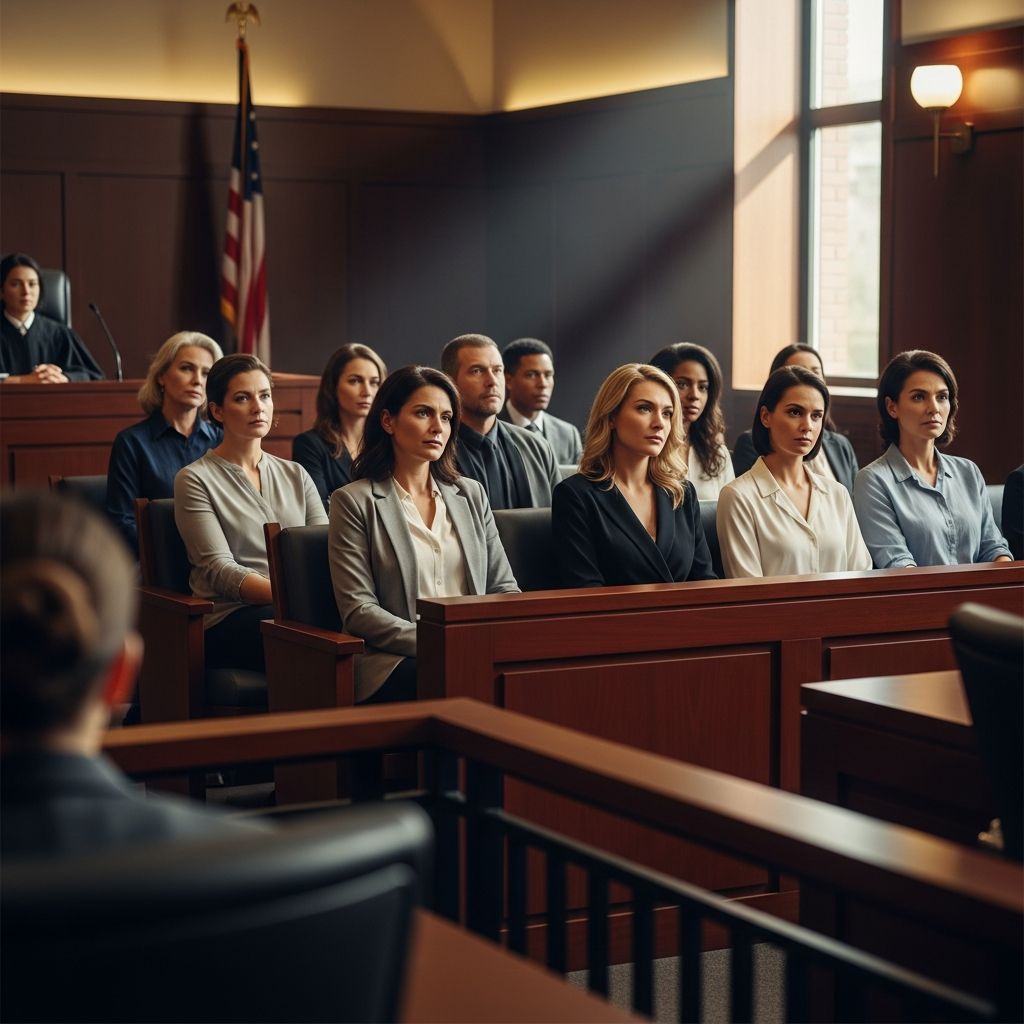
In criminal cases across the United States, juries play a central role in deciding guilt or innocence. To protect the right to a fair trial, courts follow a structured process to identify, summon, question, and ultimately select potential jurors for service.
This article explains, in plain language, how people are chosen for jury duty, how they are screened in court, and what legal rules are designed to keep juries fair and impartial.
1. Constitutional Foundations of Jury Selection
The jury system is rooted in both the U.S. Constitution and state law. These sources shape how potential jurors are chosen and what protections apply.
- Sixth Amendment: In criminal prosecutions, the accused has the right to an impartial jury of the state and district where the crime was committed.
- Fourteenth Amendment: Due process and equal protection principles prohibit systematic exclusion of groups from jury service based on race, gender, or similar characteristics.
- State constitutions and statutes: Each state specifies how juror lists are compiled, who is disqualified, and how many jurors are required for particular cases.
Because of these constitutional protections, courts must make a good faith effort to draw jurors from a fair cross-section of the community and guard against discrimination in both the initial pool and the final jury panel.
2. Where Potential Jurors Come From
The first stage in jury selection happens long before any particular trial is scheduled. Courts assemble large lists of people who could be called for jury duty.
2.1 Building the Master Jury List
Courts typically create a master list (sometimes called the source list or jury wheel) from public records that cover broad segments of the adult population.
- Voter registration records
- Driver’s license and state ID lists
- State income tax rolls or other governmental databases
Using multiple sources helps courts avoid excluding people who are eligible but not registered to vote, which supports the goal of a representative jury pool.
2.2 Random Selection into the Jury Pool (Venire)
From the master list, names are chosen at random to form a jury pool (also called the venire). These individuals may be asked to serve during a specific term (for example, a week or a month).
Key features of this step include:
- Randomization to reduce bias and favoritism.
- Geographic limits so that jurors come from the court’s jurisdiction.
- Rotation so the same people are not called repeatedly while others are never summoned.
3. Jury Summons and Basic Qualification Screening
Once names are drawn for the jury pool, courts contact potential jurors and ensure they meet basic eligibility standards.
3.1 The Jury Summons
Courts usually mail a written jury summons to selected individuals, instructing them to appear at the courthouse or to call in on a specific date.
The summons commonly includes:
- The date, time, and place to report (or a phone/online check-in system).
- A questionnaire about the person’s background and eligibility.
- Information on requesting a deferral or hardship excuse.
Ignoring a valid summons can lead to penalties, although many courts first attempt to reschedule or contact the person before imposing sanctions.
3.2 General Juror Qualifications
Federal and state laws list minimum criteria a person must meet to serve as a juror. While details vary by jurisdiction, common requirements include:
- Being at least a specified minimum age (often 18).
- Being a U.S. citizen for federal court; state courts apply their own rules.
- Residing within the court’s geographic area.
- Having sufficient English proficiency to understand the proceedings.
- Not currently facing certain types of criminal charges.
- Not having disqualifying felony convictions, or, in some states, having those rights restored.
People may also be excused or deferred temporarily due to circumstances like severe illness, caregiving responsibilities, or essential public safety roles.
4. From the Jury Pool to the Courtroom Panel
On the day of service, members of the jury pool report to the courthouse. Only some of them will be sent to individual courtrooms for specific cases.
4.1 Orientation and Waiting Period
Court staff typically provide a brief orientation explaining:
- The importance of jury service in the justice system.
- Basic rules, such as not discussing ongoing cases or conducting independent research.
- How jurors will be called to courtrooms and what to expect there.
Until assigned to a courtroom, potential jurors may wait in a central room or designated area within the courthouse.
4.2 Creating a Panel for a Specific Criminal Case
When a criminal trial is ready to begin, the clerk or judge requests a panel of prospective jurors from the larger pool. A group is chosen, usually by random selection systems, and escorted into the courtroom.
This smaller group is sometimes called the panel or array. From this panel, the trial’s actual jury will be chosen through a process known as voir dire.
| Stage | Group Name | Primary Purpose |
|---|---|---|
| Initial selection from records | Master list / jury wheel | Identify a broad set of eligible adults |
| Summons to serve | Jury pool / venire | Call citizens for a term of jury duty |
| Assignment to a specific case | Courtroom panel | Screen and select the final trial jury |
5. Voir Dire: Questioning Potential Jurors
The heart of jury selection is the questioning of prospective jurors in the courtroom. This step is called voir dire, a term often translated as “to speak the truth.”
5.1 Purpose of Voir Dire
The judge and the attorneys question potential jurors to determine whether they can decide the case fairly and follow the law. The goals include:
- Uncovering obvious conflicts of interest (for example, knowing the defendant or a key witness).
- Identifying strong biases or preconceived opinions that might affect judgment.
- Assessing whether a juror can follow instructions, such as presuming the defendant innocent.
5.2 Typical Topics Covered
While questions vary by case, voir dire often explores:
- Employment, education, and family background.
- Prior experience with law enforcement, courts, or crime (as a victim, witness, or defendant).
- Exposure to news or social media coverage about the case or similar cases.
- Attitudes about issues central to the case (for example, credibility of police, self-defense, or forensic evidence).
- Ability to follow legal principles, such as the burden of proof or the presumption of innocence.
Questions may be asked directly by the judge, by the attorneys, or by a combination of both, depending on local practice.
5.3 Group vs. Individual Questioning
Courts use different formats for voir dire:
- Group questioning: Many jurors are questioned together in the courtroom, which allows broad topics to be covered efficiently.
- Individual questioning: Sensitive issues (such as prior victimization or pretrial publicity) may be addressed one-on-one at the bench or in chambers.
This combination is designed to balance efficiency with respect for jurors’ privacy and the need for candid answers.
6. Removing Jurors: Challenges for Cause and Peremptory Strikes
After questioning, the judge and attorneys use formal tools called challenges to remove some prospective jurors from the panel.
6.1 Challenges for Cause
A challenge for cause asks the judge to excuse a juror because there is a specific reason they cannot be fair or legally qualified to serve.
Examples include:
- A clear bias or prejudice that the juror admits they cannot set aside.
- A close relationship to a party, attorney, or key witness.
- An inability to understand the language used in court.
- A disqualifying legal condition, such as an ineligible criminal status.
There is generally no limit on the number of challenges for cause, as long as each one is supported by a valid basis recognized by law.
6.2 Peremptory Challenges
Peremptory challenges allow each side to remove a limited number of prospective jurors without giving a detailed reason in open court.
Key features of peremptory challenges:
- Each side is given a set number by statute or court rule, which varies by jurisdiction and seriousness of the charges.
- Lawyers may consider juror demeanor, body language, or answers that raise subtle concerns.
- Peremptory strikes cannot be used for discriminatory reasons, such as removing jurors solely because of race, gender, or ethnicity.
If one side believes the other is using peremptory strikes in a discriminatory way, they may raise a constitutional challenge (often called a Batson-type objection, after a leading Supreme Court case).
7. Forming, Swearing In, and Instructing the Jury
After all challenges are resolved, the remaining jurors are seated as the official jury for the trial.
7.1 Number of Jurors and Alternates
The required number of jurors depends on the jurisdiction and type of case:
- In federal criminal trials, juries typically consist of 12 jurors, with alternates selected in case a juror becomes unable to continue.
- Some state criminal cases may use smaller juries (for example, six jurors) for less serious offenses, while still providing constitutional protections.
Alternates hear the evidence and follow all instructions but do not deliberate or vote unless they formally replace a regular juror.
7.2 The Oath
Once the final list of jurors is set, the judge administers an oath, usually requiring jurors to:
- Listen carefully to all evidence and instructions.
- Decide the case impartially, based solely on what is presented in court.
- Follow the law as the judge explains it, even if they disagree with it personally.
The taking of the oath marks the formal end of jury selection and the beginning of the trial phase.
7.3 Initial Instructions to the Jury
Before opening statements, judges often give preliminary instructions, including:
- Not to discuss the case with anyone, including family or fellow jurors, until deliberations begin.
- Not to consume news or online information about the case or the parties involved.
- Not to conduct independent research, including internet searches, site visits, or experiments.
These rules are designed to ensure that jurors decide the case based only on admissible evidence and proper legal standards.
8. Why Jury Selection Matters
Jury selection is not a mere formality. It directly affects the fairness and legitimacy of criminal trials.
- Impartial decision-makers: The process aims to identify people who can evaluate evidence without prejudice or improper influence.
- Community participation: Random selection from broad lists ensures that verdicts reflect the judgment of ordinary citizens, not just professionals.
- Public confidence: Transparent procedures and anti-discrimination rules help maintain trust that verdicts are reached fairly.
- Grounds for appeal: Serious errors in jury selection—such as improper exclusion of jurors or discrimination—can lead to reversal of convictions on appeal.
Frequently Asked Questions About Juror Selection
Q1: Can I be forced to serve on a jury?
A: If you are lawfully summoned and meet all eligibility requirements, you are generally required to serve unless you are excused or deferred by the court for a valid reason, such as hardship or disqualification under local law.
Q2: What happens if I ignore a jury summons?
A: Courts can impose fines or other sanctions for failing to respond to a summons, although many first attempt to reschedule service or contact the person to determine the reason for nonresponse.
Q3: Will I be asked personal questions during voir dire?
A: Yes, you may be asked about your background, experiences, and opinions, but judges often allow sensitive matters to be discussed privately at the bench or outside the presence of other jurors when appropriate.
Q4: Can I be excluded from a jury because of my race or gender?
A: No. The Constitution and court decisions forbid excluding jurors based solely on race, gender, or similar protected characteristics. If such discrimination is suspected, the opposing party can ask the judge to review the strikes.
Q5: If I serve on a jury once, will I be called again soon?
A: Many jurisdictions have rules limiting how often a person can be required to serve, such as a period of several years before they may be summoned again, but the exact timeframe varies by location.
References
- Jury Selection — Legal Information Institute, Cornell Law School. 2023-06-01. https://www.law.cornell.edu/wex/jury_selection
- Jury Selection in Criminal Cases — Nolo. 2022-08-15. https://www.nolo.com/legal-encyclopedia/jury-selection-criminal-cases.html
- Juror Selection Process — United States Courts. 2023-04-10. https://www.uscourts.gov/court-programs/jury-service/juror-selection-process
- Trial — United States Department of Justice, U.S. Attorneys. 2020-09-18. https://www.justice.gov/usao/justice-101/trial
- Jury Selection: A Primer — Duke Law (Law and Contemporary Problems). 2019-01-01. https://scholarship.law.duke.edu/lcp/vol82/iss2/2/
Similar Articles








Read full bio of medha deb




