
The Illusion of Progress: How Political Compromises Sabotage Police Reform
When transparency is traded for political expediency, genuine police accountability is lost behind closed doors.
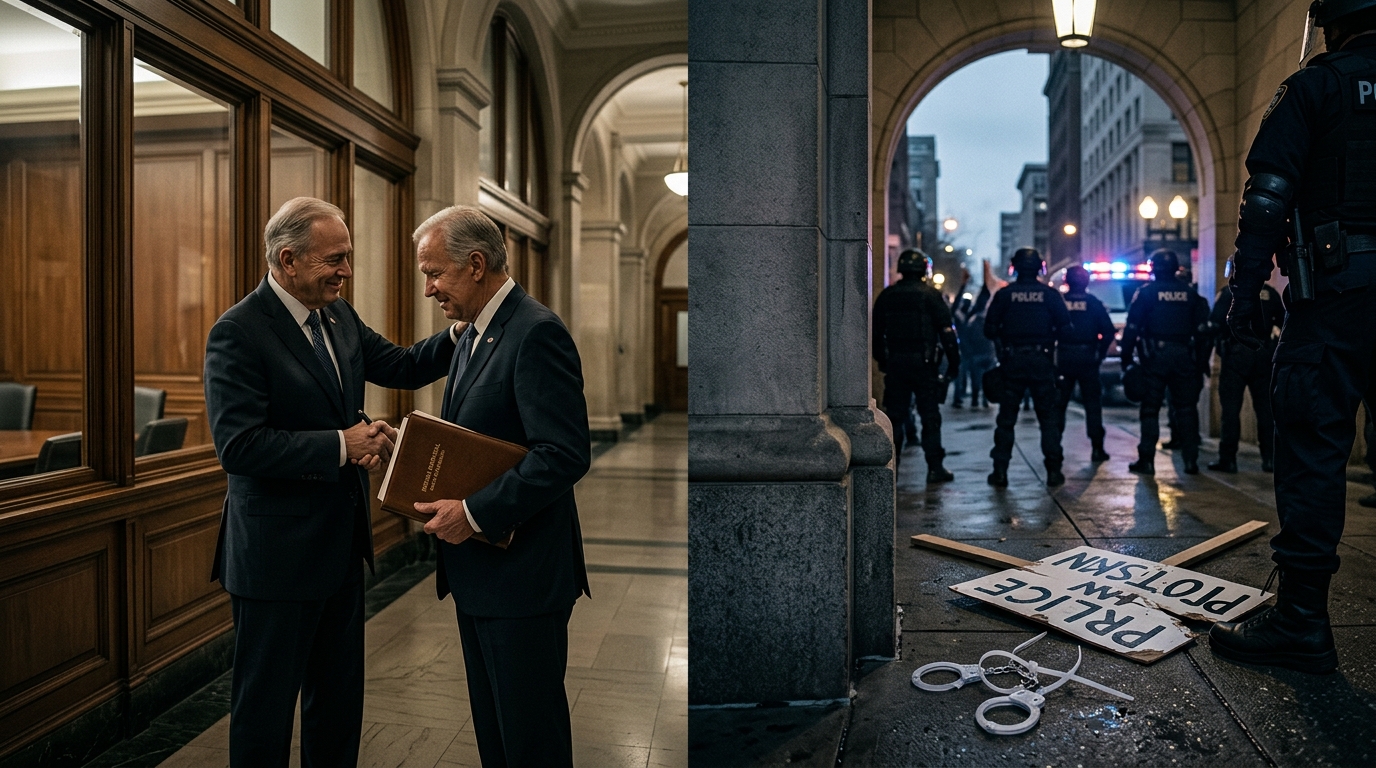
Over the last decade, a powerful national consensus has emerged demanding an end to unchecked police misconduct and systemic racial bias in law enforcement. Across the country, grassroots organizers, civil rights advocates, and progressive lawmakers have mobilized to draft ambitious legislation aimed at bringing unprecedented transparency to policing. From mandating the use of body-worn cameras to enforcing strict identification protocols during civilian encounters, the legislative push for accountability has never been stronger. However, the path from a drafted bill to an enacted law is notoriously perilous. While the public celebrates the announcement of new reform initiatives, the final legislation signed into law frequently bears little resemblance to its original, robust iteration.
The primary mechanism of this dilution is the closed-door political compromise. In the high-stakes arena of municipal and state politics, powerful law enforcement lobbies, entrenched union representatives, and risk-averse politicians frequently negotiate behind the scenes, away from the scrutiny of the communities most impacted by police violence. These “backroom deals” introduce subtle but devastating loopholes into accountability bills, transforming genuine oversight into a mere illusion of progress. Understanding how these legislative maneuvers operate is essential for anyone committed to true systemic change in the criminal justice system.
The Anatomy of Meaningful Law Enforcement Accountability
To recognize how legislation is strategically undermined, one must first understand what genuine, uncompromising police reform actually looks like. Effective accountability is not rooted in vague departmental guidelines or voluntary training programs; it is built upon enforceable legal mandates that shift the power dynamic between armed state actors and everyday citizens. Meaningful reform restricts discretionary powers that have historically been weaponized against marginalized groups and establishes clear, objective standards for interactions on the street .
Three Pillars of Uncompromised Legislation
- Unambiguous Identification Mandates: Officers must be required to proactively provide their full names, rank, badge numbers, and the specific legal rationale for stopping a civilian. This requirement must apply to all encounters, not just those that culminate in an arrest or a formal summons.
- Affirmative, Documented Consent: For searches conducted without a warrant or established probable cause, officers must obtain explicit, affirmative consent. Furthermore, legislation must require that this consent be captured via audio or video recording, ensuring the civilian was informed of their legal right to refuse the search.
- Comprehensive Data Tracking and Public Reporting: Law enforcement agencies must be legally bound to record and publicly share demographic data for every single civilian stop. Without granular data tracking, it is impossible to identify patterns of racial profiling or enforce civil rights protections .
The Mechanics of the “Backroom Deal”
The legislative journey of police accountability bills often begins with immense public pressure following a tragedy or the release of damning civil rights reports. Lawmakers, eager to appease an outraged electorate, introduce sweeping reform packages. Yet, as the legislation moves into committee hearings and private negotiations, the dynamics shift. The voices of grassroots organizers and legal advocates are frequently marginalized, replaced by the persistent lobbying of police unions and institutional stakeholders who view oversight as a threat to operational autonomy.
These negotiations rarely result in the outright defeat of a bill. Instead, opponents of reform use a more insidious tactic: the strategic insertion of modifying language. By adding qualifying phrases such as “when operationally feasible,” “at the officer’s discretion,” or “suspected of criminal activity,” negotiators can completely neutralize the core intent of a law. The politicians championing the bill can still claim a legislative victory and hold a celebratory press conference, while law enforcement agencies retain the loopholes necessary to continue their standard practices unhindered. This phenomenon represents a profound betrayal of the public trust, as citizens are led to believe that systemic flaws have been addressed when, in reality, the status quo has simply been codified under a new name.
The “Suspected Criminal Activity” Loophole: A Case Study in Dilution
A prominent example of how backroom negotiations gut effective legislation can be seen in the historical battles over officer identification mandates in major metropolitan areas. Initially, comprehensive identification bills are drafted to require officers to identify themselves during any non-emergency investigative encounter. This broad scope is critical because the vast majority of police harassment, constitutional violations, and discriminatory profiling occur during low-level, routine stops that do not result in formal charges .
However, when these bills are subjected to closed-door compromises with police unions, the language is often subtly altered. A common tactic is rewriting the mandate so that officers are only required to identify themselves when the civilian is formally “suspected of criminal activity.” To the untrained eye, this phrase seems reasonable. In practice, it represents a massive loophole that swallows the rule. Law enforcement officers do not need formal, documented suspicion of a crime to approach individuals, disrupt their daily routines, ask probing questions, or intimidate them on the street. By restricting the identification mandate only to formal criminal suspicion, the revised law explicitly exempts the exact type of arbitrary, low-level encounters that people of color and low-income individuals endure daily.
Comparing Legislative Frameworks
| Feature | Original, Uncompromised Bill | Watered-Down Compromise Bill |
|---|---|---|
| Scope of Identification | Required in all non-emergency investigative encounters, regardless of suspicion. | Only required when an individual is formally suspected of a specific criminal act. |
| Documentation | Officers must provide a business card at the end of any interaction not resulting in arrest. | Business cards only offered upon the explicit request of the civilian. |
| Enforcement | Violations result in automatic disciplinary hearings and public reporting. | Violations are handled internally with “retraining” and no public transparency. |
The Essential Role of Affirmative, Documented Consent
Beyond officer identification, the protocols governing search and seizure represent another critical battleground where real reform is often traded away. Historically, police have relied heavily on “consent searches,” wherein an officer asks to search a person’s belongings or vehicle without holding the requisite probable cause. The inherent power imbalance in these situations is staggering. When a heavily armed representative of the state, flanked by flashing lights, asks a civilian to empty their pockets, the average person does not feel they have the agency to say no. Compliance in the face of intimidation is routinely mischaracterized by law enforcement as voluntary consent.
Genuine reform legislation directly attacks this dynamic by requiring officers to explicitly inform individuals of their constitutional right to refuse a search. Furthermore, true reform dictates that this consent must be recorded—either via a signed document or on a body-worn camera—before the search commences. While body-worn cameras are a crucial tool for transparency, their effectiveness is entirely dependent on strict departmental policies mandating their activation during these specific, high-tension interactions . When backroom deals strip away the requirement for objective proof of consent, the legislation becomes toothless. Officers can continue to claim they received verbal permission, and civilian complaints regarding illegal searches remain inherently unprovable “he-said, she-said” disputes.
The Disproportionate Toll on Marginalized Communities
When political expediency triumphs over legislative integrity, the devastating consequences are not borne equally across society. It is the marginalized communities—specifically Black, Latino, Indigenous, and low-income neighborhoods—that suffer the immediate, physical reality of watered-down police reform. These demographics are historically over-policed and disproportionately subjected to aggressive patrol tactics like stop-and-frisk .
For a politician in a wealthy suburb, a compromised accountability bill might seem like an acceptable, pragmatic middle ground. But for a young person of color walking home in an over-policed neighborhood, that compromise translates to continued harassment, constitutional violations, and a persistent fear of those sworn to protect them. The failure to enact stringent identification and consent mandates perpetuates a cycle of trauma and alienates entire communities from the civic process. It reinforces the deeply ingrained perception that the justice system is rigged, and that elected officials prioritize the comfort of law enforcement unions over the civil liberties of their constituents.
Strategies for Preserving Legislative Integrity
Preventing the dilution of essential accountability bills requires strategic, sustained action from civil rights organizations, legal watchdogs, and the broader public. Activists must anticipate that backroom negotiations will be utilized to weaken legislation and must structure their advocacy accordingly. The fight for reform is a marathon that extends far beyond the initial drafting of a bill; it requires intense vigilance during committee markups, public hearings, and the final voting stages.
First, reformers must refuse to be sidelined during the negotiation process. Coalitions of community leaders and legal experts must demand a seat at the table when the final text of a bill is being hammered out, ensuring that union lobbyists are not the only voices in the room. Second, public education campaigns must be precise and relentless. Advocates must clearly explain to voters exactly what loopholes look like—such as the “suspected of criminal activity” exemption—so the public can hold politicians accountable when they attempt to pass off a gutted bill as a historic victory. Finally, maintaining the threat of electoral consequences is paramount. Politicians who capitulate to law enforcement lobbies and betray the core tenets of civil rights legislation must be challenged at the ballot box.
Conclusion
The fight for an equitable and transparent justice system does not end when a bill is drafted, nor does it conclude when an elected official declares victory at a press conference. True police accountability is built on clear, enforceable, and uncompromising legal standards that protect the most vulnerable members of society. By recognizing the insidious nature of backroom political deals, understanding the legal loopholes they create, and remaining fiercely vigilant throughout the legislative process, advocates can ensure that the promise of police reform becomes a concrete reality rather than a political illusion. Transparency and justice cannot be bargained away in the shadows; they must be codified boldly in the light.
Frequently Asked Questions (FAQs)
What is a “backroom deal” in the context of criminal justice legislation?
A backroom deal refers to closed-door negotiations between politicians, government officials, and powerful lobbying groups (such as police unions) where the original, robust language of a reform bill is secretly altered or weakened before it is passed, often excluding community advocates from the process.
Why is affirmative consent so important during police searches?
Due to the intimidating nature of interacting with armed law enforcement, many civilians comply with search requests out of fear, not free will. Affirmative consent laws require officers to explicitly inform citizens of their right to refuse and mandate objective documentation (like body camera footage) of that consent, protecting constitutional rights against unlawful search and seizure.
How does the “suspected of criminal activity” loophole weaken accountability?
By requiring officers to identify themselves and provide a reason for a stop only when formal criminal suspicion is involved, lawmakers effectively exempt the vast majority of routine, low-level police encounters from oversight. These low-level encounters are precisely where the most widespread harassment and racial profiling occur.
What can citizens do to ensure police reform bills are not weakened?
Citizens can stay engaged by reading the actual text of proposed bills rather than relying on political summaries, demanding that grassroots organizers are included in final legislative negotiations, and holding elected officials accountable at the polls if they vote for compromised, loophole-ridden legislation.
References
- Proactive Policing: Effects on Crime and Communities — National Academies of Sciences, Engineering, and Medicine. 2018-01-17. https://doi.org/10.17226/24928
- Analysis of Racial Disparities in the New York Police Department’s Stop, Question, and Frisk Practices — RAND Corporation. 2007-11-01. https://www.nyc.gov/html/nypd/downloads/pdf/public_information/rand_report.pdf
- Research on Body-Worn Cameras and Law Enforcement — National Institute of Justice. 2023-01-22. https://nij.ojp.gov/topics/articles/research-body-worn-cameras-and-law-enforcement
Similar Articles








Read full bio of medha deb




