The Urgent Need for True Systemic Accountability
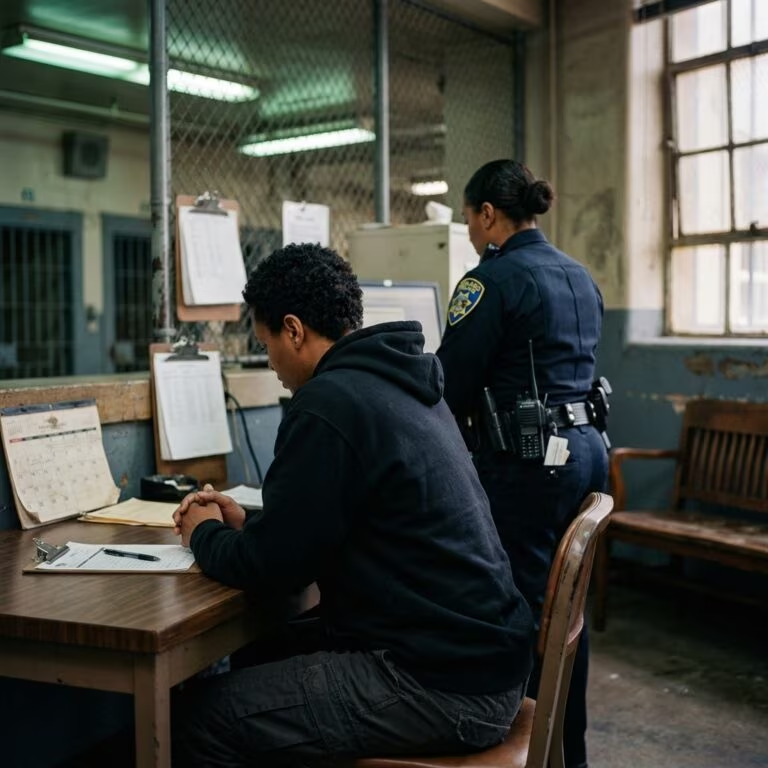
Across the nation, citizens, community leaders, and legal scholars have reached a resounding consensus: the American criminal justice system requires profound, structural transformation. From curbing excessive use of force to ending the disproportionate targeting of minority communities, the public mandate for equitable policing is stronger than ever. The emotional and societal toll of unchecked police violence regularly sparks massive public outcries, driving demands for immediate legislative action. Despite this overwhelming grassroots demand, sweeping legislative proposals often die in committee or are stripped of their regulatory teeth before they ever reach a final vote.
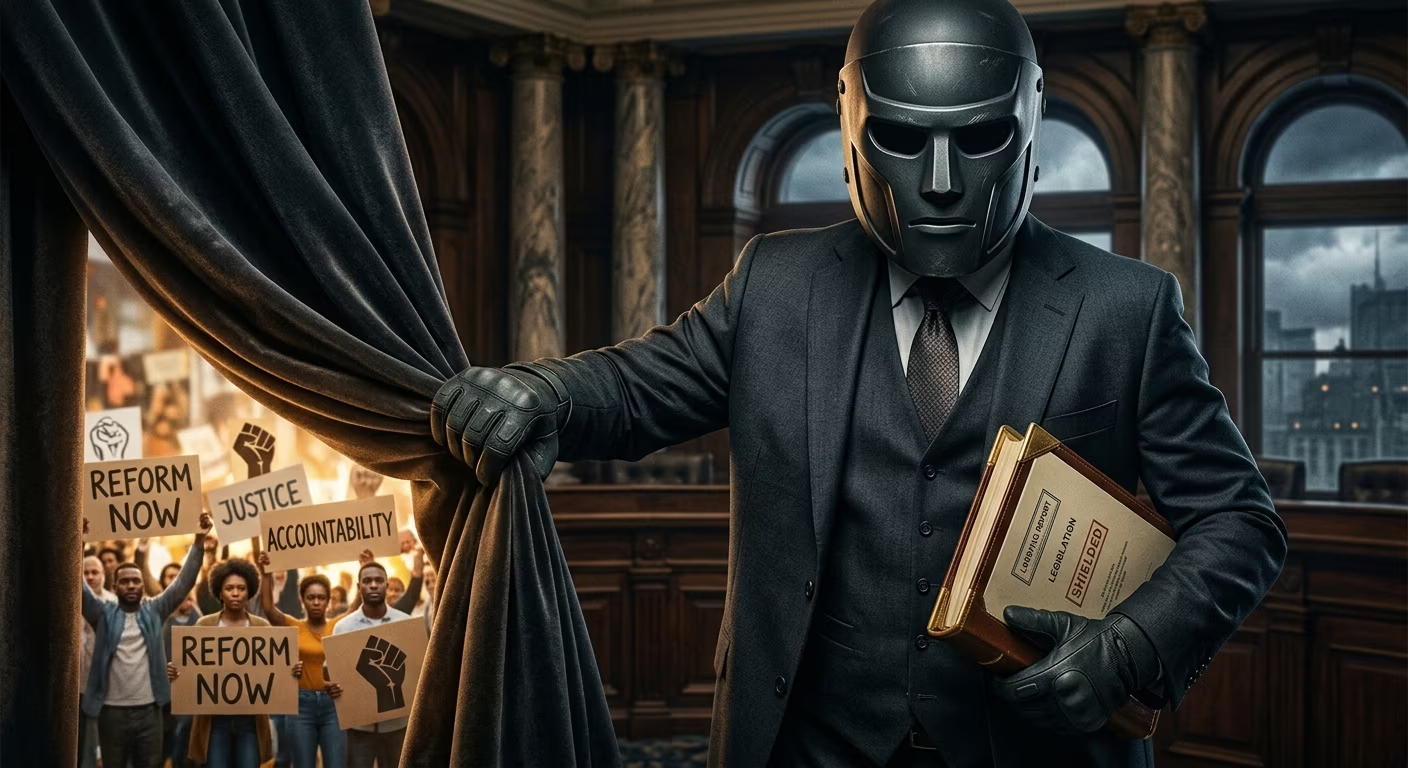
The primary force behind this systemic inertia is not a lack of public will, but rather the formidable, well-financed machinery of law enforcement lobbyists and police unions. Unlike traditional labor organizations that focus strictly on securing fair wages, adequate healthcare, and safe working environments for their members, modern police unions have evolved into massive, sophisticated political entities. They wield unprecedented influence over local, state, and federal politics, actively obstructing policies designed to increase transparency and officer accountability. To achieve meaningful criminal justice reform, it is essential to understand how these organizations operate, the mechanisms they use to shield bad actors, and the strategic interventions necessary to prioritize the safety and constitutional rights of the public over the institutional interests of law enforcement lobbying groups.
The Architecture of Police Political Influence
The political leverage of police unions is not an accident; it is the calculated result of decades of strategic organizing, massive financial expenditures, and the cultivation of a deeply ingrained “law and order” public narrative. Law enforcement lobbyists utilize three primary vehicles to influence policy: substantial campaign contributions, highly coveted political endorsements, and aggressive, targeted lobbying efforts utilizing Political Action Committees (PACs).
In local elections, where voter turnout is often lower and campaign budgets are relatively modest, a sizable financial donation from a police union can dramatically alter the trajectory of a race. District attorneys, mayors, and city council members rely heavily on these contributions to fund their campaigns. Furthermore, the endorsement of a local police union carries significant psychological weight with voters, often serving as a definitive seal of approval for candidates wishing to project a tough-on-crime image. This dynamic creates a dangerous, inherent conflict of interest. When the elected officials tasked with negotiating police contracts and prosecuting officer misconduct are financially backed by the very unions representing those officers, independent oversight becomes nearly impossible . Politicians become understandably reluctant to challenge union demands or push for aggressive reforms, fearing the immediate withdrawal of financial support or facing a well-funded, negative attack campaign painting them as a threat to public safety in their next election cycle.
Collective Bargaining Agreements: Secret Shields Against Oversight
While high-profile legislative battles capture media headlines, some of the most consequential barriers to police reform are quietly erected behind closed doors through Collective Bargaining Agreements (CBAs). Negotiated directly between city governments and union representatives, these contracts govern everything from base compensation to internal disciplinary procedures. Unfortunately, they are routinely weaponized to negotiate away public accountability.
Many police union contracts contain hidden provisions specifically designed to thwart investigations into officer misconduct and shield officers from the consequences of their actions. These systemic roadblocks include:
- Mandatory Delay Periods: Many CBAs require internal affairs investigators to wait 48 to 72 hours before questioning an officer involved in a critical incident, such as a civilian shooting. This delay provides ample time for officers to review evidence and coordinate their narratives, a privileged grace period never afforded to everyday citizens suspected of a crime.
- Erasure of Disciplinary Records: Contracts frequently mandate the automatic purging of civilian complaints and disciplinary actions from an officer’s permanent personnel file after a short period, often just one to two years. This deliberate destruction of records prevents departments from identifying, tracking, and terminating repeat offenders, allowing “bad apples” to remain on the force indefinitely .
- Restrictions on Civilian Oversight: Unions consistently bargain to limit the subpoena power, operational funding, and investigative authority of independent civilian review boards, ensuring that police departments are only effectively investigated by their own peers.
- Binding Arbitration and Reinstatement: When an officer is actually fired by a police chief for egregious misconduct, union contracts almost universally allow the officer to appeal the decision to a secretive, binding arbitration process. Arbitrators, who rely on the approval of both the city and the union for continued employment, frequently overturn the leadership’s decision and order the immediate reinstatement of the fired officer, complete with retroactive back pay .
Furthermore, these contracts successfully sever financial liability from the offending officers. When victims of police brutality sue and win, the multi-million-dollar settlements are almost always paid out from the city’s general taxpayer fund, not from police pensions or union coffers. This completely removes the financial deterrent for police misconduct.
Legislative Interference: Defeating State and Federal Reforms
Beyond local contract negotiations, police unions maintain a constant, aggressive, and highly organized presence in state legislatures and the halls of Congress. Their specialized lobbyists are experts at mobilizing quickly to defeat, delay, or severely dilute any bill that threatens to pierce their veil of operational secrecy.
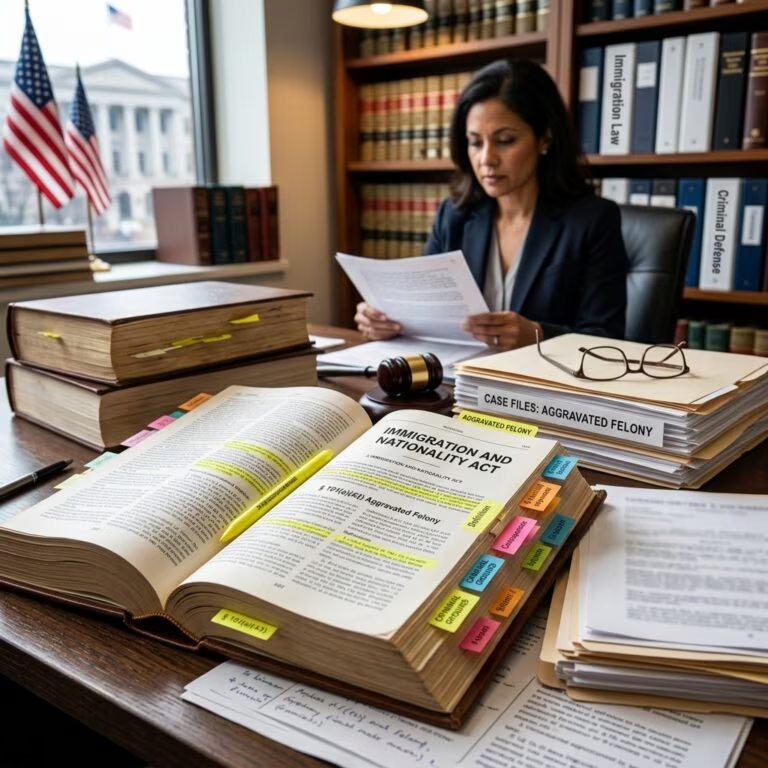
One of their most significant, long-standing victories has been the proliferation of Law Enforcement Officers’ Bills of Rights (LEOBORs). Enacted in numerous states across the country, LEOBORs are statutory provisions that grant police officers special, elevated due process protections that supersede standard labor laws and departmental policies. These statutes often codify the very obstacles found in CBAs—such as interrogation delays, limits on civilian oversight, and restrictions on public reporting—making them exponentially harder to overturn. Stripping these protections requires a full, heavily contested act of the state legislature rather than a localized contract renegotiation.
Furthermore, law enforcement lobbyists fiercely oppose transparency initiatives. When lawmakers attempt to pass legislation requiring the unedited public release of body-worn camera footage, or bills designed to unseal the records of officers with a documented history of excessive force, unions argue forcefully that such measures endanger officer safety and violate personal privacy rights. By framing basic, democratic transparency as an aggressive attack on the physical safety of law enforcement personnel, lobbyists effectively paralyze moderate politicians who fear alienating voters or being labeled as “anti-police.”
The Disproportionate Cost to Marginalized Communities
The obstructionist tactics of police lobbyists do not impact all citizens equally; the systemic burden falls overwhelmingly on Black, Brown, and lower-income communities. Due to historical redlining and ongoing systemic biases, these neighborhoods are frequently the primary targets of aggressive, zero-tolerance policing strategies, such as “broken windows” policing and the militarized execution of no-knock search warrants. Yet, paradoxically, these same communities are systematically excluded from the political and contractual processes that govern how those policing strategies are implemented and monitored.
When union contracts make it structurally impossible to terminate an officer with a documented history of racial profiling or excessive force, it is marginalized residents who face the daily, physical consequences of that retention. The distinct lack of participatory democracy in the negotiation of police contracts means that the communities most deeply and violently affected by law enforcement practices have absolutely no seat at the bargaining table . This structural exclusion fosters a profound, multi-generational, and entirely justified distrust of both the police and the local government institutions that continuously capitulate to union demands. True public safety fundamentally relies on community trust, but law enforcement lobbyists actively dismantle that foundational trust by fighting fiercely to keep violent or corrupt officers on the streets.
Strategies to Curtail Lobbying Power and Restore Accountability
Overcoming the deeply entrenched political power of police unions requires a highly coordinated, multi-faceted approach from lawmakers, civil rights advocates, and everyday citizens. Reformers must shift the focus from merely changing surface-level department policies to structurally dismantling the overarching influence of law enforcement lobbyists. Key actionable strategies include:
- Redefining the Scope of Collective Bargaining: State legislatures must step up and pass definitive laws that explicitly remove disciplinary procedures, use-of-force policies, and internal accountability mechanisms from the allowable scope of collective bargaining. Police unions should be strictly restricted to negotiating standard labor issues like base wages, healthcare benefits, and standard working conditions, rather than dictating how public servants are held legally accountable for violating civil rights .
- Mandating Strict Contract Transparency: The negotiation of police contracts must be dragged into the public eye. Cities and municipalities should pass ordinances requiring open, publicly broadcasted bargaining sessions. Furthermore, they must mandate a comprehensive public review and comment period before any police union contract can be ratified by a city council.
- Reforming Campaign Finance Laws: To eliminate glaring, systemic conflicts of interest, jurisdictions must explore and enact legislation that heavily restricts or outright prohibits the ability of police unions and their affiliated PACs to donate to the political campaigns of district attorneys, judges, and the local executives responsible for negotiating their contracts.
- Leveraging Federal and State Financial Grants: Higher levels of government can powerfully incentivize local change by conditioning the receipt of essential, lucrative law enforcement grants on the elimination of protective clauses in local union contracts. If a local police department’s CBA contains mandatory delay periods, arbitration loopholes, or record-purging requirements, that department should be automatically rendered ineligible for federal public safety funding.
Frequently Asked Questions (FAQs)
Why are police unions viewed differently than other public sector labor unions?
While teachers, firefighters, and sanitation workers use their unions to advocate for fair compensation, better resources, and safe workplaces, police unions have uniquely utilized their specialized power to shield members from legal accountability for civil rights violations and criminal conduct. Because police officers are authorized by the state to use lethal force and unilaterally deprive citizens of their physical liberty, the public interest inherently demands a much higher degree of absolute transparency and rigorous oversight than is required for any other type of public employee.
What exactly is a Law Enforcement Officers’ Bill of Rights (LEOBOR)?
A LEOBOR is a specialized state-level law that provides police officers with an extra layer of extraordinary procedural protections during internal and external investigations. These controversial laws often mandate that officers cannot be questioned immediately following a violent use-of-force incident, restrict exactly who is permitted to conduct the investigation, and severely limit the severity of discipline that can be imposed. Civil rights advocates heavily criticize these laws, arguing they create a separate, distinctly more lenient justice system exclusively designed for police officers.
How does binding arbitration negatively affect police accountability?
Binding arbitration allows an outside, third-party arbitrator to review and rule upon disciplinary actions taken against a police officer by department leadership. Because these private arbitrators want to be hired again by both the city and the union, they often seek middle-ground compromises rather than enforcing strict discipline. Statistically, this process frequently results in the total reversal of a police chief’s decision to fire an officer for serious misconduct, legally forcing the city to rehire the individual. This deeply undermines the authority of reform-minded police leadership attempting to clean up their own departments.
Can the federal government step in to override these restrictive union contracts?
The federal government generally cannot directly rewrite or void local municipal employment contracts due to the principles of federalism. However, the U.S. Department of Justice can aggressively investigate departments for documented patterns of civil rights violations and enforce federal consent decrees that mandate operational overhauls. Furthermore, federal lawmakers possess the power of the purse; they can pass legislation that ties federal law enforcement funding to the adoption of strict, standardized accountability metrics, economically pressuring local governments to strip protective clauses from their union contracts in order to receive grant money.
Conclusion: Prioritizing the People Over Institutional Protection
The path to achieving a just, equitable, and truly meaningful criminal justice system is unequivocally blocked by the outsized, self-serving political influence of law enforcement lobbyists and police unions. By utilizing immense financial resources to unduly influence local elections and relentlessly negotiating secretive contracts that actively insulate officers from the legal and professional consequences of their actions, these organizations have engineered a broken system. It is a system that consistently prioritizes institutional self-preservation and the protection of its members over the constitutional rights and physical safety of the broader public.
Transforming this deeply entrenched reality requires tremendous political courage and sustained, organized public pressure. Elected officials at every level of government must stop relying on the political safety of police union endorsements and actively recognize that their primary, sworn duty is to the communities they represent, not the public servants they employ. By bringing contract negotiations into the illuminating light of public scrutiny, restricting the legal scope of collective bargaining to standard labor issues, and aggressively pushing back against the obstructionist, fear-mongering tactics of police lobbyists, society can finally begin to build a justice system that is truly accountable, transparent, and equitable for all citizens.
References
- An Analysis of Police Union Donation Strategies in California Local Elections — University of Chicago (Knowledge@UChicago). 2022-06-15. https://knowledge.uchicago.edu/record/6559
- A Proposal for Police Reform: Require Effective Accountability Measures in Police Union Contracts as a Condition of Tax-Exempt Status — The University of Chicago Law Review. 2020-08-07. https://lawreviewblog.uchicago.edu/2020/08/07/police-reform-crawford/
- Police Unionism, Accountability, and Misconduct — Annual Review of Criminology. 2023-01-15. https://www.annualreviews.org/doi/10.1146/annurev-criminol-030421-034244
- Beyond Transparency: Police Union Collective Bargaining and Participatory Democracy — SMU Scholar. 2021-01-01. https://scholar.smu.edu/smulr/vol74/iss3/4/