
Housing Accessibility: Supporting Disabled Residents in Rentals
Understanding landlord obligations and tenant protections for disability accommodations.
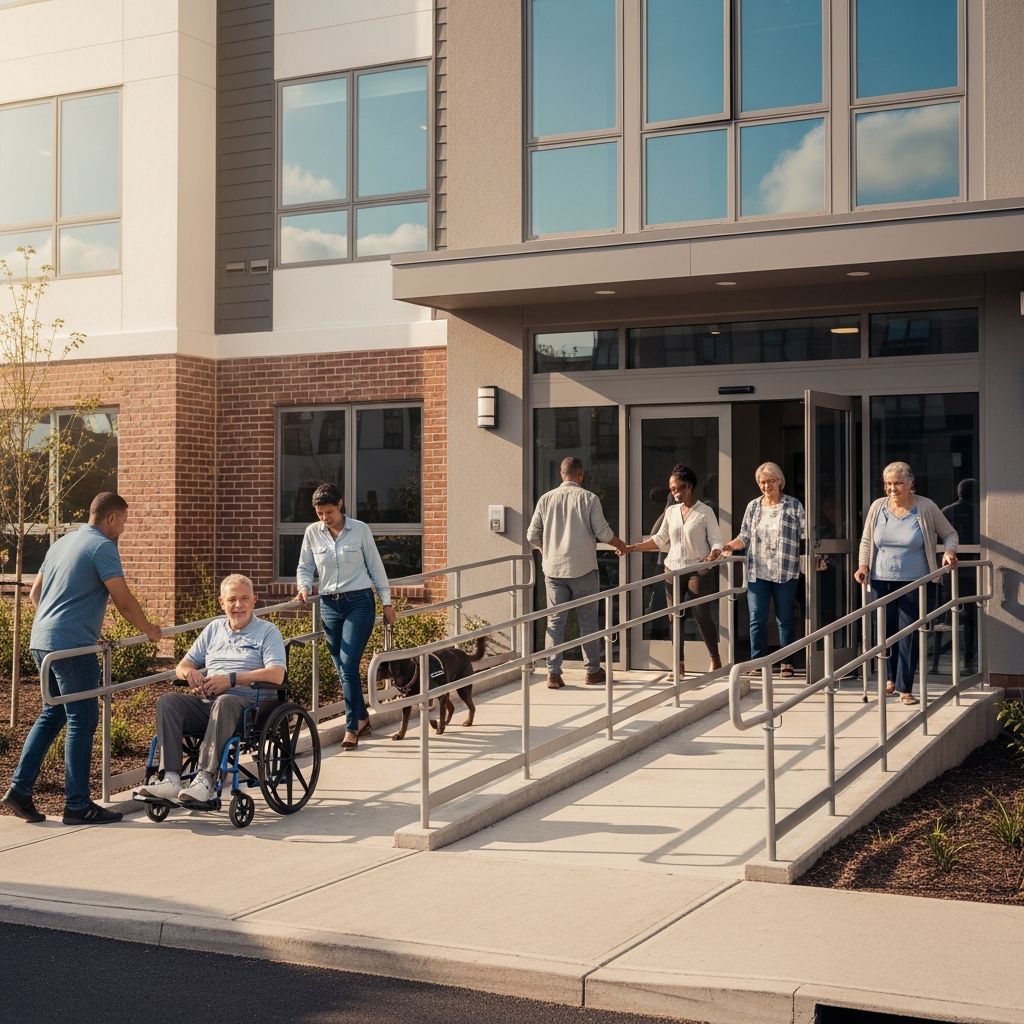
Creating Inclusive Rental Communities for People with Disabilities
Ensuring that people with disabilities have equal access to rental housing is not merely a legal requirement—it represents a fundamental commitment to inclusive community building. When landlords understand their obligations and proactively work to accommodate tenants with disabilities, they create housing environments where all individuals can live safely, independently, and with dignity. This article explores the legal frameworks governing disability accommodations in rental properties, the rights of disabled tenants, and the practical steps landlords and property managers can take to foster accessible housing communities.
The Legal Foundation for Disability Housing Rights
Multiple layers of federal and state legislation work together to protect people with disabilities in housing contexts. The
Fair Housing Act (FHA)
, enacted as part of the Fair Housing Amendments Act of 1988, establishes a foundational prohibition against discrimination based on disability in the sale, rental, or financing of housing. This federal law applies broadly, protecting individuals who have a disability, have a record of a disability, or are regarded as having a disability.At the state level, California provides additional protections through the
California Fair Employment and Housing Act (FEHA)
, which extends beyond the federal baseline to require landlords to consider both reasonable accommodations and reasonable modifications that help tenants with disabilities live comfortably in their units. The FEHA defines disability expansively to include physical disabilities, mobility impairments, hearing impairments, visual impairments, mental health conditions, and medical conditions.The
Americans with Disabilities Act (ADA)
complements these frameworks by ensuring accessible public housing and shared spaces, including leasing offices and common areas. Additionally,Section 504 of the Rehabilitation Act
prohibits discrimination based on disability in programs receiving federal financial assistance, meaning that housing programs benefiting from federal funds must provide reasonable accommodations and modifications for tenants with disabilities.Finally, California’s
Disabled Persons Act
provides that individuals with disabilities are entitled to full and equal access to all housing accommodations offered for rent, lease, or compensation in the state, subject to conditions and limitations established by law.Understanding Reasonable Accommodations in Rental Housing
A reasonable accommodation is a
change in policies, rules, or services
that makes it easier for a disabled person to use and enjoy their rental unit. Unlike physical modifications to the property, reasonable accommodations focus on adjusting how a landlord operates or responds to a tenant’s specific needs. Common examples include:- Adjusting rent payment schedules for tenants receiving disability income assistance
- Allowing a live-in caregiver despite lease restrictions against additional occupants
- Waiving pet policies to permit service animals
- Modifying noise policies to accommodate individuals with sensory sensitivities
- Providing accessible parking spaces near unit entrances
- Allowing flexible lease terms for medical appointments or treatment schedules
Landlords must grant reasonable accommodation requests unless doing so would create an undue burden, fundamentally alter the rental operation, or pose a direct threat to health or safety. The burden of proving undue hardship rests with the landlord, not the tenant requesting the accommodation.
Distinguishing Between Accommodations and Modifications
While reasonable accommodations involve policy changes or services,
reasonable modifications refer to physical alterations to the rental unit or common areas
. These might include installing grab bars in bathrooms, adding ramps for wheelchair access, modifying doorways to accommodate mobility devices, or adjusting lighting for individuals with visual impairments.The distinction matters because it affects who typically bears the cost. Landlords are generally responsible for modifications that constitute structural changes to the property, unless such modifications would impose an undue financial or administrative burden. Tenants may sometimes be responsible for modifications they install themselves, provided they restore the unit to its original condition upon move-out, unless the modification cannot be removed without damage to the property.
The Process for Requesting Accommodations
Tenants with disabilities can request reasonable accommodations by notifying their landlord or property management company. The request should ideally be made in writing, though verbal requests are also legally valid. When submitting a request, tenants should:
- Clearly describe the specific accommodation needed
- Explain how the accommodation relates to their disability or medical condition
- Provide medical or professional verification if the disability or need is not readily apparent
- Keep copies of all correspondence for documentation purposes
Landlords can verify three specific elements of a reasonable accommodation request: the existence of a disability (if not readily apparent), the relationship between the accommodation and the disability, and in cases involving caregivers, the qualifications of the caregiver to provide necessary support services. However, landlords cannot request comprehensive medical records or demand detailed information about the severity of a disability. This balance ensures that landlords can confirm legitimate requests while protecting tenants’ medical privacy.
Landlords are required to respond to reasonable accommodation requests in a timely manner and must provide written explanations if they deny a request. A denial must be based on legitimate grounds—such as undue burden or direct threat—rather than prejudice, fears, or assumptions about disabilities.
Protected Disability Categories and Broad Definitions
California law recognizes that disabilities exist across a wide spectrum. Tenants may qualify for reasonable accommodations if they have:
- Mobility limitations affecting movement within the rental unit or accessing common areas
- Visual impairments requiring adaptations to lighting, signage, or spatial orientation
- Hearing impairments necessitating visual alarm systems or notification methods
- Mental health conditions requiring supportive services or environmental modifications
- Chronic illnesses or medical conditions affecting daily functioning
The FEHA explicitly protects individuals whose disabilities arise from various conditions, including those related to weight. This expansive approach recognizes that disabilities are not limited to dramatic diagnoses or visibly apparent conditions. If a medical provider confirms that a person needs a change to use or enjoy their home as a result of a diagnosed disability, that individual may qualify for reasonable accommodations.
Landlord Obligations and Compliance Responsibilities
Landlords operating rental properties must adhere to several core obligations regarding disabled tenants:
| Obligation | Description | Legal Basis |
|---|---|---|
| Non-Discrimination in Rental Decisions | Use the same criteria for selecting tenants regardless of disability status; cannot refuse to rent based on disability or assert that housing is unavailable when it actually is | FHA, FEHA |
| Prohibition on Discriminatory Advertising | Cannot advertise preference for nondisabled tenants or state that reasonable accommodations will not be provided | FEHA |
| Reasonable Accommodation Requests | Must consider and approve reasonable accommodation requests unless they create undue burden or fundamental alteration | FHA, FEHA |
| No Inquiry About Disability Severity | Cannot ask about the nature or severity of a disability or request comprehensive medical records | ADA, FHA |
| Accessible Common Areas | Must maintain ADA-compliant public areas, including leasing offices and shared facilities | ADA |
| Accessibility in New Construction | All new rental housing constructed after March 13, 1991, with four or more units and at least one elevator must meet accessibility standards | FHA |
Specific Examples of Housing Accommodations
Real-world scenarios illustrate how reasonable accommodations function in practice. A tenant with a mobility disability who cannot climb stairs may request assignment to a ground-floor unit or request installation of a ramp at the unit entrance. A tenant with a severe anxiety disorder or PTSD may need to request a caregiver or support person to live in the unit despite lease restrictions on occupancy. An individual with a hearing impairment might request visual notification systems for fire alarms and building alerts. A tenant with chronic pain conditions might need flexible lease terms to accommodate frequent medical appointments.
These accommodations vary in scope and cost, but all serve the common purpose of enabling disabled tenants to access and enjoy their housing on equal terms with non-disabled tenants. The reasonableness standard requires that accommodations be practical, feasible, and directly related to enabling access to housing.
Tenant Protections Against Retaliation and Discrimination
California and federal law prohibit landlords from retaliating against tenants who request reasonable accommodations. A tenant cannot be evicted, charged additional fees, subjected to harassment, or otherwise penalized for requesting disability-related accommodations or modifications. If a landlord denies a reasonable accommodation request based on disability discrimination, or if a tenant experiences retaliation after requesting an accommodation, the tenant may have grounds to file a housing discrimination complaint.
Discriminatory harassment based on medical conditions or disabilities—such as unwelcome comments, exclusion from common areas, or differential treatment compared to non-disabled tenants—also violates fair housing law. Tenants experiencing such treatment have legal recourse through fair housing agencies and civil remedies.
Special Considerations: Live-In Caregivers and Support Services
A particularly important accommodation involves the ability to have a live-in caregiver. If a lease contains restrictions on the number of occupants, a tenant with a disability can request that a live-in caregiver be allowed as a reasonable accommodation. This accommodation recognizes that many disabled individuals depend on personal care attendants, medical aides, or family members to assist with activities of daily living.
When evaluating such requests, landlords may verify that the caregiver is qualified to provide the necessary supportive services and that the relationship between the tenant and caregiver is genuine. However, landlords cannot deny the request based on concerns about disruption or other generalizations about having additional occupants. The accommodation exists precisely to enable disabled tenants to have essential support in their homes.
Section 504 and Federal Funding Requirements
Housing providers in San Jose and other California jurisdictions that receive federal funding must comply with Section 504 of the Rehabilitation Act. This means that housing programs must include a minimum percentage of units designed with accessible features for people with mobility and hearing or vision disabilities, and these accessible units must be distributed throughout the property rather than clustered in one area.
Section 504 guarantees that people with disabilities have equal access to housing opportunities and services in federally-funded programs. For private landlords without federal funding, FHA and FEHA requirements still apply, though the specific accessibility mandates may differ.
Frequently Asked Questions
Q: What disabilities qualify for reasonable accommodations in rental housing?
A: California law recognizes a broad range of disabilities, including mobility limitations, visual and hearing impairments, mental health conditions, and chronic medical conditions. You do not need a dramatic diagnosis or visible disability—if a medical provider confirms you need a change to use or enjoy your home due to a diagnosed disability, you may qualify.
Q: Can a landlord refuse my reasonable accommodation request?
A: A landlord can deny a request only if it would create an undue burden, fundamentally alter the rental operation, or pose a direct threat to health or safety. The landlord must provide a written explanation and cannot deny a request based on prejudice, fears, or assumptions about disabilities.
Q: Can a landlord ask about my disability or request my medical records?
A: No. Landlords cannot ask about the nature or severity of a disability and cannot request comprehensive medical records. They may request verification that a disability exists if it is not readily apparent, and that the accommodation is needed, but this verification should be limited and not invasive.
Q: Who pays for reasonable modifications to the rental unit?
A: Landlords are generally responsible for modifications that constitute structural changes to the property, unless such modifications would impose an undue financial burden. Tenants may sometimes pay for modifications they install themselves, though landlords typically cannot charge tenants for essential accessibility features.
Q: Can my landlord evict me for requesting a reasonable accommodation?
A: No. Retaliation against a tenant for requesting disability accommodations is illegal under California and federal fair housing law. If a landlord evicts you, raises your rent, or otherwise penalizes you for requesting an accommodation, you may file a housing discrimination complaint.
Q: What should I do if my landlord denies my accommodation request?
A: Request a written explanation for the denial. If you believe the denial is discriminatory, you can file a complaint with the California Department of Fair Employment and Housing (DFEH) or the U.S. Department of Housing and Urban Development (HUD). You may also consult with a housing discrimination attorney.
Moving Forward: Best Practices for Inclusive Rental Communities
Creating truly accessible and inclusive rental communities requires more than legal compliance. Landlords and property managers benefit from proactively identifying accessibility barriers, training staff on fair housing obligations, establishing clear procedures for handling accommodation requests, and fostering a culture of inclusion. When landlords view disability accommodations not as burdens but as opportunities to serve a wider population and create supportive communities, they contribute to a housing market that works for everyone.
For tenants with disabilities, understanding these rights and the accommodation process empowers them to advocate for their needs and claim their right to equal housing access. For landlords, embracing these legal obligations creates more diverse, resilient rental communities and reduces the risk of fair housing violations.
References
- Disabled Tenant Rights in California: How to Make Your Rental Property Accessible — Property Management Pleasanton. 2024. https://www.propertymanagementpleasanton.com/california-landlord-law-resources/disabled-tenant-rights-in-california-how-to-make-your-rental-property-accessible
- Know Your Disability Rights in California: Rental Housing & COVID-19 — Disability Rights Education & Defense Fund (DREDF). 2021-05-27. https://dredf.org/wp-content/uploads/2021/05/Know-Your-Rights-in-California-COVID-19-and-Housing-Final-5-27-2021-v1.pdf
- Disability Rights in Housing – Legal Rights of Persons with Disabilities — California Attorney General’s Office. 2024. https://oag.ca.gov/system/files/media/drb-disability-rights-housing.pdf
- Reasonable Accommodations: CA Tenant Rights — Tenant Law Group SF. 2025. https://tenantlawgroupsf.com/blog/2025/august/reasonable-accommodations/
- ADA Housing Laws and Requirements in San Jose, CA – 2026 — Steadily. 2026. https://www.steadily.com/blog/ada-housing-laws-regulations-san-jose
- Housing: Frequently Asked Questions — Disability Rights California. 2024. https://www.disabilityrightsca.org/publications/housing-frequently-asked-questions
- Disabled Renters’ Rights in California in 2022 — Lifeway Mobility. 2022. https://www.lifewaymobility.com/san-jose/blog/disabled-renters-rights-in-california-for-2021/
Similar Articles








Read full bio of medha deb


