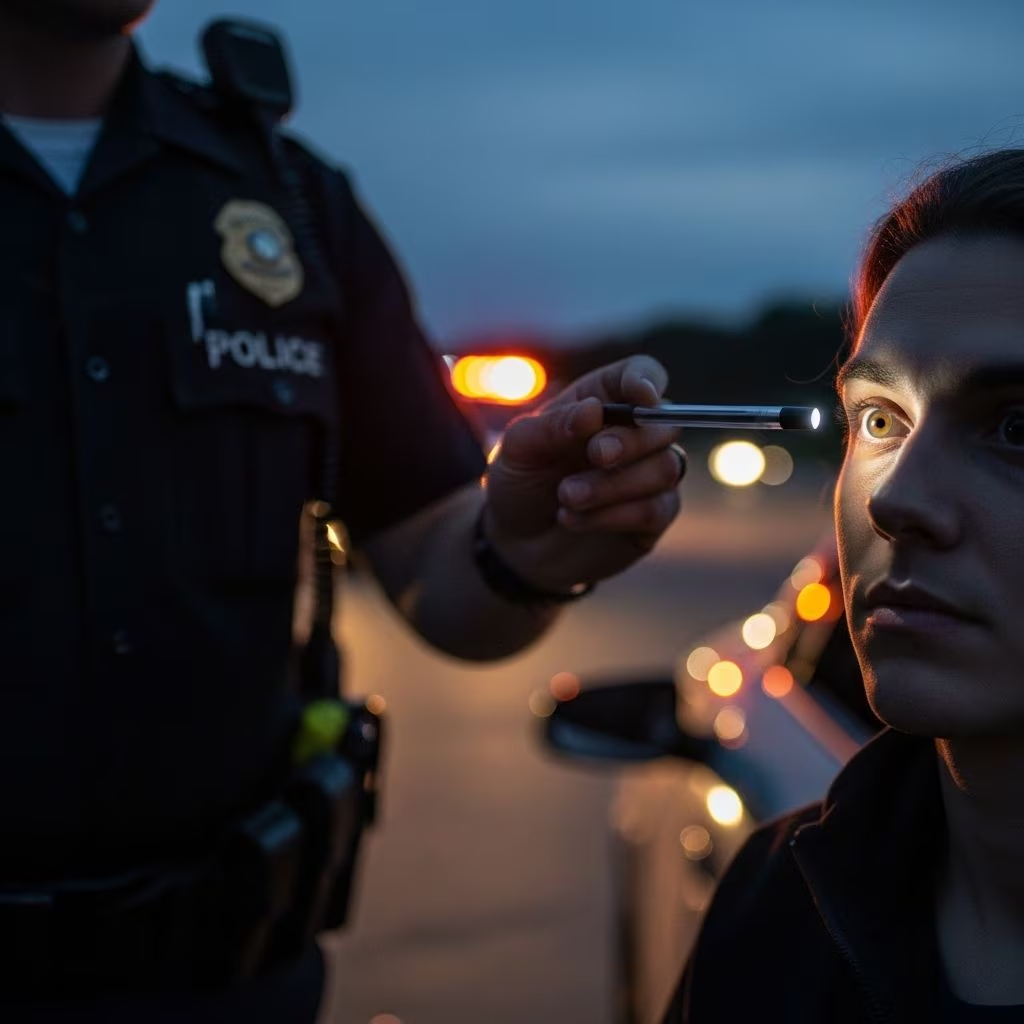
The Horizontal Gaze Nystagmus (HGN) test is one of the most commonly used field sobriety tools in drunk and drugged driving investigations in the United States. During this test, an officer observes how a driver’s eyes move as they follow a small object from side to side, looking for an involuntary jerking motion that may be associated with alcohol or certain drugs.
Although HGN has been researched and endorsed by federal traffic safety agencies, it is not infallible. Its value in court depends heavily on how it was administered, the driver’s medical history, and how the results are presented to a judge or jury.
What Is Nystagmus and Why Does It Matter in DUI Cases?
Nystagmus is an involuntary, rhythmic movement of the eyes, most often described as a jerking or bouncing motion. It can occur horizontally, vertically, or in a rotary pattern and may be caused by problems in the inner ear, the brain, or by certain medications and substances.
In the DUI context, police focus on horizontal gaze nystagmus, which is eye jerking that appears when a person looks to the side from a central gaze. Research sponsored by the National Highway Traffic Safety Administration (NHTSA) found that alcohol can make this jerking more pronounced and cause it to appear at smaller angles away from center as blood alcohol concentration (BAC) rises.
- Key idea: the more impaired a person is by alcohol, the earlier and more clearly the jerking eye movement may appear as the eyes move sideways.
- Limitation: nystagmus is not unique to alcohol. It can also result from neurological disorders, inner-ear issues, head trauma, and some prescription or illegal drugs.
How Officers Conduct the HGN Field Sobriety Test
NHTSA has developed standardized instructions for officers who use the HGN test as part of the three validated field sobriety tests (HGN, walk-and-turn, and one-leg stand). If the officer does not follow these procedures closely, the accuracy of the test drops significantly.
Initial Medical Checks Before the Test
Before scoring a driver’s eye movements, the officer should perform basic checks to rule out obvious medical or injury-related causes of abnormal eye behavior:
- Ensure pupils are equal in size, since unequal pupils may indicate a head injury or other medical problem.
- Confirm the eyes can track together as a stimulus moves side to side (equal tracking).
- Look for resting nystagmus, present even when the person is looking straight ahead, which may suggest a neurological or vestibular issue not related to alcohol.
If these checks show potential injury, neurological problems, or unequal tracking, proper practice is to treat the HGN results with caution or not perform the test at all.
Step-by-Step Demonstration of the HGN Test
While precise details vary slightly by jurisdiction, the general HGN procedure is widely similar and based on NHTSA training materials:
- The officer holds a small object (pen, fingertip, or penlight) about 12–15 inches in front of the driver’s nose and just above eye level.
- The driver is instructed to keep their head still and follow the object only with the eyes.
- The officer slowly moves the object horizontally across the driver’s field of vision, making multiple passes to check each eye.
- Movements are timed and paced so the eyes have enough time to follow the object smoothly without rushing.
The Three Main HGN “Clues” Officers Look For
In standardized HGN testing, officers look for three different clues in each eye, for a maximum of six clues. The more clues observed, the more likely it is—according to NHTSA validation studies—that the driver’s BAC is at or above the legal limit.
| HGN Clue | What the Officer Observes | What It May Indicate |
|---|---|---|
| Lack of smooth pursuit | The eyes jerk or bounce as they follow a slowly moving object, rather than gliding smoothly. | Possible impairment by alcohol or certain depressant drugs. |
| Distinct nystagmus at maximum deviation | At the farthest point to the side the eye can turn, obvious jerking persists for at least about four seconds. | More pronounced impairment; sober individuals may show only mild, brief jerks at extreme gaze. |
| Onset of nystagmus prior to 45 degrees | Eye jerking begins before the eye has moved about halfway between straight ahead and the edge of the shoulder. | Associated in studies with BAC at or above common legal limits. |
Research sponsored by NHTSA has indicated that when the HGN test is properly standardized, it can be a strong indicator of alcohol impairment and correlates with BAC levels in controlled studies. However, those same publications stress that training and correct administration are critical to obtaining reliable results.
How HGN Results Are Used in DUI Investigations
In many states, HGN is treated as part of the probable cause assessment for a DUI arrest. Officers rarely rely on the HGN test alone; it is usually combined with other evidence such as driving behavior, odor of alcohol, speech patterns, and results of other field sobriety tests.
- Roadside use: support for the decision to arrest or request a breath or blood test.
- In court: testimony about HGN may be offered to show impairment, bolster the officer’s observations, or, in some jurisdictions, to suggest a BAC above a statutory threshold.
NHTSA training materials characterize HGN as one of the most effective behavioral tests for detecting alcohol-impaired drivers when administered correctly. Some state appellate courts have recognized HGN as generally accepted in the scientific and medical community when tied to alcohol’s effects on the central nervous system.
Scientific Support and Reliability Concerns
Horizontal gaze nystagmus is not a technique invented by law enforcement; it is a phenomenon long recognized in neurology and ophthalmology. Medical references, such as the Merck Manual, describe alcohol as one of several possible causes of jerk nystagmus. NHTSA-sponsored validation studies from the late 1970s and early 1980s found that HGN, used with other field sobriety tests, can predict BAC at or above legal limits with relatively high accuracy under controlled conditions.
At the same time, there are documented concerns:
- Non-alcohol causes: inner-ear disorders, certain seizure medications, head injuries, and fatigue can all create or exaggerate nystagmus.
- Environmental factors: flashing emergency lights, uneven ground, wind, and temperature can make it harder for a subject to focus or for an officer to see eye movements clearly.
- Human error: if the officer moves the stimulus too fast, holds it at maximum deviation for too short a time, or misjudges the angle, the test’s scientific basis is undermined.
This mix of scientific support and potential for error is why some courts tightly control how HGN evidence is introduced, sometimes requiring expert testimony or limiting what inferences can be drawn from the number of clues observed.
Common Legal Challenges to HGN Evidence
Defense attorneys frequently scrutinize HGN evidence because it can be persuasive to jurors who may not understand its limitations. Several recurring lines of attack appear in DUI litigation and legal commentary.
1. Officer Training and Certification
A key question is whether the officer received formal NHTSA-approved training on standardized field sobriety testing and whether they have maintained proficiency. Cross-examination may explore:
- When and where the officer was trained on HGN.
- Whether they completed refresher courses.
- Whether they followed the NHTSA manual at the time of the stop.
2. Proper Administration of the Test
Even a well-trained officer can administer the test incorrectly on a particular night. Defense counsel may compare the officer’s testimony or body-camera footage to published NHTSA procedures to identify deviations, such as:
- Improper distance or height of the stimulus from the suspect’s eyes.
- Moving the object too quickly or inconsistently across the field of vision.
- Not holding the stimulus long enough at maximum deviation.
- Failing to conduct pre-test checks for equal tracking, resting nystagmus, or unequal pupils.
3. Alternative Medical Explanations
Because nystagmus can stem from many non-alcohol causes, defense strategies sometimes involve medical records or expert testimony. Potential explanations include:
- Inner-ear conditions or vestibular dysfunction.
- Past concussions or brain injuries.
- Certain anti-epileptic or sedative medications.
- Congenital (lifelong) nystagmus.
4. Scope of Testimony and Overstatement
Courts in some jurisdictions have limited what officers can say about HGN. They may allow officers to testify that HGN is consistent with alcohol consumption but prohibit them from estimating a specific BAC based on the HGN clues alone. Defense counsel often challenges any suggestion that HGN can accurately measure a numerical BAC without chemical testing.
How Drivers Typically Experience the HGN Test
For many drivers, the HGN test is confusing because they feel completely sober yet see an officer taking the time to closely examine their eyes. Some common experiences include:
- Difficulty keeping the head still while following the stimulus only with the eyes.
- Dry, tired, or irritated eyes after a long day or night shift, making steady focus challenging.
- Anxiety about doing something “wrong,” even though the test measures involuntary responses that cannot be consciously controlled.
Drivers should understand that HGN is only one factor in a broader DUI investigation. Whether the officer ultimately had probable cause to arrest, and whether the prosecution can prove impairment beyond a reasonable doubt, depend on the totality of the circumstances, not the HGN test alone.
Practical Considerations for DUI Defendants
If you are facing a DUI charge where the HGN test was used, it is important to recognize how nuanced this evidence can be. A knowledgeable defense lawyer may:
- Obtain and review the officer’s training records and the relevant NHTSA manuals.
- Analyze body-camera or dash-camera footage to determine whether protocol was followed.
- Investigate your medical history for conditions that may produce nystagmus.
- File pretrial motions to limit or exclude HGN evidence if foundational requirements are not met.
Because rules vary significantly from state to state, local legal advice is essential; some courts view HGN as powerful scientific evidence, while others treat it more cautiously and emphasize its limitations.
Frequently Asked Questions About HGN Tests
Q: Can I refuse to take the HGN test during a traffic stop?
A: In many states, drivers are not legally required to perform field sobriety tests such as HGN, though refusal may influence the officer’s decision about arrest. Implied-consent laws typically apply to chemical testing (breath, blood, or urine), not field sobriety exercises. You should consult local law or an attorney for specific rules in your jurisdiction.
Q: Is the HGN test accurate enough to prove I was over the legal limit?
A: NHTSA’s validation studies show that HGN can be a strong predictor of a high BAC when administered correctly, but it is not a direct measurement like a breath or blood test. Most courts treat HGN as supportive evidence of impairment rather than a standalone BAC measurement.
Q: Can medical conditions cause a false positive on the HGN test?
A: Yes. Inner-ear disorders, neurological problems, past head injuries, and certain medications can all contribute to nystagmus that looks similar to alcohol-related HGN. These issues may be explored in your defense with the help of medical records or expert testimony.
Q: Does the presence of HGN automatically mean I was impaired?
A: No. HGN is a sign that may be associated with impairment, but it is not conclusive by itself. Officers and courts consider HGN together with driving behavior, statements, physical appearance, and any chemical test results.
Q: Should I talk about the HGN test with the officer at the roadside?
A: You generally have the right to remain silent about where you were, what you drank, or how you think you performed on tests. However, you should comply with lawful orders and avoid arguments on the roadside. Legal advice from a defense attorney after the stop is usually the safest way to address HGN evidence.
References
- Horizontal Gaze Nystagmus: The Science and The Law — National Highway Traffic Safety Administration (NHTSA). 2014-02-01. https://www.nhtsa.gov/sites/nhtsa.gov/files/documents/horizontal_gaze_nystagmus-the_science_and_the_law.pdf
- Horizontal Gaze Nystagmus — The National College for DUI Defense. n.d. https://www.ncdd.com/dui-defenses-that-work/horizontal-gaze-nystagmus
- Understanding the HGN Test in DUI Cases — The Sessions Law Firm. 2020-08-10. https://www.thesessionslawfirm.com/georgia-dui-lawyer/hgn-test-in-dui-cases/
- Horizontal Gaze Nystagmus (HGN) Field Sobriety Test — The Law Offices of Taylor & Taylor. 2019-05-03. https://www.expertlawfirm.com/criminal-defense/dui/california-drunk-driving-information/hgn/
- Horizontal Gaze Nystagmus Testing in DUI Cases — Barone Defense Firm. 2021-06-15. https://www.baronedefensefirm.com/horizontal-gaze-nystagmus-testing-dui-cases.html