The Fundamental Pillar of Democracy
The right to vote is universally heralded as the bedrock of any representative democracy. It is the primary mechanism through which citizens express their preferences, hold their leaders accountable, and shape the policies that govern their daily lives. However, this fundamental right was not universally granted upon the inception of the United States. Instead, it was systematically withheld from vast portions of the population, requiring decades of immense struggle, strategic organizing, and profound personal sacrifice to secure. To understand the true power of the ballot today, one must first recognize the deep historical context from which modern voting rights emerged. Exercising the franchise is not merely a civic duty; it is a profound act of honoring those who risked their lives so that future generations could stand equal at the ballot box.
In contemporary society, it is dangerously easy to take the electoral process for granted. Voter apathy often stems from a disconnection from the historical realities of disenfranchisement. By examining the relentless crusades of the mid-twentieth century and the unique role of young activists in those movements, citizens can reignite a sense of urgency and purpose in their civic participation. The fight for fair representation is not a closed chapter of history, but a continuous, evolving imperative that requires vigilance, education, and unwavering participation.
The Crucial Weight of Historical Sacrifices
To fully appreciate the gravity held within a single ballot, one must look back to the mid-twentieth century, a period defined by an intense and often violent struggle for racial equality. The American South, operating under the oppressive constraints of Jim Crow laws, utilized a sophisticated network of disenfranchisement tactics. Poll taxes, maliciously complex literacy tests, and violent intimidation were routinely deployed to prevent marginalized communities from exercising their constitutional rights. These were not merely administrative hurdles; they were weapons of systemic oppression designed to maintain a rigid racial hierarchy and silence dissenting voices.
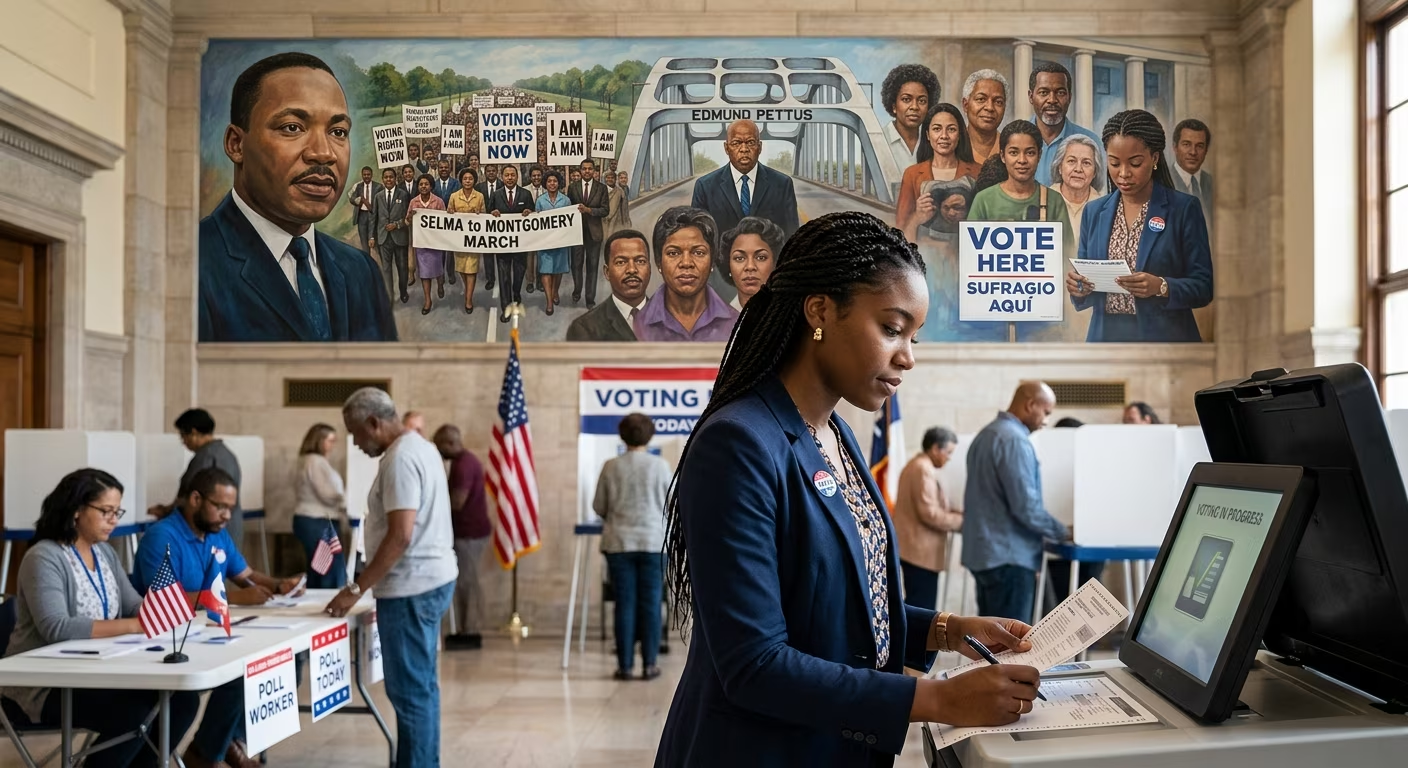
The breaking point of this systemic disenfranchisement culminated in the deeply historic marches of the 1960s. Citizens from all walks of life—teachers, laborers, clergy, and students—congregated to demand federal intervention and the unequivocal guarantee of their right to vote. The televised brutality inflicted upon peaceful marchers during pivotal moments, such as the Selma to Montgomery marches, shocked the national conscience. The blood shed on the Edmund Pettus Bridge served as a grim catalyst for legislative action, ultimately accelerating the passage of the Voting Rights Act of 1965. This landmark legislation aimed to dismantle the legal barriers at the state and local levels that denied African Americans their right to vote under the 15th Amendment.
Understanding this harrowing history is paramount. When a citizen steps into a voting booth today, they are stepping into a space carved out by the extraordinary courage of ordinary people. The ballot is a tangible inheritance, paid for by the resilience of activists who faced police dogs, fire hoses, and mob violence. To abstain from voting is to disregard the monumental price paid for that exact privilege.
The Unsung Vanguard: Youth in the Fight for Equality
Historical narratives frequently highlight the towering, charismatic leaders of the civil rights era, yet the engine of the movement was often powered by its youngest participants. The vanguard of social change has historically been populated by students and children who possessed the moral clarity and fearless determination to challenge entrenched injustices. Youth activism provided a profound psychological catalyst for the broader movement, shaking adult complacency and illustrating the stark moral imperatives of the struggle.
The involvement of young people in desegregation efforts, sit-ins, and voting rights marches demonstrated an acute awareness of their own futures. Children as young as elementary school age were known to participate in demonstrations, deeply internalizing the message that their dignity and their future societal standing depended on the dismantling of systemic racism. Their presence on the front lines exposed the sheer cruelty of oppressive state forces; watching armed authorities deploy violence against unarmed youths galvanized international outrage and expedited federal action.
This legacy of youth mobilization remains incredibly relevant. Today, the echoes of those early youth movements can be seen in modern student-led organizing, from climate justice rallies to campaigns against gun violence and efforts to expand voter registration on college campuses. The historical participation of young civil rights fighters serves as a powerful reminder that one is never too young to demand a seat at the table, and that intergenerational collaboration is essential for the sustained health of a democracy. It proves that civic empowerment does not begin at the legal voting age, but rather takes root in the early recognition of one’s inherent political agency.
Modern Mechanisms of Voter Suppression
While the blatant and violently enforced disenfranchisement tactics of the past have largely been eradicated, the struggle for equitable ballot access is far from over. Modern threats to voting rights are often insidious, shrouded in the language of administrative efficiency or election security. The landscape of electoral access experienced a seismic shift following the 2013 Supreme Court decision in Shelby County v. Holder, which effectively dismantled the preclearance formula of the Voting Rights Act. This ruling allowed states with established histories of discriminatory voting practices to change their election laws without prior federal approval.
In the wake of this decision, numerous jurisdictions swiftly implemented a wave of restrictive voting measures. Strict voter identification laws, for instance, disproportionately affect low-income individuals, the elderly, and minority voters who may face significant hurdles in obtaining the specific forms of ID required. Furthermore, the aggressive purging of voter rolls—often removing eligible voters for simply missing recent elections—has disenfranchised thousands of citizens without adequate warning or recourse.
Additionally, the systemic reduction of polling locations in specific neighborhoods leads to excruciatingly long lines, effectively placing a time-tax on working-class voters. Gerrymandering, the strategic manipulation of electoral district boundaries, further dilutes the voting power of targeted demographics, ensuring predetermined outcomes and severely undermining the principle of competitive, representative elections. Recognizing these modern barriers is crucial; they are the contemporary equivalents of poll taxes and literacy tests, requiring the same level of concerted resistance and legislative advocacy that defined the 1960s.
The Indispensable Nature of Local Elections
When discussing the power of the vote, national media and public discourse overwhelmingly focus on presidential and congressional races. While federal elections undoubtedly shape national policy and international relations, the most immediate and tangible impacts on a citizen’s daily life are determined by local governance. Municipal and state elections dictate the allocation of community resources, the quality of public education, the administration of local justice, and the upkeep of neighborhood infrastructure.
City council members, mayors, and county commissioners make critical zoning decisions that affect housing affordability and local economic development. District attorneys, judges, and sheriffs possess immense discretionary power over the criminal justice system, influencing rates of incarceration, bail policies, and community policing strategies. School board members decide on educational curricula, school funding distribution, and vital student support services.
Therefore, treating voting as an activity reserved solely for presidential election years represents a massive forfeiture of political power. Protecting the legacy of civil rights activists means voting down the entire ballot, recognizing that true systemic change frequently originates at the local level. Engaging in municipal elections ensures that community leaders reflect the values and needs of the populations they serve, creating a stronger, more resilient foundation for the broader democratic structure.
Actionable Imperatives for Electoral Protection
Safeguarding democracy requires more than a passive belief in the right to vote; it demands proactive engagement and community mobilization. Individuals must equip themselves with the necessary tools and knowledge to navigate the voting process successfully and to assist others in doing the same.
- Verify Registration Status: Voter rolls are frequently updated and purged. Citizens should proactively check their registration status well in advance of election deadlines to ensure their information is accurate and active.
- Understand Local Voting Laws: Because election administration is highly decentralized, rules regarding absentee ballots, early voting periods, and acceptable forms of identification vary drastically by state and county. Knowing these specific regulations is the first line of defense against disenfranchisement.
- Engage in Community Education: Knowledge is a collective asset. Organizing voter registration drives, distributing non-partisan information regarding ballot measures, and helping neighbors navigate polling locations drastically improves community turnout.
- Support Voting Rights Legislation: Advocacy must extend beyond election day. Contacting elected representatives to support federal and state legislation that expands voting access and restores anti-discrimination protections is vital for the long-term health of the electoral process.
Historical Milestones of Ballot Access
The expansion of the franchise in the United States has been a gradual, deeply contested process. The following table outlines key legislative and constitutional milestones that have shaped the modern electorate.
| Year | Milestone | Impact on Democratic Access |
|---|---|---|
| 1870 | 15th Amendment Ratified | Prohibited denying the right to vote based on race, color, or previous condition of servitude. |
| 1920 | 19th Amendment Ratified | Granted women the constitutional right to vote, effectively doubling the eligible electorate. |
| 1964 | 24th Amendment Ratified | Abolished poll taxes for federal elections, removing a significant economic barrier to voting. |
| 1965 | Voting Rights Act Passed | Outlawed discriminatory voting practices like literacy tests and instituted federal oversight in specific jurisdictions. |
| 1971 | 26th Amendment Ratified | Lowered the national voting age from 21 to 18, empowering millions of young adult citizens. |
Frequently Asked Questions
Why is the Voting Rights Act of 1965 considered so critical?
The Voting Rights Act (VRA) of 1965 is considered one of the most effective pieces of civil rights legislation in U.S. history because it provided the federal government with the enforcement mechanisms necessary to bypass obstinate state officials. By outlawing literacy tests and requiring federal “preclearance” for changes to voting laws in jurisdictions with a history of discrimination, the VRA resulted in massive increases in minority voter registration and representation.
How did the Shelby County v. Holder decision impact voting rights?
In 2013, the Supreme Court ruled in Shelby County v. Holder that the coverage formula used to determine which states and local governments needed federal preclearance before changing their voting laws was unconstitutional. This essentially gutted the enforcement power of the VRA, allowing states to immediately implement restrictive voting laws, such as strict ID requirements and polling place closures, without prior federal review.
What role did youth play in the Civil Rights Movement?
Youth were integral to the operational success and moral force of the movement. Students formed organizations like the Student Nonviolent Coordinating Committee (SNCC), spearheaded lunch counter sit-ins, participated in the Freedom Rides, and marched in major demonstrations. Their willingness to face arrest and violence highlighted the stark injustices of segregation and galvanized adult populations and international observers.
What constitutes modern voter suppression?
Modern voter suppression includes any legal or administrative tactic that makes it disproportionately difficult for specific demographics to vote. Common examples include strict voter ID laws, the aggressive purging of voter registration rolls, reducing the number of polling locations and drop boxes in minority or low-income neighborhoods, restricting early voting hours, and extreme partisan gerrymandering.
Why are local elections often overlooked, and why do they matter?
Local elections often suffer from lower turnout because they receive significantly less media coverage than federal races. However, they are vital because local officials—like mayors, school board members, and district attorneys—control budgets, direct community policing, dictate public education policies, and make zoning decisions that immediately and directly affect the daily lives and safety of local residents.
References
- History of Federal Voting Rights Laws — U.S. Department of Justice. 2024-03-01. https://www.justice.gov/crt/history-federal-voting-rights-laws
- Voting Rights Act (1965) — National Archives and Records Administration. 2022-02-08. https://www.archives.gov/milestone-documents/voting-rights-act
- Register and Vote in Your State — U.S. Election Assistance Commission. 2024-01-15. https://www.eac.gov/voters/register-and-vote-in-your-state