
Homebrewing Beer: Legality Across America
Unlock the rules of crafting your own beer at home: federal permissions, state variations, and practical tips for enthusiasts nationwide.
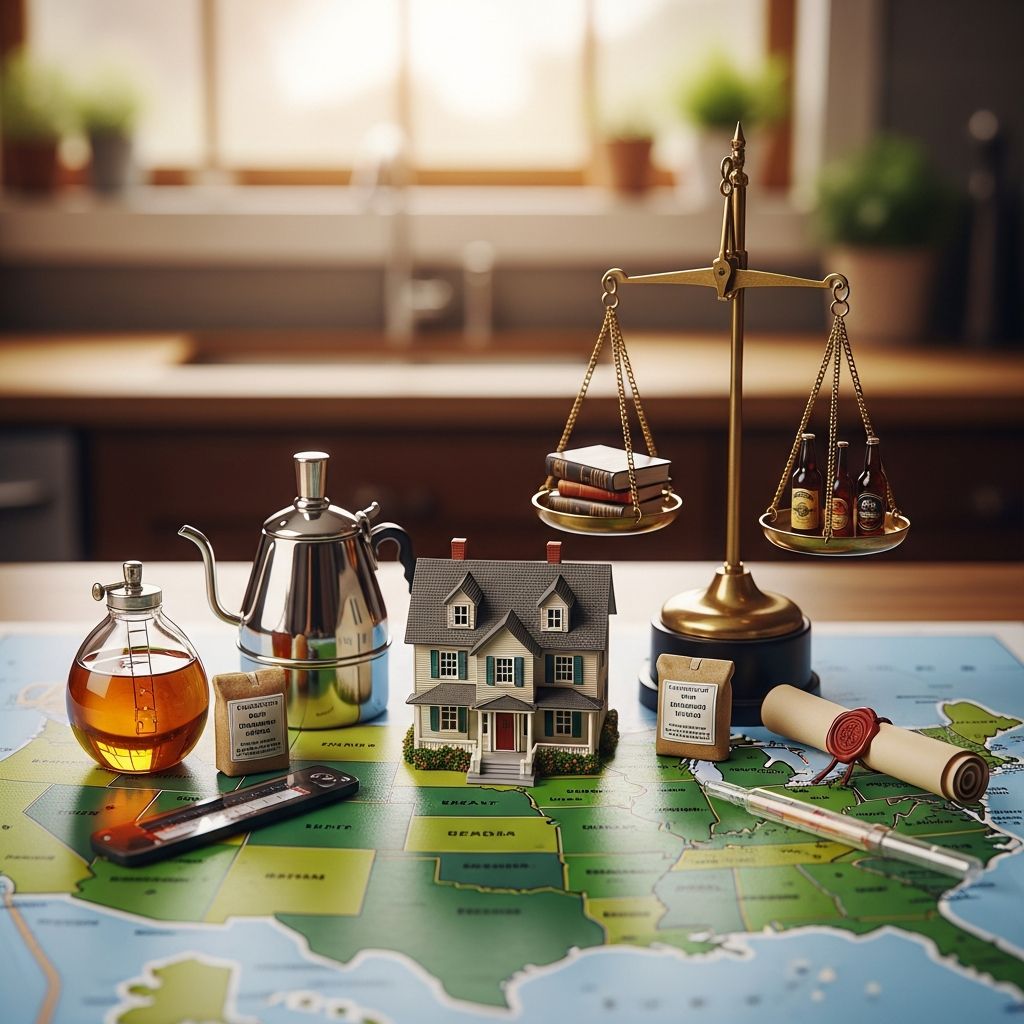
Creating beer at home has evolved from a clandestine activity during Prohibition to a celebrated hobby protected by federal law and embraced in all 50 states. This practice, known as homebrewing, allows individuals to experiment with flavors and techniques for personal enjoyment, subject to specific regulations on production limits, alcohol content, and distribution.
Historical Evolution of Homebrewing Regulations
The journey of homebrewing legality in the United States is tied to major constitutional changes. The 18th Amendment, ratified in 1919, ushered in Prohibition, banning the manufacture, sale, and transportation of intoxicating liquors, which included beer production at home. This era forced many into underground brewing, despite the risks, as ingredients for beer were relatively accessible compared to distilled spirits.
Prohibition ended with the 21st Amendment in 1933, repealing the ban and legalizing home winemaking but inadvertently omitting beer, leaving its status ambiguous under state control. Homebrewing beer remained federally restricted until a pivotal shift in 1978. President Jimmy Carter signed H.R. 1337 on October 14, 1978, exempting home-produced beer from federal taxation for personal or family use, effective February 1, 1979. This legislation marked the federal green light, sparking a renaissance in the hobby.
State-level adoption lagged, with Mississippi and Alabama as the final holdouts, legalizing in 2013. Today, homebrewing thrives nationwide, bolstered by organizations like the American Homebrewers Association advocating for clearer statutes.
Federal Framework: What You Can Brew at Home
Under federal law, adults over 21 may produce beer for personal consumption without excise taxes, capped at 200 gallons annually for households with two or more adults, or 100 gallons for single adults. This exemption applies strictly to non-commercial use; selling homebrew is prohibited federally and in all states.
Key federal guidelines include:
- No licensing required for personal brewing.
- Production must occur at a private residence.
- Beers must not be distributed, bartered, or sold.
- Transport via U.S. Postal Service is banned; private carriers like UPS or FedEx require special permits.
These rules provide a solid foundation, but the 21st Amendment delegates finer details to states, creating a patchwork of regulations.
Navigating State-Specific Homebrewing Rules
While federally legal, state laws impose unique constraints on volume, strength, ingredients, and transport. Most align with federal limits, but variations demand attention to avoid violations.
| State/Region | Annual Limit (Gallons) | ABV/ABW Cap | Notable Restrictions |
|---|---|---|---|
| Federal Baseline | 200 (2+ adults), 100 (1 adult) | None | Personal use only |
| Tennessee | 200/100 | 10% ABV | No transport >5 gal off-premises |
| Mississippi | 200/100 | 10% ABV | Dry counties prohibit all alcohol |
| West Virginia | 200/100 | 12% ABV | Club meetings allowed |
| Oklahoma | 200/100 | 3.2% ABW (permit) | Legalized 2010 |
| Connecticut | 100 (2 adults), 50 (1) | None specified | Household-based |
| Idaho | 200/100 | None | Native-grown ingredients required |
This table highlights select examples; always verify current statutes via state alcohol control boards. States like Delaware cap at 200 gallons regardless of household size, while Iowa distinguishes ‘beer’ (≤5% ABW) from higher-alcohol variants with ingredient limits and transport caps at 5 gallons.
Transport rules vary: some states permit taking homebrew to competitions or club meetings, others restrict it to the brewing residence. For instance, Tennessee limits off-site transport to 5 gallons to prevent perceived distribution.
Common Pitfalls and Enforcement Realities
Enforcement is typically lax unless complaints arise or large-scale operations mimic commercial activity. High-profile social media boasts of extreme ABV brews in restrictive states could invite scrutiny, though routine inspections are rare. Historical quirks, like New Jersey’s former licensing fee repealed after community pushback, underscore evolving attitudes.
Other pitfalls include:
- Overproduction: Exceeding limits risks confiscation and fines.
- Sharing/Selling: Even gifting beyond permitted transport can be seen as distribution.
- Minors: Homebrew cannot be served to those under 21.
- Public Events: Competitions often require sealed containers and event-specific permissions.
In dry counties or municipalities, like parts of Mississippi, all alcohol is off-limits, overriding state homebrewing rights.
Practical Steps for Compliant Homebrewing
To brew legally and safely:
- Research Local Laws: Consult the American Homebrewers Association’s statutes page or state ABC (Alcoholic Beverage Control) websites.
- Track Production: Maintain logs to stay under annual caps.
- Label Clearly: Mark bottles as ‘homebrew, not for sale’ for competitions.
- Join Clubs: Organizations provide updates and event guidance.
- Upgrade Equipment Responsibly: Scale matches hobby limits; commercial setups flag intent to sell.
Health and safety matter too: Sanitize equipment, monitor fermentation to avoid contamination, and age beers properly.
Benefits and Cultural Impact of Homebrewing
Beyond legality, homebrewing fosters creativity, cost savings, and community. Enthusiasts craft unique styles unavailable commercially, from hazy IPAs to barrel-aged stouts. The hobby fueled the craft beer boom, with many pros starting in garages.
Annual events like the National Homebrew Competition showcase talent, with states increasingly supporting transport for entries. Economically, it reduces reliance on store-bought beer while teaching science—yeast metabolism, pH balance, and gravity measurements.
Frequently Asked Questions About Homebrewing Legality
Is homebrewing legal everywhere in the US?
Yes, it’s legal federally and in all 50 states since 2013, but check state and local rules for specifics.
Can I sell my homebrew?
No, federal and state laws prohibit selling; it’s for personal use only.
What if I live alone—how much can I brew?
Up to 100 gallons per year federally and in most states.
Are there ABV limits in my state?
Some states cap it, e.g., 10% in Tennessee; others don’t. Verify locally.
Can I take homebrew to a party?
Depends on state transport laws; many limit quantities or ban off-site consumption.
Is a permit needed for homebrewing?
No federally; rare states historically required one, but most don’t now.
This guide empowers brewers to enjoy the craft responsibly. Laws evolve, so stay informed through official channels.
References
- Statutes — American Homebrewers Association. 2023. https://homebrewersassociation.org/homebrewing-rights/statutes/
- The Day Homebrewing Was Legalized — Craft Beer & Brewing. 2023-10-14. https://www.beerandbrewing.com/the-day-homebrewing-was-legalized
- Homebrewing — Wikipedia. 2026. https://en.wikipedia.org/wiki/Homebrewing
- Just Brew It: A Brief Legislative History about Homebrewing in the United States, Part 1 — Library of Congress. 2023-02. https://blogs.loc.gov/law/2023/02/just-brew-it-a-brief-legislative-history-about-homebrewing-in-the-united-states-part-1/
- Homebrewing Legal in All 50 States — Craft Brewing Business. 2013. https://www.craftbrewingbusiness.com/news/homebrewing-legal-in-all-50-states/
- Home Manufacture of Alcohol State Statutes — National Conference of State Legislatures. 2023. https://www.ncsl.org/financial-services/home-manufacture-of-alcohol-state-statutes
Similar Articles








Read full bio of medha deb


