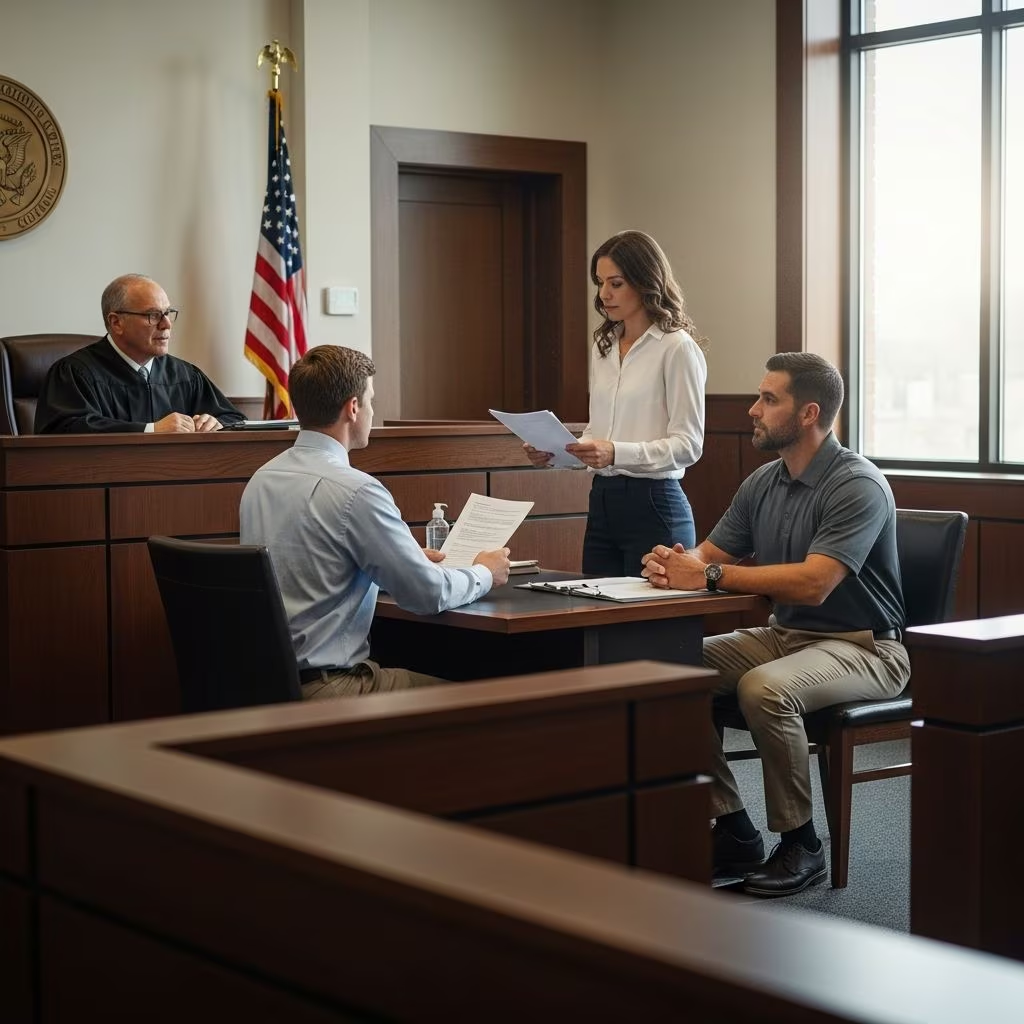
Understanding Your Options When Contractor Problems Arise
Disputes with home contractors can be frustrating and costly. When a contractor fails to complete work, delivers substandard results, or abandons a project, homeowners often wonder about their legal options. While small claims court appears to be an accessible solution, it is important to understand whether this forum is actually the best choice for your specific situation. This guide explores the practical considerations involved in deciding whether to pursue a small claims action against a contractor, what you can realistically expect from the process, and alternative approaches that may prove more effective.
The Reality of Small Claims Court Jurisdiction
Small claims courts operate under significant limitations that many homeowners overlook. These courts were designed to provide accessible legal remedies for disputes involving smaller dollar amounts, but they cannot address all types of contractor disputes effectively. Understanding these limitations is crucial before you decide to file a claim.
The most fundamental constraint is monetary jurisdiction. Each state establishes its own ceiling on the amount you can recover in small claims court, ranging from $2,500 to $25,000 depending on your location. If your dispute involves damages exceeding your state’s limit, you cannot pursue the matter in small claims court—you would need to file in a general trial court, though this typically requires hiring an attorney.
Beyond monetary limits, small claims courts face significant restrictions on the types of relief they can provide. The primary remedy available through small claims court is monetary damages—essentially, the judge can order the defendant to pay you money. However, many homeowners facing contractor problems actually want the work completed rather than compensation. If your primary objective is to force the contractor to finish the job, small claims court cannot help you achieve this goal.
What Small Claims Court Can and Cannot Do
The distinction between monetary damages and what legal professionals call “equitable relief” is critical. Equitable relief includes court orders compelling someone to perform a specific action, such as completing construction work. Small claims judges lack authority to issue such orders. They cannot require a contractor to return to your property and complete the project according to contract specifications.
This limitation creates a practical problem: even if you win your case and receive a judgment, you still do not have a completed home improvement project. The money awarded may help you hire another contractor to finish the work, but this comes with its own complications. You may need to verify that the work was actually completed properly, and you lose the benefit of having a single contractor responsible for the entire project.
The types of cases best suited for small claims court are those where the contractor owes you money for work they performed but failed to pay for, or where you paid upfront but the contractor failed to complete the work and you are seeking reimbursement. In these scenarios, monetary compensation addresses your primary concern.
Before Filing: Communication Strategies That Work
Before investing time and money in small claims court, consider whether direct communication might resolve the matter. Many contractor disputes stem from misunderstanding rather than deliberate misconduct. Your first step should be a face-to-face conversation or phone call with the contractor, clearly explaining your concerns and what you expect as a resolution.
If verbal communication proves unproductive, escalate to written communication. A formal letter to the contractor is more effective than casual conversation because it creates a documented record and signals that you are serious about the dispute. In your letter, specifically reference the original contract terms, describe exactly what was supposed to occur versus what actually happened, and explain how you have been harmed by the contractor’s actions. Include concrete details: if the contractor installed the wrong tile color, state the specific colors promised and delivered; if work is behind schedule, specify how many months behind and reference the original timeline.
A powerful addition to your letter is a closing statement reserving your legal rights and remedies. This language indicates that you are prepared to pursue legal action if the contractor does not respond satisfactorily. Surprisingly often, this approach prompts contractors to take your concerns seriously and seek resolution.
The Psychological Impact of Filing a Lawsuit
Even if you ultimately decide small claims court is not your ideal venue, the act of filing a lawsuit can be surprisingly effective. Simply receiving notice that you have initiated legal proceedings sometimes motivates contractors to resolve disputes. This occurs because litigation creates uncertainty and expense for the contractor, and many prefer settling to facing potential judgments and enforcement actions.
However, relying on this effect has downsides. Once you file suit, construction work typically comes to a complete halt pending the court hearing and decision. If you still hope for a completed project rather than monetary compensation, this pause in work represents lost time and potential complications if work cannot resume where it left off.
Determining Damages and What You Can Recover
Calculating your damages is more complex than simply adding up your direct costs. When pursuing a contractor claim, you need to establish what you have actually lost. Possible categories of damages include:
- The cost differential between the promised work and what was actually completed or the cost to hire another contractor to complete the work
- Any money you paid to the contractor that was not earned or applied to the project
- Temporary living expenses if the contractor’s failure forced you to relocate while repairs were being made
- Diminution in property value resulting from incomplete or defective work
- Direct costs for remedying the contractor’s deficient work
When you file your small claims action, you must clearly state the amount you are seeking and explain how you calculated that amount. Judges expect detailed calculations supported by documentation such as quotes from other contractors, invoices, photographs, and repair estimates.
State-Specific Rules and Requirements
Small claims procedures vary significantly by state, making it essential to research your specific jurisdiction before filing. Some states handle serving defendants (officially notifying them of the lawsuit) through the court clerk, while others require you to hire a process server or handle service yourself. Each state has its own monetary limits, filing fees, and procedural requirements.
When suing a contractor, properly identifying the defendant is more complicated than you might expect. You should determine whether you are suing a sole proprietor, a partnership, or a corporation, and use the legally correct name. If the contractor operates under a business name different from their legal name, you may need to research the business structure through your state’s licensing board or business registration office. Incorrectly identifying the defendant can result in dismissal of your case.
In some states, particularly California, contractors must maintain surety bonds, and homeowners can sometimes recover directly from the bond up to specified limits. Understanding whether your contractor maintained such a bond requires investigating their licensing status, which varies by state and by contractor type.
When Small Claims Court Makes Sense
Small claims court becomes an appropriate choice when several conditions are met. First, your damages must fall within your state’s monetary jurisdiction limit. Second, you should be primarily seeking monetary compensation rather than having the contractor complete the work. Third, you would prefer not to hire an attorney and have the capability to represent yourself effectively. Fourth, you have already attempted informal resolution without success.
The advantages of small claims court include straightforward paperwork designed for unrepresented parties, lower filing fees compared to general civil litigation, faster resolution timelines, and the possibility that filing alone will motivate settlement. If you owe less than the jurisdictional limit and are comfortable with seeking money rather than completion, small claims court offers a cost-effective remedy.
Collecting Your Judgment
Winning your case does not automatically mean you receive money. After obtaining a judgment, you must take steps to collect it. This is particularly important when suing contractors, who may refuse to pay or lack readily available funds. Your county clerk can explain your state’s judgment enforcement procedures, which typically involve either filing a garnishment application or serving the contractor with an informational subpoena requiring disclosure of assets.
Before pursuing these enforcement mechanisms, sending the contractor a formal notice of your intent to collect can motivate payment. Many contractors will pay when they understand you are serious about enforcement. If they refuse, you can pursue garnishment of wages or bank accounts, though this process takes time and may require additional court filings.
Alternative Dispute Resolution Options
Before committing to litigation, consider whether mediation or arbitration might resolve your dispute more efficiently. Mediation involves a neutral third party helping you and the contractor reach a mutually acceptable agreement. Unlike small claims court, mediation is confidential, less adversarial, and often faster. Many mediators specialize in construction disputes and understand industry standards and practices.
Arbitration is another alternative where a neutral arbitrator hears evidence and makes a binding decision, similar to small claims court but with more formal procedures and potentially greater flexibility regarding the types of relief available. Some construction contracts include mandatory arbitration clauses, so check your agreement before pursuing court action.
Legal aid organizations in your county may provide resources and guidance for understanding small claims procedures and evaluating your options. Taking advantage of these free resources can help you make an informed decision about whether litigation is truly necessary.
Key Factors in Your Decision
| Factor | Favors Small Claims Court | Favors Other Approaches |
|---|---|---|
| Damage Amount | Less than your state’s limit | Exceeds your state’s limit |
| Primary Goal | Recover money | Have work completed |
| Communication Status | Contractor ignores written requests | Contractor still responsive |
| Attorney Budget | Cannot afford attorney | Can hire legal representation |
| Time Sensitivity | Can wait for court process | Need quick resolution |
Preparing Your Case if You Proceed
If you decide to file in small claims court, thorough preparation significantly increases your chances of success. Gather all documentation including the original contract, written communications with the contractor, photographs or video of the work, estimates from other contractors for remedial work, and any invoices or payment records. Organize this evidence chronologically and create clear copies for the court and the defendant.
Write a narrative summary explaining what was promised, what actually occurred, when you first noticed problems, and what steps you took to resolve the matter. This narrative helps the judge understand your case quickly and makes your legal position clear. Practice presenting your case concisely, as small claims judges often have crowded dockets and limited time per case.
Frequently Asked Questions
Q: Can I sue a contractor for an amount larger than my state’s small claims limit?
A: No, small claims courts have mandatory jurisdictional limits. If your damages exceed your state’s limit, you must either accept that limit or file in general civil court, which typically requires hiring an attorney.
Q: What if the contractor refuses to show up for the trial?
A: Most states allow you to win by default if the defendant fails to appear after proper service of notice. However, you still must prove your damages to the judge.
Q: How long does the small claims court process typically take?
A: Timeline varies by state, but many cases are resolved within three to six months from filing to judgment, though enforcement may take additional time.
Q: Can I appeal a small claims court judgment?
A: Appeals processes vary significantly by state. Some states allow appeals only on procedural grounds, while others permit broader appellate review. Check your state’s rules before deciding whether to accept an unfavorable judgment.
Q: Should I hire an attorney for small claims court?
A: Most states prohibit attorneys in small claims court, and self-representation is the norm. However, you can consult an attorney beforehand to evaluate your case and develop strategy.
References
- Can You Sue A Contractor In Small Claims Court? — County Office Law. May 20, 2025. https://www.youtube.com/watch?v=2Jcx5D6Z2gQ
- Filing a Small Claims Court Construction Claim — California Department of Consumer Affairs. https://www.cslb.ca.gov/resources/guidesandpublications/guidetosmallclaims.pdf
- Should I take my contractor to small claims court? — Nolo. https://www.nolo.com/legal-encyclopedia/should-i-take-contractor-small-claims-court.html
- Navigating Small Claims Court in Construction Disputes: Five Major Steps to Resolution — Corestone Law. October 16, 2023. https://www.corestone.ca/navigating-small-claims-court-in-construction-disputes-five-major-steps-to-resolution/
- CSLB Small Claims Court Fast Facts — California Contractors State License Board. https://www.cslb.ca.gov/resources/guidesandpublications/guidetosmallclaims.pdf