
Home-Based LLC Guide: What You Need To Know For 2025
Master the essentials of launching and managing your LLC from home: legal steps, tax perks, and smart strategies for success.
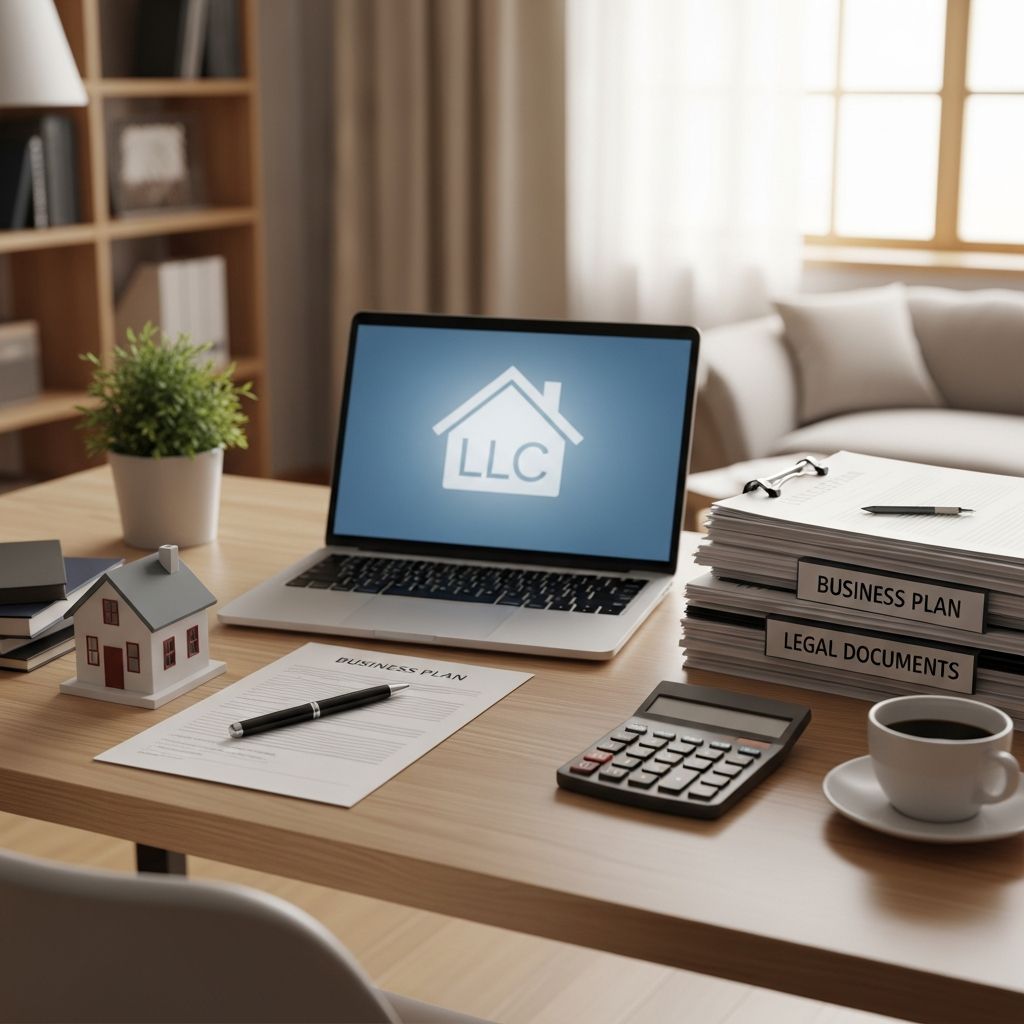
Operating a limited liability company (LLC) from your residence offers entrepreneurs a flexible entry into business ownership with minimal startup costs. This approach suits consultants, freelancers, e-commerce sellers, and service providers who require little physical infrastructure. However, success demands careful navigation of legal, tax, and operational hurdles to ensure compliance and sustainability.
Financial Advantages of a Residential Business Setup
Choosing your home as the base for your LLC significantly lowers initial and ongoing expenses. Entrepreneurs avoid commercial rent, which can exceed thousands monthly in urban areas, and eliminate commuting costs, vehicle maintenance, and utility bills for separate offices. These savings allow reinvestment into marketing, inventory, or technology, accelerating growth.
Additional perks include scalable operations. Start in a spare room and expand without relocation. According to business formation experts, home-based setups can reduce overhead by up to 70% compared to traditional offices.
Tax Benefits for Home Office Operators
The Internal Revenue Service (IRS) provides substantial deductions for qualifying home offices, making residential LLCs tax-efficient. To claim, designate a space used exclusively and regularly for business—no personal use allowed, such as a guest room doubling as storage.
Deductions fall into two categories:
- Simplified Method: $5 per square foot, up to 300 square feet ($1,500 maximum). Ideal for small spaces.
- Actual Expense Method: Proportional share of rent/mortgage, utilities, insurance, repairs, and depreciation. Requires meticulous records but yields higher savings for larger areas.
Other deductible items include business mileage (2026 standard rate pending IRS update, typically 65-70 cents/mile), internet proportional to business use, and office supplies. Consult IRS Publication 587 for details, as eligibility hinges on principal place of business status. Homeowners may deduct mortgage interest portions, while renters claim lease equivalents.
| Deduction Type | Eligibility Criteria | Potential Savings Example (500 sq ft home office) |
|---|---|---|
| Simplified | Exclusive use, up to 300 sq ft | $1,500/year |
| Actual Expenses | Records of bills, square footage ratio | $3,000-$6,000/year (varies by location) |
| Mileage | Business travel only | $4,000/year (6,000 miles) |
Track expenses via software like QuickBooks to maximize claims and prepare for audits.
Navigating Zoning Laws and Local Regulations
Zoning ordinances dictate home business viability. Most municipalities permit low-impact operations like online sales or virtual consulting but restrict high-traffic activities, manufacturing, or signage. Check city planning departments for ‘home occupation’ permits, often requiring <25% of home floor space for business and no external alterations.
Homeowners Associations (HOAs) or covenants may impose stricter rules, prohibiting commercial vehicles or client visits. Renters must review leases—many ban businesses without landlord approval. Non-compliance risks fines, shutdowns, or eviction.
Steps to verify compliance:
- Search ‘[your city] home business zoning’ on official government sites.
- Contact local zoning board for pre-approval.
- Review HOA docs or lease clauses.
Essential Permits and Licensing Essentials
Beyond zoning, secure business licenses. States require general LLC registration via Secretary of State offices; locals may need occupational permits. Industries like food service or childcare demand specialized approvals.
Federal requirements apply for EIN (free via IRS.gov), sales tax permits if selling goods, and industry-specific licenses (e.g., cosmetology). Use tools like state business portals—Texas, for instance, mandates DBA filings for sole props but LLCs need certificate of formation. Budget $50-$500 for fees, varying by location.
Selecting the Right Business Address Strategy
LLC formation demands a physical street address, not a P.O. Box. Home addresses work but expose privacy—public records list them, inviting solicitations or risks. Virtual mailboxes or offices provide professional alternatives: street addresses for mail scanning apps, often $10-50/month.
Registered agents are mandatory: receive service of process during business hours. Self-appointment suits single-member LLCs, but professionals ($100-300/year) ensure availability and privacy. Multiple LLCs can share addresses/agents if names differ.
Insurance Coverage Imperatives
Standard homeowner policies exclude business liability. Home-based LLCs need:
- General Liability: Covers client injuries/property damage ($400-1,500/year).
- Professional Liability (E&O): Errors/omissions protection.
- Commercial Property: Equipment/inventory.
Notify insurers; riders cost $200-500 annually. Umbrella policies add layers for high-risk ops.
Optimizing Your Home Workspace
A productive setup boosts efficiency:
- Ergonomics: Adjustable desk/chair to prevent strain.
- Tech: High-speed internet (500Mbps+), VoIP phones, cloud backups.
- Supplies: Printers, scanners, secure filing.
- Security: Firewalls, locks, alarms.
Dedicate space to signal professionalism—separate from living areas for focus.
LLC vs. Sole Proprietorship Debate
Sole proprietorships launch fastest (no filing), but lack liability shields—personal assets at risk. LLCs ($100-800 formation) offer protection, pass-through taxation, and credibility. Ideal for growth-oriented ventures.
Scaling from Home Base
Begin solo, hire virtually via platforms like Upwork. Monitor traffic/parking for zoning adherence. Transition to commercial space when revenue justifies—many thrive indefinitely at home.
Frequently Asked Questions
Can renters operate an LLC from their apartment?
Yes, with landlord permission and lease compliance. Verify no commercial bans.
Does a home-based LLC qualify for all tax deductions?
Only exclusive business space; IRS audits rigorously.
Can one address serve multiple LLCs?
Yes, with unique names and separate formations.
What if zoning changes mid-operation?
Apply for variances or relocate address via amendment.
Is a registered agent always required?
Yes, for legal service receipt.
References
- Can You Run an LLC From Home? — Bizee. 2024. https://bizee.com/articles/legal/running-llc-from-home
- Can I Use My Home to Start an LLC? — PhysicalAddress.com. 2024. https://physicaladdress.com/blog/can-i-use-my-home-to-start-an-llc/
- Pros and Cons to Running an LLC from Home — DelawareInc. 2024. https://www.delawareinc.com/blog/pros-cons-running-llc-from-home/
- Do You Need a Physical Address for Your Small Business? — Nolo. 2024. https://www.nolo.com/legal-encyclopedia/physical-business-address-llc.html
- Use Home Address for LLC: Legal Guide 2026 — Bonsai. 2026. https://www.hellobonsai.com/blog/can-i-use-my-home-address-for-llc
- Start a Business in Texas — Texas.gov. 2026. https://gov.texas.gov/business/page/start-a-business
Similar Articles








Read full bio of Sneha Tete


